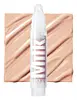
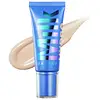
Milk Makeup Sunshine Skin Tint Clean SPF 30 Foundation Versus Milk Makeup Hydro Grip 12-Hour Hydrating Gel Skin Tint

What's inside
What's inside
 Key Ingredients
Benefits
Concerns
Ingredients Side-by-side
Homosalate 5%
Skin Conditioning

Ethylhexyl Salicylate 4.5%
UV Absorber
Octocrylene 5%
UV Absorber

Titanium Dioxide 2.9%
Cosmetic Colorant
Zinc Oxide 5.1%
Cosmetic Colorant
Water
Skin ConditioningButylene Glycol
Humectant

Crambe Abyssinica Seed Oil Phytosterol Esters
Emulsifying


Caprylic/Capric Triglyceride
Masking
Squalane
Emollient
Glyceryl Oleate
Emollient

Polyglyceryl-3 Polyricinoleate
Emulsifying
Pentylene Glycol
Skin Conditioning
Silica
Abrasive

Diisostearyl Malate
EmollientSodium Chloride
MaskingStearalkonium Hectorite
Gel FormingSimmondsia Chinensis Seed Oil
Emollient
Olea Europaea Fruit Oil
Masking
Persea Gratissima Oil
Skin Conditioning
Vitis Vinifera Seed Oil
Emollient
Citrus Nobilis Peel Oil
Masking
Tremella Fuciformis Sporocarp Extract
Antioxidant
Lonicera Japonica Flower Extract
Skin ConditioningTocopheryl Acetate
Antioxidant

Tribehenin
Emollient
Magnesium Aluminum Silicate
Absorbent
Isostearic Acid
Cleansing
Lecithin
Emollient
Polyhydroxystearic Acid
Emulsifying
Hydrogenated Olive Oil Unsaponifiables
Emollient
Alumina
Abrasive
Stearic Acid
Cleansing
Jojoba Esters
Emollient
Glycerin
Humectant
Olea Europaea Oil Unsaponifiables
Skin Conditioning
Acacia Senegal Gum
MaskingEthylhexylglycerin
Skin ConditioningXanthan Gum
EmulsifyingBetaine
Humectant
Potassium Sorbate
Preservative
Phenoxyethanol
Preservative
Parfum
Masking
Iron Oxides
Homosalate 5%, Ethylhexyl Salicylate 4.5%, Octocrylene 5%, Titanium Dioxide 2.9%, Zinc Oxide 5.1%, Water, Butylene Glycol, Crambe Abyssinica Seed Oil Phytosterol Esters, Caprylic/Capric Triglyceride, Squalane, Glyceryl Oleate, Polyglyceryl-3 Polyricinoleate, Pentylene Glycol, Silica, Diisostearyl Malate, Sodium Chloride, Stearalkonium Hectorite, Simmondsia Chinensis Seed Oil, Olea Europaea Fruit Oil, Persea Gratissima Oil, Vitis Vinifera Seed Oil, Citrus Nobilis Peel Oil, Tremella Fuciformis Sporocarp Extract, Lonicera Japonica Flower Extract, Tocopheryl Acetate, Tribehenin, Magnesium Aluminum Silicate, Isostearic Acid, Lecithin, Polyhydroxystearic Acid, Hydrogenated Olive Oil Unsaponifiables, Alumina, Stearic Acid, Jojoba Esters, Glycerin, Olea Europaea Oil Unsaponifiables, Acacia Senegal Gum, Ethylhexylglycerin, Xanthan Gum, Betaine, Potassium Sorbate, Phenoxyethanol, Parfum, Iron Oxides
Water
Skin ConditioningIsononyl Isononanoate
EmollientPropanediol
Solvent
Isostearyl Neopentanoate
Emollient
Glycerin
Humectant
Octyldodecyl Stearoyl Stearate
Emollient
Polyglyceryl-2 Dipolyhydroxystearate
Skin Conditioning
Saccharomyces/Xylinum/Black Tea Ferment
Skin Conditioning
Hydrogenated Ethylhexyl Olivate
EmollientCoco-Caprylate/Caprate
Emollient
Dicaprylyl Ether
Emollient
Polyglyceryl-6 Polyricinoleate
Emulsifying
Squalane
Emollient
Polyglyceryl-3 Diisostearate
Emulsifying
Dimer Dilinoleyl Dimer Dilinoleate
EmollientPullulan
Niacinamide
Smoothing



Sodium Hyaluronate
Humectant
Cannabis Sativa Seed Oil
Emollient
Agave Tequilana Leaf Extract
AstringentButyrospermum Parkii Butter
Skin Conditioning
Helianthus Annuus Seed Oil
Emollient
Hydrogenated Olive Oil Unsaponifiables
Emollient
Tocopherol
Antioxidant
Pentaerythrityl Tetra-Di-T-Butyl Hydroxyhydrocinnamate
Antioxidant
Lecithin
Emollient
Dipalmitoyl Hydroxyproline
Skin Conditioning
Magnesium Sulfate
Disteardimonium Hectorite
StabilisingPropylene Carbonate
SolventHydrogenated Styrene/Methylstyrene/Indene Copolymer
Lauroyl Lysine
Skin Conditioning
Stearic Acid
Cleansing
Zinc Stearate
Cosmetic ColorantAllantoin
Skin Conditioning
Distarch Phosphate
AbsorbentPalmitic Acid
Emollient
Maltose
MaskingPotassium Sorbate
Preservative
Sodium Dehydroacetate
Preservative
Sodium Benzoate
Masking
Phenoxyethanol
Preservative
CI 77891
Cosmetic ColorantCI 77491
Cosmetic ColorantCI 77492
Cosmetic ColorantCI 77499
Cosmetic ColorantWater, Isononyl Isononanoate, Propanediol, Isostearyl Neopentanoate, Glycerin, Octyldodecyl Stearoyl Stearate, Polyglyceryl-2 Dipolyhydroxystearate, Saccharomyces/Xylinum/Black Tea Ferment, Hydrogenated Ethylhexyl Olivate, Coco-Caprylate/Caprate, Dicaprylyl Ether, Polyglyceryl-6 Polyricinoleate, Squalane, Polyglyceryl-3 Diisostearate, Dimer Dilinoleyl Dimer Dilinoleate, Pullulan, Niacinamide, Sodium Hyaluronate, Cannabis Sativa Seed Oil, Agave Tequilana Leaf Extract, Butyrospermum Parkii Butter, Helianthus Annuus Seed Oil, Hydrogenated Olive Oil Unsaponifiables, Tocopherol, Pentaerythrityl Tetra-Di-T-Butyl Hydroxyhydrocinnamate, Lecithin, Dipalmitoyl Hydroxyproline, Magnesium Sulfate, Disteardimonium Hectorite, Propylene Carbonate, Hydrogenated Styrene/Methylstyrene/Indene Copolymer, Lauroyl Lysine, Stearic Acid, Zinc Stearate, Allantoin, Distarch Phosphate, Palmitic Acid, Maltose, Potassium Sorbate, Sodium Dehydroacetate, Sodium Benzoate, Phenoxyethanol, CI 77891, CI 77491, CI 77492, CI 77499
Reviews
Ingredients Explained
These ingredients are found in both products.
Ingredients higher up in an ingredient list are typically present in a larger amount.
Glycerin (or glycerol) is a compound naturally found in your skin. It's a powerhouse humectant that pulls water into the stratum corneum.
Topically, glycerin does several things at once:
Your skin makes glycerin on its own (mostly from sebaceous oil breakdown) and shuttles it to your outermost layer of skin, or your epidermis, via aquaporin-3.
Aquaporin-3 is a transporter that is essential for normal skin hydration, elasticity, and repair. Interestingly, mice lacking in AQP3 have dry and less elastic skin that can be fully corrected with glycerin.
This ingredient is non-irritating, plays well with almost every ingredient, and works across all skin types. Typical use is anywhere between 3-10% but can go up to 79% in some leave-on products.
Just know very high concentrations (>40%) can feel tacky in low humidity.
Glycerin is the name for this ingredient in American English. British English uses Glycerol/Glycerine.
Learn more about GlycerinHydrogenated Olive Oil Unsaponifiables are the "leftover" part of olive oil after the fatty acids get turned into soap.
Most of what's left behind is a concentrated blend of squalene, phytosterols, and vitamin E.
Squalene is pretty cool because it's already naturally found in our skin and makes up about 13% of sebum. This makes it a great moisturizing and skin-barrier-supporting ingredient.
This ingredient is typically used at low concentrations (~1-3%) and occasionally up to 25% when acting as the main ingredient in a formula.
Fungal acne note: Though this ingredient is largely free of fatty acid esters that feed Malassezia, it may still have some residual fatty acids depending on the purity. This is why this ingredient is marked as not fungal acne safe.
People with existing olive oil allergies should be cautious as well.
Learn more about Hydrogenated Olive Oil UnsaponifiablesLecithin is a term for a group of substances found in the cell membranes of plants, animals, and humans. They are made up of phospholipids.
Thanks to its amphiphilic structure (water-loving head and oil-loving tail), it is a true multitasker:
It plays well with most ingredients and is typically used at 0.1-1%. However, concentrations up to 50% have been reported in moisturizers.
Learn more about LecithinPhenoxyethanol is one of the most widely used preservatives in skincare (and for good reason!).
It has a large spectrum of antimicrobial activity and especially effective bacteria, yeast, and mold while only having a weak effect on your skin's natural microbiome.
On a cellular level, it disrupts the cell membranes of microbes by poking holes that make the cell leak. This shuts down the chemical reactions the microbe needs to make energy so it can no longer survive.
Another perk of this ingredient is that it stays functional across a wide pH range (3-10).
You'll often see it paired with boosters like Ethylhexylglycerin; one study showed that a 1:9 ratio of Ethylhexylglycerin to Phenoxyethanol damages bacterial membranes as effectively as doubling the Phenoxyethanol concentration on its own.
Typical use concentrations range from 0.3-1% depending on the formula, and this ingredient is capped at 1% int the EU.
Safety-wise, the fear mongering does not hold up to the evidence. The EU's Scientific Committee on Consumer Safety and FDA consider it safe as a preservative at up to 1%, including for children of all ages.
Adverse systemic effects only showed up in animal studies at exposures roughly 200x higher than what people get from cosmetics. And despite its very widespread use, this ingredient is a rare sensitizer and allergic reactions are uncommon.
Learn more about PhenoxyethanolPotassium Sorbate is a preservative used to prevent yeast and mold in products. It is commonly found in both cosmetic and food products.
This ingredient comes from potassium salt derived from sorbic acid. Sorbic acid is a natural antibiotic and effective against fungus.
Both potassium sorbate and sorbic acid can be found in baked goods, cheeses, dried meats, dried fruit, ice cream, pickles, wine, yogurt, and more.
You'll often find this ingredient used with other preservatives.
Learn more about Potassium SorbateSqualane is the hydrogenated and shelf-stable form of squalene (a lipid that naturally occurs in human sebum).
It is an emollient and skin conditioning agent that is able to integrate seamlessly into the skin's lipid barrier without clogging pores.
This is due to how structurally similar it is to what your skin already produces.
Though it is mostly an emollient that helps soften and hydrate skin, it also has some humectant and occlusive action. Humectants help the skin retain moisture while occlusives seal it in, making squalane a triple-threat moisturizer.
Research shows it has antioxidant capabilities that help protect against stressors like UV exposure, specifically UVA induced oxidative stress. This study also found that it supports collagen biosynthesis in human dermal fibroblasts.
No clinical study has reported significant adverse effects and irritation reactions are very rare from this ingredient (even at 100% concentration).
Overall, it's a fantastic ingredient for hydration and is suitable for all skin types.
This depends on the source. Squalane can be derived from both plants and animals. Most squalane used in skincare comes from plants.
Please note: the source of squalane is only known if disclosed by the brand. We recommend reaching out to the brand if you have any questions about their squalane.
Read more about squalene with an "e".
Though squalane is often called an oil, it’s technically not one. It is a hydrocarbon, meaning it is only made of carbon and hydrogen. True oils are triglycerides and made of fatty acids and glycerol.
The term “oil-free” isn’t regulated so companies can define it however they want. Some exclude all oils, while others just avoid mineral oil or comedogenic oils.
Squalane has a comedogenic rating of 1 from the original 1972 study that tested raw ingredients under occlusion on rabbit ears. This system is not standardized or peer-reviewed, and using the raw ingredients is very different from how diluted cosmetic formulations are used on human skin.
A comedogenic rating of 1 means it is "unlikely to clog pores" according to the original rating system.
The overall formula of a product matters more than the individual ingredients on whether or not it will cause clogged pores.
Learn more about SqualaneStearic Acid is a fatty acid that is already found in your skin. It's one of the free fatty acids that works alongside ceramides and cholesterols to maintain your barrier.
In cosmetics, it is a multitasker:
Safety-wise, the CIR Expert Panel has concluded it to be safe in cosmetics when formulated to be non-irritating and non-sensitizing.
Free stearic acid is a C18 fatty acid that the Malassezia yeast can substrate, so this ingredient may not be fungal acne safe.
This ingredient does have a comedogenic rating of 2-3, but this doesn't mean a formula with this ingredient will clog pores.
Human testing has proved that any finished product with this ingredient won't automatically make you break out; it really comes down to concentration, formula, and your skin.
Learn more about Stearic AcidWater. It's the most common cosmetic ingredient of all. You'll usually see it at the top of ingredient lists, meaning that it makes up the largest part of the product.
So why is it so popular? Water most often acts as a solvent - this means that it helps dissolve other ingredients into the formulation.
You'll also recognize water as that liquid we all need to stay alive. If you see this, drink a glass of water. Remember to stay hydrated!
Learn more about Water

