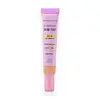
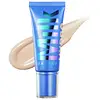
Revolution Beauty Superdewy Skin Tint SPF 30 Versus Milk Makeup Hydro Grip 12-Hour Hydrating Gel Skin Tint


What's inside
What's inside
 Key Ingredients
Benefits
Concerns
Ingredients Side-by-side
Water
Skin ConditioningIsononyl Isononanoate
EmollientZinc Oxide
Cosmetic Colorant


Glycerin
Humectant


C9-12 Alkane
SolventCaprylic/Capric Triglyceride
Masking
Butyloctyl Salicylate
Skin Conditioning
Polyglyceryl-6 Polyricinoleate
Emulsifying

Coco-Caprylate/Caprate
Emollient
Polyglyceryl-2 Isostearate
Emulsifying
Triheptanoin
Skin ConditioningSodium Chloride
MaskingDisteardimonium Hectorite
StabilisingPhenoxyethanol
Preservative
Stearoyl Glutamic Acid
CleansingEthylhexylglycerin
Skin ConditioningDilinoleic Acid/Butanediol Copolymer
Polyhydroxystearic Acid
Emulsifying
Isopropyl Titanium Triisostearate
Emollient
Pongamia Pinnata Seed Extract
Skin ConditioningTetrahexyldecyl Ascorbate
Antioxidant





Saccharomyces/Xylinum/Black Tea Ferment
Skin Conditioning
Sodium Phytate
ChelatingCastor Oil/Ipdi Copolymer

Tocopherol
Antioxidant


Pentylene Glycol
Skin Conditioning
Potassium Sorbate
Preservative
Sodium Benzoate
Masking
Sodium Ferrocyanide
Arginine/Lysine Polypeptide
Skin Conditioning
CI 77891
Cosmetic ColorantCI 77492
Cosmetic ColorantCI 77491
Cosmetic ColorantCI 77499
Cosmetic ColorantWater, Isononyl Isononanoate, Zinc Oxide, Glycerin, C9-12 Alkane, Caprylic/Capric Triglyceride, Butyloctyl Salicylate, Polyglyceryl-6 Polyricinoleate, Coco-Caprylate/Caprate, Polyglyceryl-2 Isostearate, Triheptanoin, Sodium Chloride, Disteardimonium Hectorite, Phenoxyethanol, Stearoyl Glutamic Acid, Ethylhexylglycerin, Dilinoleic Acid/Butanediol Copolymer, Polyhydroxystearic Acid, Isopropyl Titanium Triisostearate, Pongamia Pinnata Seed Extract, Tetrahexyldecyl Ascorbate, Saccharomyces/Xylinum/Black Tea Ferment, Sodium Phytate, Castor Oil/Ipdi Copolymer, Tocopherol, Pentylene Glycol, Potassium Sorbate, Sodium Benzoate, Sodium Ferrocyanide, Arginine/Lysine Polypeptide, CI 77891, CI 77492, CI 77491, CI 77499
Water
Skin ConditioningIsononyl Isononanoate
EmollientPropanediol
Solvent
Isostearyl Neopentanoate
Emollient

Glycerin
Humectant
Octyldodecyl Stearoyl Stearate
Emollient
Polyglyceryl-2 Dipolyhydroxystearate
Skin Conditioning
Saccharomyces/Xylinum/Black Tea Ferment
Skin Conditioning
Hydrogenated Ethylhexyl Olivate
EmollientCoco-Caprylate/Caprate
Emollient
Dicaprylyl Ether
Emollient
Polyglyceryl-6 Polyricinoleate
Emulsifying
Squalane
Emollient
Polyglyceryl-3 Diisostearate
Emulsifying
Dimer Dilinoleyl Dimer Dilinoleate
EmollientPullulan
Niacinamide
Smoothing

Sodium Hyaluronate
Humectant
Cannabis Sativa Seed Oil
Emollient
Agave Tequilana Leaf Extract
AstringentButyrospermum Parkii Butter
Skin Conditioning
Helianthus Annuus Seed Oil
Emollient
Hydrogenated Olive Oil Unsaponifiables
Emollient
Tocopherol
Antioxidant
Pentaerythrityl Tetra-Di-T-Butyl Hydroxyhydrocinnamate
Antioxidant
Lecithin
Emollient
Dipalmitoyl Hydroxyproline
Skin Conditioning
Magnesium Sulfate
Disteardimonium Hectorite
StabilisingPropylene Carbonate
SolventHydrogenated Styrene/Methylstyrene/Indene Copolymer
Lauroyl Lysine
Skin Conditioning
Stearic Acid
Cleansing
Zinc Stearate
Cosmetic ColorantAllantoin
Skin Conditioning
Distarch Phosphate
AbsorbentPalmitic Acid
Emollient
Maltose
MaskingPotassium Sorbate
Preservative
Sodium Dehydroacetate
Preservative
Sodium Benzoate
Masking
Phenoxyethanol
Preservative
CI 77891
Cosmetic ColorantCI 77491
Cosmetic ColorantCI 77492
Cosmetic ColorantCI 77499
Cosmetic ColorantWater, Isononyl Isononanoate, Propanediol, Isostearyl Neopentanoate, Glycerin, Octyldodecyl Stearoyl Stearate, Polyglyceryl-2 Dipolyhydroxystearate, Saccharomyces/Xylinum/Black Tea Ferment, Hydrogenated Ethylhexyl Olivate, Coco-Caprylate/Caprate, Dicaprylyl Ether, Polyglyceryl-6 Polyricinoleate, Squalane, Polyglyceryl-3 Diisostearate, Dimer Dilinoleyl Dimer Dilinoleate, Pullulan, Niacinamide, Sodium Hyaluronate, Cannabis Sativa Seed Oil, Agave Tequilana Leaf Extract, Butyrospermum Parkii Butter, Helianthus Annuus Seed Oil, Hydrogenated Olive Oil Unsaponifiables, Tocopherol, Pentaerythrityl Tetra-Di-T-Butyl Hydroxyhydrocinnamate, Lecithin, Dipalmitoyl Hydroxyproline, Magnesium Sulfate, Disteardimonium Hectorite, Propylene Carbonate, Hydrogenated Styrene/Methylstyrene/Indene Copolymer, Lauroyl Lysine, Stearic Acid, Zinc Stearate, Allantoin, Distarch Phosphate, Palmitic Acid, Maltose, Potassium Sorbate, Sodium Dehydroacetate, Sodium Benzoate, Phenoxyethanol, CI 77891, CI 77491, CI 77492, CI 77499
Reviews
Ingredients Explained
These ingredients are found in both products.
Ingredients higher up in an ingredient list are typically present in a larger amount.
Ci 77491 is also hydrated iron III oxide. It's sole purpose is to give a red/pink hue to products.
Iron III oxides are classified as inorganic chemicals for coloring.
Synthetically created Ci 77491 is considered safer than those naturally found. This is because the synthetically created version may contain less impurities. Iron oxides are generally non-toxic and non-allergenic.
Learn more about CI 77491CI 77492 is also hydrated iron III oxide. It's sole purpose is to give a yellow hue to products.
Iron III oxides are classified as inorganic chemicals for coloring.
Synthetically created CI 77492 is considered safer than those naturally found. This is because the synthetically created version may contain less impurities. Iron oxides are generally non-toxic and non-allergenic.
Learn more about CI 77492Ci 77499 is also hydrated iron III oxide. It is created from mixing red and black iron oxides. This helps give shades of darkness to a product.
Iron III oxides are classified as inorganic chemicals for coloring.
Ci 77891 is a white pigment from Titanium dioxide. It is naturally found in minerals such as rutile and ilmenite.
It's main function is to add a white color to cosmetics. It can also be mixed with other colors to create different shades.
Ci 77891 is commonly found in sunscreens due to its ability to block UV rays.
Learn more about CI 77891Coco-Caprylate/Caprate is a lightweight ester created from coconut oil fatty acids, caprylic acid, and capric acid.
It is an emollient that helps soften skin and reduce transepidermal water loss (TEWL). What sets it apart from heavier emollients is its ultralight, non-greasy feel.
Once applied, this ingredient dries down quickly and leaves a dry, silky finish behind. This also helps improve spreadability and texture.
This ingredient has an excellent safety-record and is non-irritating.
Typical concentrations for cosmetics range from 0.5-62%.
Research on Malassezia growth found no growth on fatty acid esters with chain lengths shorter than 12 carbons (it prefers C11-24).
Since Coco-Caprylate/Caprate is built on C8 and C10 fatty acids, it is out of the range that Malassezia metabolizes, and therefore safe for fungal acne.
Learn more about Coco-Caprylate/CaprateDisteardimonium Hectorite comes from the clay mineral named hectorite. It is used to add thickness to a product.
It can also help stabilize a product by helping to disperse other ingredients.
Hectorite is a rare, white clay mineral.
Learn more about Disteardimonium HectoriteGlycerin (or glycerol) is a compound naturally found in your skin. It's a powerhouse humectant that pulls water into the stratum corneum.
Topically, glycerin does several things at once:
Your skin makes glycerin on its own (mostly from sebaceous oil breakdown) and shuttles it to your outermost layer of skin, or your epidermis, via aquaporin-3.
Aquaporin-3 is a transporter that is essential for normal skin hydration, elasticity, and repair. Interestingly, mice lacking in AQP3 have dry and less elastic skin that can be fully corrected with glycerin.
This ingredient is non-irritating, plays well with almost every ingredient, and works across all skin types. Typical use is anywhere between 3-10% but can go up to 79% in some leave-on products.
Just know very high concentrations (>40%) can feel tacky in low humidity.
Glycerin is the name for this ingredient in American English. British English uses Glycerol/Glycerine.
Learn more about GlycerinIsononyl Isononanoate is a synthetic skin-conditioner and texture enhancer. It is created from nonanoic acid, a fatty acid found in cocoa and lavender oil.
As an emollient, Isononyl Isononanoate helps keep your skin soft and smooth. This is because emollients create a barrier on the skin to trap moisture in.
Isononyl Isononanoate helps give products a velvet feel and improves spreadability.
Learn more about Isononyl IsononanoatePhenoxyethanol is one of the most widely used preservatives in skincare (and for good reason!).
It has a large spectrum of antimicrobial activity and especially effective bacteria, yeast, and mold while only having a weak effect on your skin's natural microbiome.
On a cellular level, it disrupts the cell membranes of microbes by poking holes that make the cell leak. This shuts down the chemical reactions the microbe needs to make energy so it can no longer survive.
Another perk of this ingredient is that it stays functional across a wide pH range (3-10).
You'll often see it paired with boosters like Ethylhexylglycerin; one study showed that a 1:9 ratio of Ethylhexylglycerin to Phenoxyethanol damages bacterial membranes as effectively as doubling the Phenoxyethanol concentration on its own.
Typical use concentrations range from 0.3-1% depending on the formula, and this ingredient is capped at 1% int the EU.
Safety-wise, the fear mongering does not hold up to the evidence. The EU's Scientific Committee on Consumer Safety and FDA consider it safe as a preservative at up to 1%, including for children of all ages.
Adverse systemic effects only showed up in animal studies at exposures roughly 200x higher than what people get from cosmetics. And despite its very widespread use, this ingredient is a rare sensitizer and allergic reactions are uncommon.
Learn more about PhenoxyethanolPolyglyceryl-6 Polyricinoleate isn't fungal acne safe.
Potassium Sorbate is a preservative used to prevent yeast and mold in products. It is commonly found in both cosmetic and food products.
This ingredient comes from potassium salt derived from sorbic acid. Sorbic acid is a natural antibiotic and effective against fungus.
Both potassium sorbate and sorbic acid can be found in baked goods, cheeses, dried meats, dried fruit, ice cream, pickles, wine, yogurt, and more.
You'll often find this ingredient used with other preservatives.
Learn more about Potassium SorbateThis combination of bacteria + black tea + fermentation = kombucha.
According to a manufacturer, this ingredient helps boost radiance, smoothness, and thickens skin.
You can read about the skin benefits of the individual parts here:
Saccharomyces
Black tea
Sodium Benzoate is a preservative. It's used in both cosmetic and food products to inhibit the growth of mold and bacteria. It is typically produced synthetically.
Both the US FDA and EU Health Committee have approved the use of sodium benzoate. In the US, levels of 0.1% (of the total product) are allowed.
Sodium benzoate works as a preservative by inhibiting the growth of bacteria inside of cells. It prevents the cell from fermenting a type of sugar using an enzyme called phosphofructokinase.
It is the salt of benzoic acid. Foods containing sodium benzoate include soda, salad dressings, condiments, fruit juices, wines, and snack foods.
Studies for using ascorbic acid and sodium benzoate in cosmetics are lacking, especially in skincare routines with multiple steps.
We always recommend speaking with a professional, such as a dermatologist, if you have any concerns.
Learn more about Sodium BenzoateTocopherol is a fat-soluble antioxidant known as Vitamin E.
You'll find this ingredient in the vast majority of skincare (for good reason). It works to neutralize free radicals, or unstable molecules generated by UV exposure, pollution, and other environmental stressors, before they can cause oxidative damage to your skin cells.
Topically applied tocopherol has been shown to protect against UV damage by ramping up the skin's own natural defense enzymes.
It also acts as a skin conditioning agent; some studies show that regular topical use can improve the skin's water-binding capacity over 2-4 weeks.
This ingredient is especially loved for being a team player. When combined with Vitamin C, the photoprotective effect of both ingredients roughly doubles and the combo also helps reduce UV-induced DNA damage.
This ingredient has some brightening potential but it's more of a prevention ingredient than spot-fader. Cell studies show it can slow down melanin production but it's worth noting that it's not the most powerful brightener out there.
In formulations, it also serves as a stabilizer that helps protect other oxidation-prone ingredients from degrading.
Concentrations usually range from 0.1-1% in most leave-on products.
Learn more about TocopherolWater. It's the most common cosmetic ingredient of all. You'll usually see it at the top of ingredient lists, meaning that it makes up the largest part of the product.
So why is it so popular? Water most often acts as a solvent - this means that it helps dissolve other ingredients into the formulation.
You'll also recognize water as that liquid we all need to stay alive. If you see this, drink a glass of water. Remember to stay hydrated!
Learn more about Water

