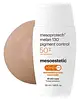
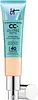
Mesoestetic Mesoprotech Melan 130 Pigment Control SPF 50+ Versus IT Cosmetics CC+ Cream Oil-Free Matte with SPF 40


What's inside
What's inside
 Key Ingredients
Benefits
Concerns
Ingredients Side-by-side
Water
Skin ConditioningDibutyl Adipate
EmollientOctocrylene
UV Absorber



Cyclopentasiloxane
Emollient
Homosalate
Skin Conditioning
Bis-Ethylhexyloxyphenol Methoxyphenyl Triazine
Skin Conditioning
Alcohol
Antimicrobial


Butyl Methoxydibenzoylmethane
UV Absorber
Titanium Dioxide
Cosmetic Colorant
Methylene Bis-Benzotriazolyl Tetramethylbutylphenol
UV Filter
Cyclohexasiloxane
Emollient
PEG-30 Dipolyhydroxystearate
Emulsifying
Polysilicone-15
UV Filter
Styrene
Perfuming
PEG-10 Dimethicone
Skin Conditioning
Silica
Abrasive


Bis-Ethylhexyl Hydroxydimethoxy Benzylmalonate
Antioxidant
Polyamide-5
Skin ConditioningPotassium Azeloyl Diglycinate
Skin Conditioning



Jojoba Esters
Emollient
Hexyl Laurate
Emollient
Helianthus Annuus Seed Oil
Emollient

Dimethicone
Emollient
Ethylhexylglycerin
Skin ConditioningAcacia Decurrens Flower Wax
Emollient
Polyglycerin-3
Humectant
Polyamide-3
Cetyl PEG/PPG-10/1 Dimethicone
Emulsifying
Polyglyceryl-4 Isostearate
Emulsifying
Sodium Chloride
MaskingVp/Hexadecene Copolymer
Decyl Glucoside
Cleansing
Disteardimonium Hectorite
StabilisingDisodium EDTA
PEG-12 Allyl Ether
Hydrogenated Lecithin
Emulsifying
Propylene Glycol
Humectant
Xanthan Gum
EmulsifyingPentaerythrityl Tetra-Di-T-Butyl Hydroxyhydrocinnamate
Antioxidant
Phenoxyethanol
Preservative
Parfum
Masking
CI 77492
Cosmetic ColorantCI 77491
Cosmetic ColorantCI 77499
Cosmetic ColorantWater, Dibutyl Adipate, Octocrylene, Cyclopentasiloxane, Homosalate, Bis-Ethylhexyloxyphenol Methoxyphenyl Triazine, Alcohol, Butyl Methoxydibenzoylmethane, Titanium Dioxide, Methylene Bis-Benzotriazolyl Tetramethylbutylphenol, Cyclohexasiloxane, PEG-30 Dipolyhydroxystearate, Polysilicone-15, Styrene, PEG-10 Dimethicone, Silica, Bis-Ethylhexyl Hydroxydimethoxy Benzylmalonate, Polyamide-5, Potassium Azeloyl Diglycinate, Jojoba Esters, Hexyl Laurate, Helianthus Annuus Seed Oil, Dimethicone, Ethylhexylglycerin, Acacia Decurrens Flower Wax, Polyglycerin-3, Polyamide-3, Cetyl PEG/PPG-10/1 Dimethicone, Polyglyceryl-4 Isostearate, Sodium Chloride, Vp/Hexadecene Copolymer, Decyl Glucoside, Disteardimonium Hectorite, Disodium EDTA, PEG-12 Allyl Ether, Hydrogenated Lecithin, Propylene Glycol, Xanthan Gum, Pentaerythrityl Tetra-Di-T-Butyl Hydroxyhydrocinnamate, Phenoxyethanol, Parfum, CI 77492, CI 77491, CI 77499
Water
Skin ConditioningDimethicone
Emollient
Butylene Glycol Dicaprylate/Dicaprate
EmollientButylene Glycol
Humectant
Titanium Dioxide
Cosmetic Colorant
Zinc Oxide
Cosmetic Colorant
Cyclopentasiloxane
Emollient
Dimethicone/Vinyl Dimethicone Crosspolymer
Skin Conditioning
Butyloctyl Salicylate
Skin Conditioning
Cetyl PEG/PPG-10/1 Dimethicone
Emulsifying
Snail Secretion Filtrate
Skin Conditioning
Sodium Chloride
MaskingBis-Diglyceryl Polyacyladipate-2
Emollient
Aluminum Hydroxide
EmollientStearic Acid
Cleansing
Disteardimonium Hectorite
StabilisingSorbitan Isostearate
Emulsifying
Polyglyceryl-4 Isostearate
Emulsifying
Hexyl Laurate
Emollient
Triethyl Citrate
Masking
Triethoxycaprylylsilane
Ethyl Hexanediol
SolventSodium Benzoate
Masking
Potassium Sorbate
Preservative
Polymethylsilsesquioxane
Tocopheryl Acetate
Antioxidant

Phenoxyethanol
Preservative
Disodium EDTA
Canadian Colloidal Clay
Skin ConditioningMoroccan Lava Clay
Abrasive
Avena Sativa Kernel Extract
Abrasive
Glycerin
Humectant
Niacinamide
Smoothing



Curcuma Longa Root Extract
Masking
Sulfur
Antiseborrhoeic
Cholesterol
Emollient
Hydrolyzed Collagen
Emollient
Anthemis Nobilis Flower Water
Masking
Persea Gratissima Fruit Extract
EmollientMaltodextrin
Absorbent
1,2-Hexanediol
Skin Conditioning
Vitis Vinifera Seed Extract
Antimicrobial
Camellia Sinensis Leaf Extract
Antimicrobial
Salix Alba Bark Extract
Astringent
Magnolia Kobus Bark Extract
Skin ConditioningChrysanthemum Indicum Flower Extract
Skin Conditioning
Pentaerythrityl Tetra-Di-T-Butyl Hydroxyhydrocinnamate
Antioxidant
Glycine Soja Sprout Extract
EmollientSerica Extract
Skin ConditioningSilk Extract
Skin ConditioningHydrolyzed Silk
Humectant
Aloe Barbadensis Leaf Extract
Emollient
Citric Acid
Buffering
Olea Europaea Leaf Extract
Perfuming
Artemisia Princeps Leaf Extract
Skin ConditioningCinnamomum Cassia Bark Extract
Masking
Pueraria Lobata Root Extract
HumectantDiospyros Kaki Leaf Extract
Skin Protecting
Morus Alba Fruit Extract
Antioxidant
Steareth-20
CleansingMelaleuca Alternifolia Flower/Leaf/Stem Extract
Skin ConditioningPunica Granatum Fruit Juice
MaskingCharcoal Powder
Abrasive
Lactobacillus/Honeysuckle Flower/Licorice Root/Morus Alba Root/Pueraria Lobata Root/Schisandra Chinensis Fruit/Scutellaria Baicalensis Root/Sophora Japonica Flower Extract Ferment Filtrate
Skin ConditioningEthylhexylglycerin
Skin ConditioningChlorhexidine Digluconate
Antimicrobial
N-Hydroxysuccinimide
Skin ConditioningSodium Citrate
BufferingPalmitoyl Tripeptide-1
Skin Conditioning
Hydrolyzed Hyaluronic Acid
Humectant
Chrysin
Skin ConditioningPalmitoyl Tetrapeptide-7
Skin Conditioning
Biotin
AntiseborrhoeicCI 77891
Cosmetic ColorantCI 77491
Cosmetic ColorantCI 77492
Cosmetic ColorantCI 77499
Cosmetic ColorantWater, Dimethicone, Butylene Glycol Dicaprylate/Dicaprate, Butylene Glycol, Titanium Dioxide, Zinc Oxide, Cyclopentasiloxane, Dimethicone/Vinyl Dimethicone Crosspolymer, Butyloctyl Salicylate, Cetyl PEG/PPG-10/1 Dimethicone, Snail Secretion Filtrate, Sodium Chloride, Bis-Diglyceryl Polyacyladipate-2, Aluminum Hydroxide, Stearic Acid, Disteardimonium Hectorite, Sorbitan Isostearate, Polyglyceryl-4 Isostearate, Hexyl Laurate, Triethyl Citrate, Triethoxycaprylylsilane, Ethyl Hexanediol, Sodium Benzoate, Potassium Sorbate, Polymethylsilsesquioxane, Tocopheryl Acetate, Phenoxyethanol, Disodium EDTA, Canadian Colloidal Clay, Moroccan Lava Clay, Avena Sativa Kernel Extract, Glycerin, Niacinamide, Curcuma Longa Root Extract, Sulfur, Cholesterol, Hydrolyzed Collagen, Anthemis Nobilis Flower Water, Persea Gratissima Fruit Extract, Maltodextrin, 1,2-Hexanediol, Vitis Vinifera Seed Extract, Camellia Sinensis Leaf Extract, Salix Alba Bark Extract, Magnolia Kobus Bark Extract, Chrysanthemum Indicum Flower Extract, Pentaerythrityl Tetra-Di-T-Butyl Hydroxyhydrocinnamate, Glycine Soja Sprout Extract, Serica Extract, Silk Extract, Hydrolyzed Silk, Aloe Barbadensis Leaf Extract, Citric Acid, Olea Europaea Leaf Extract, Artemisia Princeps Leaf Extract, Cinnamomum Cassia Bark Extract, Pueraria Lobata Root Extract, Diospyros Kaki Leaf Extract, Morus Alba Fruit Extract, Steareth-20, Melaleuca Alternifolia Flower/Leaf/Stem Extract, Punica Granatum Fruit Juice, Charcoal Powder, Lactobacillus/Honeysuckle Flower/Licorice Root/Morus Alba Root/Pueraria Lobata Root/Schisandra Chinensis Fruit/Scutellaria Baicalensis Root/Sophora Japonica Flower Extract Ferment Filtrate, Ethylhexylglycerin, Chlorhexidine Digluconate, N-Hydroxysuccinimide, Sodium Citrate, Palmitoyl Tripeptide-1, Hydrolyzed Hyaluronic Acid, Chrysin, Palmitoyl Tetrapeptide-7, Biotin, CI 77891, CI 77491, CI 77492, CI 77499
Reviews
Ingredients Explained
These ingredients are found in both products.
Ingredients higher up in an ingredient list are typically present in a larger amount.
This ingredient is a silicone-based emulsifer that helps the water and oil phases play nicely together.
It's pretty effective because one end of the molecule loves oil and the other one loves water.
Besides holding formulas together, it also leaves a silky and lightweight feel on skin without the greasiness. A manufacturer also claims it can help with the controlled release of active ingredients.
The CIR Expert Panel found this ingredient to not be sensitizing in concentrations up to 15% in human maximazation testing and dimethicone-based compounds were not comedogenic.
It has a high molecular weight well above 1,000 g/mol which means it limits meaningful skin penetration.
A 2019 study specifically tested this ingredient and found no observable Malassezia growth in its presence.
Learn more about Cetyl PEG/PPG-10/1 DimethiconeCi 77491 is also hydrated iron III oxide. It's sole purpose is to give a red/pink hue to products.
Iron III oxides are classified as inorganic chemicals for coloring.
Synthetically created Ci 77491 is considered safer than those naturally found. This is because the synthetically created version may contain less impurities. Iron oxides are generally non-toxic and non-allergenic.
Learn more about CI 77491CI 77492 is also hydrated iron III oxide. It's sole purpose is to give a yellow hue to products.
Iron III oxides are classified as inorganic chemicals for coloring.
Synthetically created CI 77492 is considered safer than those naturally found. This is because the synthetically created version may contain less impurities. Iron oxides are generally non-toxic and non-allergenic.
Learn more about CI 77492Ci 77499 is also hydrated iron III oxide. It is created from mixing red and black iron oxides. This helps give shades of darkness to a product.
Iron III oxides are classified as inorganic chemicals for coloring.
Cyclopentasiloxane (D5) is a lightweight silicone that mostly acts as an emollient and solvent in cosmetics. Its the reason your products feel silky, fast-spreading, and non-greasy.
Since D5 is volatile, it does its thing and then evaporates off the skin quickly.
The safety profile of this ingredient is reassuring; the US CIR Expert Panel concluded D5 is safe as used in cosmetics and Health Canada concluded that D5 is not harmful to human health or the environment as currently used in cosmetics
There's a study that people mention about D5 in a rat study showing tumors. This study is related to long-term inhalation of high D5 levels.
Regulatory bodies have judged this study to be not applicable in topical skincare since skin absorption of D5 is very low and we're not really inhaling huge amounts of D5.
The only restriction for this ingredient is environmental. The European Chemicals Agency (ECHA) restricted D5 in wash-off cosmetics at or above 0.1% due to their persistence in water.
Learn more about CyclopentasiloxaneDimethicone is a type of synthetic silicone created from natural materials such as quartz. It is also known as polydimethylsiloxane.
What it does:
Dimethicone comes in different viscosities:
Depending on the viscosity, dimethicone has different properties.
Ingredients lists don't always show which type is used, so we recommend reaching out to the brand if you have questions about the viscosity.
This ingredient is unlikely to cause irritation because it does not get absorbed into skin. However, people with silicone allergies should be careful about using this ingredient.
Note: Dimethicone may contribute to pilling. This is because it is not oil or water soluble, so pilling may occur when layered with products. When mixed with heavy oils in a formula, the outcome is also quite greasy.
Learn more about DimethiconeDisodium EDTA is a chelating agent. It grabs onto and deactivates metal ions that sneak into your products from water, packaging, or air.
This ingredient mainly works behind the scenes and helps with:
On top of that, this ingredient can counteract the effects of hard water by binding to the minerals in it.
One thing worth knowing is that Disodium EDTA has been shown to be a mild penetration enhancer. It can help other ingredients absorb into skin more effectively which can be a double-edged sword (great for actives, but can also make the active too strong if you have sensitive skin).
Clinical patch testing showed no significant skin irritation at typical use concentrations and minimal dermal absorption.
You'll most likely see this ingredient near the end of an ingredient list. It's typically found in concentrations less than 1%.
Learn more about Disodium EDTADisteardimonium Hectorite comes from the clay mineral named hectorite. It is used to add thickness to a product.
It can also help stabilize a product by helping to disperse other ingredients.
Hectorite is a rare, white clay mineral.
Learn more about Disteardimonium HectoriteEthylhexylglycerin is created from glycerin. It is a multitasker ingredient that:
The CIR Expert Panel found minimal skin absorption or sensitization of any kind in a safety assessment. Though this ingredient is considered well-tolerated, a small number of cases of allergic dermatitis have been published since 2002. Just be sure to patch test if you are unsure.
Industry-reported use ranges from 8% in rinse-off products and 2% in leave-on formulations.
Learn more about EthylhexylglycerinHexyl Laurate isn't fungal acne safe.
Pentaerythrityl Tetra-Di-T-Butyl Hydroxyhydrocinnamate (long name, huh?) is a synthetic antioxidant.
It is used to help stabilize other antioxidants or prevent the color from changing in a product.
As an antioxidant, it helps fight free-radical molecules. Free-radical molecules are capable of damaging our cells and other genetic material. Thus, antioxidants may reduce the signs of aging.
This ingredient is oil-soluble.
Learn more about Pentaerythrityl Tetra-Di-T-Butyl HydroxyhydrocinnamatePhenoxyethanol is a preservative that has germicide, antimicrobial, and aromatic properties. Studies show that phenoxyethanol can prevent microbial growth. By itself, it has a scent that is similar to that of a rose.
It's often used in formulations along with Caprylyl Glycol to preserve the shelf life of products.
Polyglyceryl-4 Isostearate is a plant-derived, PEG-free emulsifier.
It's made by hooking isostearic acid onto a chain of glycerin units to give it a water-loving "head" and oil-loving "tail". This allows it to keep the oil and water mixed in a formula.
The highest reported concentration is about 24% in eye makeup but most suppliers recommend a level below 10%.
It has a clean track record for safety and found to be non-irritating.
Because it is an ester of a C18 fatty acid, Malassezia can potentially metabolize it (it sits in the C11-24 range that Malassezia likes). Therefore, this ingredient may not be fungal acne safe.
Learn more about Polyglyceryl-4 IsostearateChances are, you eat sodium chloride every day. Sodium Chloride is also known as table salt. This ingredient has many purposes in skincare: thickener, emulsifier, and exfoliator.
You'll most likely find this ingredient in cleansers where it is used to create a gel-like texture. As an emulsifier, it also prevents ingredients from separating.
You might see people debate whether Sodium Chloride is comedogenic, but there actually haven't been any comedogenic tests done on it. Either way, the overall formulation of a product matters a lot more than any single ingredient.
You might see this ingredient used in scrubs as a primary exfoliating ingredient.
Learn more about Sodium ChlorideTitanium dioxide is a mineral UV filter widely used in sunscreens and cosmetics.
It is one of only two UV filters officially classified as “mineral” by regulatory agencies, the other being zinc oxide.
Titanium dioxide provides broad-spectrum protection mostly in the UVB and UVAII range, with some protection in the UVAI range.
While its UVA protection isn’t as strong as zinc oxide’s, the difference is minor.
A common myth is that mineral UV filters reflect UV light. However, modern research shows titanium dioxide absorbs UV radiation like chemical filters (~95% absorption & 5% reflection).
Thanks to its non-irritating nature, titanium dioxide is suitable for sensitive, acne-prone, or redness-prone skin. It is unlikely to cause "eye sting" like other sunscreen ingredients.
A major drawback of this ingredient is its white cast and thick texture. This is why mineral sunscreens often leave a white cast and are less cosmetically elegant than chemical/hybrid sunscreens.
To improve white cast and spreadability, micronized or nano-sized titanium dioxide is often used.
There are ongoing concerns surrounding nano-titanium oxide's impact on marine ecosystems.
There is no conclusive evidence that any form of titanium oxide (or any other sunscreen ingredients) will cause harm to marine ecosystems or coral reefs. The science is still developing but many consumers are keeping a close eye on this issue.
Please note, many destinations have reef-safety sunscreen rules. For instance, the U.S. Virgin Islands advises all visitors to use non-nano mineral sunscreens.
Nano mineral sunscreens once raised safety concerns about absorption into skin.
Extensive research has shown that they do not penetrate healthy or damaged skin; they remain safely on the surface and the top layer of dead skin (stratum corneum).
You'll likely find titanium dioxide bundled with alumina, silica, or dimethicone. These ingredients help make titanium dioxide highly photostable; this prevents it from interacting with other formula components under UV light.
Learn more about Titanium DioxideWater. It's the most common cosmetic ingredient of all. You'll usually see it at the top of ingredient lists, meaning that it makes up the largest part of the product.
So why is it so popular? Water most often acts as a solvent - this means that it helps dissolve other ingredients into the formulation.
You'll also recognize water as that liquid we all need to stay alive. If you see this, drink a glass of water. Remember to stay hydrated!
Learn more about Water
