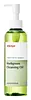
This oil-based makeup remover is made to dissolve makeup, sunscreen, and daily buildup.
This oil-based makeup remover is made to dissolve makeup, sunscreen, and daily buildup.

What's inside
What's inside
 Key Ingredients
Benefits
Concerns
Ingredients Side-by-side
Glycine Soja Oil
Emollient








Sorbeth-30 Tetraoleate
Emulsifying
Isoamyl Laurate
Emollient
Caprylic/Capric Triglyceride
Masking

Camellia Sinensis Leaf Oil
Antioxidant
Olea Europaea Fruit Oil
Masking
Vitis Vinifera Seed Oil
Emollient
Artemisia Vulgaris Oil
Perfuming

Salvia Officinalis Oil
Masking
Simmondsia Chinensis Seed Oil
Emollient
Glyceryl Caprylate
EmollientPrunus Amygdalus Dulcis Oil
Skin Conditioning
Moringa Oleifera Seed Oil
Emollient
Melaleuca Alternifolia Leaf Oil
Antioxidant

Eucalyptus Globulus Leaf Oil
Perfuming
Rosmarinus Officinalis Leaf Oil
Masking
Lavandula Angustifolia Oil
Masking
Tocopherol
Antioxidant


Camellia Sinensis Leaf Extract
Antimicrobial
Camellia Sinensis Leaf Water
Masking
Artemisia Vulgaris Extract
Skin Conditioning
Carica Papaya Fruit Extract
Skin ConditioningPogostemon Cablin Leaf Oil
Masking
Olibanum
MaskingGlycine Soja Oil, Sorbeth-30 Tetraoleate, Isoamyl Laurate, Caprylic/Capric Triglyceride, Camellia Sinensis Leaf Oil, Olea Europaea Fruit Oil, Vitis Vinifera Seed Oil, Artemisia Vulgaris Oil, Salvia Officinalis Oil, Simmondsia Chinensis Seed Oil, Glyceryl Caprylate, Prunus Amygdalus Dulcis Oil, Moringa Oleifera Seed Oil, Melaleuca Alternifolia Leaf Oil, Eucalyptus Globulus Leaf Oil, Rosmarinus Officinalis Leaf Oil, Lavandula Angustifolia Oil, Tocopherol, Camellia Sinensis Leaf Extract, Camellia Sinensis Leaf Water, Artemisia Vulgaris Extract, Carica Papaya Fruit Extract, Pogostemon Cablin Leaf Oil, Olibanum
Zea Mays Germ Oil
Emollient
Ethylhexyl Palmitate
Emollient
Caprylic/Capric Triglyceride
Masking
Cetyl Ethylhexanoate
EmollientSorbeth-30 Tetraoleate
Emulsifying
Sorbitan Sesquioleate
Emulsifying
Vitis Vinifera Fruit Extract
Skin ConditioningPrunus Mume Fruit Extract
Humectant
Malus Domestica Fruit Extract
Antioxidant
Carica Papaya Fruit Extract
Skin ConditioningDiospyros Kaki Leaf Extract
Skin Protecting
Houttuynia Cordata Extract
Skin Conditioning
Carthamus Tinctorius Flower Extract
Skin ConditioningCoffea Arabica Seed Extract
Masking
Polygonum Cuspidatum Root Extract
Antioxidant
Camellia Sinensis Leaf Extract
Antimicrobial
Castanea Crenata Shell Extract
Skin ConditioningZanthoxylum Piperitum Fruit Extract
Skin ConditioningOlea Europaea Fruit Oil
Masking
Abies Sibirica Oil
Masking
Rosmarinus Officinalis Leaf Oil
Masking
Salvia Sclarea Oil
Masking
Pelargonium Graveolens Flower Oil
Masking
Eugenia Caryophyllus Leaf Oil
Masking
Pogostemon Cablin Leaf Oil
Masking
Chamomilla Recutita Flower Oil
Masking
Juniperus Mexicana Oil
Masking
Anthemis Nobilis Flower Oil
Masking
Hydrogenated Lecithin
Emulsifying
Sodium Hyaluronate
Humectant
1,2-Hexanediol
Skin Conditioning
Pentaerythrityl Tetra-Di-T-Butyl Hydroxyhydrocinnamate
Antioxidant
Water
Skin ConditioningSuccinic Acid
BufferingPanthenol
Skin Conditioning
Butylene Glycol
Humectant
Glyceryl Glucoside
Humectant
Ceramide NP
Skin Conditioning
Dipropylene Glycol
HumectantGlycerin
Humectant
Glyceryl Stearate
Emollient
Ceramide As
Skin Conditioning
Ceramide AP
Skin Conditioning
Ceramide Ns
Skin Conditioning
Cholesterol
Emollient
Dimethylsilanol Hyaluronate
Humectant
Hydrolyzed Sodium Hyaluronate
Skin Conditioning
Hydrolyzed Hyaluronic Acid
Humectant
Ethylhexylglycerin
Skin ConditioningPotassium Hyaluronate
Skin ConditioningHyaluronic Acid
Humectant
Sodium Hyaluronate Crosspolymer
Humectant
Hydroxypropyltrimonium Hyaluronate
Sodium Hyaluronate Dimethylsilanol
HumectantSodium Acetylated Hyaluronate
Humectant
Ceramide EOP
Skin Conditioning
Zea Mays Germ Oil, Ethylhexyl Palmitate, Caprylic/Capric Triglyceride, Cetyl Ethylhexanoate, Sorbeth-30 Tetraoleate, Sorbitan Sesquioleate, Vitis Vinifera Fruit Extract, Prunus Mume Fruit Extract, Malus Domestica Fruit Extract, Carica Papaya Fruit Extract, Diospyros Kaki Leaf Extract, Houttuynia Cordata Extract, Carthamus Tinctorius Flower Extract, Coffea Arabica Seed Extract, Polygonum Cuspidatum Root Extract, Camellia Sinensis Leaf Extract, Castanea Crenata Shell Extract, Zanthoxylum Piperitum Fruit Extract, Olea Europaea Fruit Oil, Abies Sibirica Oil, Rosmarinus Officinalis Leaf Oil, Salvia Sclarea Oil, Pelargonium Graveolens Flower Oil, Eugenia Caryophyllus Leaf Oil, Pogostemon Cablin Leaf Oil, Chamomilla Recutita Flower Oil, Juniperus Mexicana Oil, Anthemis Nobilis Flower Oil, Hydrogenated Lecithin, Sodium Hyaluronate, 1,2-Hexanediol, Pentaerythrityl Tetra-Di-T-Butyl Hydroxyhydrocinnamate, Water, Succinic Acid, Panthenol, Butylene Glycol, Glyceryl Glucoside, Ceramide NP, Dipropylene Glycol, Glycerin, Glyceryl Stearate, Ceramide As, Ceramide AP, Ceramide Ns, Cholesterol, Dimethylsilanol Hyaluronate, Hydrolyzed Sodium Hyaluronate, Hydrolyzed Hyaluronic Acid, Ethylhexylglycerin, Potassium Hyaluronate, Hyaluronic Acid, Sodium Hyaluronate Crosspolymer, Hydroxypropyltrimonium Hyaluronate, Sodium Hyaluronate Dimethylsilanol, Sodium Acetylated Hyaluronate, Ceramide EOP
Reviews
Ingredients Explained
These ingredients are found in both products.
Ingredients higher up in an ingredient list are typically present in a larger amount.
Camellia Sinensis Leaf Extract (tea extract) is one of the most well-researched plant extracts in skincare with an impressive resume.
Black tea, green tea, and oolong tea are all harvested from the Camellia Sinensis plant.
Studies show green tea extract and its catechins (like epigallocatechin gallate (EGCG)) help your skin cells product energy more efficiently and reducing the number of free-radicals that can damage your skin from the inside.
In lab-grown skin models, this translated to younger, healthier, and stronger skin.
There's also good sun protection data; researchers saw less DNA damage and redness on human skin when green tea was applied before UVB exposure. And the more they applied, the better the protection.
Needless to say, this ingredient shouldn't replace your sunscreen. But it is a great supportive ingredient that you can already find in many sunscreens and antioxidant serums.
A 2009 study found a 2% green tea lotion was effective for mild-to-moderate acne thanks to its anti-inflammatory and mild antimicrobial activity.
The quality of the extract matters a lot here:
Good extracts contain 50-90% catechins while lower quality ones are mostly there for marketing. We recommend reaching out to the brand if you have questions about the quality or source of their ingredients.
Human Repeated Insult Patch Testing showed no irritation or sensitization at use concentrations (0.86% in leave-on products and up to 30% as leaf water).
Learn more about Camellia Sinensis Leaf ExtractCaprylic/Capric Triglyceride (aka MCT Oil) is a lightweight emollient, solvent, and texture enhancer. It is considered a skin-softener by helping to prevent moisture loss.
Though it behaves like an oil, it is not technically one due to its chemical composition. One perk of this ingredient is that it is very stable, resistant to oxidation, and unlikely to go rancid.
In practice, that translates to a long shelf life and a consistently elegant skin feel.
While there is an assumption Caprylic Triglyceride can clog pores due to it being derived from coconut oil, there is no research supporting this. Just patch test if you have concerns.
Fractionated coconut oil and MCT Oil are both listed as Caprylic/Capric Triglyceride according to INCI. This is because INCI names are based on the ingredient’s final chemical composition and not its marketing name or source.
This ingredient is treated as the gold standard fungal acne safe oil. Even though it is coconut derived, the problematic lauric acid is stripped out.
This leaves just caprylic (C8) and capric (C10) acid. These chain lengths actually trend antifungal; a 2020 study found caprylic acid was enough to disrupt Malassezia furfur cell membrane, with a caprylic acid derivative damaging membrane structures at concentrations as low as 0.2%.
Learn more about Caprylic/Capric TriglycerideCarica Papaya Fruit Extract comes from the flesh of the papaya. It's a skin conditioning agent that carries a mix of bioactives like papain, beta-carotene, and vitamin C.
These bioactive compounds give it two main talking points:
1. Papain is a proteolytic enzyme that provides mild exfoliation, helping skin look smoother and more even.
2. The carotenoids and vitamin C provide some antioxidant activity.
It's pretty compatible with most ingredients, but just sure to space out enzyme products with strong acids/retinoids to avoid over-doing it.
Maximum reported concentration is around 0.1% and most leave-on products use just 0.05%. If you see higher figures like 5-10%, this is usually the pre-diluted material from raw extract suppliers.
This ingredient has an assuring safety record and there's a lack of clinical case reports of dermatitis from using it.
The only caveat is allergy: patch test if you have a papaya or latex-fruit allergy.
Learn more about Carica Papaya Fruit ExtractThis ingredient is also known as olive oil. It has been used in skincare for centuries and science largely backs up its reputation as a nourishing emollient.
The main components of olive oil are oleic acid (55-83%), linoleic acid (3.5-20%), and palmitic acid (7-20%). Oleic acid promotes skin regeneration and helps regulate inflammatory responses.
Squalene is also naturally present in olive oil and exhibits moisturizing and antioxidant properties.
The polyphenols in olive oil also show anti-aging promise; one clinical study found a measurable improvement in skin appearance after 30 days of topical serum use.
Just be aware that applying olive oil directly to skin can weaken the barrier and cause redness. One study with volunteers found even people without sensitive skin experienced a significant reduction in stratum corneum integrity and induced mild erythema.
It's best to use this ingredient as part of a carefully crafted formula (instead of putting it on skin directly from the bottle).
Because it has a 0-2 on the comedogenic scale, it is low risk for acne-prone skin. Just remember the overall formulation of a product matters more than a few ingredients with comedogenic ratings.
This ingredient may not be fungal acne safe because of the oleic and palmitic acid content. These fall within the C11-24 fatty acid range that the Malassezia yeast can metabolize to grow.
Overall, olive oil is a well-studied and nourishing skincare ingredient.
Learn more about Olea Europaea Fruit OilThis ingredient is also known as Patchouli oil. Its main role is to add a warm, earthy, and musky scent to products.
Patchouli exhibits slight antioxidant, antibacterial and antifungal activity from its patchoulol, beta-caryophyllene, pogostone content.
Like all essential oils, this ingredient is a known sensitizer at higher concentrations. This is because this oil also contains known skin-irritating fragrances, limonene and camphor. Limonene and camphor are both known EU allergens.
While patchouli oil holds FDA GRAS ("generally recognized as safe") status, it is typically used at low levels and subject to usage guidelines.
Those with sensitive skin should patch test before using.
Learn more about Pogostemon Cablin Leaf OilRosmarinus Officinalis Leaf Oil is an essential oil also known as rosemary essential oil. In skincare, it is a skin conditioning agent and also acts as a natural fragrance that gives products a fresh/herby smell.
The oil is a mix of over 100 volatile compounds with 1,8-cineole, α-pinene, camphor, and verbenone usually leading the pack.
Lab studies credit this oil with antioxidant, anti-inflammatory, and antimicrobial activity. Some research even show rosemary compounds calming acne-related inflammation.
The Cosmetic Ingredient Review (CIR) has concluded rosemary-derived ingredients to be safe when formulated to be nonsensitizing.
Since this is a fragrant essential oil, the main concern is for fragrance-sensitive folks.
Learn more about Rosmarinus Officinalis Leaf OilSorbeth-30 Tetraoleate is a surfactant and emulsifier.
This ingredient is a tetraester from oleic acid and polyethylene glycol ether of sorbitol.
As an emulsifier, it helps ingredients such as oil and water mix together. This allows the dirt and oils in your skin to be washed away.
One study found pumpkin oil containing Sorbeth-30 Tetraoleate helped hydrate the skin and did not cause any irritation.
Learn more about Sorbeth-30 Tetraoleate

