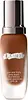
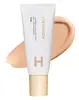
La Mer Soft Fluid Long Wear Foundation Broad Spectrum SPF 20 Versus Hourglass Cosmetics Veil Hydrating Skin Tint Foundation

What's inside
What's inside
 Key Ingredients
Benefits
Concerns
Ingredients Side-by-side
Ethylhexyl Methoxycinnamate 7.5%
UV Absorber


Titanium Dioxide 1.9%
Cosmetic Colorant
Cyclopentasiloxane
Emollient
Isododecane
EmollientDimethicone
Emollient
Phenyl Trimethicone
Skin Conditioning
Butylene Glycol
Humectant

Polymethyl Methacrylate

Polysilicone-11
Coco-Caprylate/Caprate
Emollient
PEG/PPG-18/18 Dimethicone
Emulsifying
Octyldodecyl Neopentanoate
EmollientSilica
Abrasive

Algae Extract
Emollient

Sesamum Indicum Seed Oil
Emollient


Medicago Sativa Seed Powder
Skin ConditioningHelianthus Annuus Seedcake
Abrasive
Prunus Amygdalus Dulcis Seed Meal
Abrasive
Eucalyptus Globulus Leaf Oil
Perfuming


Sodium Gluconate
ChelatingCopper Gluconate
Skin Conditioning
Calcium Gluconate
HumectantMagnesium Gluconate
Skin ConditioningZinc Gluconate
Skin Conditioning

Tocopheryl Succinate
Antioxidant
Niacin
SmoothingSesamum Indicum Seed Powder
Skin ConditioningPolyglyceryl-4 Isostearate
Emulsifying
Citrus Aurantifolia Peel Extract
Cleansing
Chondrus Crispus Extract
Skin Conditioning
Cucumis Sativus Fruit Extract
Emollient
Hordeum Vulgare Extract
EmollientMolasses Extract
Skin ConditioningChlorella Vulgaris Extract
Skin ConditioningGelidium Cartilagineum Extract
Skin ProtectingCorallina Officinalis Extract
Skin Conditioning
Saccharomyces Lysate Extract
Humectant
Silybum Marianum Extract
Skin Conditioning
Whey Protein
Skin ConditioningLaminaria Saccharina Extract
Skin Protecting
Codium Tomentosum Extract
Skin ProtectingSucrose
Humectant
Glycerin
Humectant
Cholesterol
Emollient
Eryngium Maritimum Extract
TonicLaminaria Digitata Extract
Skin Protecting
Glycine Soja Protein
EmulsifyingAcetyl Glucosamine
Skin Conditioning


Caffeine
Skin Conditioning
Sorbitol
Humectant
Sigesbeckia Orientalis Extract
Skin ConditioningTourmaline
Acetyl Hexapeptide-8
Humectant
Sodium Hyaluronate
Humectant
Hexyl Laurate
Emollient
Cetyl PEG/PPG-10/1 Dimethicone
Emulsifying
Disteardimonium Hectorite
StabilisingC12-16 Alcohols
EmollientMagnesium Aluminum Silicate
Absorbent
Trehalose
Humectant
Faex Extract
Skin ConditioningDimethicone Silylate
Propylene Glycol Diethylhexanoate
EmollientYeast Polysaccharides
Skin ConditioningCaprylyl Glycol
Emollient
Triethyl Citrate
Masking
Tetrahexyldecyl Ascorbate
Antioxidant

Stearic Acid
Cleansing
Palmitic Acid
Emollient
Hydrogenated Lecithin
Emulsifying
Methicone
Emollient
Propylene Glycol Dicaprate
EmollientTocopheryl Linoleate/Oleate
Antioxidant
Sodium Chloride
MaskingAluminum Hydroxide
EmollientHexylene Glycol
EmulsifyingTriethoxycaprylylsilane
Parfum
Masking
Alcohol Denat.
Antimicrobial

Disodium EDTA
ChelatingBHT
Antioxidant
Phenoxyethanol
Preservative
Mica
Cosmetic ColorantCI 77891
Cosmetic ColorantCI 77492
Cosmetic ColorantCI 77491
Cosmetic ColorantCI 77499
Cosmetic ColorantEthylhexyl Methoxycinnamate 7.5%, Titanium Dioxide 1.9%, Cyclopentasiloxane, Isododecane, Dimethicone, Phenyl Trimethicone, Butylene Glycol, Polymethyl Methacrylate, Polysilicone-11, Coco-Caprylate/Caprate, PEG/PPG-18/18 Dimethicone, Octyldodecyl Neopentanoate, Silica, Algae Extract, Sesamum Indicum Seed Oil, Medicago Sativa Seed Powder, Helianthus Annuus Seedcake, Prunus Amygdalus Dulcis Seed Meal, Eucalyptus Globulus Leaf Oil, Sodium Gluconate, Copper Gluconate, Calcium Gluconate, Magnesium Gluconate, Zinc Gluconate, Tocopheryl Succinate, Niacin, Sesamum Indicum Seed Powder, Polyglyceryl-4 Isostearate, Citrus Aurantifolia Peel Extract, Chondrus Crispus Extract, Cucumis Sativus Fruit Extract, Hordeum Vulgare Extract, Molasses Extract, Chlorella Vulgaris Extract, Gelidium Cartilagineum Extract, Corallina Officinalis Extract, Saccharomyces Lysate Extract, Silybum Marianum Extract, Whey Protein, Laminaria Saccharina Extract, Codium Tomentosum Extract, Sucrose, Glycerin, Cholesterol, Eryngium Maritimum Extract, Laminaria Digitata Extract, Glycine Soja Protein, Acetyl Glucosamine, Caffeine, Sorbitol, Sigesbeckia Orientalis Extract, Tourmaline, Acetyl Hexapeptide-8, Sodium Hyaluronate, Hexyl Laurate, Cetyl PEG/PPG-10/1 Dimethicone, Disteardimonium Hectorite, C12-16 Alcohols, Magnesium Aluminum Silicate, Trehalose, Faex Extract, Dimethicone Silylate, Propylene Glycol Diethylhexanoate, Yeast Polysaccharides, Caprylyl Glycol, Triethyl Citrate, Tetrahexyldecyl Ascorbate, Stearic Acid, Palmitic Acid, Hydrogenated Lecithin, Methicone, Propylene Glycol Dicaprate, Tocopheryl Linoleate/Oleate, Sodium Chloride, Aluminum Hydroxide, Hexylene Glycol, Triethoxycaprylylsilane, Parfum, Alcohol Denat., Disodium EDTA, BHT, Phenoxyethanol, Mica, CI 77891, CI 77492, CI 77491, CI 77499
Water
Skin ConditioningCaprylic/Capric Triglyceride
Masking
Glycerin
Humectant
Limnanthes Alba Seed Oil
Skin Conditioning
Propanediol
Solvent
Squalane
Emollient
C9-12 Alkane
SolventErythritol
Humectant
Dicaprylyl Ether
Emollient
Polyglyceryl-6 Polyricinoleate
Emulsifying
Octyldodecanol
Emollient
Disteardimonium Hectorite
StabilisingDistarch Phosphate
AbsorbentPhenoxyethanol
Preservative
Polyglyceryl-2 Isostearate
Emulsifying
Magnesium Sulfate
Zinc Stearate
Cosmetic ColorantSodium Benzoate
Masking
Sodium Dehydroacetate
Preservative
Butyrospermum Parkii Butter Extract
Skin Conditioning
Hydrogenated Lecithin
Emulsifying
Coco-Caprylate/Caprate
Emollient
Benzoic Acid
Masking
Propylene Carbonate
SolventSodium Hyaluronate
Humectant
Dehydroacetic Acid
Preservative
Lecithin
Emollient
Ethylhexylglycerin
Skin ConditioningTocopherol
Antioxidant
Ascorbyl Palmitate
Antioxidant
Nephelium Lappaceum Peel Extract
Skin ConditioningCitric Acid
Buffering
Stearic Acid
Cleansing
CI 77891
Cosmetic ColorantIron Oxides
Water, Caprylic/Capric Triglyceride, Glycerin, Limnanthes Alba Seed Oil, Propanediol, Squalane, C9-12 Alkane, Erythritol, Dicaprylyl Ether, Polyglyceryl-6 Polyricinoleate, Octyldodecanol, Disteardimonium Hectorite, Distarch Phosphate, Phenoxyethanol, Polyglyceryl-2 Isostearate, Magnesium Sulfate, Zinc Stearate, Sodium Benzoate, Sodium Dehydroacetate, Butyrospermum Parkii Butter Extract, Hydrogenated Lecithin, Coco-Caprylate/Caprate, Benzoic Acid, Propylene Carbonate, Sodium Hyaluronate, Dehydroacetic Acid, Lecithin, Ethylhexylglycerin, Tocopherol, Ascorbyl Palmitate, Nephelium Lappaceum Peel Extract, Citric Acid, Stearic Acid, CI 77891, Iron Oxides
Reviews
Ingredients Explained
These ingredients are found in both products.
Ingredients higher up in an ingredient list are typically present in a larger amount.
Ci 77891 is a white pigment from Titanium dioxide. It is naturally found in minerals such as rutile and ilmenite.
It's main function is to add a white color to cosmetics. It can also be mixed with other colors to create different shades.
Ci 77891 is commonly found in sunscreens due to its ability to block UV rays.
Learn more about CI 77891Coco-Caprylate/Caprate is a lightweight ester created from coconut oil fatty acids, caprylic acid, and capric acid.
It is an emollient that helps soften skin and reduce transepidermal water loss (TEWL). What sets it apart from heavier emollients is its ultralight, non-greasy feel.
Once applied, this ingredient dries down quickly and leaves a dry, silky finish behind. This also helps improve spreadability and texture.
This ingredient has an excellent safety-record and is non-irritating.
Typical concentrations for cosmetics range from 0.5-62%.
Research on Malassezia growth found no growth on fatty acid esters with chain lengths shorter than 12 carbons (it prefers C11-24).
Since Coco-Caprylate/Caprate is built on C8 and C10 fatty acids, it is out of the range that Malassezia metabolizes, and therefore safe for fungal acne.
Learn more about Coco-Caprylate/CaprateDisteardimonium Hectorite comes from the clay mineral named hectorite. It is used to add thickness to a product.
It can also help stabilize a product by helping to disperse other ingredients.
Hectorite is a rare, white clay mineral.
Learn more about Disteardimonium HectoriteGlycerin (or glycerol) is a compound naturally found in your skin. It's a powerhouse humectant that pulls water into the stratum corneum.
Topically, glycerin does several things at once:
Your skin makes glycerin on its own (mostly from sebaceous oil breakdown) and shuttles it to your outermost layer of skin, or your epidermis, via aquaporin-3.
Aquaporin-3 is a transporter that is essential for normal skin hydration, elasticity, and repair. Interestingly, mice lacking in AQP3 have dry and less elastic skin that can be fully corrected with glycerin.
This ingredient is non-irritating, plays well with almost every ingredient, and works across all skin types. Typical use is anywhere between 3-10% but can go up to 79% in some leave-on products.
Just know very high concentrations (>40%) can feel tacky in low humidity.
Glycerin is the name for this ingredient in American English. British English uses Glycerol/Glycerine.
Learn more about GlycerinHydrogenated Lecithin is a more stable version of lecithin.
It's made by taking lecithin (a phospholipid commonly found in soybeans and egg yolks) and hydrogenating it. This just means the unsaturated fatty acids are turned into saturated ones so they don't go bad as easily.
This ingredient is an emollient, emulsifier, and penetration enhancer. As an emollient, it helps soften and hydrate skin by trapping moisture within. As an emulsifier, it prevents oil and water ingredients from separating.
Hydrogenated Lecithin can form tiny spherical structures made of phospholipid bilayers called liposomes. These liposomes are able to capture compounds inside their structure and deliver them through the skin barrier.
Because phospholipids are a natural component of our cell membranes, this ingredient is inherently compatible with skin.
A 2021 study found lecithin-based surfactants were less harsh and more tolerable comared to Sodium Lauryl Sulfate (SLS).
Learn more about Hydrogenated LecithinPhenoxyethanol is one of the most widely used preservatives in skincare (and for good reason!).
It has a large spectrum of antimicrobial activity and especially effective bacteria, yeast, and mold while only having a weak effect on your skin's natural microbiome.
On a cellular level, it disrupts the cell membranes of microbes by poking holes that make the cell leak. This shuts down the chemical reactions the microbe needs to make energy so it can no longer survive.
Another perk of this ingredient is that it stays functional across a wide pH range (3-10).
You'll often see it paired with boosters like Ethylhexylglycerin; one study showed that a 1:9 ratio of Ethylhexylglycerin to Phenoxyethanol damages bacterial membranes as effectively as doubling the Phenoxyethanol concentration on its own.
Typical use concentrations range from 0.3-1% depending on the formula, and this ingredient is capped at 1% int the EU.
Safety-wise, the fear mongering does not hold up to the evidence. The EU's Scientific Committee on Consumer Safety and FDA consider it safe as a preservative at up to 1%, including for children of all ages.
Adverse systemic effects only showed up in animal studies at exposures roughly 200x higher than what people get from cosmetics. And despite its very widespread use, this ingredient is a rare sensitizer and allergic reactions are uncommon.
Learn more about PhenoxyethanolSodium Hyaluronate is the salt form of hyaluronic acid. It is a long sugar chain that is naturally found in your skin, joints, and connective tissue that maintains hydration and elasticity.
In skincare, it works as a humectant. It pulls water from the environment and deeper layers of skin and binds it to the surface.
Interestingly, the size of the molecule affects its behavior:
Some clinical evidence links low molecular weight versions to improved wrinkle depth, elasticity, anti-inflammatory effects, and barrier repair.
Many serums use a blend of both weights so you can get surface hydration plus longer-lasting and deeper effects.
You'll typically see concentrations between 0.1-2% for this ingredient.
Learn more about Sodium HyaluronateStearic Acid is a fatty acid that is already found in your skin. It's one of the free fatty acids that works alongside ceramides and cholesterols to maintain your barrier.
In cosmetics, it is a multitasker:
Safety-wise, the CIR Expert Panel has concluded it to be safe in cosmetics when formulated to be non-irritating and non-sensitizing.
Free stearic acid is a C18 fatty acid that the Malassezia yeast can substrate, so this ingredient may not be fungal acne safe.
This ingredient does have a comedogenic rating of 2-3, but this doesn't mean a formula with this ingredient will clog pores.
Human testing has proved that any finished product with this ingredient won't automatically make you break out; it really comes down to concentration, formula, and your skin.
Learn more about Stearic Acid

