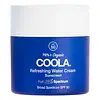
COOLA Refreshing Water Cream Organic Face Sunscreen SPF 50 Versus COOLA Classic Face Sunscreen SPF 50

What's inside
What's inside
 Key Ingredients

Benefits
Concerns
Ingredients Side-by-side
Butyl Methoxydibenzoylmethane 3%
UV Absorber


Homosalate 5%
Skin Conditioning
Ethylhexyl Salicylate 3%
UV Absorber
Octocrylene 5%
UV Absorber
Aloe Barbadensis Leaf Juice
Skin Conditioning


Glycerin
Humectant


Carthamus Tinctorius Oleosomes
Emollient
Adipic Acid/Diglycol Crosspolymer
Neopentyl Glycol Diheptanoate
EmollientSodium Acrylates Copolymer
Isododecane
EmollientSodium Stearoyl Glutamate
CleansingGlyceryl Stearate
Emollient
Water
Skin ConditioningCocos Nucifera Water
Masking
Aloe Barbadensis Flower Extract
EmollientHyaluronic Acid
Humectant

Sodium Hydroxide
BufferingJasminum Sambac Leaf Cell Extract
Masking
Theobroma Cacao Seed Extract
Antioxidant
Schinus Molle Extract
Skin ProtectingMelia Azadirachta Leaf Extract
Skin ConditioningMelia Azadirachta Flower Extract
Skin ConditioningCorallina Officinalis Extract
Skin Conditioning
Argania Spinosa Kernel Oil
Emollient

Coccinia Indica Fruit Extract
Skin ConditioningSolanum Melongena Fruit Extract
Skin ConditioningCurcuma Longa Root Extract
Masking
Ocimum Sanctum Leaf Extract
Skin Conditioning
Ocimum Basilicum Flower/Leaf Extract
TonicLeuconostoc/Radish Root Ferment Filtrate
Antimicrobial
Leuconostoc Ferment Filtrate
AntimicrobialGlyceryl Caprylate
EmollientSodium Benzoate
Masking
Methylbenzyl Acetate
Masking
Benzyl Acetate
Masking
Juniperus Mexicana Oil
Masking
Propanediol
Solvent
Butylene Glycol
Humectant
Lecithin
Emollient
Caprylhydroxamic Acid
Gluconolactone
Skin Conditioning


Citric Acid
Buffering

Tocopheryl Acetate
Antioxidant
Bisabolol
Masking
Xanthan Gum
EmulsifyingDelta-Decalactone
Masking
Ethyl Butyrate
Perfuming
Gamma-Nonalactone
Masking
Gamma-Octalactone
Perfuming
Methyl Anthranilate
MaskingMethyl Benzoate
Perfuming
Mimosa Tenuiflora Bark Extract
Skin ProtectingNerolidol
Perfuming
Phenethyl Alcohol
MaskingHeliotropine
Masking
Anisaldehyde
Masking
Triethyl Citrate
Masking
Vanillin
Masking
Butyl Methoxydibenzoylmethane 3%, Homosalate 5%, Ethylhexyl Salicylate 3%, Octocrylene 5%, Aloe Barbadensis Leaf Juice, Glycerin, Carthamus Tinctorius Oleosomes, Adipic Acid/Diglycol Crosspolymer, Neopentyl Glycol Diheptanoate, Sodium Acrylates Copolymer, Isododecane, Sodium Stearoyl Glutamate, Glyceryl Stearate, Water, Cocos Nucifera Water, Aloe Barbadensis Flower Extract, Hyaluronic Acid, Sodium Hydroxide, Jasminum Sambac Leaf Cell Extract, Theobroma Cacao Seed Extract, Schinus Molle Extract, Melia Azadirachta Leaf Extract, Melia Azadirachta Flower Extract, Corallina Officinalis Extract, Argania Spinosa Kernel Oil, Coccinia Indica Fruit Extract, Solanum Melongena Fruit Extract, Curcuma Longa Root Extract, Ocimum Sanctum Leaf Extract, Ocimum Basilicum Flower/Leaf Extract, Leuconostoc/Radish Root Ferment Filtrate, Leuconostoc Ferment Filtrate, Glyceryl Caprylate, Sodium Benzoate, Methylbenzyl Acetate, Benzyl Acetate, Juniperus Mexicana Oil, Propanediol, Butylene Glycol, Lecithin, Caprylhydroxamic Acid, Gluconolactone, Citric Acid, Tocopheryl Acetate, Bisabolol, Xanthan Gum, Delta-Decalactone, Ethyl Butyrate, Gamma-Nonalactone, Gamma-Octalactone, Methyl Anthranilate, Methyl Benzoate, Mimosa Tenuiflora Bark Extract, Nerolidol, Phenethyl Alcohol, Heliotropine, Anisaldehyde, Triethyl Citrate, Vanillin
Butyl Methoxydibenzoylmethane 1.75%
UV Absorber
Homosalate 5%
Skin Conditioning
Ethylhexyl Salicylate 2%
UV Absorber
Octocrylene 5%
UV Absorber
Aloe Barbadensis Leaf Juice
Skin Conditioning
Carthamus Tinctorius Oleosomes
Emollient
Water
Skin ConditioningCarthamus Tinctorius Seed Oil
Masking
Glycerin
Humectant
Polyacrylate Crosspolymer-6
Emulsion StabilisingLimnanthes Alba Seed Oil
Skin Conditioning
Mauritia Flexuosa Fruit Oil
Skin Conditioning
Rubus Idaeus Seed Oil
Emollient
Squalane
Emollient
Brassica Campestris Seed Oil
Skin Conditioning
Opuntia Ficus-Indica Flower Extract
Skin ConditioningCamelina Sativa Seed Oil
Skin Conditioning
Xanthan Gum
EmulsifyingCetearyl Alcohol
Emollient


Cetyl Palmitate
Emollient
Caprylyl Glycol
Emollient
1,2-Hexanediol
Skin Conditioning
Sorbitan Palmitate
Emulsifying
Methyl Dihydroabietate
Dimethicone
Emollient
Sorbitan Oleate
Emulsifying
Silica
Abrasive
Sodium Phytate
Sodium Hydroxide
BufferingPolysilicone-11
Butylene Glycol
Humectant
Tropolone
Skin ConditioningDecyl Glucoside
CleansingLinalool
Perfuming
Geraniol
Perfuming
Hexyl Cinnamal
Perfuming
Limonene
Perfuming
Parfum
Masking
Caprylic/Capric Triglyceride
Masking
Linalyl Acetate
Masking
Salvia Sclarea Oil
Masking
Phenethyl Alcohol
MaskingBenzyl Acetate
Masking
Citrus Reticulata Leaf Oil
Masking
Citrus Aurantium Bergamia Peel Oil
3-Hexenol
Masking
Hexyl Acetate
Masking
Hexenyl Acetate
Masking
Santalum Album Oil
Masking
Alpha-Ionone
Perfuming
A-Terpinyl Acetate
Perfuming
Alpha-Terpinene
Perfuming
Geranyl Acetate
Perfuming
Aniba Rosaeodora Wood Oil
Astringent
Anisaldehyde
Masking
Rose Ketone-4
Perfuming
Methyl Benzoate
Perfuming
Zingiber Officinale Root Oil
Masking
Mentha Piperita Oil
Masking
Nerol
Perfuming
Benzaldehyde
Masking
Jasminum Officinale Oil
Masking
Butyl Methoxydibenzoylmethane 1.75%, Homosalate 5%, Ethylhexyl Salicylate 2%, Octocrylene 5%, Aloe Barbadensis Leaf Juice, Carthamus Tinctorius Oleosomes, Water, Carthamus Tinctorius Seed Oil, Glycerin, Polyacrylate Crosspolymer-6, Limnanthes Alba Seed Oil, Mauritia Flexuosa Fruit Oil, Rubus Idaeus Seed Oil, Squalane, Brassica Campestris Seed Oil, Opuntia Ficus-Indica Flower Extract, Camelina Sativa Seed Oil, Xanthan Gum, Cetearyl Alcohol, Cetyl Palmitate, Caprylyl Glycol, 1,2-Hexanediol, Sorbitan Palmitate, Methyl Dihydroabietate, Dimethicone, Sorbitan Oleate, Silica, Sodium Phytate, Sodium Hydroxide, Polysilicone-11, Butylene Glycol, Tropolone, Decyl Glucoside, Linalool, Geraniol, Hexyl Cinnamal, Limonene, Parfum, Caprylic/Capric Triglyceride, Linalyl Acetate, Salvia Sclarea Oil, Phenethyl Alcohol, Benzyl Acetate, Citrus Reticulata Leaf Oil, Citrus Aurantium Bergamia Peel Oil, 3-Hexenol, Hexyl Acetate, Hexenyl Acetate, Santalum Album Oil, Alpha-Ionone, A-Terpinyl Acetate, Alpha-Terpinene, Geranyl Acetate, Aniba Rosaeodora Wood Oil, Anisaldehyde, Rose Ketone-4, Methyl Benzoate, Zingiber Officinale Root Oil, Mentha Piperita Oil, Nerol, Benzaldehyde, Jasminum Officinale Oil
Ingredients Explained
These ingredients are found in both products.
Ingredients higher up in an ingredient list are typically present in a larger amount.
Aloe Barbadensis Leaf Juice comes from leaves of the aloe plant. Aloe Barbadensis Leaf Juice is best known for helping to soothe sunburns. It is also anti-inflammatory, moisturizing, antiseptic, and can help heal wounds.
Aloe is packed with good stuff including Vitamins A, C, and E. These vitamins are antioxidants, which help fight free-radicals and the damage they may cause. Free-radicals are molecules that may damage your skin cells, such as pollution.
Aloe Barbadensis Leaf Juice also contains sugars. These sugars come in the form of monosaccharides and polysaccharides, folic acid, and choline. These sugars are able to help bind moisture to skin.
It also contains minerals such as calcium, 12 anthraquinones, fatty acids, amino acids, and Vitamin B12.
Learn more about Aloe Barbadensis Leaf JuiceAnisaldehyde is a fragrance.
Benzyl Acetate is a fragrance.
Also known as Avobenzone, this ingredient is a chemical sunscreen filter that provides protection in the UV-A range.
Avobenzone is globally approved and is the most commonly used UV-A filter in the world.
Studies have found that avobenzone becomes ineffective when exposed to UV light (it is not photostable; meaning that it breaks down in sunlight). Because of this, formulations that include avobenzone will usually contain stabilizers such as octocrylene.
However, some modern formulations (looking at you, EU!) are able to stabilize avobenzone by coating the molecules.
Avobenzone does not protect against the UV-B range, so it's important to check that the sunscreen you're using contains other UV filters that do!
The highest concentration of avobenzone permitted is 3% in the US, and 5% in the EU.
Learn more about Butyl MethoxydibenzoylmethaneButylene Glycol (or BG) is used within cosmetic products for a few different reasons:
Overall, Butylene Glycol is a safe and well-rounded ingredient that works well with other ingredients.
Though this ingredient works well with most skin types, some people with sensitive skin may experience a reaction such as allergic rashes, closed comedones, or itchiness.
Learn more about Butylene GlycolCarthamus Tinctorius Oleosomes isn't fungal acne safe.
Ethylhexyl Salicylate is an organic compound used to block UV rays. It primarily absorbs UVB rays but offers a small amount of UVA protection as well.
Commonly found in sunscreens, Ethylhexyl Salicylate is created from salicylic acid and 2-ethylhexanol. You might know salicylic acid as the effective acne fighter ingredient and BHA.
The ethylhexanol in this ingredient is a fatty alcohol and helps hydrate your skin, similar to oils. It is an emollient, which means it traps moisture into the skin.
According to manufacturers, Ethylhexyl Salicylate absorbs UV wavelength of 295-315 nm, with a peak absorption at 307-310 nm. UVA rays are linked to long term skin damage, such as hyperpigmentation. UVB rays emit more energy and are capable of damaging our DNA. UVB rays cause sunburn.
Learn more about Ethylhexyl SalicylateGlycerin is already naturally found in your skin. It helps moisturize and protect your skin.
A study from 2016 found glycerin to be more effective as a humectant than AHAs and hyaluronic acid.
As a humectant, it helps the skin stay hydrated by pulling moisture to your skin. The low molecular weight of glycerin allows it to pull moisture into the deeper layers of your skin.
Hydrated skin improves your skin barrier; Your skin barrier helps protect against irritants and bacteria.
Glycerin has also been found to have antimicrobial and antiviral properties. Due to these properties, glycerin is often used in wound and burn treatments.
In cosmetics, glycerin is usually derived from plants such as soybean or palm. However, it can also be sourced from animals, such as tallow or animal fat.
This ingredient is organic, colorless, odorless, and non-toxic.
Glycerin is the name for this ingredient in American English. British English uses Glycerol/Glycerine.
Learn more about GlycerinHomosalate is a chemical sunscreen filter that provides protection in the UV-B range (280nm - 320 nm), with a peak protection at 306 nm. It is internationally approved for use in sunscreens.
Homosalate is not photo-stable, meaning it's strength as a UV filter degrades over time with exposure to the sun. Because of this, it's often used in combination with other chemical sunscreen filters as avobenzone (which protects from the UV-A range). Homosalate also helps act as a solvent for harder-to-dissolve UV filters.
(Part of the reason that sunscreens need to be frequently re-applied is due to the photo instability of many chemical sunscreen filters)
Currently, homosalate is approved in concentrations up to 10% in the EU and 15% in the US. The FDA is currently doing further research on the effects of homosalate, and it is possible that these approved concentrations will change in the future.
Learn more about HomosalateMethyl Benzoate is a fragrance and is a preservative.
Octocrylene protects skin from sun damage. It absorbs UV-B with peak absorption of 304 nm. It is a common sunscreen ingredient and often paired with avobenzone, a UVA filter. This is because octocrylene stabilizes other sunscreen ingredients by protecting them from degradation when exposed to sunlight. Octocrylene is a photostable ingredient and loses about 10% of SPF in 95 minutes.
Octocrylene also acts as an emollient, meaning it helps skin retain moisture and softens skin. It is oil-soluble and hydrophobic, enhancing water-resistant properties in a product.
Those who are using ketoprofen, a topical anti-inflammatory drug, may experience an allergic reaction when using octocrylene. It is best to speak with a healthcare professional about using sunscreens with octocrylene.
The EU allows a maximum of these concentrations:
Learn more about OctocrylenePhenethyl Alcohol is a colorless and aromatic alohol. It is naturally occuring in essential oils.
The scent of this ingredient is floral and often compared to rose.
Like other alcohols, this ingredient helps prevent the growth of bacteria. However, its main purpose is to impact a fragrance.
Learn more about Phenethyl AlcoholSodium Hydroxide is also known as lye or caustic soda. It is used to adjust the pH of products; many ingredients require a specific pH to be effective.
In small amounts, sodium hydroxide is considered safe to use. However, large amounts may cause chemical burns due to its high alkaline.
Your skin has a natural pH and acid mantle. This acid mantle helps prevent harmful bacteria from breaking through. The acid mantle also helps keep your skin hydrated.
"Alkaline" refers to a high pH level. A low pH level would be considered acidic.
Learn more about Sodium HydroxideWater. It's the most common cosmetic ingredient of all. You'll usually see it at the top of ingredient lists, meaning that it makes up the largest part of the product.
So why is it so popular? Water most often acts as a solvent - this means that it helps dissolve other ingredients into the formulation.
You'll also recognize water as that liquid we all need to stay alive. If you see this, drink a glass of water. Stay hydrated!
Learn more about WaterXanthan gum is used as a stabilizer and thickener within cosmetic products. It helps give products a sticky, thick feeling - preventing them from being too runny.
On the technical side of things, xanthan gum is a polysaccharide - a combination consisting of multiple sugar molecules bonded together.
Xanthan gum is a pretty common and great ingredient. It is a natural, non-toxic, non-irritating ingredient that is also commonly used in food products.
Learn more about Xanthan Gum
