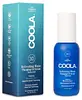
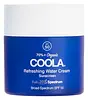
COOLA Refreshing Water Plumping Gel SPF 30 Versus COOLA Refreshing Water Cream Organic Face Sunscreen SPF 50
This chemical sunscreen covers most of the UV range, lighter on the deep UVA that drives aging.
This chemical sunscreen covers most of the UV range, lighter on the deep UVA that drives aging.

What's inside
What's inside
 Key Ingredients
Benefits
Concerns
Ingredients Side-by-side
Butyl Methoxydibenzoylmethane 3%
UV Absorber
Homosalate 6%
Skin Conditioning
Ethylhexyl Salicylate 5%
UV Absorber
Octocrylene 7%
UV Absorber

Aloe Barbadensis Leaf Juice
Skin Conditioning


Alcohol Denat.
Antimicrobial


Ammonium Acryloyldimethyltaurate/Vp Copolymer
Butyloctyl Salicylate
Skin Conditioning
Ethylhexyl Methoxycrylene
Skin Conditioning
Hyaluronic Acid
Humectant



Cocos Nucifera Fruit Water
Skin Conditioning
Alaria Esculenta Extract
Skin ProtectingAloe Barbadensis Flower Extract
EmollientJasminum Sambac Leaf Cell Extract
Masking
Melia Azadirachta Leaf Extract
Skin ConditioningMelia Azadirachta Flower Extract
Skin ConditioningCorallina Officinalis Extract
Skin Conditioning
Coccinia Indica Fruit Extract
Skin Conditioning
Solanum Melongena Fruit Extract
Skin ConditioningTheobroma Cacao Seed Extract
Antioxidant
Curcuma Longa Root Extract
Antioxidant
Ocimum Basilicum Flower/Leaf Extract
TonicOcimum Sanctum Leaf Extract
Skin ConditioningSchinus Molle Extract
Skin ProtectingCaprylic/Capric Triglyceride
Masking
Water
Skin ConditioningEthyl Ferulate
Antioxidant
Propanediol
Solvent
Butylene Glycol
Humectant
1,2-Hexanediol
Skin Conditioning
Caprylyl Glycol
Emollient
Triethyl Citrate
Masking
Tapioca Starch
Glycerin
Humectant
Gamma-Nonalactone
Masking
Tropolone
Skin ConditioningJuniperus Mexicana Oil
Masking
Gamma-Octalactone
Perfuming
Benzyl Acetate
Masking
Phenethyl Alcohol
MaskingMimosa Tenuiflora Bark Extract
Skin ProtectingVanillin
Masking
Heliotropine
Masking
Anisaldehyde
Masking
Delta-Decalactone
Masking
Methylbenzyl Acetate
Masking
Ethyl Butyrate
Perfuming
Methyl Anthranilate
MaskingMethyl Benzoate
Perfuming
Butyl Methoxydibenzoylmethane 3%, Homosalate 6%, Ethylhexyl Salicylate 5%, Octocrylene 7%, Aloe Barbadensis Leaf Juice, Alcohol Denat., Ammonium Acryloyldimethyltaurate/Vp Copolymer, Butyloctyl Salicylate, Ethylhexyl Methoxycrylene, Hyaluronic Acid, Cocos Nucifera Fruit Water, Alaria Esculenta Extract, Aloe Barbadensis Flower Extract, Jasminum Sambac Leaf Cell Extract, Melia Azadirachta Leaf Extract, Melia Azadirachta Flower Extract, Corallina Officinalis Extract, Coccinia Indica Fruit Extract, Solanum Melongena Fruit Extract, Theobroma Cacao Seed Extract, Curcuma Longa Root Extract, Ocimum Basilicum Flower/Leaf Extract, Ocimum Sanctum Leaf Extract, Schinus Molle Extract, Caprylic/Capric Triglyceride, Water, Ethyl Ferulate, Propanediol, Butylene Glycol, 1,2-Hexanediol, Caprylyl Glycol, Triethyl Citrate, Tapioca Starch, Glycerin, Gamma-Nonalactone, Tropolone, Juniperus Mexicana Oil, Gamma-Octalactone, Benzyl Acetate, Phenethyl Alcohol, Mimosa Tenuiflora Bark Extract, Vanillin, Heliotropine, Anisaldehyde, Delta-Decalactone, Methylbenzyl Acetate, Ethyl Butyrate, Methyl Anthranilate, Methyl Benzoate
Butyl Methoxydibenzoylmethane 3%
UV Absorber
Homosalate 5%
Skin Conditioning
Ethylhexyl Salicylate 3%
UV Absorber
Octocrylene 5%
UV Absorber
Aloe Barbadensis Leaf Juice
Skin Conditioning
Glycerin
Humectant
Carthamus Tinctorius Oleosomes
Emollient
Adipic Acid/Diglycol Crosspolymer
Neopentyl Glycol Diheptanoate
EmollientSodium Acrylates Copolymer
Isododecane
EmollientSodium Stearoyl Glutamate
CleansingGlyceryl Stearate
Emollient
Water
Skin ConditioningCocos Nucifera Water
Masking
Aloe Barbadensis Flower Extract
EmollientHyaluronic Acid
Humectant
Sodium Hydroxide
BufferingJasminum Sambac Leaf Cell Extract
Masking
Theobroma Cacao Seed Extract
Antioxidant
Schinus Molle Extract
Skin ProtectingMelia Azadirachta Leaf Extract
Skin ConditioningMelia Azadirachta Flower Extract
Skin ConditioningCorallina Officinalis Extract
Skin Conditioning
Argania Spinosa Kernel Oil
Emollient

Coccinia Indica Fruit Extract
Skin Conditioning
Solanum Melongena Fruit Extract
Skin ConditioningCurcuma Longa Root Extract
Antioxidant
Ocimum Sanctum Leaf Extract
Skin ConditioningOcimum Basilicum Flower/Leaf Extract
TonicLeuconostoc/Radish Root Ferment Filtrate
Antimicrobial
Leuconostoc Ferment Filtrate
AntimicrobialGlyceryl Caprylate
EmollientSodium Benzoate
Masking
Methylbenzyl Acetate
Masking
Benzyl Acetate
Masking
Juniperus Mexicana Oil
Masking
Propanediol
Solvent
Butylene Glycol
Humectant
Lecithin
Emollient
Caprylhydroxamic Acid
Gluconolactone
Skin Conditioning




Citric Acid
Buffering
Tocopheryl Acetate
Antioxidant
Bisabolol
Antioxidant
Xanthan Gum
EmulsifyingDelta-Decalactone
Masking
Ethyl Butyrate
Perfuming
Gamma-Nonalactone
Masking
Gamma-Octalactone
Perfuming
Methyl Anthranilate
MaskingMethyl Benzoate
Perfuming
Mimosa Tenuiflora Bark Extract
Skin ProtectingNerolidol
Perfuming
Phenethyl Alcohol
MaskingHeliotropine
Masking
Anisaldehyde
Masking
Triethyl Citrate
Masking
Vanillin
Masking
Butyl Methoxydibenzoylmethane 3%, Homosalate 5%, Ethylhexyl Salicylate 3%, Octocrylene 5%, Aloe Barbadensis Leaf Juice, Glycerin, Carthamus Tinctorius Oleosomes, Adipic Acid/Diglycol Crosspolymer, Neopentyl Glycol Diheptanoate, Sodium Acrylates Copolymer, Isododecane, Sodium Stearoyl Glutamate, Glyceryl Stearate, Water, Cocos Nucifera Water, Aloe Barbadensis Flower Extract, Hyaluronic Acid, Sodium Hydroxide, Jasminum Sambac Leaf Cell Extract, Theobroma Cacao Seed Extract, Schinus Molle Extract, Melia Azadirachta Leaf Extract, Melia Azadirachta Flower Extract, Corallina Officinalis Extract, Argania Spinosa Kernel Oil, Coccinia Indica Fruit Extract, Solanum Melongena Fruit Extract, Curcuma Longa Root Extract, Ocimum Sanctum Leaf Extract, Ocimum Basilicum Flower/Leaf Extract, Leuconostoc/Radish Root Ferment Filtrate, Leuconostoc Ferment Filtrate, Glyceryl Caprylate, Sodium Benzoate, Methylbenzyl Acetate, Benzyl Acetate, Juniperus Mexicana Oil, Propanediol, Butylene Glycol, Lecithin, Caprylhydroxamic Acid, Gluconolactone, Citric Acid, Tocopheryl Acetate, Bisabolol, Xanthan Gum, Delta-Decalactone, Ethyl Butyrate, Gamma-Nonalactone, Gamma-Octalactone, Methyl Anthranilate, Methyl Benzoate, Mimosa Tenuiflora Bark Extract, Nerolidol, Phenethyl Alcohol, Heliotropine, Anisaldehyde, Triethyl Citrate, Vanillin
Ingredients Explained
These ingredients are found in both products.
Ingredients higher up in an ingredient list are typically present in a larger amount.
Aloe Barbadensis Flower Extract is the extract from the flowers of the aloe vera plant. In cosmetics, it functions as a skin conditioning agent.
Here's the honest part: most of the famous "aloe" research is on the leaf and this flower extract is much less studied. It shouldn't be assumed to do everything the gel is known for.
However, there is a small body of flower-specific research that is interesting to take a look at.
The flowers of Aloe vera contain volatile compounds and ascorbic acid. And when researchers looked closer, they found the flower is rich in antioxidants called phenolics that lined up with the extract's strong antioxidant activity.
This extract also showed some ability to fight off a common bacteria (Pseudomonas aeruginosa) in lab tests.
In lab and mouse studies, those phenolic compounds behaved like solid antioxidants though human skin trials on the flower extract are still needed.
Safety-wise, this ingredient is pretty assuring. The CIR Expert Panel deems this ingredient safe in current practices of use and only rare cases of acute eczema, contact urticaria, and dermatitis have been reported.
Learn more about Aloe Barbadensis Flower ExtractAloe Barbadensis Leaf Juice is the filtered, stabilized liquid pressed from the inner gel of the aloe vera leaf.
In cosmetics, it shows up as either soothing active or a water-replacement base. It is roughly 98-99% water and the last 1-2% is an interesting mix of polysaccharides, amino acids, vitamins, minerals, and enzymes.
The polysaccharides do most of the work: they bind water at the skin surface for a light, non-greasy hydration boost. And one of the polysaccharides, glycomannan, is linked to fibroblast stimulation + collagen synthesis. This is also why aloe has such a long track record in wound and burn healing.
This ingredient is also calming with anti-inflammatory and mild antimicrobial activity, making it a great pick for sensitive, irritated, or post-sun skin.
Realistic expectations matter though; the solid evidence is mostly limited to hydration, soothing, and wound support. Deeper claims about anti-aging or sun protection are not well backed, and science reviews note it does not prevent radiation-induced skin injury.
Because it plays well with almost everything, it's commonly used as a base alongside other actives like niacinamide or vitamin C.
Typical usage concentrations range from 0.5% (where hydration benefits already show up) all the way to 90%+ (where it replaces water as the main base).
The safety for this ingredient is well-establish as well. Overall, this is a great supporting ingredient for those who want a boost in hydration.
Learn more about Aloe Barbadensis Leaf JuiceAnisaldehyde is a fragrance.
Benzyl Acetate is a fragrance.
Also known as Avobenzone, this ingredient is an oil-soluble used to absorb the full spectrum of UVA rays (peak 357 nm).
It's one of the most effective UVA filters available but has a major caveat of photostability: avobenzone is susceptible to photodegradation.
This means it can lose efficacy when exposed to sunlight without the help of a stabilizing agent.
Studies show antioxidants (like vitamin E or vitamin C) and some UV filters (like octocrylene and Tinosorb S) can meaningfully improve its stability in a formulation.
The maximum allowable concentration according to regulation is 3% in the US + Canada, and 5% in the EU, Australia, China, Korea, and ASEAN countries.
It has a well-support safety profile: a comprehensive 2025 review found minimal toxicity with no evidence of carcinogenicity.
Overall, avobenzone is a safe and regulated ingredient used in sunscreen for over 40 years.
Learn more about Butyl MethoxydibenzoylmethaneButylene Glycol (or BG) is used within cosmetic products for a few different reasons:
Overall, Butylene Glycol is a safe and well-rounded ingredient that works well with other ingredients.
Though this ingredient works well with most skin types, some people with sensitive skin may experience a reaction such as allergic rashes, closed comedones, or itchiness.
Learn more about Butylene GlycolCoccinia Indica Fruit Extract is also known as Ivy Gourd Fruit Extract. It has skin conditioning properties.
The fruit is rich in flavonoids, phenolic acids, terpenoids, and sterols that show antioxidant and anti-inflammatory effect in vitro. This is because the fruit contains a thick mucilage that forms a protective and soothing layer on the skin's surface.
The extract itself has demonstrated antioxidant, soothing, and potential anti-allergy properties.
Most of this research is done in vitro and dedicated clinical studies on topical application are still limited.
Learn more about Coccinia Indica Fruit ExtractCorallina Officinalis Extract is from the red seaweed, Corallina Officinalis. This seaweed is found all over the world but is most common in the rocky shores of Great Britain and Ireland.
Corallina Officinalis Extract contains antioxidant and emollient properties.
Extracted polysaccharides, galactose and xylose, in red algae showed antioxidant activity. Antioxidants help with anti-aging by neutralizing free-radical molecules. Free-radical molecules may damage your skin cells and DNA. Galactose is also a PHA.
Corallina Officinalis is structurally similar to coral due to its high calcium content.
Learn more about Corallina Officinalis ExtractCurcuma Longa Root Extract comes from the rhizome (underground stem) of the turmeric plant.
While the official EU Cosing Database lists this ingredient as a fragrance, it actually does more than give products a scent.
This ingredient contains a group of yellow pigments called curcuminoids (mostly curcumin) that give it genuine antioxidant and anti-inflammatory activity in skin.
Reviews of topical clinical studies have found turmeric/curcumin to be generally well-tolerated and useful across conditions like eczema and mild inflammation.
One thing working in its favor is that curcumin barely penetrates; in lab skin-permeation testing, the curcuminoids mostly stayed in the outermost layer of skin. This is a good thing because its soothing and antioxidant activity is a surface-level job anyway.
At this time, industry data shows there's no single "correct" cosmetic percentage. It's used across a wide range depending on the product and varies from tiny fractions of a percent up to a few percent.
Allergy-wise, curcumin is a documented (but uncommon) contact allergen. It can also cross react with related plants, so anyone with a turmeric/ginger/cinnamon allergy or reactive skin should patch test first.
Learn more about Curcuma Longa Root ExtractDelta-Decalactone is a fragrance.
Ethyl Butyrate is a fragrance.
Ethylhexyl Salicylate (also called Octisalate or Octyl Salicylate) is an oil-soluble organic UV filter that's been used in sunscreen since the 1950's.
It absorbs UVB light in the 280-320 nm range with a peak absorbance around 306 nm.
You'll often see it paired with other UV filters to boost overall SPF because octisalate is a fairly week filter on its own.
The reason you'll see it so often is because it can help solubilize and stabilize the trickier filters like oxybenzone and avobenzone.
Unlike these filters, octisalate has pretty good photostability and doesn't create skin-damaging free radicals when exposed to sunlight.
The fatty-alcohol part of the molecule also gives it a light, emollient feel so it doubles as a nice texture enhancer.
Usage levels vary around the world:
Safety-wise, this ingredient has a pretty reassuring track record. The EU's Scientific Committee on Consumer Products (SCCP) found very low skin penetration in human skin tests and negative results for irritation, phototoxicity, and photoallergy.
The real-world allergy risk is pretty low too; a 2012 European study of 1,031 people recorded only 2 reactions to it (a rate of 0.19%).
You might have seen scary headlines about sunscreen getting into your blood.
In 2019, the FDA found that several chemical filters can absorb through the skin and show up in the bloodstream at small but measurable levels.
Here's the important part: these tiny levels are just a cutoff the FDA uses to decide which ingredients need more testing and doesn't mean anything harmful was found.
The researchers were clear that the results are no reason to stop wearing sunscreen.
Learn more about Ethylhexyl SalicylateGamma-Nonalactone is a fragrance.
Gamma-Octalactone is a fragrance.
Glycerin (or glycerol) is a compound naturally found in your skin. It's a powerhouse humectant that pulls water into the stratum corneum.
Topically, glycerin does several things at once:
Your skin makes glycerin on its own (mostly from sebaceous oil breakdown) and shuttles it to your outermost layer of skin, or your epidermis, via aquaporin-3.
Aquaporin-3 is a transporter that is essential for normal skin hydration, elasticity, and repair. Interestingly, mice lacking in AQP3 have dry and less elastic skin that can be fully corrected with glycerin.
This ingredient is non-irritating, plays well with almost every ingredient, and works across all skin types. Typical use is anywhere between 3-10% but can go up to 79% in some leave-on products.
Just know very high concentrations (>40%) can feel tacky in low humidity.
Glycerin is the name for this ingredient in American English. British English uses Glycerol/Glycerine.
Learn more about GlycerinHeliotropine is a fragrance.
Homosalate is an oil-soluble organic UVB filter that has been a sunscreen staple for decades. Its job is to absorb UVB rays (~295-315 nm) and protect your skin against sunburn,
This is one of the more photostable organic UV filters; it holds up pretty well under UV and a 2022 quantum-chemistry study found it stays stable in sunlight.
It's actually so reliable that formulators often pair it with shakier ingredients like oxybenzone and avobenzone. Formulators also use it to help dissolve the other UV filters into the oil phase.
One thing to keep in mind: "stable" isn't the same as "strong". On its own, homosalate is actually a pretty weak UV filter so it's better off as a helpful team player that helps boost overall SPF protection.
The safety picture is a bit nuanced but not scary.
This ingredient has a long track record of being gentle and regulators agree it isn't an irritant; EU's Scientific Committee on Consumer Safety found that homosalate is not considered a skin irritant and doesn't raise eye-irritation flags either.
There's talk about homosalate because your skin absorbs a little bit of it into your bloodstream. A 2020 FDA-backed study found homosalate showed up in people's blood levels at the level where the FDA decides to double check.
The EU's Scientific Committee on Consumer Safety (SCCS) also found small amounts in blood and breast milk. They estimated that about 5% of what you apply gets absorbed through the skin.
Due to the debate about whether it might mess with hormones, the SCCS recommended a maximum limit of 0.5% in most products of 7.3% in face creams/pump sprays.
One important thing to keep in mind: in the US, Homosalate is currently labeled "non-GRASE" by the FDA. This sounds alarming but really just means the FDA wants more data to confirm it's safe. It's not confidently saying this ingredient is harmful.
As of now, homosalate is still completely legal and widely used while that research gets done.
The current maximum limits are:
Learn more about HomosalateHyaluronic acid (HA) is a glycosaminoglycan (basically a long sugar chain) that your skin already makes on its own. In your skin, HA lives in the extracellular matrix and acts as the body's moisture reservoir.
Topically, HA is a humectant that binds water and helps skin look more plump, smooth, and hydrated.
The only catch is that HA isn't a single thing; it actually comes in a wide range of molecular weights (~50 - 2,000+ kDA) and size matters.
Some clinical evidence links low molecular weight versions to improved wrinkle depth, elasticity, anti-inflammatory effects, and barrier repair.
This is why the best HA serums blend the two sizes together so you get the best of both worlds.
The majority of cosmetic HA is produced by bacterial fermentation, typically using Streptococcus or Bacillus strains. Typical use levels in skincare sit around 0.1-2%.
A clinical study using a 0.2% low-molecular weight HA gel showed improvement in facial seborrheic dermatitis with excellent tolerance.
These are some other common types of Hyaluronic Acid:
Learn more about Hyaluronic AcidJasminum Sambac Leaf Cell Extract is a fragrance.
This essential oil is steam-distilled from the wood of the Juniperus tree. It's mainly a fragrance ingredient used to cover the scent of other ingredients. It has a warm, woody scent.
Be sure to patch test if you are sensitive to essential oils or fragrance.
Another name for this ingredient is Texas Cedarwood oil.
Learn more about Juniperus Mexicana OilMelia Azadirachta Flower Extract is from the Neem tree. Neem trees originate from India.
Melia Azadirachta Flower Extract contains antioxidants. Antioxidants help fight free-radicals. Free-radicals are molecules that may damage your skin cells, such as pollution.
The flowers of this tree are lilac colored.
Learn more about Melia Azadirachta Flower ExtractThis ingredient is also known as neem leaf extract. It contains natural compounds like nimbidin, quercetin, and other polyphenols that give it antibacterial, antifungal, and anti-inflammatory activity.
Lab studies have shown neem leaf extract can inhibit acne-related bacteria and help calm skin. Animal studies on wound gels using 1-3% neem leaf extract found it sped up healing without causing irritation.
A wound-healing study testing gels with the extract at 1%, 2%, and 3% concentrations and found none of them irritated the skin.
Most commercial products also use it in a similar low range (typically under 5%).
Allergy-wise, there are some case reports on neem oil causing allergic contact dermatitis so people with plant/botanical sensitivities may want to patch test first.
Learn more about Melia Azadirachta Leaf ExtractWe don't have a description for Methyl Anthranilate yet.
Methyl Benzoate is a fragrance and is a preservative.
Methylbenzyl Acetate is a fragrance.
We don't have a description for Mimosa Tenuiflora Bark Extract yet.
We don't have a description for Ocimum Basilicum Flower/Leaf Extract yet.
Ocimum Sanctum Leaf Extract comes from the Holy Basil plant. Holy Basil is native to India.
Holy Basil is rich in antioxidants due to its high romarinic acid, ferulic acid, and rutin content. This gives it skin brightening and soothing properties.
While Holy Basil has many claims to help fight acne, more research is needed.
One thing to note is the presence of tannins; tannins are naturally found in nature. However, this compound may be skin-sensitizing.
Learn more about Ocimum Sanctum Leaf ExtractOctocrylene is an oil-soluble organic UV filter that mainly absorbs UVB and short wave UVA II light.
Its real superpower is teamwork: octocrylene is remarkably photostable and is most famous for stabilizing avobenzone (the workhorse UVA filter).
This ingredient is commonly used to enhance both UVB and UVA protection due to its unique property in stabilizing avobenzone. It also pulls double duty by boosting water resistance and giving formulas a smooth, spreadable feel.
The EU's Scientific Committee on Consumer Safety (SCCS) has deemed octocrylene to be safe as a UV-filter at concentrations up to 10% (capped at 9% in propellant sprays). The US also permits it up to 10%.
Two things worth knowing:
You'll usually see this ingredient used in concentrations between 2-10% (higher amounts when used as a stabilizer for avobenzone).
Learn more about OctocrylenePhenethyl Alcohol is a colorless and aromatic alohol. It is naturally occuring in essential oils.
The scent of this ingredient is floral and often compared to rose.
Like other alcohols, this ingredient helps prevent the growth of bacteria. However, its main purpose is to impact a fragrance.
Learn more about Phenethyl AlcoholPropanediol is an all-star ingredient. It softens, hydrates, and smooths the skin.
It’s often used to:
Propanediol is not likely to cause sensitivity and considered safe to use. It is derived from corn or petroleum with a clear color and no scent.
Learn more about PropanediolWe don't have a description for Schinus Molle Extract yet.
This ingredient comes from eggplant (or aubergine). It has skin conditioning properties due to its abundance of antioxidants like Chlorogenic Acid, Caffeic Acid, and Nasunin.
Nasunin is the pigment concentrated in the purple peel and has demonstrated the abilityu to neutralize free radicals and bind excess iron in lab studies.
Lab studies have shown that eggplant extracts can lower oxidative stress and protect skin cell membranes from damage. A 2025 study found that specific compounds in eggplant (particularly a phenolamide called N-Trans-Feruloylputrescine) may support skin health by neutralizing 2-nonenal, a byproduct linked to aging skin.
Overall, this is a gentle, well-tolerated ingredient that adds a little extra antioxidant support to your routine.
Those with nighshade vegetable allergies (tomatoes, peppers, potatoes) should patch test as eggplant is part of the same family.
Learn more about Solanum Melongena Fruit ExtractTheobroma Cacao Seed Extract comes from the Theobroma cacoa, or Cacao tree. Cacao trees are native to tropical landscapes.
Cacao seed extract contains antioxidants known as polyphenols.
Triethyl Citrate comes from citric acid. It has masking, perfuming, and solvent properties. As a solvent, this ingredient helps disperse ingredients evenly in skincare.
One manufacturer claims this ingredient can:
According to perfume manufacturers, this ingredient is almost odorless but has a mild fruity, wine and plum scent. It can be used to mask the scent of other ingredients.
This ingredient can be plant-sourced or synthetic; it can naturally be found in cabbage and white wine.
Learn more about Triethyl CitrateVanillin is the main compound of the vanilla bean. It is naturally occuring but can also be artificially created.
This ingredient exhibits antioxidant properties but is also a known skin-irritant.
Vanillism is the term of contact-dermatitis associated with the vanilla plant. The sap of the vanilla plant triggers skin irritation, swelling, and redness.
Learn more about VanillinWater. It's the most common cosmetic ingredient of all. You'll usually see it at the top of ingredient lists, meaning that it makes up the largest part of the product.
So why is it so popular? Water most often acts as a solvent - this means that it helps dissolve other ingredients into the formulation.
You'll also recognize water as that liquid we all need to stay alive. If you see this, drink a glass of water. Remember to stay hydrated!
Learn more about Water

