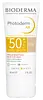
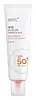
This chemical sunscreen covers the full UV range and blocks ~98% of UVB at SPF 50.
This chemical sunscreen covers the full UV range and blocks ~98% of UVB at SPF 50.


What's inside
What's inside
 Key Ingredients
Benefits
Concerns
Ingredients Side-by-side
Water
Skin ConditioningDiethylamino Hydroxybenzoyl Hexyl Benzoate
UV Filter
Homosalate
Skin Conditioning
Diisopropyl Sebacate
EmollientBis-Ethylhexyloxyphenol Methoxyphenyl Triazine
UV Absorber
Dibutyl Adipate
EmollientPropanediol
Solvent

Ethylhexyl Salicylate
UV Absorber
Ethylhexyl Triazone
UV Absorber
Glycerin
Humectant
Silica
Abrasive


Potassium Cetyl Phosphate
EmulsifyingGlyceryl Stearate
Emollient

PEG-100 Stearate
Surfactant
Propylene Glycol
Humectant
Polyacrylate Crosspolymer-6
Emulsion StabilisingStearyl Glycyrrhetinate
Skin ConditioningTocopheryl Acetate
Antioxidant


CI 77891
Cosmetic ColorantCapryloyl Glycine
CleansingSodium Citrate
BufferingXanthan Gum
EmulsifyingGlycine Soja Germ Extract
EmollientEctoin
Skin Conditioning



Mannitol
Humectant
Xylitol
Humectant
Citric Acid
Buffering
Ginkgo Biloba Leaf Extract
Skin Conditioning
Sodium Hydroxide
BufferingCI 77492
Cosmetic ColorantRhamnose
HumectantCI 77491
Cosmetic ColorantCI 77499
Cosmetic ColorantHydrogenated Lecithin
Emulsifying
Lauroyl Lysine
Skin Conditioning
Fructooligosaccharides
Humectant
Caprylic/Capric Triglyceride
Masking
Laminaria Ochroleuca Extract
Skin Conditioning
Water, Diethylamino Hydroxybenzoyl Hexyl Benzoate, Homosalate, Diisopropyl Sebacate, Bis-Ethylhexyloxyphenol Methoxyphenyl Triazine, Dibutyl Adipate, Propanediol, Ethylhexyl Salicylate, Ethylhexyl Triazone, Glycerin, Silica, Potassium Cetyl Phosphate, Glyceryl Stearate, PEG-100 Stearate, Propylene Glycol, Polyacrylate Crosspolymer-6, Stearyl Glycyrrhetinate, Tocopheryl Acetate, CI 77891, Capryloyl Glycine, Sodium Citrate, Xanthan Gum, Glycine Soja Germ Extract, Ectoin, Mannitol, Xylitol, Citric Acid, Ginkgo Biloba Leaf Extract, Sodium Hydroxide, CI 77492, Rhamnose, CI 77491, CI 77499, Hydrogenated Lecithin, Lauroyl Lysine, Fructooligosaccharides, Caprylic/Capric Triglyceride, Laminaria Ochroleuca Extract
Water
Skin ConditioningDipropylene Glycol
HumectantEthylhexyl Methoxycinnamate
UV Absorber
Isoamyl P-Methoxycinnamate
UV Absorber
Alcohol
Antimicrobial

Styrene/Acrylates Copolymer
Diethylamino Hydroxybenzoyl Hexyl Benzoate
UV Filter
Ethylhexyl Salicylate
UV Absorber
Niacinamide
Smoothing



C12-15 Alkyl Benzoate
AntimicrobialBis-Ethylhexyloxyphenol Methoxyphenyl Triazine
UV Absorber
1,2-Hexanediol
Skin Conditioning
Dimethicone
Emollient
Hydroxyacetophenone
Antioxidant
Acrylates/C10-30 Alkyl Acrylate Crosspolymer
Emulsion StabilisingSodium Hydroxide
BufferingBetula Platyphylla Japonica Juice
Skin Conditioning
Sodium Hyaluronate
Humectant
Macadamia Integrifolia Seed Oil
Skin Conditioning
Simmondsia Chinensis Seed Oil
Emollient
Leontopodium Alpinum Callus Culture Extract
Antioxidant
Lonicera Japonica Flower Extract
Skin ConditioningGlycerin
Humectant
Spirulina Platensis Extract
Skin ProtectingLavandula Angustifolia Extract
Skin Conditioning
Apium Graveolens Extract
Skin ConditioningHyacinthus Orientalis Extract
Skin ConditioningChamomilla Recutita Flower/Leaf Extract
AntimicrobialHordeum Vulgare Seed Extract
Skin ConditioningCentaurea Cyanus Flower Extract
Astringent
Butylene Glycol
Humectant
Ethylhexylglycerin
Skin ConditioningCentella Asiatica Extract
Cleansing
Aloe Barbadensis Leaf Extract
Emollient
Mentha Piperita Leaf Extract
Skin ConditioningEucalyptus Globulus Leaf Extract
Perfuming
Chamomilla Recutita Extract
Skin Conditioning
Artemisia Montana Leaf Extract
Skin ConditioningUlmus Davidiana Root Extract
Skin Conditioning
Dioscorea Villosa Root Extract
Skin Conditioning
Pseudoalteromonas Ferment Extract
Humectant
Yeast Extract
Skin ConditioningPortulaca Oleracea Extract
Skin Conditioning
Propolis Extract
Skin Conditioning
Panthenol
Skin Conditioning
Hydrogenated Lecithin
Emulsifying
Tocopheryl Succinate
Antioxidant
Linoleic Acid
Cleansing
Glyceryl Oleate
Emollient
Pyridoxine
Skin ConditioningPolyacrylic Acid
Emulsion StabilisingBiotin
AntiseborrhoeicCyanocobalamin
Skin ConditioningBeta-Carotene
Skin ConditioningSodium Ascorbyl Phosphate
Antioxidant
Brassica Oleracea Italica Extract
AstringentLavandula Angustifolia Oil
Masking
Aniba Rosaeodora Wood Oil
Astringent
Citrus Aurantium Dulcis Peel Oil
Masking
Allantoin
Skin Conditioning
Xanthan Gum
EmulsifyingPentaerythrityl Tetra-Di-T-Butyl Hydroxyhydrocinnamate
Antioxidant
Adenosine
Skin Conditioning
Disodium EDTA
ChelatingWater, Dipropylene Glycol, Ethylhexyl Methoxycinnamate, Isoamyl P-Methoxycinnamate, Alcohol, Styrene/Acrylates Copolymer, Diethylamino Hydroxybenzoyl Hexyl Benzoate, Ethylhexyl Salicylate, Niacinamide, C12-15 Alkyl Benzoate, Bis-Ethylhexyloxyphenol Methoxyphenyl Triazine, 1,2-Hexanediol, Dimethicone, Hydroxyacetophenone, Acrylates/C10-30 Alkyl Acrylate Crosspolymer, Sodium Hydroxide, Betula Platyphylla Japonica Juice, Sodium Hyaluronate, Macadamia Integrifolia Seed Oil, Simmondsia Chinensis Seed Oil, Leontopodium Alpinum Callus Culture Extract, Lonicera Japonica Flower Extract, Glycerin, Spirulina Platensis Extract, Lavandula Angustifolia Extract, Apium Graveolens Extract, Hyacinthus Orientalis Extract, Chamomilla Recutita Flower/Leaf Extract, Hordeum Vulgare Seed Extract, Centaurea Cyanus Flower Extract, Butylene Glycol, Ethylhexylglycerin, Centella Asiatica Extract, Aloe Barbadensis Leaf Extract, Mentha Piperita Leaf Extract, Eucalyptus Globulus Leaf Extract, Chamomilla Recutita Extract, Artemisia Montana Leaf Extract, Ulmus Davidiana Root Extract, Dioscorea Villosa Root Extract, Pseudoalteromonas Ferment Extract, Yeast Extract, Portulaca Oleracea Extract, Propolis Extract, Panthenol, Hydrogenated Lecithin, Tocopheryl Succinate, Linoleic Acid, Glyceryl Oleate, Pyridoxine, Polyacrylic Acid, Biotin, Cyanocobalamin, Beta-Carotene, Sodium Ascorbyl Phosphate, Brassica Oleracea Italica Extract, Lavandula Angustifolia Oil, Aniba Rosaeodora Wood Oil, Citrus Aurantium Dulcis Peel Oil, Allantoin, Xanthan Gum, Pentaerythrityl Tetra-Di-T-Butyl Hydroxyhydrocinnamate, Adenosine, Disodium EDTA
Reviews
Ingredients Explained
These ingredients are found in both products.
Ingredients higher up in an ingredient list are typically present in a larger amount.
This ingredient is better known as bemotrizinol or Tinosorb S and is one of the best broad-spectrum UV filters in modern sunscreen.
It works by absorbing UV light across a whole range (280-400 nm) with peaks around 310 nm (UVB) and 340-345 nm (UVA). This means it covers UVB plus the deeper UVA wavelengths that drive photoaging and pigmentation.
Another pro?
It's exceptionally photostable, barely degrades in sunlight, and acts as a "bodyguard" for less stable filters.
That's why you'll see it paired with avobenzone or octinoxate; this team up ensures they keep working through sun exposure.
Safety reviews have been reassuring across the board. This ingredient shows low absorption through the skin, rarely irritates, and lab studies found it doesn't act like a hormone in the body (a concern that's been raised about some older sunscreen filters).
On maximum concentrations:
In 2026, the US F.D.A finally added it as an OTC sunscreen ingredient at concentrations up to 6% for adults / children 6 months and older
Learn more about Bis-Ethylhexyloxyphenol Methoxyphenyl TriazineDiethylamino Hydroxybenzoyl Hexyl Benzoate (DHHB) is a chemical UV-A absorber. It is formulated for high UVA protection (320-400 nm).
DHHB is well-liked for:
DHHB has been approved by the EU, Japan, Taiwan, and South America for use up to 10%. Unfortunately, it has not been approved for use in the US or Canada due to slow regulatory processes.
This ingredient is soluble in oils, fats, and lipids.
Learn more about Diethylamino Hydroxybenzoyl Hexyl BenzoateEthylhexyl Salicylate (also called Octisalate or Octyl Salicylate) is an oil-soluble organic UV filter that's been used in sunscreen since the 1950's.
It absorbs UVB light in the 280-320 nm range with a peak absorbance around 306 nm.
You'll often see it paired with other UV filters to boost overall SPF because octisalate is a fairly week filter on its own.
The reason you'll see it so often is because it can help solubilize and stabilize the trickier filters like oxybenzone and avobenzone.
Unlike these filters, octisalate has pretty good photostability and doesn't create skin-damaging free radicals when exposed to sunlight.
The fatty-alcohol part of the molecule also gives it a light, emollient feel so it doubles as a nice texture enhancer.
Usage levels vary around the world:
Safety-wise, this ingredient has a pretty reassuring track record. The EU's Scientific Committee on Consumer Products (SCCP) found very low skin penetration in human skin tests and negative results for irritation, phototoxicity, and photoallergy.
The real-world allergy risk is pretty low too; a 2012 European study of 1,031 people recorded only 2 reactions to it (a rate of 0.19%).
You might have seen scary headlines about sunscreen getting into your blood.
In 2019, the FDA found that several chemical filters can absorb through the skin and show up in the bloodstream at small but measurable levels.
Here's the important part: these tiny levels are just a cutoff the FDA uses to decide which ingredients need more testing and doesn't mean anything harmful was found.
The researchers were clear that the results are no reason to stop wearing sunscreen.
Learn more about Ethylhexyl SalicylateGlycerin (or glycerol) is a compound naturally found in your skin. It's a powerhouse humectant that pulls water into the stratum corneum.
Topically, glycerin does several things at once:
Your skin makes glycerin on its own (mostly from sebaceous oil breakdown) and shuttles it to your outermost layer of skin, or your epidermis, via aquaporin-3.
Aquaporin-3 is a transporter that is essential for normal skin hydration, elasticity, and repair. Interestingly, mice lacking in AQP3 have dry and less elastic skin that can be fully corrected with glycerin.
This ingredient is non-irritating, plays well with almost every ingredient, and works across all skin types. Typical use is anywhere between 3-10% but can go up to 79% in some leave-on products.
Just know very high concentrations (>40%) can feel tacky in low humidity.
Glycerin is the name for this ingredient in American English. British English uses Glycerol/Glycerine.
Learn more about GlycerinHydrogenated Lecithin is a more stable version of lecithin.
It's made by taking lecithin (a phospholipid commonly found in soybeans and egg yolks) and hydrogenating it. This just means the unsaturated fatty acids are turned into saturated ones so they don't go bad as easily.
This ingredient is an emollient, emulsifier, and penetration enhancer. As an emollient, it helps soften and hydrate skin by trapping moisture within. As an emulsifier, it prevents oil and water ingredients from separating.
Hydrogenated Lecithin can form tiny spherical structures made of phospholipid bilayers called liposomes. These liposomes are able to capture compounds inside their structure and deliver them through the skin barrier.
Because phospholipids are a natural component of our cell membranes, this ingredient is inherently compatible with skin.
A 2021 study found lecithin-based surfactants were less harsh and more tolerable comared to Sodium Lauryl Sulfate (SLS).
Learn more about Hydrogenated LecithinSodium Hydroxide is also known as lye or caustic soda. It is used to adjust the pH of products; many ingredients require a specific pH to be effective.
In small amounts, sodium hydroxide is considered safe to use. However, large amounts may cause chemical burns due to its high alkaline.
Your skin has a natural pH and acid mantle. This acid mantle helps prevent harmful bacteria from breaking through. The acid mantle also helps keep your skin hydrated.
"Alkaline" refers to a high pH level. A low pH level would be considered acidic.
Learn more about Sodium HydroxideWater. It's the most common cosmetic ingredient of all. You'll usually see it at the top of ingredient lists, meaning that it makes up the largest part of the product.
So why is it so popular? Water most often acts as a solvent - this means that it helps dissolve other ingredients into the formulation.
You'll also recognize water as that liquid we all need to stay alive. If you see this, drink a glass of water. Remember to stay hydrated!
Learn more about WaterXanthan gum is used as a stabilizer and thickener within cosmetic products. It helps give products a sticky, thick feeling - preventing them from being too runny.
On the technical side of things, xanthan gum is a polysaccharide - a combination consisting of multiple sugar molecules bonded together.
Xanthan gum is a pretty common and great ingredient. It is a natural, non-toxic, non-irritating ingredient that is also commonly used in food products.
Learn more about Xanthan Gum

