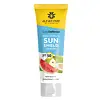
Azarine City Defense Aqua Essence Sunshield Serum SPF 50 Versus Hyalupure 9x Hyaluronic Acid Sun Defense Serum SPF 50
This hybrid sunscreen covers the full UV range and blocks ~98% of UVB at SPF 50.
This chemical sunscreen covers the full UV range and blocks ~98% of UVB at SPF 50.

What's inside
What's inside
 Key Ingredients
Benefits
Concerns
Ingredients Side-by-side
Water
Skin ConditioningCocos Nucifera Oil
Masking








Titanium Dioxide
Cosmetic Colorant

Cetyl Alcohol
Emollient
Cocos Nucifera Water
Masking
Citrullus Lanatus Fruit Extract
Skin Conditioning
Glyceryl Stearate
Emollient
Glycerin
Humectant

Aloe Barbadensis Leaf Juice
Skin Conditioning
Propanediol
Solvent
Ethylhexyl Methoxycinnamate
UV Absorber
Butyl Methoxydibenzoylmethane
UV Absorber
Butylene Glycol
Humectant
Parfum
Masking
Punica Granatum Extract
AstringentCentella Asiatica Extract
Cleansing

Acrylates/C10-30 Alkyl Acrylate Crosspolymer
Emulsion StabilisingOctocrylene
UV Absorber
Phenoxyethanol
Preservative
Chlorphenesin
Antimicrobial
Butyrospermum Parkii Butter
Skin Conditioning
Allantoin
Skin Conditioning
Lecithin
Emollient
Stearic Acid
Cleansing
Water, Cocos Nucifera Oil, Titanium Dioxide, Cetyl Alcohol, Cocos Nucifera Water, Citrullus Lanatus Fruit Extract, Glyceryl Stearate, Glycerin, Aloe Barbadensis Leaf Juice, Propanediol, Ethylhexyl Methoxycinnamate, Butyl Methoxydibenzoylmethane, Butylene Glycol, Parfum, Punica Granatum Extract, Centella Asiatica Extract, Acrylates/C10-30 Alkyl Acrylate Crosspolymer, Octocrylene, Phenoxyethanol, Chlorphenesin, Butyrospermum Parkii Butter, Allantoin, Lecithin, Stearic Acid
Water
Skin ConditioningGlycerin
Humectant
Propylene Glycol
Humectant
Ethylhexyl Salicylate
UV Absorber
Octocrylene
UV Absorber
Diethylamino Hydroxybenzoyl Hexyl Benzoate
UV Filter
Butyl Methoxydibenzoylmethane
UV Absorber
Glycereth-26
Humectant
Tremella Fuciformis Polysaccharide
Emulsion Stabilising
Butylene Glycol
Humectant
Ethylhexyl Triazone
UV Absorber
Dimethicone
Emollient
Potassium Cetyl Phosphate
Emulsifying1,2-Hexanediol
Skin Conditioning
Hydroxyacetophenone
Antioxidant
CI 77891
Cosmetic ColorantDiglycerin
Humectant
Acrylates/C10-30 Alkyl Acrylate Crosspolymer
Emulsion StabilisingPEG/PPG-17/6 Copolymer
SolventPolysorbate 80
Emulsifying
Triethanolamine
BufferingPanthenol
Skin Conditioning
Vp/Va Copolymer
Paeonia Suffruticosa Root Extract
Skin ProtectingSorbitan Oleate
Emulsifying
Glyceryl Glucoside
Humectant
Allantoin
Skin Conditioning
Niacinamide
Smoothing





Adenosine
Skin Conditioning
Glycyrrhiza Uralensis Root Extract
Skin Conditioning
Portulaca Oleracea Flower/Leaf/Stem Extract
Antioxidant
Paeonia Lactiflora Extract
AstringentFicus Carica Fruit Extract
Humectant
Dianthus Chinensis Extract
HumectantGlucose
Humectant
Lactobacillus Ferment Lysate
Skin Conditioning
Alumina
Abrasive
Triethoxycaprylylsilane
Bifida Ferment Lysate
Skin Conditioning
Ascorbic Acid
Antioxidant
Brassica Campestris Sprout Extract
HumectantTriticum Vulgare Germ Extract
Skin ConditioningBrassica Oleracea Italica Sprout Extract
EmollientStreptococcus Thermophilus Ferment
Humectant
Caprylic/Capric Triglyceride
Masking
Phenoxyethanol
Preservative
Centella Asiatica Extract
Cleansing
Hydrogenated Lecithin
Emulsifying
Hexylene Glycol
EmulsifyingStearic Acid
Cleansing
Cholesterol
Emollient
Ceramide NP
Skin Conditioning
Ceramide AP
Skin Conditioning
Ceramide EOP
Skin Conditioning
Sodium Hyaluronate Crosspolymer
Humectant
Potassium Hyaluronate
Skin ConditioningHydrolyzed Sodium Hyaluronate
Skin Conditioning
Hyaluronic Acid
Humectant
Sodium Hyaluronate Dimethylsilanol
HumectantEthylhexylglycerin
Skin ConditioningPhospholipids
Skin Conditioning
Sodium Hyaluronate
Humectant
Astaxanthin
Skin Conditioning
Hydroxypropyltrimonium Hyaluronate
Sodium Acetylated Hyaluronate
Humectant
Hydrolyzed Hyaluronic Acid
Humectant
Water, Glycerin, Propylene Glycol, Ethylhexyl Salicylate, Octocrylene, Diethylamino Hydroxybenzoyl Hexyl Benzoate, Butyl Methoxydibenzoylmethane, Glycereth-26, Tremella Fuciformis Polysaccharide, Butylene Glycol, Ethylhexyl Triazone, Dimethicone, Potassium Cetyl Phosphate, 1,2-Hexanediol, Hydroxyacetophenone, CI 77891, Diglycerin, Acrylates/C10-30 Alkyl Acrylate Crosspolymer, PEG/PPG-17/6 Copolymer, Polysorbate 80, Triethanolamine, Panthenol, Vp/Va Copolymer, Paeonia Suffruticosa Root Extract, Sorbitan Oleate, Glyceryl Glucoside, Allantoin, Niacinamide, Adenosine, Glycyrrhiza Uralensis Root Extract, Portulaca Oleracea Flower/Leaf/Stem Extract, Paeonia Lactiflora Extract, Ficus Carica Fruit Extract, Dianthus Chinensis Extract, Glucose, Lactobacillus Ferment Lysate, Alumina, Triethoxycaprylylsilane, Bifida Ferment Lysate, Ascorbic Acid, Brassica Campestris Sprout Extract, Triticum Vulgare Germ Extract, Brassica Oleracea Italica Sprout Extract, Streptococcus Thermophilus Ferment, Caprylic/Capric Triglyceride, Phenoxyethanol, Centella Asiatica Extract, Hydrogenated Lecithin, Hexylene Glycol, Stearic Acid, Cholesterol, Ceramide NP, Ceramide AP, Ceramide EOP, Sodium Hyaluronate Crosspolymer, Potassium Hyaluronate, Hydrolyzed Sodium Hyaluronate, Hyaluronic Acid, Sodium Hyaluronate Dimethylsilanol, Ethylhexylglycerin, Phospholipids, Sodium Hyaluronate, Astaxanthin, Hydroxypropyltrimonium Hyaluronate, Sodium Acetylated Hyaluronate, Hydrolyzed Hyaluronic Acid
Ingredients Explained
These ingredients are found in both products.
Ingredients higher up in an ingredient list are typically present in a larger amount.
Acrylates/C10-30 Alkyl Acrylate Crosspolymer is a synthetic polymer. It is used to thicken, emulsify, and improve the texture of products.
As an emulsifier, it helps stabilize oil-in-water emulsions to give products an elegant feel when applied.
It can also form a thin protective film on skin. One study found that a formula using this polymer helped slow down how quickly other ingredients (like DEET) were absorbed through skin.
A 2024 study of over 1,300 patients confirmed that sensitization to this ingredient is rare. It is also non-mutagenic and has a clean track record.
Learn more about Acrylates/C10-30 Alkyl Acrylate CrosspolymerAllantoin is a soothing ingredient known for its protective and moisturizing properties; it's basically a quiet workhorse ingredient you can find in a huge range of cosmetics.
Though it can be derived from the comfrey plant, allantoin is produced synthetically for cosmetic products to ensure purity.
Research shows it can encourage your skin cells to turn over and renew by stimulating keratinocyte and fibroblast proliferation.
It also has mild keratolytic properties to help loosen and shed dead skin cells without being harsh.
Studies also suggest allantoin can help calm inflammation by dialing down some of the chemical signals your skin sends out when it is irritated.
This ingredient is typically used in the 0.1-0.5% range, and the FDA recognizes it as a skin protectant in OTC products up to 2%.
Overall, allantoin is a wonderful addition to most routines; it is stable across a wide pH range (~4-8), works well with other ingredients, and is considered non-sensitizing/non-irritating.
Fun fact: Allantoin is naturally occurring in comfrey root, beets, chamomile, and wheat sprouts. Our bodies even produce it as a byproduct of uric acid metabolism.
Learn more about AllantoinAlso known as Avobenzone, this ingredient is an oil-soluble used to absorb the full spectrum of UVA rays (peak 357 nm).
It's one of the most effective UVA filters available but has a major caveat of photostability: avobenzone is susceptible to photodegradation.
This means it can lose efficacy when exposed to sunlight without the help of a stabilizing agent.
Studies show antioxidants (like vitamin E or vitamin C) and some UV filters (like octocrylene and Tinosorb S) can meaningfully improve its stability in a formulation.
The maximum allowable concentration according to regulation is 3% in the US + Canada, and 5% in the EU, Australia, China, Korea, and ASEAN countries.
It has a well-support safety profile: a comprehensive 2025 review found minimal toxicity with no evidence of carcinogenicity.
Overall, avobenzone is a safe and regulated ingredient used in sunscreen for over 40 years.
Learn more about Butyl MethoxydibenzoylmethaneButylene Glycol (or BG) is used within cosmetic products for a few different reasons:
Overall, Butylene Glycol is a safe and well-rounded ingredient that works well with other ingredients.
Though this ingredient works well with most skin types, some people with sensitive skin may experience a reaction such as allergic rashes, closed comedones, or itchiness.
Learn more about Butylene GlycolCentella Asiatica Extract (Centella) is one of the most researched botanical extracts in skincare with decades of studies backing its effects on inflammation, collagen, and the skin barrier.
That research keeps pointing back to the same four triterpenoid saponins: Asiaticoside, Madecassoside, Asiatic Acid, and Madecassic Acid.
These compounds allow centella to dial back inflammation, encourage the skin to build and hold onto collagen, support the barrier and hydration, and bring solid antioxidant activity to protect against signs of aging.
Centella also carries a nice supporting cast of Vitamin A, vitamin C, several B vitamins, and amino acids. Put it all together and you get an ingredient that soothes, hydrates, and protects, all at once.
Most of centella's magic comes from the four big compounds (Asiaticoside, Madecassoside, Asiatic Acid, and Madecassic Acid). These are the actives doing the heavy lifting in almost every centella study.
Here is the short version of what they do in the skin:
So it is not just soothing for the sake of soothing. Centella calms the skin AND helps it rebuild.
Just FYI, not all centella on an ingredient list is the same. What you are getting actually depends on the extract:
Fun fact on the ratios: the leaves tend to be richest in Madecassoside and Asiaticoside, and lower in the two acids. The exact amounts shift with where the plant is grown and how it is processed. This means purity really does vary brand to brand.
Centella is one of the most easygoing actives out there.
It layers well with basically everything: niacinamide, hyaluronic acid, peptides, and vitamin C, and also pairs nicely with stronger actives like retinoids and exfoliating acids where it can help take the edge off irritation.
On the safety side, centella and its triterpenes are classified as weak sensitizers, meaning allergic reactions are possible but uncommon.
Patch tests at 1% and 5% came back negative in test panels, and creams at typical use levels did not cause allergic reactions across large groups of people.
But as with any new active, a patch test is still a smart move for very reactive skin.
Centella is widely used because it is effective at low percentages. For context, human safety testing found no meaningful irritation from creams containing centella extract at everyday use levels (the tested amounts were well under 1%).
The irritancy threshold in animal testing was also above 30% (so real-world formulas sit far below anything concerning).
In collagen lab studies, higher concentrations drove more collagen synthesis, so serums built around centella tend to feature it more prominently.
Bottom line: you will find centella working nicely anywhere from a fraction of a percent up to hero-ingredient levels depending on whether it is a supporting soother or the main event.
Fun fact: Centella has been used as a medicine and in food for many centuries. As a medicine, it is used to treat burns, scratches, and wounds.
Learn more about Centella Asiatica ExtractGlycerin (or glycerol) is a compound naturally found in your skin. It's a powerhouse humectant that pulls water into the stratum corneum.
Topically, glycerin does several things at once:
Your skin makes glycerin on its own (mostly from sebaceous oil breakdown) and shuttles it to your outermost layer of skin, or your epidermis, via aquaporin-3.
Aquaporin-3 is a transporter that is essential for normal skin hydration, elasticity, and repair. Interestingly, mice lacking in AQP3 have dry and less elastic skin that can be fully corrected with glycerin.
This ingredient is non-irritating, plays well with almost every ingredient, and works across all skin types. Typical use is anywhere between 3-10% but can go up to 79% in some leave-on products.
Just know very high concentrations (>40%) can feel tacky in low humidity.
Glycerin is the name for this ingredient in American English. British English uses Glycerol/Glycerine.
Learn more about GlycerinOctocrylene is an oil-soluble organic UV filter that mainly absorbs UVB and short wave UVA II light.
Its real superpower is teamwork: octocrylene is remarkably photostable and is most famous for stabilizing avobenzone (the workhorse UVA filter).
This ingredient is commonly used to enhance both UVB and UVA protection due to its unique property in stabilizing avobenzone. It also pulls double duty by boosting water resistance and giving formulas a smooth, spreadable feel.
The EU's Scientific Committee on Consumer Safety (SCCS) has deemed octocrylene to be safe as a UV-filter at concentrations up to 10% (capped at 9% in propellant sprays). The US also permits it up to 10%.
Two things worth knowing:
You'll usually see this ingredient used in concentrations between 2-10% (higher amounts when used as a stabilizer for avobenzone).
Learn more about OctocrylenePhenoxyethanol is one of the most widely used preservatives in skincare (and for good reason!).
It has a large spectrum of antimicrobial activity and especially effective bacteria, yeast, and mold while only having a weak effect on your skin's natural microbiome.
On a cellular level, it disrupts the cell membranes of microbes by poking holes that make the cell leak. This shuts down the chemical reactions the microbe needs to make energy so it can no longer survive.
Another perk of this ingredient is that it stays functional across a wide pH range (3-10).
You'll often see it paired with boosters like Ethylhexylglycerin; one study showed that a 1:9 ratio of Ethylhexylglycerin to Phenoxyethanol damages bacterial membranes as effectively as doubling the Phenoxyethanol concentration on its own.
Typical use concentrations range from 0.3-1% depending on the formula, and this ingredient is capped at 1% int the EU.
Safety-wise, the fear mongering does not hold up to the evidence. The EU's Scientific Committee on Consumer Safety and FDA consider it safe as a preservative at up to 1%, including for children of all ages.
Adverse systemic effects only showed up in animal studies at exposures roughly 200x higher than what people get from cosmetics. And despite its very widespread use, this ingredient is a rare sensitizer and allergic reactions are uncommon.
Learn more about PhenoxyethanolStearic Acid is a fatty acid that is already found in your skin. It's one of the free fatty acids that works alongside ceramides and cholesterols to maintain your barrier.
In cosmetics, it is a multitasker:
Safety-wise, the CIR Expert Panel has concluded it to be safe in cosmetics when formulated to be non-irritating and non-sensitizing.
Free stearic acid is a C18 fatty acid that the Malassezia yeast can substrate, so this ingredient may not be fungal acne safe.
Learn more about Stearic AcidWater. It's the most common cosmetic ingredient of all. You'll usually see it at the top of ingredient lists, meaning that it makes up the largest part of the product.
So why is it so popular? Water most often acts as a solvent - this means that it helps dissolve other ingredients into the formulation.
You'll also recognize water as that liquid we all need to stay alive. If you see this, drink a glass of water. Remember to stay hydrated!
Learn more about Water

