AMUSE Ballerina Edition Ceramic Skin Perfector Cushion Versus Judydoll Moisturizing Cushion Foundation


What's inside
What's inside
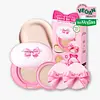 Key Ingredients
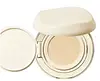
Benefits
Concerns
Ingredients Side-by-side
Water
Skin ConditioningCI 77891
Cosmetic ColorantCyclopentasiloxane
Emollient
Propanediol
Solvent

Trimethylsiloxysilicate
Emollient
Synthetic Fluorphlogopite
Caprylic/Capric Triglyceride
Masking
Cetyl Ethylhexanoate
EmollientDiphenylsiloxy Phenyl Trimethicone
Skin Conditioning
Methyl Trimethicone
Skin Conditioning
Lauryl PEG-10 Tris(Trimethylsiloxy)Silylethyl Dimethicone
Emulsifying
Hydrogenated Poly(C6-14 Olefin)
EmollientNiacinamide
Smoothing










Trisiloxane
Skin Conditioning
PEG-10 Dimethicone
Skin Conditioning
Dimethicone
Emollient
1,2-Hexanediol
Skin Conditioning
Glycerin
Humectant
Chitosan
Simmondsia Chinensis Seed Oil
Emollient


Moringa Oleifera Seed Oil
Emollient

Sodium Hyaluronate
Humectant
Solanum Lycopersicum Fruit Extract
Antioxidant
Soluble Collagen
Humectant
Isododecane
EmollientDisteardimonium Hectorite
StabilisingHdi/Trimethylol Hexyllactone Crosspolymer
Dimethicone Crosspolymer
Emulsion Stabilising
Stearic Acid
Cleansing
Alumina
Abrasive
Aluminum Hydroxide
EmollientPolyhydroxystearic Acid
Emulsifying
Glyceryl Caprylate
EmollientLauroyl Lysine
Skin Conditioning
Glycolipids
Skin ConditioningEthylhexyl Palmitate
Emollient
Isopropyl Myristate
Emollient
Isostearic Acid
Cleansing
Lecithin
Emollient
Triethoxycaprylylsilane
Adenosine
Skin Conditioning
Polyglyceryl-3 Polyricinoleate
Emulsifying
Silica
Abrasive
Bis-Hydroxyethoxypropyl Dimethicone/Ipdi Copolymer Ethylcarbamate
Tocopherol
Antioxidant
Squalane
Emollient
Ceramide NP
Skin Conditioning
Phytosphingosine
Skin Conditioning
Hydrogenated Lecithin
Emulsifying
Linolenic Acid
Cleansing

Caprylyl Glycol
Emollient
Acetyl Hexapeptide-8
Humectant
Isostearyl Alcohol
Emollient
Parfum
Masking
CI 77492
Cosmetic ColorantCI 77491
Cosmetic ColorantCI 77499
Cosmetic ColorantWater, CI 77891, Cyclopentasiloxane, Propanediol, Trimethylsiloxysilicate, Synthetic Fluorphlogopite, Caprylic/Capric Triglyceride, Cetyl Ethylhexanoate, Diphenylsiloxy Phenyl Trimethicone, Methyl Trimethicone, Lauryl PEG-10 Tris(Trimethylsiloxy)Silylethyl Dimethicone, Hydrogenated Poly(C6-14 Olefin), Niacinamide, Trisiloxane, PEG-10 Dimethicone, Dimethicone, 1,2-Hexanediol, Glycerin, Chitosan, Simmondsia Chinensis Seed Oil, Moringa Oleifera Seed Oil, Sodium Hyaluronate, Solanum Lycopersicum Fruit Extract, Soluble Collagen, Isododecane, Disteardimonium Hectorite, Hdi/Trimethylol Hexyllactone Crosspolymer, Dimethicone Crosspolymer, Stearic Acid, Alumina, Aluminum Hydroxide, Polyhydroxystearic Acid, Glyceryl Caprylate, Lauroyl Lysine, Glycolipids, Ethylhexyl Palmitate, Isopropyl Myristate, Isostearic Acid, Lecithin, Triethoxycaprylylsilane, Adenosine, Polyglyceryl-3 Polyricinoleate, Silica, Bis-Hydroxyethoxypropyl Dimethicone/Ipdi Copolymer Ethylcarbamate, Tocopherol, Squalane, Ceramide NP, Phytosphingosine, Hydrogenated Lecithin, Linolenic Acid, Caprylyl Glycol, Acetyl Hexapeptide-8, Isostearyl Alcohol, Parfum, CI 77492, CI 77491, CI 77499
Panax Ginseng Root Water
Masking
Cyclopentasiloxane
Emollient
CI 77891
Cosmetic ColorantPropanediol
Solvent
Butylene Glycol
Humectant
Isohexadecane
EmollientTrimethylsiloxysilicate
Emollient
Caprylyl Methicone
Skin Conditioning
PEG-10 Dimethicone
Skin Conditioning
Phenyl Trimethicone
Skin Conditioning
Pentylene Glycol
Skin Conditioning
Erythritol
Humectant
Polyglyceryl-2 Isostearate
Emulsifying
Acrylates/Dimethicone Copolymer
Skin Conditioning
Isododecane
EmollientCyclohexasiloxane
Emollient
Mica
Cosmetic ColorantCetyl PEG/PPG-10/1 Dimethicone
Emulsifying
CI 77492
Cosmetic ColorantDimethicone
Emollient
Magnesium Sulfate
Acrylates/Propyl Trimethicone Methacrylate Copolymer
Disteardimonium Hectorite
StabilisingDimethicone/Vinyl Dimethicone Crosspolymer
Skin Conditioning
Phenoxyethanol
Preservative
Polymethylsilsesquioxane
Polyglyceryl-4 Isostearate
Emulsifying
Tocopheryl Acetate
Antioxidant
Pvp
Emulsion StabilisingCalcium Aluminum Borosilicate
1,2-Hexanediol
Skin Conditioning
Triethoxysilylethyl Polydimethylsiloxyethyl Dimethicone
Skin Conditioning
Aluminum Hydroxide
EmollientGlycerin
Humectant
Methyl Gluceth-20
Humectant
Calendula Officinalis Flower Extract
Masking
Water
Skin ConditioningPropylene Carbonate
SolventBisabolol
Antioxidant
Xanthan Gum
EmulsifyingCI 77499
Cosmetic ColorantCI 77491
Cosmetic ColorantEthylhexylglycerin
Skin ConditioningC12-13 Pareth-9
EmulsifyingParfum
Masking
Lauryl Dimethicone
Skin Conditioning
Sodium Hyaluronate
Humectant
Squalane
Emollient
Cyclodextrin
AbsorbentOrchid Extract
Skin ConditioningSodium Myristoyl Glutamate
CleansingCentella Asiatica Extract
Cleansing
Hydroxyacetophenone
Antioxidant
Macrocystis Pyrifera Extract
Skin Conditioning
Sparassis Crispa Extract
Emulsion StabilisingThamnolia Vermicularis Leaf Extract
Skin ConditioningPortulaca Oleracea Extract
Skin Conditioning
Panax Ginseng Root Water, Cyclopentasiloxane, CI 77891, Propanediol, Butylene Glycol, Isohexadecane, Trimethylsiloxysilicate, Caprylyl Methicone, PEG-10 Dimethicone, Phenyl Trimethicone, Pentylene Glycol, Erythritol, Polyglyceryl-2 Isostearate, Acrylates/Dimethicone Copolymer, Isododecane, Cyclohexasiloxane, Mica, Cetyl PEG/PPG-10/1 Dimethicone, CI 77492, Dimethicone, Magnesium Sulfate, Acrylates/Propyl Trimethicone Methacrylate Copolymer, Disteardimonium Hectorite, Dimethicone/Vinyl Dimethicone Crosspolymer, Phenoxyethanol, Polymethylsilsesquioxane, Polyglyceryl-4 Isostearate, Tocopheryl Acetate, Pvp, Calcium Aluminum Borosilicate, 1,2-Hexanediol, Triethoxysilylethyl Polydimethylsiloxyethyl Dimethicone, Aluminum Hydroxide, Glycerin, Methyl Gluceth-20, Calendula Officinalis Flower Extract, Water, Propylene Carbonate, Bisabolol, Xanthan Gum, CI 77499, CI 77491, Ethylhexylglycerin, C12-13 Pareth-9, Parfum, Lauryl Dimethicone, Sodium Hyaluronate, Squalane, Cyclodextrin, Orchid Extract, Sodium Myristoyl Glutamate, Centella Asiatica Extract, Hydroxyacetophenone, Macrocystis Pyrifera Extract, Sparassis Crispa Extract, Thamnolia Vermicularis Leaf Extract, Portulaca Oleracea Extract
Ingredients Explained
These ingredients are found in both products.
Ingredients higher up in an ingredient list are typically present in a larger amount.
1,2-Hexanediol is a synthetic liquid and another multi-functional powerhouse.
It is a:
- Humectant, drawing moisture into the skin
- Emollient, helping to soften skin
- Solvent, dispersing and stabilizing formulas
- Preservative booster, enhancing the antimicrobial activity of other preservatives
Aluminum Hydroxide is a form of aluminum. It can be naturally found in nature as the mineral gibbsite. In cosmetics, Aluminum Hydroxide is used as a colorant, pH adjuster, and absorbent.
As a colorant, Aluminum Hydroxide may add opacity, or reduce the transparency. Aluminum hydroxide is contains both basic and acidic properties.
According to manufacturers, this ingredient is an emollient and humectant. This means it helps hydrate the skin.
In medicine, this ingredient is used to help relieve heartburn and help heal ulcers.
There is currently no credible scientific evidence linking aluminum hydroxide in cosmetics to increased cancer risk.
Major health organizations allow the use of aluminum hydroxide in personal care products and have not flagged it as a carcinogenic risk at typical usage levels.
Learn more about Aluminum HydroxideCi 77491 is also hydrated iron III oxide. It's sole purpose is to give a red/pink hue to products.
Iron III oxides are classified as inorganic chemicals for coloring.
Synthetically created Ci 77491 is considered safer than those naturally found. This is because the synthetically created version may contain less impurities. Iron oxides are generally non-toxic and non-allergenic.
Learn more about CI 77491CI 77492 is also hydrated iron III oxide. It's sole purpose is to give a yellow hue to products.
Iron III oxides are classified as inorganic chemicals for coloring.
Synthetically created CI 77492 is considered safer than those naturally found. This is because the synthetically created version may contain less impurities. Iron oxides are generally non-toxic and non-allergenic.
Learn more about CI 77492Ci 77499 is also hydrated iron III oxide. It is created from mixing red and black iron oxides. This helps give shades of darkness to a product.
Iron III oxides are classified as inorganic chemicals for coloring.
Ci 77891 is a white pigment from Titanium dioxide. It is naturally found in minerals such as rutile and ilmenite.
It's main function is to add a white color to cosmetics. It can also be mixed with other colors to create different shades.
Ci 77891 is commonly found in sunscreens due to its ability to block UV rays.
Learn more about CI 77891Cyclopentasiloxane (D5) is a lightweight silicone that mostly acts as an emollient and solvent in cosmetics. Its the reason your products feel silky, fast-spreading, and non-greasy.
Since D5 is volatile, it does its thing and then evaporates off the skin quickly.
The safety profile of this ingredient is reassuring; the US CIR Expert Panel concluded D5 is safe as used in cosmetics and Health Canada concluded that D5 is not harmful to human health or the environment as currently used in cosmetics
There's a study that people mention about D5 in a rat study showing tumors. This study is related to long-term inhalation of high D5 levels.
Regulatory bodies have judged this study to be not applicable in topical skincare since skin absorption of D5 is very low and we're not really inhaling huge amounts of D5.
The only restriction for this ingredient is environmental. The European Chemicals Agency (ECHA) restricted D5 in wash-off cosmetics at or above 0.1% due to their persistence in water.
Learn more about CyclopentasiloxaneDimethicone is a type of synthetic silicone created from natural materials such as quartz. It is also known as polydimethylsiloxane.
What it does:
Dimethicone comes in different viscosities:
Depending on the viscosity, dimethicone has different properties.
Ingredients lists don't always show which type is used, so we recommend reaching out to the brand if you have questions about the viscosity.
This ingredient is unlikely to cause irritation because it does not get absorbed into skin. However, people with silicone allergies should be careful about using this ingredient.
Note: Dimethicone may contribute to pilling. This is because it is not oil or water soluble, so pilling may occur when layered with products. When mixed with heavy oils in a formula, the outcome is also quite greasy.
Learn more about DimethiconeDisteardimonium Hectorite comes from the clay mineral named hectorite. It is used to add thickness to a product.
It can also help stabilize a product by helping to disperse other ingredients.
Hectorite is a rare, white clay mineral.
Learn more about Disteardimonium HectoriteGlycerin (or glycerol) is a compound naturally found in your skin. It's a powerhouse humectant that pulls water into the stratum corneum.
Topically, glycerin does several things at once:
Your skin makes glycerin on its own (mostly from sebaceous oil breakdown) and shuttles it to your outermost layer of skin, or your epidermis, via aquaporin-3.
Aquaporin-3 is a transporter that is essential for normal skin hydration, elasticity, and repair. Interestingly, mice lacking in AQP3 have dry and less elastic skin that can be fully corrected with glycerin.
This ingredient is non-irritating, plays well with almost every ingredient, and works across all skin types. Typical use is anywhere between 3-10% but can go up to 79% in some leave-on products.
Just know very high concentrations (>40%) can feel tacky in low humidity.
Glycerin is the name for this ingredient in American English. British English uses Glycerol/Glycerine.
Learn more about GlycerinIsododecane is a fragrance, emollient, and solvent.
As an emollient, it helps your skin stay soft and hydrated. Emollients help trap moisture into your skin.
Isododecane's role as a solvent makes it a great texture enhancer. It spreads smoothly on skin and does not leave a sticky feeling behind. Isododecane also helps prevent color transfer in makeup products.
Isododecane is not absorbed into skin.
The chemical name for this ingredient is 2,2,4,6,6-PENTAMETHYLHEPTANE.
Learn more about IsododecaneParfum is a catch-all term for an ingredient or more that is used to give a scent to products.
Also called "fragrance", this ingredient can be a blend of hundreds of chemicals or plant oils. This means every product with "fragrance" or "parfum" in the ingredients list is a different mixture.
For instance, Habanolide is a proprietary trade name for a specific aroma chemical. When used as a fragrance ingredient in cosmetics, most aroma chemicals fall under the broad labeling category of “FRAGRANCE” or “PARFUM” according to EU and US regulations.
The term 'parfum' or 'fragrance' is not regulated in many countries. In many cases, it is up to the brand to define this term.
For instance, many brands choose to label themselves as "fragrance-free" because they are not using synthetic fragrances. However, their products may still contain ingredients such as essential oils that are considered a fragrance by INCI standards.
One example is Calendula flower extract. Calendula is an essential oil that still imparts a scent or 'fragrance'.
Depending on the blend, the ingredients in the mixture can cause allergies and sensitivities on the skin. Some ingredients that are known EU allergens include linalool and citronellol.
Parfum can also be used to mask or cover an unpleasant scent.
The bottom line is: not all fragrances/parfum/ingredients are created equally. If you are worried about fragrances, we recommend taking a closer look at an ingredient. And of course, we always recommend speaking with a professional.
Learn more about ParfumPeg-10 Dimethicone is silicone with conditioner and emulsifier properties. It mostly acts as an emollient in skincare and and humectant in haircare.
According to the manufacturer, acidic formulations decrease the stability of this ingredient. It works best in neutral or near neutral formulations.
Propanediol is an all-star ingredient. It softens, hydrates, and smooths the skin.
It’s often used to:
Propanediol is not likely to cause sensitivity and considered safe to use. It is derived from corn or petroleum with a clear color and no scent.
Learn more about PropanediolSodium Hyaluronate is the salt form of hyaluronic acid. It is a long sugar chain that is naturally found in your skin, joints, and connective tissue that maintains hydration and elasticity.
In skincare, it works as a humectant. It pulls water from the environment and deeper layers of skin and binds it to the surface.
Interestingly, the size of the molecule affects its behavior:
Some clinical evidence links low molecular weight versions to improved wrinkle depth, elasticity, anti-inflammatory effects, and barrier repair.
Many serums use a blend of both weights so you can get surface hydration plus longer-lasting and deeper effects.
You'll typically see concentrations between 0.1-2% for this ingredient.
Learn more about Sodium HyaluronateSqualane is the hydrogenated and shelf-stable form of squalene (a lipid that naturally occurs in human sebum).
It is an emollient and skin conditioning agent that is able to integrate seamlessly into the skin's lipid barrier without clogging pores.
This is due to how structurally similar it is to what your skin already produces.
Though it is mostly an emollient that helps soften and hydrate skin, it also has some humectant and occlusive action. Humectants help the skin retain moisture while occlusives seal it in, making squalane a triple-threat moisturizer.
Research shows it has antioxidant capabilities that help protect against stressors like UV exposure, specifically UVA induced oxidative stress. This study also found that it supports collagen biosynthesis in human dermal fibroblasts.
No clinical study has reported significant adverse effects and irritation reactions are very rare from this ingredient (even at 100% concentration).
Overall, it's a fantastic ingredient for hydration and is suitable for all skin types.
This depends on the source. Squalane can be derived from both plants and animals. Most squalane used in skincare comes from plants.
Please note: the source of squalane is only known if disclosed by the brand. We recommend reaching out to the brand if you have any questions about their squalane.
Read more about squalene with an "e".
Though squalane is often called an oil, it’s technically not one. It is a hydrocarbon, meaning it is only made of carbon and hydrogen. True oils are triglycerides and made of fatty acids and glycerol.
The term “oil-free” isn’t regulated so companies can define it however they want. Some exclude all oils, while others just avoid mineral oil or comedogenic oils.
Squalane has a comedogenic rating of 1 from the original 1972 study that tested raw ingredients under occlusion on rabbit ears. This system is not standardized or peer-reviewed, and using the raw ingredients is very different from how diluted cosmetic formulations are used on human skin.
A comedogenic rating of 1 means it is "unlikely to clog pores" according to the original rating system.
The overall formula of a product matters more than the individual ingredients on whether or not it will cause clogged pores.
Learn more about SqualaneThis silicone is an emollient. Emollients create a thin film on the skin to prevent moisture from escaping.
It is not soluble in water and helps increase water-resistance in products.
According to a manufacturer, it can blend seamlessly with silicone oils, such as Cyclopentasiloxane.
Learn more about TrimethylsiloxysilicateWater. It's the most common cosmetic ingredient of all. You'll usually see it at the top of ingredient lists, meaning that it makes up the largest part of the product.
So why is it so popular? Water most often acts as a solvent - this means that it helps dissolve other ingredients into the formulation.
You'll also recognize water as that liquid we all need to stay alive. If you see this, drink a glass of water. Remember to stay hydrated!
Learn more about Water

