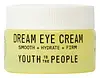
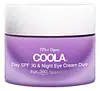
Youth To The People Dream Eye Cream with Goji Stem Cell and Ceramides Versus COOLA Full Spectrum 360 Day SPF 30 & Night Organic Eye Cream Duo
This anti-aging eye moisturizer is formulated around Ceramide NP and Squalane to soften the look of wrinkles and hydrate skin.
This calming eye moisturizer is formulated around Aloe Barbadensis Leaf Juice and Corallina Officinalis Extract to calm redness and hydrate skin.

What's inside
What's inside
 Key Ingredients
Benefits
Concerns
Ingredients Side-by-side
Water
Skin ConditioningDicaprylyl Carbonate
EmollientButyrospermum Parkii Butter
Skin Conditioning






Cetearyl Alcohol
Emollient

Glycerin
Humectant
Squalane
Emollient
Glyceryl Stearate
Emollient
Avena Sativa Bran Extract
Abrasive
Citrus Aurantium Dulcis Peel Extract
Emulsion Stabilising
Moringa Oleifera Seed Oil
Emollient

Opuntia Ficus-Indica Seed Oil
Emollient
Lycium Barbarum Callus Culture Extract
Skin ConditioningGardenia Jasminoides Fruit Extract
Cosmetic ColorantSodium Stearoyl Glutamate
CleansingCarbomer
Emulsion StabilisingCetearyl Glucoside
Emulsifying
Isomalt
HumectantSodium Benzoate
Masking
Tetrahexyldecyl Ascorbate
Antioxidant





Tocopheryl Acetate
Antioxidant
Tetrasodium Glutamate Diacetate
ChelatingBetaine
Humectant
Ceramide NP
Skin Conditioning
Phospholipids
Skin Conditioning
Sodium Hyaluronate
Humectant
Maltodextrin
Absorbent
Sodium Hydroxide
BufferingPhenoxyethanol
Preservative
Glucose
Humectant
Lecithin
Emollient
Tocopherol
Antioxidant
Sodium Glycolate
BufferingSodium Formate
Buffering
Ethylhexylglycerin
Skin ConditioningCitric Acid
Buffering
Water, Dicaprylyl Carbonate, Butyrospermum Parkii Butter, Cetearyl Alcohol, Glycerin, Squalane, Glyceryl Stearate, Avena Sativa Bran Extract, Citrus Aurantium Dulcis Peel Extract, Moringa Oleifera Seed Oil, Opuntia Ficus-Indica Seed Oil, Lycium Barbarum Callus Culture Extract, Gardenia Jasminoides Fruit Extract, Sodium Stearoyl Glutamate, Carbomer, Cetearyl Glucoside, Isomalt, Sodium Benzoate, Tetrahexyldecyl Ascorbate, Tocopheryl Acetate, Tetrasodium Glutamate Diacetate, Betaine, Ceramide NP, Phospholipids, Sodium Hyaluronate, Maltodextrin, Sodium Hydroxide, Phenoxyethanol, Glucose, Lecithin, Tocopherol, Sodium Glycolate, Sodium Formate, Ethylhexylglycerin, Citric Acid
Butyl Methoxydibenzoylmethane 2%
UV Absorber
Homosalate 2%
Skin Conditioning
Ethylhexyl Salicylate
UV Absorber
Octocrylene 3%
UV Absorber
1,2-Hexanediol
Skin Conditioning
Aloe Barbadensis Flower Extract
EmollientAloe Barbadensis Leaf Extract
Emollient
Aloe Barbadensis Leaf Juice
Skin Conditioning
Amino Esters-1
Skin ConditioningButylene Glycol
Humectant
C12-15 Alkyl Benzoate
AntimicrobialCaprylyl Glycol
Emollient
Carthamus Tinctorius Oleosomes
Emollient
Cetearyl Alcohol
Emollient
Cetyl Palmitate
Emollient
Coccinia Indica Fruit Extract
Skin Conditioning
Corallina Officinalis Extract
Skin Conditioning
Corallina Officinalis Powder
Curcuma Longa Root Extract
Antioxidant
Dimethicone
Emollient
Dimethicone Crosspolymer
Emulsion Stabilising
Glycerin
Humectant
Isododecane
EmollientJasminum Sambac Leaf Cell Extract
Masking
Melia Azadirachta Flower Extract
Skin ConditioningMelia Azadirachta Leaf Extract
Skin ConditioningNeopentyl Glycol Diheptanoate
EmollientOcimum Basilicum Flower/Leaf Extract
TonicOcimum Sanctum Leaf Extract
Skin ConditioningParfum
Masking
Water
Skin ConditioningDicaprylyl Ether
Emollient
Hydrogenated Vegetable Glycerides
EmollientButyrospermum Parkii Butter
Skin Conditioning
Cetyl Alcohol
Emollient
Glyceryl Stearate
Emollient
Helianthus Annuus Seed Oil
Emollient
Olea Europaea Fruit Oil
Masking
Sodium Stearoyl Glutamate
CleansingSodium Hydroxide
BufferingGlyceryl Caprylate
EmollientPalmitic Acid
Emollient
Sodium Acrylate/Sodium Acryloyldimethyl Taurate Copolymer
Emulsion StabilisingPropanediol
Solvent
Stearic Acid
Cleansing
Polyisobutene
Acrylates/C10-30 Alkyl Acrylate Crosspolymer
Emulsion StabilisingCaprylhydroxamic Acid
ChelatingCaprylyl/Capryl Glucoside
CleansingTheobroma Cacao Seed Extract
Antioxidant
Resveratrol
Antioxidant
Sodium Hyaluronate
Humectant
Sodium Carbonate
BufferingSchinus Molle Extract
Skin ProtectingBetaine
Humectant
Butyl Methoxydibenzoylmethane 2%, Homosalate 2%, Ethylhexyl Salicylate, Octocrylene 3%, 1,2-Hexanediol, Aloe Barbadensis Flower Extract, Aloe Barbadensis Leaf Extract, Aloe Barbadensis Leaf Juice, Amino Esters-1, Butylene Glycol, C12-15 Alkyl Benzoate, Caprylyl Glycol, Carthamus Tinctorius Oleosomes, Cetearyl Alcohol, Cetyl Palmitate, Coccinia Indica Fruit Extract, Corallina Officinalis Extract, Corallina Officinalis Powder, Curcuma Longa Root Extract, Dimethicone, Dimethicone Crosspolymer, Glycerin, Isododecane, Jasminum Sambac Leaf Cell Extract, Melia Azadirachta Flower Extract, Melia Azadirachta Leaf Extract, Neopentyl Glycol Diheptanoate, Ocimum Basilicum Flower/Leaf Extract, Ocimum Sanctum Leaf Extract, Parfum, Water, Dicaprylyl Ether, Hydrogenated Vegetable Glycerides, Butyrospermum Parkii Butter, Cetyl Alcohol, Glyceryl Stearate, Helianthus Annuus Seed Oil, Olea Europaea Fruit Oil, Sodium Stearoyl Glutamate, Sodium Hydroxide, Glyceryl Caprylate, Palmitic Acid, Sodium Acrylate/Sodium Acryloyldimethyl Taurate Copolymer, Propanediol, Stearic Acid, Polyisobutene, Acrylates/C10-30 Alkyl Acrylate Crosspolymer, Caprylhydroxamic Acid, Caprylyl/Capryl Glucoside, Theobroma Cacao Seed Extract, Resveratrol, Sodium Hyaluronate, Sodium Carbonate, Schinus Molle Extract, Betaine
Ingredients Explained
These ingredients are found in both products.
Ingredients higher up in an ingredient list are typically present in a larger amount.
Betaine is a humectant. Like hyaluronic acid, it helps attract and retain moisture in the skin. It’s known for being gentle and for helping the skin maintain balanced hydration.
Betaine is mainly used to improve hydration and support calmer skin. It helps skin cells regulate water balance because it functions as an osmolyte.
Some studies suggest betaine may support making skin tone more even.
Fun fact: Betaine naturally exists in the skin and the body. In cosmetic products, it can be either plant-derived (most commonly from sugar beets) or synthetically produced for consistency and stability.
Betaine is also known as trimethylglycine.
Learn more about BetaineThis ingredient is also known as shea butter. It is a plant-derived extract from the nuts of the Africa shea tree and one of the most well-studied emollients.
Because it has a high concentration of fatty acids (primarily oleic, stearic, and linoleic) it is able to form a protective barrier on the skin's surface. This helps seal in moisture and prevents transepidermal water loss (TEWL).
In vitro research found an increase in skin hydration by 58% and a decrease in TEWL by 37.8% after 24 hours of applying this ingredient (pretty impressive for a single ingredient!).
Besides hydration, shea butter also contains triterpenes that have anti-inflammatory potential. In particule, lupeol cinnamate has shown the highest anti-inflammatory activity in vivo.
Shea butter also contains vitamins A and E which may contribute to antioxidant activity.
While Shea Butter has an SPF rating of about 3-4, it is not a sunscreen replacement.
This ingredient may not be fungal acne safe because its fatty acids fall within the C11-C24 range that the Malassezia yeast can metabolize.
This ingredient shows up on a lot of "pore-clogging" lists but there's no real evidence behind that. It doesn't even have a comedogenic rating from an actual study; the numbers you'll find online come from blogs citing other blogs.
Ratings for other ingredients mostly come from a 1980s rabbit ear test. This test doesn't translate well to human skin or to real products because the ingredient sits at a much lower percentage.
Some people still find it breaks them out. So if that's you, definitely trust your skin. Just know this one's based on experience and not evidence.
Learn more about Butyrospermum Parkii ButterCetearyl alcohol is a waxy mixture of two fatty alcohols: cetyl alcohol and stearyl alcohol. It is an emollient and emulsifier.
Despite having "alcohol" in its name, it has nothing to do with drying solvent alcohols; the FDA also allows "alcohol-free" products to contain fatty alcohols like this ingredient.
It plays several roles in a formula:
Typical use levels for this ingredient sit around 1-10% and the Cosmetic Ingredient Review Expert Panel has affirmed safety at concentrations up to 25% in leave-on products.
Multiple assessments have found it to be non-irritating and non-sensitizing to most people.
However, there have been some cases of allergic contact dermatitis in patients with chronically compromised skin barriers.
Cetearyl alcohol has a comedogenic rating of 2 and irritancy rating of 1. Both of these numbers come from the 1989 study that used rabbit ears; a "2" means mildly comedogenic and a "1" means low irritancy.
Here's the catch: rabbit skin is more sensitive than human skin and throws a lot of false positives. A 1996 reappraisal found that ingredients rated 1-2 in the rabbit ear tests are generally safe for humans.
Remember comedogenic ratings are unable to assess the entire formula of a product or how it will react on your skin. Just be sure to patch test if you are unsure about certain ingredients.
This ingredient is not fungal acne safe. Cetearyl alcohol is a fatty alcohol with chain lengths that fall within the range that Malassezia can metabolize.
A 2019 study has also observed Malassezia growth in the presence of this ingredient, confirming it to be not-fungal acne safe.
Learn more about Cetearyl AlcoholGlycerin (or glycerol) is a compound naturally found in your skin. It's a powerhouse humectant that pulls water into the stratum corneum.
Topically, glycerin does several things at once:
Your skin makes glycerin on its own (mostly from sebaceous oil breakdown) and shuttles it to your outermost layer of skin, or your epidermis, via aquaporin-3.
Aquaporin-3 is a transporter that is essential for normal skin hydration, elasticity, and repair. Interestingly, mice lacking in AQP3 have dry and less elastic skin that can be fully corrected with glycerin.
This ingredient is non-irritating, plays well with almost every ingredient, and works across all skin types. Typical use is anywhere between 3-10% but can go up to 79% in some leave-on products.
Just know very high concentrations (>40%) can feel tacky in low humidity.
Glycerin is the name for this ingredient in American English. British English uses Glycerol/Glycerine.
Learn more about GlycerinGlyceryl Stearate is made by reacting glycerin with stearic acid (typically sourced from plant oils like palm or coconut). It's an emulsifier, emollient, and mild occlusive.
Emulsifiers help ingredients like oil and water stay mixed so your formula stays nicely blended and uniform in texture.
This ingredient is typically used in concentrations between 1-10%. Studies have found it to be non-sensitizing, non-phototoxic, and non-photoallergenic.
A close cousin of this ingredient is Glyceryl Stearate SE ("self-emulsifying"). This just has a small amount of sodium or potassium stearate added so it can emulsify without a co-emulsifier.
Since this ingredient is an ester of a C18 fatty acid, it may not be fungal acne safe. The Malassezia yeast can potentially metabolize within the C11-C24 range.
Fun fact: The human body also creates Glyceryl Stearate naturally.
Learn more about Glyceryl StearateSodium Hyaluronate is the salt form of hyaluronic acid. It is a long sugar chain that is naturally found in your skin, joints, and connective tissue that maintains hydration and elasticity.
In skincare, it works as a humectant. It pulls water from the environment and deeper layers of skin and binds it to the surface.
Interestingly, the size of the molecule affects its behavior:
Some clinical evidence links low molecular weight versions to improved wrinkle depth, elasticity, anti-inflammatory effects, and barrier repair.
Many serums use a blend of both weights so you can get surface hydration plus longer-lasting and deeper effects.
You'll typically see concentrations between 0.1-2% for this ingredient.
Learn more about Sodium HyaluronateSodium Hydroxide is also known as lye or caustic soda. It is used to adjust the pH of products; many ingredients require a specific pH to be effective.
In small amounts, sodium hydroxide is considered safe to use. However, large amounts may cause chemical burns due to its high alkaline.
Your skin has a natural pH and acid mantle. This acid mantle helps prevent harmful bacteria from breaking through. The acid mantle also helps keep your skin hydrated.
"Alkaline" refers to a high pH level. A low pH level would be considered acidic.
Learn more about Sodium HydroxideSodium Stearoyl Glutamate is an amino-acid based emulsifier. It is made by combining stearic acid with L-glutamic acid and neutralizing it to a sodium salt.
As an emulsifier, it works mainly as an oil-in-water one and helps keep the oil and water in your formulas blended. It also contributes to a smooth, non-greasy skin feel.
This ingredient is biodegradable and commonly available in natural/COSMOS-certified grades.
Learn more about Sodium Stearoyl GlutamateWater. It's the most common cosmetic ingredient of all. You'll usually see it at the top of ingredient lists, meaning that it makes up the largest part of the product.
So why is it so popular? Water most often acts as a solvent - this means that it helps dissolve other ingredients into the formulation.
You'll also recognize water as that liquid we all need to stay alive. If you see this, drink a glass of water. Remember to stay hydrated!
Learn more about Water

