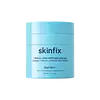
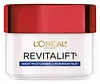
Skinfix Barrier+ Triple Lipid-Peptide Cream Versus L'Oreal Paris Revitalift Anti Wrinkle Night Cream
This barrier-repair moisturizer is formulated around Butyrospermum Parkii Butter and Ceramide NP to strengthen the skin barrier and hydrate skin.
This night moisturizer is formulated around Retinyl Palmitate to brighten and support scar healing.


What's inside
What's inside
 Key Ingredients
Benefits
Concerns
Ingredients Side-by-side
Water
Skin ConditioningCaprylic/Capric Triglyceride
Masking


Glycerin
Humectant
Butyrospermum Parkii Butter
Skin Conditioning




Olus Oil
Emollient
Cetyl Lactate
EmollientPropanediol
Solvent
C12-16 Alcohols
EmollientCaprylyl Caprylate/Caprate
Emollient
Jojoba Oil/Macadamia Seed Oil Esters
Skin Conditioning
Glyceryl Stearate Citrate
Emollient
Palmitic Acid
Emollient
Hydrogenated Lecithin
Emulsifying
Oryza Sativa Bran Extract
Skin Conditioning
Dilinoleic Acid/Propanediol Copolymer
EmollientSqualene
Emollient
Ophiopogon Japonicus Root Extract
Skin ConditioningXanthan Gum
EmulsifyingPhytosteryl Sunflowerseedate
Skin ConditioningGlycine Soja Extract
Skin ConditioningPentylene Glycol
Skin Conditioning
Ceramide NP
Skin Conditioning



Ceramide AP
Skin Conditioning
Ceramide EOP
Skin Conditioning
Hydrolyzed Rice Protein
Skin ConditioningChondrus Crispus Extract
Skin Conditioning
Hydrogenated Vegetable Glycerides
EmollientHelianthus Annuus Extract
Emollient
Sodium Hyaluronate
Humectant
Citric Acid
Buffering

Phytosteryl Macadamiate
Skin Conditioning
Tocopherol
Antioxidant


Rosmarinus Officinalis Leaf Extract
AntimicrobialAloe Barbadensis Leaf Juice
Skin Conditioning
Trisodium Ethylenediamine Disuccinate
ChelatingPhytosterols
Skin Conditioning
Sodium Lauroyl Lactylate
EmulsifyingGluconolactone
Chelating




Phenethyl Alcohol
MaskingPhytosphingosine
Skin Conditioning
Cholesterol
Emollient
Carbomer
Emulsion StabilisingPotassium Sorbate
Preservative
Ethylhexylglycerin
Skin ConditioningSodium Benzoate
Masking
Phenoxyethanol
Preservative
Water, Caprylic/Capric Triglyceride, Glycerin, Butyrospermum Parkii Butter, Olus Oil, Cetyl Lactate, Propanediol, C12-16 Alcohols, Caprylyl Caprylate/Caprate, Jojoba Oil/Macadamia Seed Oil Esters, Glyceryl Stearate Citrate, Palmitic Acid, Hydrogenated Lecithin, Oryza Sativa Bran Extract, Dilinoleic Acid/Propanediol Copolymer, Squalene, Ophiopogon Japonicus Root Extract, Xanthan Gum, Phytosteryl Sunflowerseedate, Glycine Soja Extract, Pentylene Glycol, Ceramide NP, Ceramide AP, Ceramide EOP, Hydrolyzed Rice Protein, Chondrus Crispus Extract, Hydrogenated Vegetable Glycerides, Helianthus Annuus Extract, Sodium Hyaluronate, Citric Acid, Phytosteryl Macadamiate, Tocopherol, Rosmarinus Officinalis Leaf Extract, Aloe Barbadensis Leaf Juice, Trisodium Ethylenediamine Disuccinate, Phytosterols, Sodium Lauroyl Lactylate, Gluconolactone, Phenethyl Alcohol, Phytosphingosine, Cholesterol, Carbomer, Potassium Sorbate, Ethylhexylglycerin, Sodium Benzoate, Phenoxyethanol
Water
Skin ConditioningGlycerin
Humectant
Dimethicone
Emollient
Hydrogenated Polyisobutene
EmollientCetyl Alcohol
Emollient
Glyceryl Stearate
Emollient
Aluminum Starch Octenylsuccinate
Absorbent
PEG-40 Stearate
Emulsifying
Prunus Armeniaca Kernel Oil
Masking
Shorea Robusta Seed Butter
Emollient
Paraffinum Liquidum
Emollient
Paraffin
Skin Conditioning
Zea Mays Kernel Extract
Stearic Acid
Cleansing
Stearyl Alcohol
Emollient
Microcrystalline Wax
Emulsion StabilisingSorbitan Tristearate
EmulsifyingGlycine Soja Protein
EmulsifyingTriethanolamine
BufferingIsohexadecane
EmollientSalicyloyl Phytosphingosine
Skin ConditioningMyristyl Alcohol
Emollient
Palmitic Acid
Emollient
Phenethyl Alcohol
MaskingHydrolyzed Soy Protein
Humectant
Caprylyl Glycol
Emollient
Acetyl Trifluoromethylphenyl Valylglycine
Skin ConditioningYeast Extract
Skin ConditioningPolysorbate 80
Emulsifying
Acrylamide/Sodium Acryloyldimethyltaurate Copolymer
Emulsion StabilisingRetinyl Palmitate
Skin Conditioning
Potassium Sorbate
Preservative
Sodium Benzoate
Masking
Phenoxyethanol
Preservative
Linalool
Perfuming

Geraniol
Perfuming
Alpha-Isomethyl Ionone
Perfuming
Amyl Cinnamal
Perfuming
Limonene
Perfuming
Citral
Perfuming
Citronellol
Perfuming
Butylphenyl Methylpropional
Perfuming
Hexyl Cinnamal
Perfuming
Benzyl Alcohol
Perfuming
Benzyl Benzoate
Antimicrobial
Benzyl Cinnamate
Perfuming
Benzyl Salicylate
Perfuming
Parfum
Masking
Water, Glycerin, Dimethicone, Hydrogenated Polyisobutene, Cetyl Alcohol, Glyceryl Stearate, Aluminum Starch Octenylsuccinate, PEG-40 Stearate, Prunus Armeniaca Kernel Oil, Shorea Robusta Seed Butter, Paraffinum Liquidum, Paraffin, Zea Mays Kernel Extract, Stearic Acid, Stearyl Alcohol, Microcrystalline Wax, Sorbitan Tristearate, Glycine Soja Protein, Triethanolamine, Isohexadecane, Salicyloyl Phytosphingosine, Myristyl Alcohol, Palmitic Acid, Phenethyl Alcohol, Hydrolyzed Soy Protein, Caprylyl Glycol, Acetyl Trifluoromethylphenyl Valylglycine, Yeast Extract, Polysorbate 80, Acrylamide/Sodium Acryloyldimethyltaurate Copolymer, Retinyl Palmitate, Potassium Sorbate, Sodium Benzoate, Phenoxyethanol, Linalool, Geraniol, Alpha-Isomethyl Ionone, Amyl Cinnamal, Limonene, Citral, Citronellol, Butylphenyl Methylpropional, Hexyl Cinnamal, Benzyl Alcohol, Benzyl Benzoate, Benzyl Cinnamate, Benzyl Salicylate, Parfum
Reviews
Ingredients Explained
These ingredients are found in both products.
Ingredients higher up in an ingredient list are typically present in a larger amount.
Glycerin (or glycerol) is a compound naturally found in your skin. It's a powerhouse humectant that pulls water into the stratum corneum.
Topically, glycerin does several things at once:
Your skin makes glycerin on its own (mostly from sebaceous oil breakdown) and shuttles it to your outermost layer of skin, or your epidermis, via aquaporin-3.
Aquaporin-3 is a transporter that is essential for normal skin hydration, elasticity, and repair. Interestingly, mice lacking in AQP3 have dry and less elastic skin that can be fully corrected with glycerin.
This ingredient is non-irritating, plays well with almost every ingredient, and works across all skin types. Typical use is anywhere between 3-10% but can go up to 79% in some leave-on products.
Just know very high concentrations (>40%) can feel tacky in low humidity.
Glycerin is the name for this ingredient in American English. British English uses Glycerol/Glycerine.
Learn more about GlycerinPalmitic Acid is a fatty acid naturally found in our skin and in many plant and animal sources.
In cosmetics, it is usually derived from palm oil. It serves many purposes in skincare, acting as a cleanser, emollient, and emulsifier.
Interestingly, topically applied Palmitic Acid can be elongated into longer chain fatty acids and ceramides. A 2019 study found low levels of Palmitic Acid lead to slower development of cells, suggesting it plays a role in keeping your skin's renewal process on track.
The CIR (Cosmetic Ingredient Review) panel determined it safe as used in cosmetics at concentrations up to 13%. It is non-irritating and non-sensitizing in clinical studies.
The culprit behind fungal acne, the Malassezia yeast, feeds on fatty acids with carbon chain lengths between C11-C24. Palmitic Acid, at C16, falls right into that sweet spot.
In vitro studies have shown that Palmitic Acid is one of the fatty acids that induce rapid Malassezia growth in lab settings.
It's worth noting that what feeds yeast in a lab doesn't necessarily feed it on your face since formulation and your skin's chemistry play a bigger role.
Learn more about Palmitic AcidPhenethyl Alcohol is a colorless and aromatic alohol. It is naturally occuring in essential oils.
The scent of this ingredient is floral and often compared to rose.
Like other alcohols, this ingredient helps prevent the growth of bacteria. However, its main purpose is to impact a fragrance.
Learn more about Phenethyl AlcoholPhenoxyethanol is one of the most widely used preservatives in skincare (and for good reason!).
It has a large spectrum of antimicrobial activity and especially effective bacteria, yeast, and mold while only having a weak effect on your skin's natural microbiome.
On a cellular level, it disrupts the cell membranes of microbes by poking holes that make the cell leak. This shuts down the chemical reactions the microbe needs to make energy so it can no longer survive.
Another perk of this ingredient is that it stays functional across a wide pH range (3-10).
You'll often see it paired with boosters like Ethylhexylglycerin; one study showed that a 1:9 ratio of Ethylhexylglycerin to Phenoxyethanol damages bacterial membranes as effectively as doubling the Phenoxyethanol concentration on its own.
Typical use concentrations range from 0.3-1% depending on the formula, and this ingredient is capped at 1% int the EU.
Safety-wise, the fear mongering does not hold up to the evidence. The EU's Scientific Committee on Consumer Safety and FDA consider it safe as a preservative at up to 1%, including for children of all ages.
Adverse systemic effects only showed up in animal studies at exposures roughly 200x higher than what people get from cosmetics. And despite its very widespread use, this ingredient is a rare sensitizer and allergic reactions are uncommon.
Learn more about PhenoxyethanolPotassium Sorbate is a preservative used to prevent yeast and mold in products. It is commonly found in both cosmetic and food products.
This ingredient comes from potassium salt derived from sorbic acid. Sorbic acid is a natural antibiotic and effective against fungus.
Both potassium sorbate and sorbic acid can be found in baked goods, cheeses, dried meats, dried fruit, ice cream, pickles, wine, yogurt, and more.
You'll often find this ingredient used with other preservatives.
Learn more about Potassium SorbateSodium Benzoate is a preservative. It's used in both cosmetic and food products to inhibit the growth of mold and bacteria. It is typically produced synthetically.
Both the US FDA and EU Health Committee have approved the use of sodium benzoate. In the US, levels of 0.1% (of the total product) are allowed.
Sodium benzoate works as a preservative by inhibiting the growth of bacteria inside of cells. It prevents the cell from fermenting a type of sugar using an enzyme called phosphofructokinase.
It is the salt of benzoic acid. Foods containing sodium benzoate include soda, salad dressings, condiments, fruit juices, wines, and snack foods.
Studies for using ascorbic acid and sodium benzoate in cosmetics are lacking, especially in skincare routines with multiple steps.
We always recommend speaking with a professional, such as a dermatologist, if you have any concerns.
Learn more about Sodium BenzoateWater. It's the most common cosmetic ingredient of all. You'll usually see it at the top of ingredient lists, meaning that it makes up the largest part of the product.
So why is it so popular? Water most often acts as a solvent - this means that it helps dissolve other ingredients into the formulation.
You'll also recognize water as that liquid we all need to stay alive. If you see this, drink a glass of water. Remember to stay hydrated!
Learn more about Water

