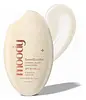
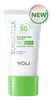
Moody SensiSoothe SPF50 PA++++ Mineral Sunscreen Versus Y.O.U Sunbrella 50% Aloe-B5 Acne Shield Light Sunscreen SPF 50+ PA++++
This mineral sunscreen covers the full UV range and blocks ~98% of UVB at SPF 50.
This chemical sunscreen covers the full UV range and blocks ~98% of UVB at SPF 50.


What's inside
What's inside
 Key Ingredients
Benefits
Concerns
No concerns
Ingredients Side-by-side
Water
Skin ConditioningIsononyl Isononanoate
EmollientZinc Oxide
Cosmetic Colorant


Titanium Dioxide
Cosmetic Colorant
Silica
Abrasive

Dicaprylyl Carbonate
EmollientCyclopentasiloxane
Emollient
Dimethicone Crosspolymer
Emulsion Stabilising
Ceramide NP
Skin Conditioning





Ceramide AP
Skin Conditioning
Ceramide EOP
Skin Conditioning
Phytosphingosine
Skin Conditioning
Tocopheryl Acetate
Antioxidant


Propanediol
Solvent
Squalane
Emollient
C14-22 Alcohols
Emulsion Stabilising
C12-20 Alkyl Glucoside
EmulsifyingEmulsifying Wax Nf
Polyacrylate Crosspolymer-6
Emulsion StabilisingNiacinamide
Smoothing




Xanthan Gum
EmulsifyingPhenoxyethanol
Preservative
Ethylhexylglycerin
Skin ConditioningWater, Isononyl Isononanoate, Zinc Oxide, Titanium Dioxide, Silica, Dicaprylyl Carbonate, Cyclopentasiloxane, Dimethicone Crosspolymer, Ceramide NP, Ceramide AP, Ceramide EOP, Phytosphingosine, Tocopheryl Acetate, Propanediol, Squalane, C14-22 Alcohols, C12-20 Alkyl Glucoside, Emulsifying Wax Nf, Polyacrylate Crosspolymer-6, Niacinamide, Xanthan Gum, Phenoxyethanol, Ethylhexylglycerin
Aloe Barbadensis Leaf Water
MaskingEthylhexyl Methoxycinnamate
UV Absorber
Water
Skin ConditioningEthylhexyl Salicylate
UV Absorber
Bis-Ethylhexyloxyphenol Methoxyphenyl Triazine
UV Absorber
Methylene Bis-Benzotriazolyl Tetramethylbutylphenol
UV Filter
Ethylhexyl Triazone
UV Absorber
Potassium Cetyl Phosphate
EmulsifyingDiethylamino Hydroxybenzoyl Hexyl Benzoate
UV Filter
Butyloctyl Salicylate
Skin Conditioning
Cyclopentasiloxane
Emollient
Propylene Glycol
Humectant

Cetearyl Alcohol
Emollient



Butylene Glycol
Humectant
Dibutyl Adipate
EmollientSucrose Polystearate
EmollientPhenoxyethanol
Preservative
Hexylene Glycol
EmulsifyingDecyl Glucoside
Cleansing
Hydroxyacetophenone
Antioxidant
Sodium Carbomer
Emulsion StabilisingAcrylates/Beheneth-25 Methacrylate Copolymer
Microcrystalline Cellulose
Absorbent1,2-Hexanediol
Skin Conditioning
Ammonium Acryloyldimethyltaurate/Vp Copolymer
Bisabolol
Antioxidant
Allantoin
Skin Conditioning
Ethylhexylglycerin
Skin ConditioningGlycerin
Humectant
Sodium Laureth Sulfate
Cleansing

Menthol
Masking
Menthyl Lactate
Masking
Disodium EDTA
ChelatingOlea Europaea Oil Unsaponifiables
Skin Conditioning
Parfum
Masking

Glyceryl Stearate
Emollient
Hydrogenated Castor Oil
Emollient
Steareth-21
CleansingXanthan Gum
EmulsifyingBHT
Antioxidant
Steareth-2
EmulsifyingHinokitiol
PEG-40 Hydrogenated Castor Oil
Emulsifying
Caprylyl Glycol
Emollient
Glycolipids
Skin ConditioningZinc PCA
Humectant
Centella Asiatica Leaf Extract
Skin Conditioning
Panthenol
Skin Conditioning
Ectoin
Skin Conditioning
Thermus Thermophillus Ferment
Skin ConditioningLactic Acid
Buffering
Salicylic Acid
Masking
Hydroxypropyl Cyclodextrin
MaskingPropanediol
Solvent
Caprylic/Capric Triglyceride
Masking
Mentha Piperita Leaf Extract
Skin ConditioningBuddleja Officinalis Leaf Extract
Skin ConditioningCeramide NP
Skin Conditioning
Hydrogenated Lecithin
Emulsifying
Niacinamide
Smoothing
Polylysine
Ceramide Ns
Skin Conditioning
Ceramide As
Skin Conditioning
Potassium Sorbate
Preservative
Ceramide EOP
Skin Conditioning
Ceramide AP
Skin Conditioning
Aloe Barbadensis Leaf Water, Ethylhexyl Methoxycinnamate, Water, Ethylhexyl Salicylate, Bis-Ethylhexyloxyphenol Methoxyphenyl Triazine, Methylene Bis-Benzotriazolyl Tetramethylbutylphenol, Ethylhexyl Triazone, Potassium Cetyl Phosphate, Diethylamino Hydroxybenzoyl Hexyl Benzoate, Butyloctyl Salicylate, Cyclopentasiloxane, Propylene Glycol, Cetearyl Alcohol, Butylene Glycol, Dibutyl Adipate, Sucrose Polystearate, Phenoxyethanol, Hexylene Glycol, Decyl Glucoside, Hydroxyacetophenone, Sodium Carbomer, Acrylates/Beheneth-25 Methacrylate Copolymer, Microcrystalline Cellulose, 1,2-Hexanediol, Ammonium Acryloyldimethyltaurate/Vp Copolymer, Bisabolol, Allantoin, Ethylhexylglycerin, Glycerin, Sodium Laureth Sulfate, Menthol, Menthyl Lactate, Disodium EDTA, Olea Europaea Oil Unsaponifiables, Parfum, Glyceryl Stearate, Hydrogenated Castor Oil, Steareth-21, Xanthan Gum, BHT, Steareth-2, Hinokitiol, PEG-40 Hydrogenated Castor Oil, Caprylyl Glycol, Glycolipids, Zinc PCA, Centella Asiatica Leaf Extract, Panthenol, Ectoin, Thermus Thermophillus Ferment, Lactic Acid, Salicylic Acid, Hydroxypropyl Cyclodextrin, Propanediol, Caprylic/Capric Triglyceride, Mentha Piperita Leaf Extract, Buddleja Officinalis Leaf Extract, Ceramide NP, Hydrogenated Lecithin, Niacinamide, Polylysine, Ceramide Ns, Ceramide As, Potassium Sorbate, Ceramide EOP, Ceramide AP
Reviews
Ingredients Explained
These ingredients are found in both products.
Ingredients higher up in an ingredient list are typically present in a larger amount.
Ceramide AP is is a skin-identical lipid that mimics what your skin already makes naturally. Ceramides help maintain epidermal integrity and barrier function.
You'll often see this ingredient paired with other ceramides (like ceramide NP), cholesterol, or fatty acids because this combination best mimics the natural lipid mix your skin already has.
The skin's ability to produce ceramides gets disrupted in skin conditions like eczema. This in turn weakens the skin barrier and applying ceramides topically has been shown to replenish what's been lost to restore barrier function.
Most of the studies with Ceramide AP test it as part of a multi-ceramide complex; studies reinforce ceramide AP's role in rebalancing ceramides in skin and improving skin hydration.
Learn more about Ceramide APCeramide EOP is formally known as Ceramide 1.
It is naturally found in skin and part of the intercellular "mortar" holding everything together in your outermost layer.
EOP stands for a linked Ester fatty acid, a linked Omega hydroxy fatty acid, and the Phytosphingosine base.
What makes Ceramide EOP special is its ultra-long fatty acid chain; this unique structure allows it to bridge the lipid layers in your skin barrier to prevent water loss (something no other ceramide can do).
Low levels of Ceramide EOP have been found in people with eczema and psoriasis.
Using it together with other ceramides, cholesterol, and linoleic acid have been shown to meaningfully improve hydration and reduce water loss.
In one clinical study, a regimen using Ceramide EOP, NP, and AP led to significant symptom improvements in patients with eczema, psoriasis, and dry skin in just 4 weeks.
You'll usually see concentrations between 0.1-0.5% in formulations. Overall, this is a well-tolerated and safe ingredient for cosmetic use.
Learn more about Ceramide EOPCeramide NP (formerly known as Ceramide 3) is one of the skin's naturally occurring lipids.
Since ceramides are the major lipid components of the skin, they are crucial for maintaining skin barrier and hydration. Ceramide NP most closely mirrors the dominant kind in human skin amongst ceramide subtypes.
This ceramide works by slotting into gaps within the stratum corneum's lipid matrix to limit trans-epidermal water loss (TEWL) and shield the skin against external irritants.
A study with 312 patients found that using a ceramide-containing routine for 4 weeks reduced the severity of atopic dermatitis by over 61%.
Another clinical study in subjects aged 60 and older found that a ceramide body wash and moisturizer improved skin dryness and itchy skin in 15 days.
Overall, ceramides are considered non-irritating and safety tests have found little to no observable adverse effects from using this ingredient.
Ceramide NP is usually sourced from plants (like soybean or rice bran), or produced synthetically.
Learn more about Ceramide NPCyclopentasiloxane (D5) is a lightweight silicone that mostly acts as an emollient and solvent in cosmetics. Its the reason your products feel silky, fast-spreading, and non-greasy.
Since D5 is volatile, it does its thing and then evaporates off the skin quickly.
The safety profile of this ingredient is reassuring; the US CIR Expert Panel concluded D5 is safe as used in cosmetics and Health Canada concluded that D5 is not harmful to human health or the environment as currently used in cosmetics
There's a study that people mention about D5 in a rat study showing tumors. This study is related to long-term inhalation of high D5 levels.
Regulatory bodies have judged this study to be not applicable in topical skincare since skin absorption of D5 is very low and we're not really inhaling huge amounts of D5.
The only restriction for this ingredient is environmental. The European Chemicals Agency (ECHA) restricted D5 in wash-off cosmetics at or above 0.1% due to their persistence in water.
Learn more about CyclopentasiloxaneEthylhexylglycerin is created from glycerin. It is a multitasker ingredient that:
The CIR Expert Panel found minimal skin absorption or sensitization of any kind in a safety assessment. Though this ingredient is considered well-tolerated, a small number of cases of allergic dermatitis have been published since 2002. Just be sure to patch test if you are unsure.
Industry-reported use ranges from 8% in rinse-off products and 2% in leave-on formulations.
Learn more about EthylhexylglycerinNiacinamide is a multitasking form of vitamin B3 that strengthens the skin barrier, reduces pores and dark spots, regulates oil, and improves signs of aging.
And the best part? It's gentle and well-tolerated by most skin types, including sensitive and reactive skin.
You might have heard of "niacin flush", or the reddening of skin that causes itchiness. Niacinamide has not been found to cause this.
In very rare cases, some individuals may not be able to tolerate niacinamide at all or experience an allergic reaction to it.
If you are experiencing flaking, irritation, and dryness with this ingredient, be sure to double check all your products as this ingredient can be found in all categories of skincare.
When incorporating niacinamide into your routine, look out for concentration amounts. Typically, 5% niacinamide provides benefits such as fading dark spots. However, if you have sensitive skin, it is better to begin with a smaller concentration.
When you apply niacinamide to your skin, your body converts it into nicotinamide adenine dinucleotide (NAD). NAD is an essential coenzyme that is already found in your cells as "fuel" and powers countless biological processes.
In your skin, NAD helps repair cell damage, produce new healthy cells, support collagen production, strengthen the skin barrier, and fight environmental stressors (like UV and pollution).
Our natural NAD levels start to decline with age, leading to slower skin repair, visible aging, and a weaker skin barrier. By providing your skin niacinamide, you're recharging your skin's NAD levels. This leads to stronger, healthier, and younger looking skin.
Another name for vitamin B3 is nicotinamide. This vitamin is water-soluble and our bodies don't store it. We obtain Vitamin B3 from either food or skincare. Meat, fish, wheat, yeast, and leafy greens contain vitamin B3.
The type of niacinamide used in skincare is synthetically created.
Learn more about NiacinamidePhenoxyethanol is one of the most widely used preservatives in skincare (and for good reason!).
It has a large spectrum of antimicrobial activity and especially effective bacteria, yeast, and mold while only having a weak effect on your skin's natural microbiome.
On a cellular level, it disrupts the cell membranes of microbes by poking holes that make the cell leak. This shuts down the chemical reactions the microbe needs to make energy so it can no longer survive.
Another perk of this ingredient is that it stays functional across a wide pH range (3-10).
You'll often see it paired with boosters like Ethylhexylglycerin; one study showed that a 1:9 ratio of Ethylhexylglycerin to Phenoxyethanol damages bacterial membranes as effectively as doubling the Phenoxyethanol concentration on its own.
Typical use concentrations range from 0.3-1% depending on the formula, and this ingredient is capped at 1% int the EU.
Safety-wise, the fear mongering does not hold up to the evidence. The EU's Scientific Committee on Consumer Safety and FDA consider it safe as a preservative at up to 1%, including for children of all ages.
Adverse systemic effects only showed up in animal studies at exposures roughly 200x higher than what people get from cosmetics. And despite its very widespread use, this ingredient is a rare sensitizer and allergic reactions are uncommon.
Learn more about PhenoxyethanolPropanediol is an all-star ingredient. It softens, hydrates, and smooths the skin.
It’s often used to:
Propanediol is not likely to cause sensitivity and considered safe to use. It is derived from corn or petroleum with a clear color and no scent.
Learn more about PropanediolWater. It's the most common cosmetic ingredient of all. You'll usually see it at the top of ingredient lists, meaning that it makes up the largest part of the product.
So why is it so popular? Water most often acts as a solvent - this means that it helps dissolve other ingredients into the formulation.
You'll also recognize water as that liquid we all need to stay alive. If you see this, drink a glass of water. Remember to stay hydrated!
Learn more about WaterXanthan gum is used as a stabilizer and thickener within cosmetic products. It helps give products a sticky, thick feeling - preventing them from being too runny.
On the technical side of things, xanthan gum is a polysaccharide - a combination consisting of multiple sugar molecules bonded together.
Xanthan gum is a pretty common and great ingredient. It is a natural, non-toxic, non-irritating ingredient that is also commonly used in food products.
Learn more about Xanthan Gum

