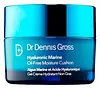
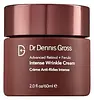
Dr. Dennis Gross Skincare Hyaluronic Marine Oil-Free Moisture Cushion Versus Dr. Dennis Gross Skincare Advanced Retinol + Ferulic Intense Wrinkle Cream
This barrier-repair moisturizer is formulated around Sodium Hyaluronate and Saccharide Isomerate to strengthen the skin barrier and hydrate skin.

What's inside
What's inside
 Key Ingredients
Benefits
Concerns
Ingredients Side-by-side
Water
Skin ConditioningCetearyl Alcohol
Emollient






C13-16 Isoparaffin
Solvent
Stearyl Dimethicone
Emollient
Dimethicone
Emollient
Butylene Glycol
Humectant

Caprylic/Capric Triglyceride
Masking
Glyceryl Behenate
Emollient
Sodium Hyaluronate
Humectant


Caulerpa Lentillifera Extract
Saccharide Isomerate
Humectant
Aloe Barbadensis Leaf Extract
Emollient
Tocopherol
Antioxidant



Citrullus Lanatus Fruit Extract
Skin Conditioning
Cocos Nucifera Fruit Extract
Emollient
Citrus Sinensis Fruit Extract
Antioxidant
Vaccinium Myrtillus Fruit/Leaf Extract
AstringentLactic Acid
Buffering




Glycolic Acid
Buffering

Saccharum Officinarum Extract
MoisturisingLeuconostoc/Radish Root Ferment Filtrate
Antimicrobial
Citrus Aurantium Dulcis Fruit Extract
MaskingCitrus Limon Fruit Extract
Masking
Acer Saccharum Extract
Skin ConditioningCollagen Amino Acids
Moisturising
Adenosine
Skin Conditioning
Hydrolyzed Soy Protein
Humectant
Copper PCA
HumectantIsohexadecane
EmollientHeptyl Undecylenate
EmollientEthylhexylglycerin
Skin ConditioningDimethicone Crosspolymer-3
Skin Conditioning
Isododecane
EmollientOctadecene
SolventSodium Acrylate/Sodium Acryloyldimethyl Taurate Copolymer
Emulsion StabilisingPotassium Cetyl Phosphate
EmulsifyingSorbitan Oleate
Emulsifying
Ceteareth-20
Cleansing
Polysorbate 80
Emulsifying
Sodium Citrate
BufferingCitric Acid
Buffering
Benzyl Alcohol
Perfuming




Phenoxyethanol
Preservative
Sodium Benzoate
Masking
Potassium Sorbate
Preservative
Water, Cetearyl Alcohol, C13-16 Isoparaffin, Stearyl Dimethicone, Dimethicone, Butylene Glycol, Caprylic/Capric Triglyceride, Glyceryl Behenate, Sodium Hyaluronate, Caulerpa Lentillifera Extract, Saccharide Isomerate, Aloe Barbadensis Leaf Extract, Tocopherol, Citrullus Lanatus Fruit Extract, Cocos Nucifera Fruit Extract, Citrus Sinensis Fruit Extract, Vaccinium Myrtillus Fruit/Leaf Extract, Lactic Acid, Glycolic Acid, Saccharum Officinarum Extract, Leuconostoc/Radish Root Ferment Filtrate, Citrus Aurantium Dulcis Fruit Extract, Citrus Limon Fruit Extract, Acer Saccharum Extract, Collagen Amino Acids, Adenosine, Hydrolyzed Soy Protein, Copper PCA, Isohexadecane, Heptyl Undecylenate, Ethylhexylglycerin, Dimethicone Crosspolymer-3, Isododecane, Octadecene, Sodium Acrylate/Sodium Acryloyldimethyl Taurate Copolymer, Potassium Cetyl Phosphate, Sorbitan Oleate, Ceteareth-20, Polysorbate 80, Sodium Citrate, Citric Acid, Benzyl Alcohol, Phenoxyethanol, Sodium Benzoate, Potassium Sorbate
Water
Skin ConditioningMethyl Glucose Sesquistearate
Emollient
Glycerin
Humectant
Diisostearyl Malate
EmollientCaprylyl Caprylate/Caprate
Emollient
Cetearyl Alcohol
Emollient
Butyrospermum Parkii Butter
Skin Conditioning
Dimethicone
Emollient
Propylene Glycol
Humectant
Caprylic/Capric Triglyceride
Masking
Cetyl Alcohol
Emollient
Bakuchiol
Antimicrobial
Retinol
Skin Conditioning
Ferulic Acid
Antimicrobial
Nephelium Lappaceum Leaf Extract
Skin ConditioningSodium Hyaluronate
Humectant
Squalane
Emollient
Oenothera Biennis Oil
Emollient
Ceramide Ng
Skin Conditioning
Emblica Officinalis Fruit Extract
Skin ConditioningSilybum Marianum Extract
Skin Conditioning
Prunus Amygdalus Dulcis Oil
Skin Conditioning
Jojoba Esters
Emollient
Soy Isoflavones
Skin ConditioningPhospholipids
Skin Conditioning
Saccharide Isomerate
Humectant
Hippophae Rhamnoides Fruit Oil
Skin Protecting
Centella Asiatica Extract
Cleansing
Ursolic Acid
MaskingAdenosine
Skin Conditioning
Camellia Japonica Seed Oil
Emollient
Helianthus Annuus Seed Oil
Emollient
Arnica Montana Flower Extract
Masking
Salix Alba Bark Extract
Astringent
Pyrus Malus Fruit Extract
Skin Conditioning
Hydrolyzed Sodium Hyaluronate
Skin Conditioning
Sodium Hyaluronate Crosspolymer
Humectant
Glycine Soja Oil
Emollient
Tocopherol
Antioxidant
Sodium Acetylated Hyaluronate
Humectant
Lactic Acid
Buffering
Hydrolyzed Soy Protein
Humectant
Pentylene Glycol
Skin Conditioning
Sodium Stearoyl Glutamate
CleansingEthylhexylglycerin
Skin ConditioningButylene Glycol
Humectant
Tetrahydropiperine
Skin ConditioningPolyglyceryl-4 Oleate
Emulsifying
Ethylhexyl Olivate
Skin Conditioning
Glyceryl Stearate Citrate
Emollient
Glyceryl Caprylate
EmollientMaltodextrin
Absorbent
Sodium Acrylates Copolymer
Sodium Phytate
ChelatingCitric Acid
Buffering
Sodium Citrate
BufferingIlomastat
ChelatingCitrus Limon Peel Extract
EmollientCitrus Aurantium Bergamia Fruit Extract
Skin ConditioningLavandula Angustifolia Flower/Leaf/Stem Extract
Masking
Phenoxyethanol
Preservative
Benzyl Alcohol
Perfuming
Sodium Benzoate
Masking
Potassium Sorbate
Preservative
Water, Methyl Glucose Sesquistearate, Glycerin, Diisostearyl Malate, Caprylyl Caprylate/Caprate, Cetearyl Alcohol, Butyrospermum Parkii Butter, Dimethicone, Propylene Glycol, Caprylic/Capric Triglyceride, Cetyl Alcohol, Bakuchiol, Retinol, Ferulic Acid, Nephelium Lappaceum Leaf Extract, Sodium Hyaluronate, Squalane, Oenothera Biennis Oil, Ceramide Ng, Emblica Officinalis Fruit Extract, Silybum Marianum Extract, Prunus Amygdalus Dulcis Oil, Jojoba Esters, Soy Isoflavones, Phospholipids, Saccharide Isomerate, Hippophae Rhamnoides Fruit Oil, Centella Asiatica Extract, Ursolic Acid, Adenosine, Camellia Japonica Seed Oil, Helianthus Annuus Seed Oil, Arnica Montana Flower Extract, Salix Alba Bark Extract, Pyrus Malus Fruit Extract, Hydrolyzed Sodium Hyaluronate, Sodium Hyaluronate Crosspolymer, Glycine Soja Oil, Tocopherol, Sodium Acetylated Hyaluronate, Lactic Acid, Hydrolyzed Soy Protein, Pentylene Glycol, Sodium Stearoyl Glutamate, Ethylhexylglycerin, Butylene Glycol, Tetrahydropiperine, Polyglyceryl-4 Oleate, Ethylhexyl Olivate, Glyceryl Stearate Citrate, Glyceryl Caprylate, Maltodextrin, Sodium Acrylates Copolymer, Sodium Phytate, Citric Acid, Sodium Citrate, Ilomastat, Citrus Limon Peel Extract, Citrus Aurantium Bergamia Fruit Extract, Lavandula Angustifolia Flower/Leaf/Stem Extract, Phenoxyethanol, Benzyl Alcohol, Sodium Benzoate, Potassium Sorbate
Ingredients Explained
These ingredients are found in both products.
Ingredients higher up in an ingredient list are typically present in a larger amount.
Adenosine is a purine nucleoside that your body already makes in every cell. In skincare, it acts mainly as a skin conditioning and anti-aging agent.
The way it works is fairly well mapped out:
Your skin has cells called fibroblasts that build collagen (the stuff that keeps skin firm and smooth). Adenosine basically flips a switch on these cells that tells them to get to work making more collagen and other proteins. These cells slow down on their own as skin ages, so Adenosine helps give them a little nudge to keep going.
The clinical backing is pretty solid too.
A blind, randomized, placebo-controlled trial of 126 women aged 45-65 tested a 0.1% cream twice daily and found real improvements in crow's feet and frown lines using a precise 3D skin-mapping technique; these changes showed up by week 3 and held at 2 months.
A later study using Adenosine-loaded dissolving microneedle patches reported gains in wrinkle depth, dermal density, elasticity, and hydration.
On concentrations, South Korea's Ministry of Food and Drug Safety has set 0.04% as the approved functional anti-wrinkle level. You'll typically see this ingredient used somewhere in the 0.04-0.1% range since it works at low doses.
This ingredient has been found safe for cosmetics with the data showing no irritation or sensitization.
Overall, this is a great ingredient for any anti-aging routine and has no photosensitizing effect, so it suits both AM and PM use.
Learn more about AdenosineBenzyl Alcohol is an aromatic alcohol with several roles: it's a preservative, solvent, and mild fragrance component with a floral scent.
This ingredient has been deemed safe for use in cosmetic formulations at concentrations up to 5%, and up to 10% in hair dyes. You'll typically see 0.5-2% in most rinse-off or leave-on products.
As a preservative, it works by disrupting the membrane of microbial proteins. This helps keep bacteria and fungi from growing in your products.
The sensitization picture is actually quite assuring as well:of nearly 71,000 patients patch tested with benzyl alcohol, only 0.21% showed a positive reaction with most of them being weakly positive.
This led researchers to conclude that benzyl alcohol cannot be regarded as a significant contact allergen.
It is worth noting this ingredient is classified as one of the EU's regulated fragrance allergens and restricted to 1% in finished products.
Labels must also declare it in concentrations above 0.001% in leave-on products and 0.01% in rinse-off products.
At concentrations around 5%, localized redness and itching can appear as a direct irritant response and not as a true allergic reaction.
Learn more about Benzyl AlcoholButylene Glycol (or BG) is used within cosmetic products for a few different reasons:
Overall, Butylene Glycol is a safe and well-rounded ingredient that works well with other ingredients.
Though this ingredient works well with most skin types, some people with sensitive skin may experience a reaction such as allergic rashes, closed comedones, or itchiness.
Learn more about Butylene GlycolCaprylic/Capric Triglyceride (aka MCT Oil) is a lightweight emollient, solvent, and texture enhancer. It is considered a skin-softener by helping to prevent moisture loss.
Though it behaves like an oil, it is not technically one due to its chemical composition. One perk of this ingredient is that it is very stable, resistant to oxidation, and unlikely to go rancid.
In practice, that translates to a long shelf life and a consistently elegant skin feel.
While there is an assumption Caprylic Triglyceride can clog pores due to it being derived from coconut oil, there is no research supporting this. Just patch test if you have concerns.
Fractionated coconut oil and MCT Oil are both listed as Caprylic/Capric Triglyceride according to INCI. This is because INCI names are based on the ingredient’s final chemical composition and not its marketing name or source.
This ingredient is treated as the gold standard fungal acne safe oil. Even though it is coconut derived, the problematic lauric acid is stripped out.
This leaves just caprylic (C8) and capric (C10) acid. These chain lengths actually trend antifungal; a 2020 study found caprylic acid was enough to disrupt Malassezia furfur cell membrane, with a caprylic acid derivative damaging membrane structures at concentrations as low as 0.2%.
Learn more about Caprylic/Capric TriglycerideCetearyl alcohol is a waxy mixture of two fatty alcohols: cetyl alcohol and stearyl alcohol. It is an emollient and emulsifier.
Despite having "alcohol" in its name, it has nothing to do with drying solvent alcohols; the FDA also allows "alcohol-free" products to contain fatty alcohols like this ingredient.
It plays several roles in a formula:
Typical use levels for this ingredient sit around 1-10% and the Cosmetic Ingredient Review Expert Panel has affirmed safety at concentrations up to 25% in leave-on products.
Multiple assessments have found it to be non-irritating and non-sensitizing to most people.
However, there have been some cases of allergic contact dermatitis in patients with chronically compromised skin barriers.
Cetearyl alcohol has a comedogenic rating of 2 and irritancy rating of 1. Both of these numbers come from the 1989 study that used rabbit ears; a "2" means mildly comedogenic and a "1" means low irritancy.
Here's the catch: rabbit skin is more sensitive than human skin and throws a lot of false positives. A 1996 reappraisal found that ingredients rated 1-2 in the rabbit ear tests are generally safe for humans.
Remember comedogenic ratings are unable to assess the entire formula of a product or how it will react on your skin. Just be sure to patch test if you are unsure about certain ingredients.
This ingredient is not fungal acne safe. Cetearyl alcohol is a fatty alcohol with chain lengths that fall within the range that Malassezia can metabolize.
A 2019 study has also observed Malassezia growth in the presence of this ingredient, confirming it to be not-fungal acne safe.
Learn more about Cetearyl AlcoholCitric Acid is an alpha hydroxy acid (AHA) naturally found in citrus fruits like oranges, lemons, and limes.
Like other AHAs, citric acid can exfoliate skin by breaking down the bonds that hold dead skin cells together. This helps reveal smoother and brighter skin underneath.
However, this exfoliating effect only happens at high concentrations (20%) which can be hard to find in cosmetic products.
Due to this, citric acid is usually included in small amounts as a pH adjuster. This helps keep products slightly more acidic and compatible with skin's natural pH.
In skincare formulas, citric acid can:
While it can provide some skin benefits, research shows lactic acid and glycolic acid are generally more effective and less irritating exfoliants.
Most citric acid used in skincare today is made by fermenting sugars (usually from molasses). This synthetic version is identical to the natural citrus form but easier to stabilize and use in formulations.
Rosacea skin has a lower threshold for acids generally, with 62.5% of rosacea subjects in one study reacting to lactic acid in a sting test. This is why we mark citric acid as a potential rosacea trigger.
However, this ingredient shows up as a pH adjuster or chelator at roughly 0.1-1% in many products. These low levels are unlikely to be an issue for rosacea skin and becomes a potential trigger at exfoliating concentrations (20%). Because everybody's skin is unique, we recommend a patch test if you are unsure.
Learn more about Citric AcidDimethicone is a type of synthetic silicone created from natural materials such as quartz. It is also known as polydimethylsiloxane.
What it does:
Dimethicone comes in different viscosities:
Depending on the viscosity, dimethicone has different properties.
Ingredients lists don't always show which type is used, so we recommend reaching out to the brand if you have questions about the viscosity.
This ingredient is unlikely to cause irritation because it does not get absorbed into skin. However, people with silicone allergies should be careful about using this ingredient.
Note: Dimethicone may contribute to pilling. This is because it is not oil or water soluble, so pilling may occur when layered with products. When mixed with heavy oils in a formula, the outcome is also quite greasy.
Learn more about DimethiconeEthylhexylglycerin is created from glycerin. It is a multitasker ingredient that:
The CIR Expert Panel found minimal skin absorption or sensitization of any kind in a safety assessment. Though this ingredient is considered well-tolerated, a small number of cases of allergic dermatitis have been published since 2002. Just be sure to patch test if you are unsure.
Industry-reported use ranges from 8% in rinse-off products and 2% in leave-on formulations.
Learn more about EthylhexylglycerinHydrolyzed Soy Protein is a water-soluble blend of peptides and amino acids made by breaking down the protein from soybeans into smaller proteins.
It's the most widely used hydrolyzed vegetable protein in cosmetics and it acts mainly as a skin and hair conditioning agent.
The smaller fragments are water-loving so it forms a thin, moisture-retentive film on skin that helps reduce water loss and leaves things feeling softer and smoother.
You'll often see it credited with "firming" or "anti-aging" benefits as well; this claim traces back to lab research like Tokudome et al. (2012). This study added low-molecular-weight soybean peptides to cultured human skin fibroblasts and saw increased type I collagen gene expression + collagen content.
The caveat is that this is in-vitro and oral-peptide research so the only solid, well-established role for the topical ingredient is skin conditioning.
Typical use concentrations go up to 3.5% in mascara but this ingredient is typically used at low levels well under 1%.
It has a reassuring safety profile as well; it's not a skin irritant in testing up to 20% and has limited skin penetration due to its large size and water-loving nature.
Anyone with a known soy allergy should definitely patch test or skip this ingredient. There's also a single case of a soy-containing product aggravating rosacea via protein contact dermatitis, but this is very rare.
Learn more about Hydrolyzed Soy ProteinLactic Acid is another well-loved alpha hydroxy acid (AHA). It is gentler than glycolic acid but still highly effective.
Its main role is to exfoliate the surface of the skin by loosening the “glue” that holds dead skin cells together. Shedding those old cells leads to smoother, softer, and more even-toned skin.
Because lactic acid molecules are larger than glycolic acid, they don’t penetrate as deeply. This means they’re less likely to sting or irritate, making it a great choice for beginners or those with sensitive skin.
Like glycolic acid, it can:
Lactic acid also acts as a humectant (like hyaluronic acid). It can draw water into the skin to improve hydration and also plays a role in the skin's natural moisturizing factor (NMF) in the form of sodium lactate.
Studies show it can boost ceramide production to strengthen the skin barrier and even help balance the skin’s microbiome.
To get results, choose products with a pH between 3-4.
Lower strengths (5-12%) focus on surface exfoliation; higher strengths (12% and up) can reach deeper in the dermis (deeper, supportive layer) to improve skin texture and firmness over time.
Though it was originally derived from milk, most modern lactic acid used in skincare is vegan. It is made through non-dairy fermentation to create a bio-identical and stable form suitable for all formulations.
When lactic acid shows up near the end of an ingredient list, it usually means the brand added just a tiny amount to adjust the product’s pH.
Legend has it that Cleopatra used to bathe in sour milk to help reduce wrinkles.
Lactic acid is truly a gentle multitasker: it exfoliates, hydrates, strengthens, and brightens. It's a great ingredient for giving your skin a smooth, glowing, and healthy look without the harshness of stronger acids.
Read more about some other popular AHA's here:
Learn more about Lactic AcidPhenoxyethanol is one of the most widely used preservatives in skincare (and for good reason!).
It has a large spectrum of antimicrobial activity and especially effective bacteria, yeast, and mold while only having a weak effect on your skin's natural microbiome.
On a cellular level, it disrupts the cell membranes of microbes by poking holes that make the cell leak. This shuts down the chemical reactions the microbe needs to make energy so it can no longer survive.
Another perk of this ingredient is that it stays functional across a wide pH range (3-10).
You'll often see it paired with boosters like Ethylhexylglycerin; one study showed that a 1:9 ratio of Ethylhexylglycerin to Phenoxyethanol damages bacterial membranes as effectively as doubling the Phenoxyethanol concentration on its own.
Typical use concentrations range from 0.3-1% depending on the formula, and this ingredient is capped at 1% int the EU.
Safety-wise, the fear mongering does not hold up to the evidence. The EU's Scientific Committee on Consumer Safety and FDA consider it safe as a preservative at up to 1%, including for children of all ages.
Adverse systemic effects only showed up in animal studies at exposures roughly 200x higher than what people get from cosmetics. And despite its very widespread use, this ingredient is a rare sensitizer and allergic reactions are uncommon.
Learn more about PhenoxyethanolPotassium Sorbate is a preservative used to prevent yeast and mold in products. It is commonly found in both cosmetic and food products.
This ingredient comes from potassium salt derived from sorbic acid. Sorbic acid is a natural antibiotic and effective against fungus.
Both potassium sorbate and sorbic acid can be found in baked goods, cheeses, dried meats, dried fruit, ice cream, pickles, wine, yogurt, and more.
You'll often find this ingredient used with other preservatives.
Learn more about Potassium SorbateSaccharide Isomerate comes from sugars found in corn. It is a skin hydrator.
The structure of this ingredient can be altered to be more similar to the carbohydrates found in our skin. This ability to mimic our skin gives it hydrating properties.
Specifically, saccharide Isomerate is a humectant. Humectants draw moisture from the air to our skin.
Research shows Saccharide Isomerate to be an effective moisturizer.
Learn more about Saccharide IsomerateSodium Benzoate is a preservative. It's used in both cosmetic and food products to inhibit the growth of mold and bacteria. It is typically produced synthetically.
Both the US FDA and EU Health Committee have approved the use of sodium benzoate. In the US, levels of 0.1% (of the total product) are allowed.
Sodium benzoate works as a preservative by inhibiting the growth of bacteria inside of cells. It prevents the cell from fermenting a type of sugar using an enzyme called phosphofructokinase.
It is the salt of benzoic acid. Foods containing sodium benzoate include soda, salad dressings, condiments, fruit juices, wines, and snack foods.
Studies for using ascorbic acid and sodium benzoate in cosmetics are lacking, especially in skincare routines with multiple steps.
We always recommend speaking with a professional, such as a dermatologist, if you have any concerns.
Learn more about Sodium BenzoateSodium Citrate is the sodium salts of citric acid. In skincare, it is used to alter pH levels and acts as a preservative.
Its main functions are to maintain the pH of a product and neutralize metal ions.
The acidity of our skin is maintained by our glands and skin biome; normal pH level of skin is slightly acidic (~4.75-5.5).
Being slightly acidic allows our skin to create an "acid mantle". This acid mantle is a thin barrier that protects our skin from bacteria and contaminants.
Learn more about Sodium CitrateSodium Hyaluronate is the salt form of hyaluronic acid. It is a long sugar chain that is naturally found in your skin, joints, and connective tissue that maintains hydration and elasticity.
In skincare, it works as a humectant. It pulls water from the environment and deeper layers of skin and binds it to the surface.
Interestingly, the size of the molecule affects its behavior:
Some clinical evidence links low molecular weight versions to improved wrinkle depth, elasticity, anti-inflammatory effects, and barrier repair.
Many serums use a blend of both weights so you can get surface hydration plus longer-lasting and deeper effects.
You'll typically see concentrations between 0.1-2% for this ingredient.
Learn more about Sodium HyaluronateTocopherol is a fat-soluble antioxidant known as Vitamin E.
You'll find this ingredient in the vast majority of skincare (for good reason). It works to neutralize free radicals, or unstable molecules generated by UV exposure, pollution, and other environmental stressors, before they can cause oxidative damage to your skin cells.
Topically applied tocopherol has been shown to protect against UV damage by ramping up the skin's own natural defense enzymes.
It also acts as a skin conditioning agent; some studies show that regular topical use can improve the skin's water-binding capacity over 2-4 weeks.
This ingredient is especially loved for being a team player. When combined with Vitamin C, the photoprotective effect of both ingredients roughly doubles and the combo also helps reduce UV-induced DNA damage.
This ingredient has some brightening potential but it's more of a prevention ingredient than spot-fader. Cell studies show it can slow down melanin production but it's worth noting that it's not the most powerful brightener out there.
In formulations, it also serves as a stabilizer that helps protect other oxidation-prone ingredients from degrading.
Concentrations usually range from 0.1-1% in most leave-on products.
Learn more about TocopherolWater. It's the most common cosmetic ingredient of all. You'll usually see it at the top of ingredient lists, meaning that it makes up the largest part of the product.
So why is it so popular? Water most often acts as a solvent - this means that it helps dissolve other ingredients into the formulation.
You'll also recognize water as that liquid we all need to stay alive. If you see this, drink a glass of water. Remember to stay hydrated!
Learn more about Water

