
What's inside
What's inside
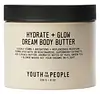 Key Ingredients
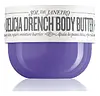
Benefits
Concerns
Ingredients Side-by-side
Water
Skin ConditioningSimmondsia Chinensis Seed Oil
Emollient





Butyrospermum Parkii Butter
Skin Conditioning


Coco-Caprylate/Caprate
Emollient
Glycerin
Humectant
Isononyl Isononanoate
EmollientNiacinamide
Smoothing









Hydroxyethylpiperazine Ethane Sulfonic Acid
BufferingIsostearyl Isostearate
Emollient
Stearyl Alcohol
Emollient
Glyceryl Stearate
Emollient
Propanediol
Solvent
Theobroma Grandiflorum Seed Butter
Skin Conditioning
Triheptanoin
Skin ConditioningCeteareth-20
Cleansing
Aristotelia Chilensis Fruit Extract
Skin ConditioningEuterpe Oleracea Fruit Extract
Gardenia Jasminoides Fruit Extract
Cosmetic ColorantLycium Barbarum Fruit Extract
Astringent
Moringa Oleifera Seed Extract
Skin Conditioning
Opuntia Tuna Fruit Extract
Skin ConditioningBisabolol
Antioxidant
Sodium Citrate
BufferingSodium Hyaluronate
Humectant
Trisodium Ethylenediamine Disuccinate
ChelatingTocopherol
Antioxidant
Citric Acid
Buffering
Caprylyl Glycol
Emollient
Castor Oil/Ipdi Copolymer
Dilinoleic Acid/Butanediol Copolymer
Glycine Soja Oil
Emollient
Helianthus Annuus Seed Oil
Emollient
Isohexadecane
EmollientMaltodextrin
Absorbent
Polysorbate 80
Emulsifying
Sodium Acrylate/Sodium Acryloyldimethyl Taurate Copolymer
Emulsion StabilisingSodium Polyacrylate
Absorbent
Sorbitan Oleate
Emulsifying
Xanthan Gum
EmulsifyingCitral
Perfuming


Citronellol
Perfuming
Geraniol
Perfuming
Hydroxycitronellal
Perfuming
Limonene
Perfuming
Linalool
Perfuming
Phenoxyethanol
Preservative
Potassium Sorbate
Preservative
Parfum
Masking
Water, Simmondsia Chinensis Seed Oil, Butyrospermum Parkii Butter, Coco-Caprylate/Caprate, Glycerin, Isononyl Isononanoate, Niacinamide, Hydroxyethylpiperazine Ethane Sulfonic Acid, Isostearyl Isostearate, Stearyl Alcohol, Glyceryl Stearate, Propanediol, Theobroma Grandiflorum Seed Butter, Triheptanoin, Ceteareth-20, Aristotelia Chilensis Fruit Extract, Euterpe Oleracea Fruit Extract, Gardenia Jasminoides Fruit Extract, Lycium Barbarum Fruit Extract, Moringa Oleifera Seed Extract, Opuntia Tuna Fruit Extract, Bisabolol, Sodium Citrate, Sodium Hyaluronate, Trisodium Ethylenediamine Disuccinate, Tocopherol, Citric Acid, Caprylyl Glycol, Castor Oil/Ipdi Copolymer, Dilinoleic Acid/Butanediol Copolymer, Glycine Soja Oil, Helianthus Annuus Seed Oil, Isohexadecane, Maltodextrin, Polysorbate 80, Sodium Acrylate/Sodium Acryloyldimethyl Taurate Copolymer, Sodium Polyacrylate, Sorbitan Oleate, Xanthan Gum, Citral, Citronellol, Geraniol, Hydroxycitronellal, Limonene, Linalool, Phenoxyethanol, Potassium Sorbate, Parfum
Water
Skin ConditioningButyrospermum Parkii Butter
Skin Conditioning
Cocos Nucifera Oil
Masking
Ethylhexyl Palmitate
Emollient
Parfum
Masking
Methyl Glucose Sesquistearate
Emollient
Glyceryl Stearate Se
Emulsifying
Lauryl Laurate
Skin Conditioning
Glycerin
Humectant
Myristyl Myristate
Emollient
Hydrolyzed Sodium Hyaluronate
Skin Conditioning
Lactobacillus/Hibiscus Sabdariffa Flower Ferment Filtrate
Skin ConditioningCopaifera Officinalis Resin
MaskingPassiflora Edulis Seed Oil
Emollient
Platonia Insignis Seed Butter
Emollient
Theobroma Grandiflorum Seed Butter
Skin Conditioning
Squalane
Emollient
Tocopherol
Antioxidant
Bixa Orellana Seed Extract
MaskingCetearyl Alcohol
Emollient
Behenyl Alcohol
Emollient
Caprylic/Capric Triglyceride
Masking
Phenyl Trimethicone
Skin Conditioning
Maltodextrin
Absorbent
Cetearyl Olivate
Sorbitan Olivate
Emulsifying
Sodium Stearoyl Glutamate
CleansingPotassium Cetyl Phosphate
EmulsifyingSodium Gluconate
ChelatingEthylhexylglycerin
Skin ConditioningPhenoxyethanol
Preservative
Butylene Glycol
Humectant
Carbomer
Emulsion StabilisingPotassium Hydroxide
BufferingSodium Hydroxide
BufferingCI 75120
Cosmetic ColorantAlpha-Isomethyl Ionone
Perfuming
Hydroxycitronellal
Perfuming
Water, Butyrospermum Parkii Butter, Cocos Nucifera Oil, Ethylhexyl Palmitate, Parfum, Methyl Glucose Sesquistearate, Glyceryl Stearate Se, Lauryl Laurate, Glycerin, Myristyl Myristate, Hydrolyzed Sodium Hyaluronate, Lactobacillus/Hibiscus Sabdariffa Flower Ferment Filtrate, Copaifera Officinalis Resin, Passiflora Edulis Seed Oil, Platonia Insignis Seed Butter, Theobroma Grandiflorum Seed Butter, Squalane, Tocopherol, Bixa Orellana Seed Extract, Cetearyl Alcohol, Behenyl Alcohol, Caprylic/Capric Triglyceride, Phenyl Trimethicone, Maltodextrin, Cetearyl Olivate, Sorbitan Olivate, Sodium Stearoyl Glutamate, Potassium Cetyl Phosphate, Sodium Gluconate, Ethylhexylglycerin, Phenoxyethanol, Butylene Glycol, Carbomer, Potassium Hydroxide, Sodium Hydroxide, CI 75120, Alpha-Isomethyl Ionone, Hydroxycitronellal
Reviews
Ingredients Explained
These ingredients are found in both products.
Ingredients higher up in an ingredient list are typically present in a larger amount.
This ingredient is also known as shea butter. It is a plant-derived extract from the nuts of the Africa shea tree and one of the most well-studied emollients.
Because it has a high concentration of fatty acids (primarily oleic, stearic, and linoleic) it is able to form a protective barrier on the skin's surface. This helps seal in moisture and prevents transepidermal water loss (TEWL).
In vitro research found an increase in skin hydration by 58% and a decrease in TEWL by 37.8% after 24 hours of applying this ingredient (pretty impressive for a single ingredient!).
Besides hydration, shea butter also contains triterpenes that have anti-inflammatory potential. In particule, lupeol cinnamate has shown the highest anti-inflammatory activity in vivo.
Shea butter also contains vitamins A and E which may contribute to antioxidant activity.
While Shea Butter has an SPF rating of about 3-4, it is not a sunscreen replacement.
This ingredient may not be fungal acne safe because its fatty acids fall within the C11-C24 range that the Malassezia yeast can metabolize.
This ingredient shows up on a lot of "pore-clogging" lists but there's no real evidence behind that. It doesn't even have a comedogenic rating from an actual study; the numbers you'll find online come from blogs citing other blogs.
Ratings for other ingredients mostly come from a 1980s rabbit ear test. This test doesn't translate well to human skin or to real products because the ingredient sits at a much lower percentage.
Some people still find it breaks them out. So if that's you, definitely trust your skin. Just know this one's based on experience and not evidence.
Learn more about Butyrospermum Parkii ButterGlycerin (or glycerol) is a compound naturally found in your skin. It's a powerhouse humectant that pulls water into the stratum corneum.
Topically, glycerin does several things at once:
Your skin makes glycerin on its own (mostly from sebaceous oil breakdown) and shuttles it to your outermost layer of skin, or your epidermis, via aquaporin-3.
Aquaporin-3 is a transporter that is essential for normal skin hydration, elasticity, and repair. Interestingly, mice lacking in AQP3 have dry and less elastic skin that can be fully corrected with glycerin.
This ingredient is non-irritating, plays well with almost every ingredient, and works across all skin types. Typical use is anywhere between 3-10% but can go up to 79% in some leave-on products.
Just know very high concentrations (>40%) can feel tacky in low humidity.
Glycerin is the name for this ingredient in American English. British English uses Glycerol/Glycerine.
Learn more about GlycerinHydroxycitronellal is a fragrance created from citronellal. The smell of hydroxycitronellal is often described as "citrus-like" or "melon-like".
Hydroxycitronellal is a known EU allergen and may cause irritation when applied to the skin.
Maltodextrin is a plant-derived carbohydrate made by breaking down starch (usually from corn, potato, or rice). In cosmetic formulas, it's a multitasking absorbent, emulsion stabilizer, and skin conditioner.
This ingredient is mostly used to stabilize emulsions and improve the powdery, non-greasy feel of products (like dry shampoos).
Safety-wise, this ingredient is pretty solid; it's even recognized as a food additive. Both animal and clinical studies found no adverse effects at the levels used in cosmetics.
Industry data shows this ingredient is used up to 45.7% in spray products and up to 33% in powder products.
Learn more about MaltodextrinParfum is a catch-all term for an ingredient or more that is used to give a scent to products.
Also called "fragrance", this ingredient can be a blend of hundreds of chemicals or plant oils. This means every product with "fragrance" or "parfum" in the ingredients list is a different mixture.
For instance, Habanolide is a proprietary trade name for a specific aroma chemical. When used as a fragrance ingredient in cosmetics, most aroma chemicals fall under the broad labeling category of “FRAGRANCE” or “PARFUM” according to EU and US regulations.
The term 'parfum' or 'fragrance' is not regulated in many countries. In many cases, it is up to the brand to define this term.
For instance, many brands choose to label themselves as "fragrance-free" because they are not using synthetic fragrances. However, their products may still contain ingredients such as essential oils that are considered a fragrance by INCI standards.
One example is Calendula flower extract. Calendula is an essential oil that still imparts a scent or 'fragrance'.
Depending on the blend, the ingredients in the mixture can cause allergies and sensitivities on the skin. Some ingredients that are known EU allergens include linalool and citronellol.
Parfum can also be used to mask or cover an unpleasant scent.
The bottom line is: not all fragrances/parfum/ingredients are created equally. If you are worried about fragrances, we recommend taking a closer look at an ingredient. And of course, we always recommend speaking with a professional.
Learn more about ParfumPhenoxyethanol is one of the most widely used preservatives in skincare (and for good reason!).
It has a large spectrum of antimicrobial activity and especially effective bacteria, yeast, and mold while only having a weak effect on your skin's natural microbiome.
On a cellular level, it disrupts the cell membranes of microbes by poking holes that make the cell leak. This shuts down the chemical reactions the microbe needs to make energy so it can no longer survive.
Another perk of this ingredient is that it stays functional across a wide pH range (3-10).
You'll often see it paired with boosters like Ethylhexylglycerin; one study showed that a 1:9 ratio of Ethylhexylglycerin to Phenoxyethanol damages bacterial membranes as effectively as doubling the Phenoxyethanol concentration on its own.
Typical use concentrations range from 0.3-1% depending on the formula, and this ingredient is capped at 1% int the EU.
Safety-wise, the fear mongering does not hold up to the evidence. The EU's Scientific Committee on Consumer Safety and FDA consider it safe as a preservative at up to 1%, including for children of all ages.
Adverse systemic effects only showed up in animal studies at exposures roughly 200x higher than what people get from cosmetics. And despite its very widespread use, this ingredient is a rare sensitizer and allergic reactions are uncommon.
Learn more about PhenoxyethanolThis ingredient is also known as cupuacu butter. It's a soft, creamy plant fat that works as a skin-conditioning agent and often marketed as the plant-based alternative to lanolin.
The composition of this butter is dominated by oleic acid, stearic acid, and smaller amounts of palmitic, linoleic, and arachidic acids. There's also a useful dose of phystosterols.
That fatty-acid-and-sterol combo is why this ingredient behaves like a richer cousin of shea butter: the lipids reinforce the skin's surface and slow water loss while the sterols help support the barrier.
There's some early research too: a mouse study found cupuacu butter emulgels had antioxidant activity and a measurable photoprotective effect against UVB damage.
Overall, this is a well-tolerated ingredient but those prone to congestion might prefer formulations with lower concentrations.
Fungal acne: Cupuacu butter's fatty acids are mostly "locked up" in triglycerides that Malassezia can't easily feed on, but the yeast can slowly break these down to access the free fatty acids. Therefore, ingredient may not be fungal acne safe.
Learn more about Theobroma Grandiflorum Seed ButterTocopherol is a fat-soluble antioxidant known as Vitamin E.
You'll find this ingredient in the vast majority of skincare (for good reason). It works to neutralize free radicals, or unstable molecules generated by UV exposure, pollution, and other environmental stressors, before they can cause oxidative damage to your skin cells.
Topically applied tocopherol has been shown to protect against UV damage by ramping up the skin's own natural defense enzymes.
It also acts as a skin conditioning agent; some studies show that regular topical use can improve the skin's water-binding capacity over 2-4 weeks.
This ingredient is especially loved for being a team player. When combined with Vitamin C, the photoprotective effect of both ingredients roughly doubles and the combo also helps reduce UV-induced DNA damage.
This ingredient has some brightening potential but it's more of a prevention ingredient than spot-fader. Cell studies show it can slow down melanin production but it's worth noting that it's not the most powerful brightener out there.
In formulations, it also serves as a stabilizer that helps protect other oxidation-prone ingredients from degrading.
Concentrations usually range from 0.1-1% in most leave-on products.
Learn more about TocopherolWater. It's the most common cosmetic ingredient of all. You'll usually see it at the top of ingredient lists, meaning that it makes up the largest part of the product.
So why is it so popular? Water most often acts as a solvent - this means that it helps dissolve other ingredients into the formulation.
You'll also recognize water as that liquid we all need to stay alive. If you see this, drink a glass of water. Remember to stay hydrated!
Learn more about Water

