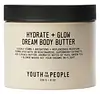
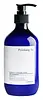
Youth To The People Superberry Hydrate + Glow Dream Body Butter Versus Pyunkang Yul Intensive Ceramide Lotion
This barrier-repair moisturizer is formulated around Sodium Hyaluronate and Hydroxypropyl Bispalmitamide Mea to strengthen the skin barrier and hydrate skin.


What's inside
What's inside
 Key Ingredients
Benefits
Concerns
Ingredients Side-by-side
Water
Skin ConditioningSimmondsia Chinensis Seed Oil
Emollient





Butyrospermum Parkii Butter
Skin Conditioning


Coco-Caprylate/Caprate
Emollient
Glycerin
Humectant
Isononyl Isononanoate
EmollientNiacinamide
Smoothing









Hydroxyethylpiperazine Ethane Sulfonic Acid
BufferingIsostearyl Isostearate
Emollient
Stearyl Alcohol
Emollient
Glyceryl Stearate
Emollient
Propanediol
Solvent
Theobroma Grandiflorum Seed Butter
Skin Conditioning
Triheptanoin
Skin ConditioningCeteareth-20
Cleansing
Aristotelia Chilensis Fruit Extract
Skin ConditioningEuterpe Oleracea Fruit Extract
Gardenia Jasminoides Fruit Extract
Cosmetic ColorantLycium Barbarum Fruit Extract
Astringent
Moringa Oleifera Seed Extract
Skin Conditioning
Opuntia Tuna Fruit Extract
Skin ConditioningBisabolol
Antioxidant
Sodium Citrate
BufferingSodium Hyaluronate
Humectant
Trisodium Ethylenediamine Disuccinate
ChelatingTocopherol
Antioxidant
Citric Acid
Buffering
Caprylyl Glycol
Emollient
Castor Oil/Ipdi Copolymer
Dilinoleic Acid/Butanediol Copolymer
Glycine Soja Oil
Emollient
Helianthus Annuus Seed Oil
Emollient
Isohexadecane
EmollientMaltodextrin
Absorbent
Polysorbate 80
Emulsifying
Sodium Acrylate/Sodium Acryloyldimethyl Taurate Copolymer
Emulsion StabilisingSodium Polyacrylate
Absorbent
Sorbitan Oleate
Emulsifying
Xanthan Gum
EmulsifyingCitral
Perfuming


Citronellol
Perfuming
Geraniol
Perfuming
Hydroxycitronellal
Perfuming
Limonene
Perfuming
Linalool
Perfuming
Phenoxyethanol
Preservative
Potassium Sorbate
Preservative
Parfum
Masking
Water, Simmondsia Chinensis Seed Oil, Butyrospermum Parkii Butter, Coco-Caprylate/Caprate, Glycerin, Isononyl Isononanoate, Niacinamide, Hydroxyethylpiperazine Ethane Sulfonic Acid, Isostearyl Isostearate, Stearyl Alcohol, Glyceryl Stearate, Propanediol, Theobroma Grandiflorum Seed Butter, Triheptanoin, Ceteareth-20, Aristotelia Chilensis Fruit Extract, Euterpe Oleracea Fruit Extract, Gardenia Jasminoides Fruit Extract, Lycium Barbarum Fruit Extract, Moringa Oleifera Seed Extract, Opuntia Tuna Fruit Extract, Bisabolol, Sodium Citrate, Sodium Hyaluronate, Trisodium Ethylenediamine Disuccinate, Tocopherol, Citric Acid, Caprylyl Glycol, Castor Oil/Ipdi Copolymer, Dilinoleic Acid/Butanediol Copolymer, Glycine Soja Oil, Helianthus Annuus Seed Oil, Isohexadecane, Maltodextrin, Polysorbate 80, Sodium Acrylate/Sodium Acryloyldimethyl Taurate Copolymer, Sodium Polyacrylate, Sorbitan Oleate, Xanthan Gum, Citral, Citronellol, Geraniol, Hydroxycitronellal, Limonene, Linalool, Phenoxyethanol, Potassium Sorbate, Parfum
Water
Skin ConditioningGlycerin
Humectant
Dipropylene Glycol
HumectantEthylhexyl Palmitate
Emollient
Methylpropanediol
SolventPolyglyceryl-3 Distearate
Emulsifying
Stearyl Alcohol
Emollient
1,2-Hexanediol
Skin Conditioning
Lonicera Japonica Flower Extract
Skin ConditioningSodium Hyaluronate
Humectant
Sodium Hyaluronate Crosspolymer
Humectant
Hydrolyzed Hyaluronic Acid
Humectant
Hyaluronic Acid
Humectant
Hydrolyzed Sodium Hyaluronate
Skin Conditioning
Hydroxypropyl Bispalmitamide Mea
Emollient
Helianthus Annuus Seed Oil
Emollient
Macadamia Ternifolia Seed Oil
Emollient
Butyrospermum Parkii Butter
Skin Conditioning
Palmitic Acid
Emollient
Sorbitan Stearate
Emulsifying
Squalane
Emollient
Caprylic/Capric Triglyceride
Masking
Olea Europaea Fruit Oil
Masking
Stearic Acid
Cleansing
Caprylyl Glycol
Emollient
Carbomer
Emulsion StabilisingGlyceryl Stearate Citrate
Emollient
Xanthan Gum
EmulsifyingMyristic Acid
Cleansing
Lauric Acid
Cleansing
Oleic Acid
Emollient
Butylene Glycol
Humectant
Pentylene Glycol
Skin Conditioning
Ethylhexylglycerin
Skin ConditioningTromethamine
BufferingDisodium EDTA
ChelatingWater, Glycerin, Dipropylene Glycol, Ethylhexyl Palmitate, Methylpropanediol, Polyglyceryl-3 Distearate, Stearyl Alcohol, 1,2-Hexanediol, Lonicera Japonica Flower Extract, Sodium Hyaluronate, Sodium Hyaluronate Crosspolymer, Hydrolyzed Hyaluronic Acid, Hyaluronic Acid, Hydrolyzed Sodium Hyaluronate, Hydroxypropyl Bispalmitamide Mea, Helianthus Annuus Seed Oil, Macadamia Ternifolia Seed Oil, Butyrospermum Parkii Butter, Palmitic Acid, Sorbitan Stearate, Squalane, Caprylic/Capric Triglyceride, Olea Europaea Fruit Oil, Stearic Acid, Caprylyl Glycol, Carbomer, Glyceryl Stearate Citrate, Xanthan Gum, Myristic Acid, Lauric Acid, Oleic Acid, Butylene Glycol, Pentylene Glycol, Ethylhexylglycerin, Tromethamine, Disodium EDTA
Reviews
Ingredients Explained
These ingredients are found in both products.
Ingredients higher up in an ingredient list are typically present in a larger amount.
This ingredient is also known as shea butter. It is a plant-derived extract from the nuts of the Africa shea tree and one of the most well-studied emollients.
Because it has a high concentration of fatty acids (primarily oleic, stearic, and linoleic) it is able to form a protective barrier on the skin's surface. This helps seal in moisture and prevents transepidermal water loss (TEWL).
In vitro research found an increase in skin hydration by 58% and a decrease in TEWL by 37.8% after 24 hours of applying this ingredient (pretty impressive for a single ingredient!).
Besides hydration, shea butter also contains triterpenes that have anti-inflammatory potential. In particule, lupeol cinnamate has shown the highest anti-inflammatory activity in vivo.
Shea butter also contains vitamins A and E which may contribute to antioxidant activity.
While Shea Butter has an SPF rating of about 3-4, it is not a sunscreen replacement.
This ingredient may not be fungal acne safe because its fatty acids fall within the C11-C24 range that the Malassezia yeast can metabolize.
This ingredient shows up on a lot of "pore-clogging" lists but there's no real evidence behind that. It doesn't even have a comedogenic rating from an actual study; the numbers you'll find online come from blogs citing other blogs.
Ratings for other ingredients mostly come from a 1980s rabbit ear test. This test doesn't translate well to human skin or to real products because the ingredient sits at a much lower percentage.
Some people still find it breaks them out. So if that's you, definitely trust your skin. Just know this one's based on experience and not evidence.
Learn more about Butyrospermum Parkii ButterCaprylyl Glycol is a humectant, skin conditioner, emollient, and preservative booster derived from either caprylic acid or synthetically created.
Typical use levels vary from 0.3-1% as a preservative booster and go up to 2% to condition skin.
Because it is not a free-fatty acid, this ingredient is fungal acne safe (there's nothing for Malassezia to feed on).
Learn more about Caprylyl GlycolGlycerin (or glycerol) is a compound naturally found in your skin. It's a powerhouse humectant that pulls water into the stratum corneum.
Topically, glycerin does several things at once:
Your skin makes glycerin on its own (mostly from sebaceous oil breakdown) and shuttles it to your outermost layer of skin, or your epidermis, via aquaporin-3.
Aquaporin-3 is a transporter that is essential for normal skin hydration, elasticity, and repair. Interestingly, mice lacking in AQP3 have dry and less elastic skin that can be fully corrected with glycerin.
This ingredient is non-irritating, plays well with almost every ingredient, and works across all skin types. Typical use is anywhere between 3-10% but can go up to 79% in some leave-on products.
Just know very high concentrations (>40%) can feel tacky in low humidity.
Glycerin is the name for this ingredient in American English. British English uses Glycerol/Glycerine.
Learn more about GlycerinHelianthus Annuus Seed Oil is a plant oil derived from the seeds of a sunflower.
It is rich in fatty acids, primarily linoleic acid and oleic acid. This gives it emollient and skin conditioning properties.
The reason this ingredient is so effective is because it forms a thin film on the skin that reduces transepidermal water loss (TEWL) while supplying linoleic acid to the stratum corneum to improve barrier strength.
The high linoleic acid content is particularly noteworthy for acne-prone skin.
Research suggests that acne-prone skin tends to be deficient in linoleic acid in sebum. Topical application may help replenish this to support a healthier follicular environment and less comedone-promoting sebum.
One randomized study found sunflower seed oil preserved skin barrier integrity in adult volunteers with and without atopic dermatitis (outperforming olive oil).
This ingredient is well-studied, gentle, and an effective emollient suitable for most skin types.
On fungal acne: This ingredient may not be Fungal acne (Malassezia folliculitis) safe. This is because it contains fatty acids with carbon chain lengths in the C11-C24 range.
Learn more about Helianthus Annuus Seed OilSodium Hyaluronate is the salt form of hyaluronic acid. It is a long sugar chain that is naturally found in your skin, joints, and connective tissue that maintains hydration and elasticity.
In skincare, it works as a humectant. It pulls water from the environment and deeper layers of skin and binds it to the surface.
Interestingly, the size of the molecule affects its behavior:
Some clinical evidence links low molecular weight versions to improved wrinkle depth, elasticity, anti-inflammatory effects, and barrier repair.
Many serums use a blend of both weights so you can get surface hydration plus longer-lasting and deeper effects.
You'll typically see concentrations between 0.1-2% for this ingredient.
Learn more about Sodium HyaluronateStearyl Alcohol is a type of fatty alcohol from stearic acid. It is a white, waxy compound used to emulsify ingredients used as an emollient or to thicken a product.
Emollients help soothe and hydrate the skin by trapping moisture.
Fatty alcohols are usually derived from natural fats and oils and therefore do not have the same drying or irritating effect as solvent (ethanol) alcohols.
The FDA allows products labeled "alcohol-free" to have fatty alcohols.
This ingredient may not be fungal acne safe. It is a primary fatty alcohol with a chain length above 12 carbons. A study from 2019 show Malassezia can feed on fatty alcohols in this range, so it may trigger fungal acne in those prone to it.
Learn more about Stearyl AlcoholWater. It's the most common cosmetic ingredient of all. You'll usually see it at the top of ingredient lists, meaning that it makes up the largest part of the product.
So why is it so popular? Water most often acts as a solvent - this means that it helps dissolve other ingredients into the formulation.
You'll also recognize water as that liquid we all need to stay alive. If you see this, drink a glass of water. Remember to stay hydrated!
Learn more about WaterXanthan gum is used as a stabilizer and thickener within cosmetic products. It helps give products a sticky, thick feeling - preventing them from being too runny.
On the technical side of things, xanthan gum is a polysaccharide - a combination consisting of multiple sugar molecules bonded together.
Xanthan gum is a pretty common and great ingredient. It is a natural, non-toxic, non-irritating ingredient that is also commonly used in food products.
Learn more about Xanthan Gum

