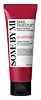
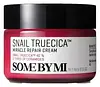
Some By Mi Snail Truecica Miracle Repair Low pH Gel Cleanser Versus Some By Mi Snail Truecica Miracle Repair Cream
This mild gel cleanser is made to cleanse while respecting your skin barrier.
This barrier-repair moisturizer is formulated around Snail Secretion Filtrate and Niacinamide to strengthen the skin barrier and calm redness.

What's inside
What's inside
 Key Ingredients
Benefits
Concerns
Ingredients Side-by-side
Water
Skin ConditioningLauryl Hydroxysultaine
CleansingDisodium Cocoamphodiacetate
CleansingSodium Chloride
MaskingPotassium Cocoyl Glycinate
Surfactant
Acrylates Copolymer
Sodium Methyl Cocoyl Taurate
Cleansing
Potassium Cocoate
Emulsifying

Butylene Glycol
Humectant

Snail Secretion Filtrate
Skin Conditioning



Benzyl Glycol
SolventCitric Acid
Buffering


Citrus Aurantium Bergamia Fruit Oil
Masking



Ethylhexylglycerin
Skin ConditioningHexylene Glycol
EmulsifyingDisodium EDTA
Salvia Officinalis Oil
Masking
Betula Platyphylla Japonica Juice
Skin Conditioning
Glycyrrhiza Glabra Root Extract
Bleaching
Camellia Sinensis Leaf Extract
Antimicrobial



Agrimonia Eupatoria Extract
AstringentPanthenol
Skin Conditioning
1,2-Hexanediol
Skin Conditioning
Centella Asiatica Extract
Cleansing
Perilla Frutescens Leaf Extract
MaskingMelaleuca Alternifolia Leaf Extract
Perfuming
Phenoxyethanol
Preservative
Glycine
Buffering
Dipropylene Glycol
HumectantSaponaria Officinalis Extract
Skin ConditioningSerine
Masking
Glutamic Acid
Humectant
Kigelia Africana Fruit Extract
Skin ConditioningAspartic Acid
Masking
Caprylic/Capric Triglyceride
Masking
Leucine
Skin ConditioningAlanine
Masking
Lysine
Skin ConditioningArginine
Masking
Asiaticoside
Antioxidant
Tyrosine
MaskingPhenylalanine
Masking
Asiatic Acid
Skin Conditioning
Madecassic Acid
Skin Conditioning
Threonine
Proline
Skin Conditioning
Valine
MaskingIsoleucine
Skin ConditioningPentylene Glycol
Skin Conditioning
Phosphatidylcholine
EmulsifyingPlatycodon Grandiflorus Root Extract
Antioxidant
Poria Cocos Extract
Skin ConditioningCoix Lacryma-Jobi Ma-Yuen Seed Extract
Skin ConditioningPaeonia Lactiflora Root Extract
Skin ConditioningHistidine
Humectant
Madecassoside
Antioxidant
Cysteine
Antioxidant
Methionine
Skin ConditioningPolygonatum Officinale Rhizome/Root Extract
Skin ConditioningScutellaria Baicalensis Root Extract
Astringent
Angelica Gigas Extract
Skin ConditioningCornus Officinalis Fruit Extract
Skin ConditioningArtemisia Vulgaris Extract
Skin Conditioning
Rehmannia Chinensis Root Extract
Skin ConditioningCeramide NP
Skin Conditioning
Bifida Ferment Lysate
Skin Conditioning
Lactococcus Ferment Lysate
Skin Conditioning
Limonene
Perfuming
Linalool
Perfuming
Water, Lauryl Hydroxysultaine, Disodium Cocoamphodiacetate, Sodium Chloride, Potassium Cocoyl Glycinate, Acrylates Copolymer, Sodium Methyl Cocoyl Taurate, Potassium Cocoate, Butylene Glycol, Snail Secretion Filtrate, Benzyl Glycol, Citric Acid, Citrus Aurantium Bergamia Fruit Oil, Ethylhexylglycerin, Hexylene Glycol, Disodium EDTA, Salvia Officinalis Oil, Betula Platyphylla Japonica Juice, Glycyrrhiza Glabra Root Extract, Camellia Sinensis Leaf Extract, Agrimonia Eupatoria Extract, Panthenol, 1,2-Hexanediol, Centella Asiatica Extract, Perilla Frutescens Leaf Extract, Melaleuca Alternifolia Leaf Extract, Phenoxyethanol, Glycine, Dipropylene Glycol, Saponaria Officinalis Extract, Serine, Glutamic Acid, Kigelia Africana Fruit Extract, Aspartic Acid, Caprylic/Capric Triglyceride, Leucine, Alanine, Lysine, Arginine, Asiaticoside, Tyrosine, Phenylalanine, Asiatic Acid, Madecassic Acid, Threonine, Proline, Valine, Isoleucine, Pentylene Glycol, Phosphatidylcholine, Platycodon Grandiflorus Root Extract, Poria Cocos Extract, Coix Lacryma-Jobi Ma-Yuen Seed Extract, Paeonia Lactiflora Root Extract, Histidine, Madecassoside, Cysteine, Methionine, Polygonatum Officinale Rhizome/Root Extract, Scutellaria Baicalensis Root Extract, Angelica Gigas Extract, Cornus Officinalis Fruit Extract, Artemisia Vulgaris Extract, Rehmannia Chinensis Root Extract, Ceramide NP, Bifida Ferment Lysate, Lactococcus Ferment Lysate, Limonene, Linalool
Water
Skin ConditioningSnail Secretion Filtrate 40%
Skin Conditioning
Propanediol
Solvent
Dicaprylyl Carbonate
EmollientPolyglyceryl-3 Methylglucose Distearate
Emulsifying
Niacinamide
Smoothing

1,2-Hexanediol
Skin Conditioning
Melaleuca Alternifolia Leaf Extract
Perfuming
Centella Asiatica Extract
Cleansing
Butylene Glycol
Humectant
Cyclomethicone
Emollient
Cetearyl Alcohol
Emollient


Squalene
Emollient
Glyceryl Stearate
Emollient
Carbomer
Emulsion StabilisingTromethamine
BufferingCitrus Aurantium Bergamia Fruit Oil
Masking
Sodium Polyacrylate
Absorbent
Madecassoside
Antioxidant
Ethylhexylglycerin
Skin ConditioningArtemisia Princeps Leaf Extract
Skin ConditioningHydrolyzed Collagen
Emollient
Glycerin
Humectant
Adenosine
Skin Conditioning
Disodium EDTA
Salvia Officinalis Oil
Masking
Tocopherol
Antioxidant
Hydrolyzed Vegetable Protein
Skin ConditioningHydrogenated Lecithin
Emulsifying
Asiaticoside
Antioxidant
Madecassic Acid
Skin Conditioning
Asiatic Acid
Skin Conditioning
Stearic Acid
Cleansing
Ceramide NP
Skin Conditioning
Ceramide Ns
Skin Conditioning
Phytosphingosine
Skin Conditioning
Cholesterol
Emollient
Ceramide As
Skin Conditioning
Ceramide AP
Skin Conditioning
Ceramide EOP
Skin Conditioning
Limonene
Perfuming
Linalool
Perfuming
Water, Snail Secretion Filtrate 40%, Propanediol, Dicaprylyl Carbonate, Polyglyceryl-3 Methylglucose Distearate, Niacinamide, 1,2-Hexanediol, Melaleuca Alternifolia Leaf Extract, Centella Asiatica Extract, Butylene Glycol, Cyclomethicone, Cetearyl Alcohol, Squalene, Glyceryl Stearate, Carbomer, Tromethamine, Citrus Aurantium Bergamia Fruit Oil, Sodium Polyacrylate, Madecassoside, Ethylhexylglycerin, Artemisia Princeps Leaf Extract, Hydrolyzed Collagen, Glycerin, Adenosine, Disodium EDTA, Salvia Officinalis Oil, Tocopherol, Hydrolyzed Vegetable Protein, Hydrogenated Lecithin, Asiaticoside, Madecassic Acid, Asiatic Acid, Stearic Acid, Ceramide NP, Ceramide Ns, Phytosphingosine, Cholesterol, Ceramide As, Ceramide AP, Ceramide EOP, Limonene, Linalool
Reviews
Ingredients Explained
These ingredients are found in both products.
Ingredients higher up in an ingredient list are typically present in a larger amount.
1,2-Hexanediol is a synthetic liquid and another multi-functional powerhouse.
It is a:
- Humectant, drawing moisture into the skin
- Emollient, helping to soften skin
- Solvent, dispersing and stabilizing formulas
- Preservative booster, enhancing the antimicrobial activity of other preservatives
Asiatic Acid is one of the four main actives found in Centella Asiatica. Its headline job is stimulating collagen.
Lab tests on human skin cells show Asiatic Acid tells your skin to make more collagen, the protein that keeps skin firm and bouncy.
It also calms inflammation and acts as an antioxidant so it can help skin heal faster, rebuild itself, and repair a damaged barrier.
And on naming, even though "acid" is in the name, it's nothing like an AHA or BHA exfoliant. It's a gentle firming and soothing ingredient that supports your skin barrier.
Concentration-wise, Asiatic Acid is potent at very low doses and usually shows up as a small fraction of a broader centella extract.
Analyses of centella material put Asiatic Acid reported in the range of 0.2-3% of the extract.
This ingredient is non-sensitizing and guinea pig sensitization testing also found it to be a weak sensitizer. That means the risk of acquiring contact sensitivty is quite low.
Allergic contact dermatitis does exist but is also very rare; documented cases tend to involve prolonged use on broken skin plus co-sensitization to fragrance ingredients.
Learn more about Asiatic AcidAsiaticoside comes from the super popular skin-soothing ingredient, Centella asiatica. It's the reason centella-based products have a strong reputation for repairing and calming skin, along with its sibling compound Madecassoside.
Research from 2016-2025 supports its role in:
You'll usually find this in concentrations between 0.2-5%.
Learn more about AsiaticosideButylene Glycol (or BG) is used within cosmetic products for a few different reasons:
Overall, Butylene Glycol is a safe and well-rounded ingredient that works well with other ingredients.
Though this ingredient works well with most skin types, some people with sensitive skin may experience a reaction such as allergic rashes, closed comedones, or itchiness.
Learn more about Butylene GlycolCentella Asiatica Extract (Centella) is one of the most researched botanical extracts in skincare with decades of studies backing its effects on inflammation, collagen, and the skin barrier.
That research keeps pointing back to the same four triterpenoid saponins: Asiaticoside, Madecassoside, Asiatic Acid, and Madecassic Acid.
These compounds allow centella to dial back inflammation, encourage the skin to build and hold onto collagen, support the barrier and hydration, and bring solid antioxidant activity to protect against signs of aging.
Centella also carries a nice supporting cast of Vitamin A, vitamin C, several B vitamins, and amino acids. Put it all together and you get an ingredient that soothes, hydrates, and protects, all at once.
Most of centella's magic comes from the four big compounds (Asiaticoside, Madecassoside, Asiatic Acid, and Madecassic Acid). These are the actives doing the heavy lifting in almost every centella study.
Here is the short version of what they do in the skin:
So it is not just soothing for the sake of soothing. Centella calms the skin AND helps it rebuild.
Just FYI, not all centella on an ingredient list is the same. What you are getting actually depends on the extract:
Fun fact on the ratios: the leaves tend to be richest in Madecassoside and Asiaticoside, and lower in the two acids. The exact amounts shift with where the plant is grown and how it is processed. This means purity really does vary brand to brand.
Centella is one of the most easygoing actives out there.
It layers well with basically everything: niacinamide, hyaluronic acid, peptides, and vitamin C, and also pairs nicely with stronger actives like retinoids and exfoliating acids where it can help take the edge off irritation.
On the safety side, centella and its triterpenes are classified as weak sensitizers, meaning allergic reactions are possible but uncommon.
Patch tests at 1% and 5% came back negative in test panels, and creams at typical use levels did not cause allergic reactions across large groups of people.
But as with any new active, a patch test is still a smart move for very reactive skin.
Centella is widely used because it is effective at low percentages. For context, human safety testing found no meaningful irritation from creams containing centella extract at everyday use levels (the tested amounts were well under 1%).
The irritancy threshold in animal testing was also above 30% (so real-world formulas sit far below anything concerning).
In collagen lab studies, higher concentrations drove more collagen synthesis, so serums built around centella tend to feature it more prominently.
Bottom line: you will find centella working nicely anywhere from a fraction of a percent up to hero-ingredient levels depending on whether it is a supporting soother or the main event.
Fun fact: Centella has been used as a medicine and in food for many centuries. As a medicine, it is used to treat burns, scratches, and wounds.
Learn more about Centella Asiatica ExtractCeramide NP (formerly known as Ceramide 3) is one of the skin's naturally occurring lipids.
Since ceramides are the major lipid components of the skin, they are crucial for maintaining skin barrier and hydration. Ceramide NP most closely mirrors the dominant kind in human skin amongst ceramide subtypes.
This ceramide works by slotting into gaps within the stratum corneum's lipid matrix to limit trans-epidermal water loss (TEWL) and shield the skin against external irritants.
A study with 312 patients found that using a ceramide-containing routine for 4 weeks reduced the severity of atopic dermatitis by over 61%.
Another clinical study in subjects aged 60 and older found that a ceramide body wash and moisturizer improved skin dryness and itchy skin in 15 days.
Overall, ceramides are considered non-irritating and safety tests have found little to no observable adverse effects from using this ingredient.
Ceramide NP is usually sourced from plants (like soybean or rice bran), or produced synthetically.
Learn more about Ceramide NPCitrus Aurantium Bergamia Fruit Oil is the oil from the bergamot orange and is primarily used as a fragrance. It has a "fresh" and "bright orange" scent.
The main aroma compounds found in this ingredient are limonene (~27-52%), linalool (~2-22%), and linalyl acetate (~27-40%). These are known EU fragrance allergens.
The term 'fragrance' is not regulated in many countries. In many cases, it is up to the brand to define this term. For instance, many brands choose to label themselves as "fragrance-free" because they are not using synthetic fragrances. However, their products may still contain ingredients such as essential oils that are considered a fragrance.
When used topically, Citrus Aurantium Bergamia Fruit Oil is a photosensitizer due to the furanocoumarin content. Furanocoumarins absorb UV-A and cause phytophotodermatitis; this can look like redness, blistering, and lasting brown pigmentation on sun-exposed skin.
Due to this, this ingredient is capped at 0.4% in leave-on products applied to sun exposed skin.
Many modern formulas used a "furanocoumarin-free" version that sidesteps the phototoxicity issue, but still contains the fragrance allergens.
Learn more about Citrus Aurantium Bergamia Fruit OilDisodium EDTA is a chelating agent. It grabs onto and deactivates metal ions that sneak into your products from water, packaging, or air.
This ingredient mainly works behind the scenes and helps with:
On top of that, this ingredient can counteract the effects of hard water by binding to the minerals in it.
One thing worth knowing is that Disodium EDTA has been shown to be a mild penetration enhancer. It can help other ingredients absorb into skin more effectively which can be a double-edged sword (great for actives, but can also make the active too strong if you have sensitive skin).
Clinical patch testing showed no significant skin irritation at typical use concentrations and minimal dermal absorption.
You'll most likely see this ingredient near the end of an ingredient list. It's typically found in concentrations less than 1%.
Learn more about Disodium EDTAEthylhexylglycerin is created from glycerin. It is a multitasker ingredient that:
The CIR Expert Panel found minimal skin absorption or sensitization of any kind in a safety assessment. Though this ingredient is considered well-tolerated, a small number of cases of allergic dermatitis have been published since 2002. Just be sure to patch test if you are unsure.
Industry-reported use ranges from 8% in rinse-off products and 2% in leave-on formulations.
Learn more about EthylhexylglycerinLimonene is a fragrance that adds scent and taste to a formulation.
It's found in the peel oil of citrus fruits and other plants such as lavender and eucalyptus. The scent of limonene is generally described as "sweet citrus".
Limonene acts as an antioxidant, meaning it helps neutralize free radicals.
When exposed to air, oxidized limonene may sensitize the skin. Because of this, limonene is often avoided by people with sensitive skin.
The term 'fragrance' is not regulated in many countries. In many cases, it is up to the brand to define this term. For instance, many brands choose to label themselves as "fragrance-free" because they are not using synthetic fragrances. However, their products may still contain ingredients such as essential oils that are considered a fragrance.
Learn more about LimoneneLinalool is a fragrance and helps add scent to products. It's derived from common plants such as cinnamon, mint, citrus, and lavender.
Like Limonene, this ingredient oxidizes when exposed to air. Oxidized linalool can cause allergies and skin sensitivity.
This ingredient has a scent that is floral, spicy tropical, and citrus-like.
Learn more about LinaloolMadecassic Acid is one of the four star actives in Centella Asiatica. In skincare, it earns its keep as a calming and repairing ingredient.
It works through the same core pathways as the rest of the centella family.
First, it turns down inflammation so it helps with things like redness and general upset skin.
Second, it acts as an antioxidant which means it helps protect skin from daily stress and damage.
And third, it nudges the skin to make more collagen and rebuild its support structure.
That combination is why the whole Centella family is known for calming skin, strengthening the barrier, fading redness, and giving anti-aging benefits.
It's worth being honest about the evidence here; a lot of the strongest data is on the full extract or a Madecassoside/Asiaticoside rather than Madecassic Acid alone. Reviewers also note more long-term clinical trials are needed to confirm the full potential.
Concentration-wise, this ingredient is rarely used pure and usually shows up as part of a standardized centella extract where reported content ranges from 0.02-3.06%.
Finished products typically run somewhere in the 0.1-10% range depending on the format.
In real-world tolerance tests, a repeat-insult patch test on an eye lotion with 0.2% Centella extract showed no irritation or allergic contact dermatitis in 54 subjects. And a mascara with 0.5% Madecassoside caused neither irritation nor sensitization in 109 subjects.
Allergy risk is very low, but not zero. Centella and its constituents are classified as weak contact sensitizers and some rare cases of allergic contact dermatitis exist.
Learn more about Madecassic AcidMadecassoside is one of four active compounds found in Centella asiatica and is one of the main reasons Centella is so effective at calming irritated skin and supporting the moisture barrier.
There's a solid body of peer-reviewed research backing Madecassoside for several skin benefits. Studies have found:
Madecassoside pairs well with other hydrating or antioxidant ingredients like Ascorbic Acid or Hyaluronic Acid.
Learn more about MadecassosideMelaleuca Alternifolia Leaf Extract comes from the Tea Tree, Melaleuca alternifolia, Myrtaceae. This tea tree is native to Australia.
Tea Leaf extract contains antimicrobial and anti-acne properties.
This ingredient has perfuming properties and contains linalool and limonene. These fragrance and terpinen components can cause skin sensitivity.
Learn more about the benefits of Tea Tree Oil here.
Learn more about Melaleuca Alternifolia Leaf ExtractSalvia Officinalis Oil is an oil.
Snail Secretion Filtrate (the slimy mucus that garden snails produce) is a multitasking ingredient that shows up in "skin repair" formulas.
This ingredient works because it's a grab bag of skin-friendly stuff like:
In a formula, it acts as a humectant and barrier-supporting soother and the research backs this up as well.
A 2025 systematic review of human clinical trials found that snail-derived ingredients improved signs of aging, increased skin hydration, decreased transepidermal water loss, and improved healing after radiation therapy/fractional laser treatment.
Lab studies have also shown the secretion promotes the proliferation, migration, and survival of the cells that rebuild skin (keratinocytes and dermal fibroblasts).
There's also a placebo-controlled study where a serum containing it helped with mask-related acne.
Overall, this is a gentle, water-based multitasker that works great for hydrating and supporting the skin barrier. However, please see the section below if you have dust mite or shellfish allergies.
You'll see snail filtrate listed at very different percentages depending on the product. Some Korean serums list it near the top of the ingredients at 90% or more while other products use just a few percent.
This doesn't mean the high-percentage ones are far stronger. Raw snail filtrate is mostly water to begin with so using a lot of it isn't the same thing as using a lot of the active ingredients.
Other products use a concentrated version so a small amount goes a long way. Either approach can work well. Just know the percentage on the label isn't a reliable way to judge how effective a snail product will be.
Being cruelty-free means a brand does not experiment on animals. If you're worried about the well-being of the snails, we recommend looking more into the company of the product. Many brands claim to have developed humane methods to collect snail mucin.
There is much debate on this subject. On one hand, this ingredient comes from an animal. On the other hand, many will argue the ingredient is naturally secreted (like a natural by-product) and therefore vegan. If you have reservations, you can look into Galactomyces Ferment Filtrate or Centella Asiatica Extract as alternatives.
This ingredient is fungal acne safe. Its core composition lacks the fatty acid/ester triggers that Malassezia depends on.
True allergy to Snail Secretion Filtrate is uncommon and most documented cases are linked to a dust mite allergy.
Snail proteins (including Tropomyosin) are similar enough to dust mite proteins that the immune system can confuse them.
In most documented cases, the dust mite was the original trigger and tropomyosin turned out to be only a minor player in some studies (so this has not been fully confirmed).
Another thing to know is that nearly all the evidence comes from eating snails or inhaling the protein and not from cosmetics.
However, the allergenic proteins can survive filtration into a finished product; a topical reaction is biologically plausible but there's little published evidence of it actually happening.
People who are allergic to dust mites (or sometimes shellfish) are the most likely to react.
Learn more about Snail Secretion FiltrateWater. It's the most common cosmetic ingredient of all. You'll usually see it at the top of ingredient lists, meaning that it makes up the largest part of the product.
So why is it so popular? Water most often acts as a solvent - this means that it helps dissolve other ingredients into the formulation.
You'll also recognize water as that liquid we all need to stay alive. If you see this, drink a glass of water. Remember to stay hydrated!
Learn more about Water

