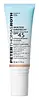
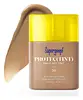
Peter Thomas Roth Water Drench Broad Spectrum SPF 45 Hyaluronic Cloud Sheer Tint Moisturizer Versus Supergoop! Protec(Tint) Daily SPF Tint SPF 50
This hybrid sunscreen covers the full UV range and blocks ~98% of UVB at SPF 45.
This hybrid sunscreen covers the full UV range and blocks ~98% of UVB at SPF 50.

What's inside
What's inside
 Key Ingredients
Benefits
Concerns
Ingredients Side-by-side
Butyl Methoxydibenzoylmethane 3%
UV Absorber
Homosalate 5%
Skin Conditioning
Ethylhexyl Salicylate 5%
UV Absorber
Octocrylene 10%
UV Absorber

Water
Skin ConditioningDimethicone
Emollient

Glycerin
Humectant

Dipropylene Glycol
HumectantPolymethylsilsesquioxane
Argania Spinosa Kernel Oil
Emollient





Tocopheryl Acetate
Antioxidant


Dimethicone/PEG-10/15 Crosspolymer
Phenoxyethanol
Preservative
Titanium Dioxide
Cosmetic Colorant
Lauryl PEG-9 Polydimethylsiloxyethyl Dimethicone
Skin Conditioning
Saccharide Isomerate
Humectant
Isododecane
EmollientMethyl Gluceth-20
Humectant
Coco-Caprylate/Caprate
Emollient
Bisabolol
Antioxidant
Sodium Chloride
MaskingSodium Hyaluronate
Humectant

PEG-15/Lauryl Dimethicone Crosspolymer
Stabilising
Sodium PCA
Humectant
Polyglyceryl-6 Polyricinoleate
Emulsifying
Polyhydroxystearic Acid
Emulsifying
Iron Oxides
CI 77492
Cosmetic ColorantCI 77491
Cosmetic ColorantYeast Extract
Skin ConditioningDilinoleic Acid/Butanediol Copolymer
Disodium Stearoyl Glutamate
CleansingTrisiloxane
Skin Conditioning
Propylene Glycol
Humectant
Ceteareth-25
CleansingPotassium Sorbate
Preservative
Sodium Benzoate
Masking
Castor Oil/Ipdi Copolymer
Sodium Citrate
BufferingCitric Acid
Buffering
Cetyl Alcohol
Emollient
Ethylhexylglycerin
Skin ConditioningSaccharomyces/Magnesium Ferment
Sambucus Nigra Fruit Extract
AstringentBehenic Acid
Cleansing
Ceramide NP
Skin Conditioning
Cholesterol
Emollient
Mica
Cosmetic ColorantCeramide Ns
Skin Conditioning
Saccharomyces/Iron Ferment
Skin Conditioning
Saccharomyces/Copper Ferment
Skin Conditioning
Saccharomyces/Silicon Ferment
Skin Conditioning
Saccharomyces/Zinc Ferment
Skin Conditioning
Butylene Glycol
Humectant
Ceramide AP
Skin Conditioning
Ceramide EOP
Skin Conditioning
Ceramide Eos
Skin Conditioning
Tocopherol
Antioxidant
Olea Europaea Leaf Extract
Perfuming
Caprooyl Phytosphingosine
Skin Conditioning
Caprooyl Sphingosine
Skin ConditioningButyl Methoxydibenzoylmethane 3%, Homosalate 5%, Ethylhexyl Salicylate 5%, Octocrylene 10%, Water, Dimethicone, Glycerin, Dipropylene Glycol, Polymethylsilsesquioxane, Argania Spinosa Kernel Oil, Tocopheryl Acetate, Dimethicone/PEG-10/15 Crosspolymer, Phenoxyethanol, Titanium Dioxide, Lauryl PEG-9 Polydimethylsiloxyethyl Dimethicone, Saccharide Isomerate, Isododecane, Methyl Gluceth-20, Coco-Caprylate/Caprate, Bisabolol, Sodium Chloride, Sodium Hyaluronate, PEG-15/Lauryl Dimethicone Crosspolymer, Sodium PCA, Polyglyceryl-6 Polyricinoleate, Polyhydroxystearic Acid, Iron Oxides, CI 77492, CI 77491, Yeast Extract, Dilinoleic Acid/Butanediol Copolymer, Disodium Stearoyl Glutamate, Trisiloxane, Propylene Glycol, Ceteareth-25, Potassium Sorbate, Sodium Benzoate, Castor Oil/Ipdi Copolymer, Sodium Citrate, Citric Acid, Cetyl Alcohol, Ethylhexylglycerin, Saccharomyces/Magnesium Ferment, Sambucus Nigra Fruit Extract, Behenic Acid, Ceramide NP, Cholesterol, Mica, Ceramide Ns, Saccharomyces/Iron Ferment, Saccharomyces/Copper Ferment, Saccharomyces/Silicon Ferment, Saccharomyces/Zinc Ferment, Butylene Glycol, Ceramide AP, Ceramide EOP, Ceramide Eos, Tocopherol, Olea Europaea Leaf Extract, Caprooyl Phytosphingosine, Caprooyl Sphingosine
Zinc Oxide 13.58%
Cosmetic Colorant
Homosalate 7%
Skin Conditioning
Ethylhexyl Salicylate 5%
UV Absorber
Water
Skin ConditioningIsononyl Isononanoate
EmollientButyloctyl Salicylate
Skin Conditioning
Propanediol
Solvent
Silica
Abrasive

Glycerin
Humectant
1,2-Hexanediol
Skin Conditioning
Lecithin
Emollient
Coco-Caprylate/Caprate
Emollient
Cetearyl Alcohol
Emollient

Lauryl Glucoside
CleansingPolyglyceryl-2 Dipolyhydroxystearate
Skin Conditioning
Ammonium Acryloyldimethyltaurate/Vp Copolymer
Ectoin
Skin Conditioning
Coco-Glucoside
Cleansing
Polyhydroxystearic Acid
Emulsifying
Citric Acid
Buffering
Triethoxycaprylylsilane
Morinda Citrifolia Extract
AstringentXanthan Gum
EmulsifyingSodium Phytate
ChelatingBentonite
Absorbent
Sodium Hyaluronate
Humectant
Tocopherol
Antioxidant
Zinc Oxide 13.58%, Homosalate 7%, Ethylhexyl Salicylate 5%, Water, Isononyl Isononanoate, Butyloctyl Salicylate, Propanediol, Silica, Glycerin, 1,2-Hexanediol, Lecithin, Coco-Caprylate/Caprate, Cetearyl Alcohol, Lauryl Glucoside, Polyglyceryl-2 Dipolyhydroxystearate, Ammonium Acryloyldimethyltaurate/Vp Copolymer, Ectoin, Coco-Glucoside, Polyhydroxystearic Acid, Citric Acid, Triethoxycaprylylsilane, Morinda Citrifolia Extract, Xanthan Gum, Sodium Phytate, Bentonite, Sodium Hyaluronate, Tocopherol
Reviews
Ingredients Explained
These ingredients are found in both products.
Ingredients higher up in an ingredient list are typically present in a larger amount.
Citric Acid is an alpha hydroxy acid (AHA) naturally found in citrus fruits like oranges, lemons, and limes.
Like other AHAs, citric acid can exfoliate skin by breaking down the bonds that hold dead skin cells together. This helps reveal smoother and brighter skin underneath.
However, this exfoliating effect only happens at high concentrations (20%) which can be hard to find in cosmetic products.
Due to this, citric acid is usually included in small amounts as a pH adjuster. This helps keep products slightly more acidic and compatible with skin's natural pH.
In skincare formulas, citric acid can:
While it can provide some skin benefits, research shows lactic acid and glycolic acid are generally more effective and less irritating exfoliants.
Most citric acid used in skincare today is made by fermenting sugars (usually from molasses). This synthetic version is identical to the natural citrus form but easier to stabilize and use in formulations.
Rosacea skin has a lower threshold for acids generally, with 62.5% of rosacea subjects in one study reacting to lactic acid in a sting test. This is why we mark citric acid as a potential rosacea trigger.
However, this ingredient shows up as a pH adjuster or chelator at roughly 0.1-1% in many products. These low levels are unlikely to be an issue for rosacea skin and becomes a potential trigger at exfoliating concentrations (20%). Because everybody's skin is unique, we recommend a patch test if you are unsure.
Learn more about Citric AcidCoco-Caprylate/Caprate is a lightweight ester created from coconut oil fatty acids, caprylic acid, and capric acid.
It is an emollient that helps soften skin and reduce transepidermal water loss (TEWL). What sets it apart from heavier emollients is its ultralight, non-greasy feel.
Once applied, this ingredient dries down quickly and leaves a dry, silky finish behind. This also helps improve spreadability and texture.
This ingredient has an excellent safety-record and is non-irritating.
Typical concentrations for cosmetics range from 0.5-62%.
Research on Malassezia growth found no growth on fatty acid esters with chain lengths shorter than 12 carbons (it prefers C11-24).
Since Coco-Caprylate/Caprate is built on C8 and C10 fatty acids, it is out of the range that Malassezia metabolizes, and therefore safe for fungal acne.
Learn more about Coco-Caprylate/CaprateEthylhexyl Salicylate (also called Octisalate or Octyl Salicylate) is an oil-soluble organic UV filter that's been used in sunscreen since the 1950's.
It absorbs UVB light in the 280-320 nm range with a peak absorbance around 306 nm.
You'll often see it paired with other UV filters to boost overall SPF because octisalate is a fairly week filter on its own.
The reason you'll see it so often is because it can help solubilize and stabilize the trickier filters like oxybenzone and avobenzone.
Unlike these filters, octisalate has pretty good photostability and doesn't create skin-damaging free radicals when exposed to sunlight.
The fatty-alcohol part of the molecule also gives it a light, emollient feel so it doubles as a nice texture enhancer.
Usage levels vary around the world:
Safety-wise, this ingredient has a pretty reassuring track record. The EU's Scientific Committee on Consumer Products (SCCP) found very low skin penetration in human skin tests and negative results for irritation, phototoxicity, and photoallergy.
The real-world allergy risk is pretty low too; a 2012 European study of 1,031 people recorded only 2 reactions to it (a rate of 0.19%).
You might have seen scary headlines about sunscreen getting into your blood.
In 2019, the FDA found that several chemical filters can absorb through the skin and show up in the bloodstream at small but measurable levels.
Here's the important part: these tiny levels are just a cutoff the FDA uses to decide which ingredients need more testing and doesn't mean anything harmful was found.
The researchers were clear that the results are no reason to stop wearing sunscreen.
Learn more about Ethylhexyl SalicylateGlycerin (or glycerol) is a compound naturally found in your skin. It's a powerhouse humectant that pulls water into the stratum corneum.
Topically, glycerin does several things at once:
Your skin makes glycerin on its own (mostly from sebaceous oil breakdown) and shuttles it to your outermost layer of skin, or your epidermis, via aquaporin-3.
Aquaporin-3 is a transporter that is essential for normal skin hydration, elasticity, and repair. Interestingly, mice lacking in AQP3 have dry and less elastic skin that can be fully corrected with glycerin.
This ingredient is non-irritating, plays well with almost every ingredient, and works across all skin types. Typical use is anywhere between 3-10% but can go up to 79% in some leave-on products.
Just know very high concentrations (>40%) can feel tacky in low humidity.
Glycerin is the name for this ingredient in American English. British English uses Glycerol/Glycerine.
Learn more about GlycerinHomosalate is an oil-soluble organic UVB filter that has been a sunscreen staple for decades. Its job is to absorb UVB rays (~295-315 nm) and protect your skin against sunburn,
This is one of the more photostable organic UV filters; it holds up pretty well under UV and a 2022 quantum-chemistry study found it stays stable in sunlight.
It's actually so reliable that formulators often pair it with shakier ingredients like oxybenzone and avobenzone. Formulators also use it to help dissolve the other UV filters into the oil phase.
One thing to keep in mind: "stable" isn't the same as "strong". On its own, homosalate is actually a pretty weak UV filter so it's better off as a helpful team player that helps boost overall SPF protection.
The safety picture is a bit nuanced but not scary.
This ingredient has a long track record of being gentle and regulators agree it isn't an irritant; EU's Scientific Committee on Consumer Safety found that homosalate is not considered a skin irritant and doesn't raise eye-irritation flags either.
There's talk about homosalate because your skin absorbs a little bit of it into your bloodstream. A 2020 FDA-backed study found homosalate showed up in people's blood levels at the level where the FDA decides to double check.
The EU's Scientific Committee on Consumer Safety (SCCS) also found small amounts in blood and breast milk. They estimated that about 5% of what you apply gets absorbed through the skin.
Due to the debate about whether it might mess with hormones, the SCCS recommended a maximum limit of 0.5% in most products of 7.3% in face creams/pump sprays.
One important thing to keep in mind: in the US, Homosalate is currently labeled "non-GRASE" by the FDA. This sounds alarming but really just means the FDA wants more data to confirm it's safe. It's not confidently saying this ingredient is harmful.
As of now, homosalate is still completely legal and widely used while that research gets done.
The current maximum limits are:
Learn more about HomosalatePolyhydroxystearic Acid is a vegetable-derived soft wax made from castor oil. It's an emulsion stabilizer, thickener, and film former.
You'll likely see it in sunscreens because it helps disperse pigments and UV-reflecting minerals like titanium dioxide and zinc oxide evenly.
Depending on the concentration, it can drastically change the texture of a product from pasty solid (like lipstick) to sprayable liquid.
The CIR Expert Panel for Cosmetic Ingredient Safety has concluded this ingredient to be safe in cosmetics. The highest reported use concentration is 14.2% in lipsticks.
Learn more about Polyhydroxystearic AcidSodium Hyaluronate is the salt form of hyaluronic acid. It is a long sugar chain that is naturally found in your skin, joints, and connective tissue that maintains hydration and elasticity.
In skincare, it works as a humectant. It pulls water from the environment and deeper layers of skin and binds it to the surface.
Interestingly, the size of the molecule affects its behavior:
Some clinical evidence links low molecular weight versions to improved wrinkle depth, elasticity, anti-inflammatory effects, and barrier repair.
Many serums use a blend of both weights so you can get surface hydration plus longer-lasting and deeper effects.
You'll typically see concentrations between 0.1-2% for this ingredient.
Learn more about Sodium HyaluronateTocopherol is a fat-soluble antioxidant known as Vitamin E.
You'll find this ingredient in the vast majority of skincare (for good reason). It works to neutralize free radicals, or unstable molecules generated by UV exposure, pollution, and other environmental stressors, before they can cause oxidative damage to your skin cells.
Topically applied tocopherol has been shown to protect against UV damage by ramping up the skin's own natural defense enzymes.
It also acts as a skin conditioning agent; some studies show that regular topical use can improve the skin's water-binding capacity over 2-4 weeks.
This ingredient is especially loved for being a team player. When combined with Vitamin C, the photoprotective effect of both ingredients roughly doubles and the combo also helps reduce UV-induced DNA damage.
This ingredient has some brightening potential but it's more of a prevention ingredient than spot-fader. Cell studies show it can slow down melanin production but it's worth noting that it's not the most powerful brightener out there.
In formulations, it also serves as a stabilizer that helps protect other oxidation-prone ingredients from degrading.
Concentrations usually range from 0.1-1% in most leave-on products.
Learn more about TocopherolWater. It's the most common cosmetic ingredient of all. You'll usually see it at the top of ingredient lists, meaning that it makes up the largest part of the product.
So why is it so popular? Water most often acts as a solvent - this means that it helps dissolve other ingredients into the formulation.
You'll also recognize water as that liquid we all need to stay alive. If you see this, drink a glass of water. Remember to stay hydrated!
Learn more about Water

