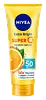
This chemical sunscreen covers most of the UV range, lighter on the deep UVA that drives aging.


What's inside
What's inside
 Key Ingredients
Benefits
Concerns
Ingredients Side-by-side
Water
Skin ConditioningC12-15 Alkyl Benzoate
AntimicrobialAlcohol Denat.
Antimicrobial




Distarch Phosphate
AbsorbentOctocrylene
UV Absorber

Phenylbenzimidazole Sulfonic Acid
UV Absorber
Butyl Methoxydibenzoylmethane
UV Absorber
Glycerin
Humectant


Polyglyceryl-3 Methylglucose Distearate
Emulsifying
Dimethicone
Emollient
Phenoxyethanol
Preservative
Sodium Hydroxide
BufferingBehenyl Alcohol
Emollient
Cetyl Alcohol
Emollient
Silica
Abrasive


Silica Dimethyl Silylate
EmollientVp/Hexadecene Copolymer
Methylparaben
Preservative
Trisodium EDTA
Acrylates/C10-30 Alkyl Acrylate Crosspolymer
Emulsion StabilisingXanthan Gum
EmulsifyingCarbomer
Emulsion StabilisingPropylene Glycol
Humectant
Creatine
Skin ConditioningPersea Gratissima Oil
Skin Conditioning

Vitis Vinifera Seed Oil
Emollient
Sodium Ascorbyl Phosphate
Antioxidant




Maltodextrin
Absorbent
Citric Acid
Buffering
Citrus Limon Juice
Skin Conditioning
Trideceth-9
EmulsifyingMalpighia Glabra Fruit Juice
Skin ConditioningMangifera Indica Juice
Skin ConditioningFragaria Ananassa Fruit Juice
Skin ConditioningRubus Fruticosus Juice
AstringentRubus Idaeus Juice
AstringentVaccinium Myrtillus Fruit Juice
Skin ConditioningBisabolol
Antioxidant
Sodium Benzoate
Masking
Camellia Sinensis Leaf Extract
Antimicrobial
Citrus Sinensis Fruit Extract
Antioxidant
Glycyrrhiza Glabra Root Extract
Bleaching
Myrciaria Dubia Fruit Juice
Antioxidant
Potassium Sorbate
Preservative
Ascorbic Acid
Antioxidant
Parfum
Masking

Water, C12-15 Alkyl Benzoate, Alcohol Denat., Distarch Phosphate, Octocrylene, Phenylbenzimidazole Sulfonic Acid, Butyl Methoxydibenzoylmethane, Glycerin, Polyglyceryl-3 Methylglucose Distearate, Dimethicone, Phenoxyethanol, Sodium Hydroxide, Behenyl Alcohol, Cetyl Alcohol, Silica, Silica Dimethyl Silylate, Vp/Hexadecene Copolymer, Methylparaben, Trisodium EDTA, Acrylates/C10-30 Alkyl Acrylate Crosspolymer, Xanthan Gum, Carbomer, Propylene Glycol, Creatine, Persea Gratissima Oil, Vitis Vinifera Seed Oil, Sodium Ascorbyl Phosphate, Maltodextrin, Citric Acid, Citrus Limon Juice, Trideceth-9, Malpighia Glabra Fruit Juice, Mangifera Indica Juice, Fragaria Ananassa Fruit Juice, Rubus Fruticosus Juice, Rubus Idaeus Juice, Vaccinium Myrtillus Fruit Juice, Bisabolol, Sodium Benzoate, Camellia Sinensis Leaf Extract, Citrus Sinensis Fruit Extract, Glycyrrhiza Glabra Root Extract, Myrciaria Dubia Fruit Juice, Potassium Sorbate, Ascorbic Acid, Parfum
Water
Skin ConditioningCentella Asiatica Extract 12.3%
Cleansing
Glycerin
Humectant
Cetyl Ethylhexanoate
EmollientCetearyl Alcohol
Emollient
Glyceryl Stearate
Emollient
Glutathione
Niacinamide
Smoothing

Madecassic Acid
Skin Conditioning
Asiaticoside
Antioxidant
Asiatic Acid
Skin Conditioning
Solanum Melongena Fruit Extract
Skin ConditioningMelaleuca Alternifolia Leaf Extract
Perfuming
Hydrolyzed Collagen
Emollient
Beta-Glucan
Skin Conditioning
Hippophae Rhamnoides Fruit Extract
Skin Conditioning
Nelumbo Nucifera Extract
Skin ConditioningArtemisia Annua Extract
Masking
Oryza Sativa Extract
Absorbent
Saccharomyces Ferment
Skin Conditioning
Squalane
Emollient
Sodium Hyaluronate
Humectant
Dipropylene Glycol
HumectantButylene Glycol
Humectant
Hydrogenated Lecithin
Emulsifying
Cholesterol
Emollient
Xanthan Gum
EmulsifyingPotassium Hydroxide
BufferingDisodium EDTA
Caprylic/Capric Triglyceride
Masking
Cyclopentasiloxane
Emollient
Cyclohexasiloxane
Emollient
Saccharide Hydrolysate
HumectantSorbitan Stearate
Emulsifying
Dimethicone
Emollient
PEG-100 Stearate
Surfactant
Stearic Acid
Cleansing
1,2-Hexanediol
Skin Conditioning
Chlorphenesin
Antimicrobial
Carbomer
Emulsion StabilisingCaprylyl Glycol
Emollient
Water, Centella Asiatica Extract 12.3%, Glycerin, Cetyl Ethylhexanoate, Cetearyl Alcohol, Glyceryl Stearate, Glutathione, Niacinamide, Madecassic Acid, Asiaticoside, Asiatic Acid, Solanum Melongena Fruit Extract, Melaleuca Alternifolia Leaf Extract, Hydrolyzed Collagen, Beta-Glucan, Hippophae Rhamnoides Fruit Extract, Nelumbo Nucifera Extract, Artemisia Annua Extract, Oryza Sativa Extract, Saccharomyces Ferment, Squalane, Sodium Hyaluronate, Dipropylene Glycol, Butylene Glycol, Hydrogenated Lecithin, Cholesterol, Xanthan Gum, Potassium Hydroxide, Disodium EDTA, Caprylic/Capric Triglyceride, Cyclopentasiloxane, Cyclohexasiloxane, Saccharide Hydrolysate, Sorbitan Stearate, Dimethicone, PEG-100 Stearate, Stearic Acid, 1,2-Hexanediol, Chlorphenesin, Carbomer, Caprylyl Glycol
Reviews
Ingredients Explained
These ingredients are found in both products.
Ingredients higher up in an ingredient list are typically present in a larger amount.
Carbomer is a synthetic thickening and gelling agent. It's basically the ingredient that gives a lot of serums, gels, creams, and sunscreens their smooth, non-sticky texture.
Although legally permitted at very high levels, carbomers are normally used at concentrations below 1%.
It also needs to be neutralized to actually thicken, and because it is a large molecule, it doesn't really penetrate the skin barrier.
Allergy-wise, the risk is very low. Clinical studies show carbomers have low potential for skin irritation/sensitization even at concentrations up to 100%.
A 2024 UK study patch-tested 1,302 patients and found true allergy to the parent group of carbomer to be rare with no confirmed relevant reactions.
Learn more about CarbomerDimethicone is a type of synthetic silicone created from natural materials such as quartz. It is also known as polydimethylsiloxane.
What it does:
Dimethicone comes in different viscosities:
Depending on the viscosity, dimethicone has different properties.
Ingredients lists don't always show which type is used, so we recommend reaching out to the brand if you have questions about the viscosity.
This ingredient is unlikely to cause irritation because it does not get absorbed into skin. However, people with silicone allergies should be careful about using this ingredient.
Note: Dimethicone may contribute to pilling. This is because it is not oil or water soluble, so pilling may occur when layered with products. When mixed with heavy oils in a formula, the outcome is also quite greasy.
Learn more about DimethiconeGlycerin (or glycerol) is a compound naturally found in your skin. It's a powerhouse humectant that pulls water into the stratum corneum.
Topically, glycerin does several things at once:
Your skin makes glycerin on its own (mostly from sebaceous oil breakdown) and shuttles it to your outermost layer of skin, or your epidermis, via aquaporin-3.
Aquaporin-3 is a transporter that is essential for normal skin hydration, elasticity, and repair. Interestingly, mice lacking in AQP3 have dry and less elastic skin that can be fully corrected with glycerin.
This ingredient is non-irritating, plays well with almost every ingredient, and works across all skin types. Typical use is anywhere between 3-10% but can go up to 79% in some leave-on products.
Just know very high concentrations (>40%) can feel tacky in low humidity.
Glycerin is the name for this ingredient in American English. British English uses Glycerol/Glycerine.
Learn more about GlycerinWater. It's the most common cosmetic ingredient of all. You'll usually see it at the top of ingredient lists, meaning that it makes up the largest part of the product.
So why is it so popular? Water most often acts as a solvent - this means that it helps dissolve other ingredients into the formulation.
You'll also recognize water as that liquid we all need to stay alive. If you see this, drink a glass of water. Remember to stay hydrated!
Learn more about WaterXanthan gum is used as a stabilizer and thickener within cosmetic products. It helps give products a sticky, thick feeling - preventing them from being too runny.
On the technical side of things, xanthan gum is a polysaccharide - a combination consisting of multiple sugar molecules bonded together.
Xanthan gum is a pretty common and great ingredient. It is a natural, non-toxic, non-irritating ingredient that is also commonly used in food products.
Learn more about Xanthan Gum

