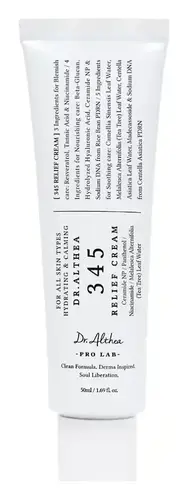
maru.derm Moisturizing Sun Cream SPF 50+ Versus The Purest Solutions Hydration Booster Daily Moisturizing Cream
This hybrid sunscreen covers the full UV range and blocks ~98% of UVB at SPF 50.
This barrier-repair moisturizer is formulated around Sodium Hyaluronate and Ceramide NP to strengthen the skin barrier and hydrate skin.

What's inside
What's inside
 Key Ingredients
Benefits
Concerns
Ingredients Side-by-side
Water
Skin ConditioningBis-Ethylhexyloxyphenol Methoxyphenyl Triazine
UV Absorber
Glycerin
Humectant


Ethylhexyl Triazone
UV Absorber
Zinc Oxide
Cosmetic Colorant

C12-15 Alkyl Benzoate
AntimicrobialCaprylic/Capric Triglyceride
Masking
Camellia Sinensis Leaf Extract
Antimicrobial





Methylene Bis-Benzotriazolyl Tetramethylbutylphenol
UV Filter
Stearic Acid
Cleansing


Ectoin
Skin Conditioning
Ceramide NP
Skin Conditioning
Panthenol
Skin Conditioning
Potassium Cetyl Phosphate
EmulsifyingInulin Lauryl Carbamate
Emulsion StabilisingMaltodextrin
Absorbent
Allantoin
Skin Conditioning
Sodium PCA
Humectant
Decyl Glucoside
Cleansing
Sodium Lactate
Buffering
Cucumis Sativus Fruit Extract
Emollient
Arginine
Masking
Propanediol
Solvent
Aspartic Acid
Masking
PCA
Humectant
Hydrolyzed Glycosaminoglycans
HumectantSodium Hyaluronate
Humectant
Glycine
Buffering
Alanine
Masking
Propylene Glycol
Humectant
Serine
Masking
Valine
MaskingProline
Skin Conditioning
Threonine
Isoleucine
Skin ConditioningHydrolyzed Hyaluronic Acid
Humectant
Hyaluronic Acid
Humectant
Sodium Hyaluronate Crosspolymer
Humectant
Histidine
Humectant
Phenylalanine
Masking
Xanthan Gum
EmulsifyingSodium Benzoate
Masking
Sodium Hydroxide
BufferingPotassium Sorbate
Preservative
Lactic Acid
Buffering



Tetrasodium EDTA
Water, Bis-Ethylhexyloxyphenol Methoxyphenyl Triazine, Glycerin, Ethylhexyl Triazone, Zinc Oxide, C12-15 Alkyl Benzoate, Caprylic/Capric Triglyceride, Camellia Sinensis Leaf Extract, Methylene Bis-Benzotriazolyl Tetramethylbutylphenol, Stearic Acid, Ectoin, Ceramide NP, Panthenol, Potassium Cetyl Phosphate, Inulin Lauryl Carbamate, Maltodextrin, Allantoin, Sodium PCA, Decyl Glucoside, Sodium Lactate, Cucumis Sativus Fruit Extract, Arginine, Propanediol, Aspartic Acid, PCA, Hydrolyzed Glycosaminoglycans, Sodium Hyaluronate, Glycine, Alanine, Propylene Glycol, Serine, Valine, Proline, Threonine, Isoleucine, Hydrolyzed Hyaluronic Acid, Hyaluronic Acid, Sodium Hyaluronate Crosspolymer, Histidine, Phenylalanine, Xanthan Gum, Sodium Benzoate, Sodium Hydroxide, Potassium Sorbate, Lactic Acid, Tetrasodium EDTA
Water
Skin ConditioningGlycerin
Humectant
Glyceryl Stearate
Emollient
C12-15 Alkyl Benzoate
AntimicrobialCaprylic/Capric Triglyceride
Masking
Dimethicone
Emollient
Behenyl Alcohol
Emollient
PEG-100 Stearate
Surfactant
Cyclopentasiloxane
Emollient
Dimethiconol
Emollient
Butyrospermum Parkii Butter
Skin Conditioning
Sodium Acrylates Copolymer
Sodium Hyaluronate Crosspolymer
Humectant
Sodium Hyaluronate
Humectant
Sodium Acetylated Hyaluronate
Humectant
Hydrolyzed Sodium Hyaluronate
Skin Conditioning
Sodium PCA
Humectant
Cetearyl Alcohol
Emollient
Ribose
HumectantSaccharide Isomerate
Humectant
Hydrogenated Starch Hydrolysate
HumectantAscophyllum Nodosum Extract
Skin ConditioningAsparagopsis Armata Extract
Skin ProtectingErythritol
Humectant
Chondrus Crispus
Masking
Ceramide NP
Skin Conditioning
Squalane
Emollient
Phenethyl Alcohol
Masking1,2-Hexanediol
Skin Conditioning
Xanthan Gum
EmulsifyingBisabolol
Antioxidant
Sodium Citrate
BufferingPEG-7 Glyceryl Cocoate
Emulsifying
Niacinamide
Smoothing

Tocopheryl Acetate
Antioxidant
Lecithin
Emollient
Glycine Soja Sterols
Emollient
Parfum
Masking

Water, Glycerin, Glyceryl Stearate, C12-15 Alkyl Benzoate, Caprylic/Capric Triglyceride, Dimethicone, Behenyl Alcohol, PEG-100 Stearate, Cyclopentasiloxane, Dimethiconol, Butyrospermum Parkii Butter, Sodium Acrylates Copolymer, Sodium Hyaluronate Crosspolymer, Sodium Hyaluronate, Sodium Acetylated Hyaluronate, Hydrolyzed Sodium Hyaluronate, Sodium PCA, Cetearyl Alcohol, Ribose, Saccharide Isomerate, Hydrogenated Starch Hydrolysate, Ascophyllum Nodosum Extract, Asparagopsis Armata Extract, Erythritol, Chondrus Crispus, Ceramide NP, Squalane, Phenethyl Alcohol, 1,2-Hexanediol, Xanthan Gum, Bisabolol, Sodium Citrate, PEG-7 Glyceryl Cocoate, Niacinamide, Tocopheryl Acetate, Lecithin, Glycine Soja Sterols, Parfum
Ingredients Explained
These ingredients are found in both products.
Ingredients higher up in an ingredient list are typically present in a larger amount.
C12-15 Alkyl Benzoate is a lightweight emollient made by combinig benzoic acid with fatty alcohols that are 12-15 carbons long.
In cosmetics, it plays several roles:
The Cosmetic Review Expert Panel has concluded the alkyl benzoate group to be safe as used in cosmetics; it wasn't found to be a skin irritant and unlikely to be absorbed due to its low water solubility.
This report recorded almost 1000 reported uses with concentrations up to 59% in leave-on products but your cosmetics will typically use 0.5-15% depending on the product.
It's often called a "SPF booster": this is because it keeps UV filters properly dissolved and evenly distributed to support a sunscreen's performance. It doesn't actually raise SPF on its own.
Overall, this ingredient is well tolerated.
This ingredient is fungal acne safe because it is an ester of benzoic acid.
Think of this ingredient as two parts stuck together: an oily part and an acid part. Malassezia only gets a meal when it can snip off a fatty acid to eat. With C12-15 Alkyl Benzoate, the acid part is benzoic acid, which isn't a fatty acid and which the yeast can't use as food.
Benzoic acid is actually used as a preservative to stop yeast from growing.
The oily part is a blend of C12-15 fatty alcohols but fatty alcohols in this size range can support only a little Malassezia growth (mostly for one species of Malassezia as well).
In the ingredient, those alcohols stay locked inside the molecule. The yeast can only reach them by snipping the benzoate bond, and that type of bond is harder for it to cut than a normal fatty bond.
So not much gets released. And whatever does get snipped comes packaged with benzoic acid, which discourages yeast growth.
Learn more about C12-15 Alkyl BenzoateCaprylic/Capric Triglyceride (aka MCT Oil) is a lightweight emollient, solvent, and texture enhancer. It is considered a skin-softener by helping to prevent moisture loss.
Though it behaves like an oil, it is not technically one due to its chemical composition. One perk of this ingredient is that it is very stable, resistant to oxidation, and unlikely to go rancid.
In practice, that translates to a long shelf life and a consistently elegant skin feel.
While there is an assumption Caprylic Triglyceride can clog pores due to it being derived from coconut oil, there is no research supporting this. Just patch test if you have concerns.
Fractionated coconut oil and MCT Oil are both listed as Caprylic/Capric Triglyceride according to INCI. This is because INCI names are based on the ingredient’s final chemical composition and not its marketing name or source.
This ingredient is treated as the gold standard fungal acne safe oil. Even though it is coconut derived, the problematic lauric acid is stripped out.
This leaves just caprylic (C8) and capric (C10) acid. These chain lengths actually trend antifungal; a 2020 study found caprylic acid was enough to disrupt Malassezia furfur cell membrane, with a caprylic acid derivative damaging membrane structures at concentrations as low as 0.2%.
Learn more about Caprylic/Capric TriglycerideCeramide NP (formerly known as Ceramide 3) is one of the skin's naturally occurring lipids.
Since ceramides are the major lipid components of the skin, they are crucial for maintaining skin barrier and hydration. Ceramide NP most closely mirrors the dominant kind in human skin amongst ceramide subtypes.
This ceramide works by slotting into gaps within the stratum corneum's lipid matrix to limit trans-epidermal water loss (TEWL) and shield the skin against external irritants.
A study with 312 patients found that using a ceramide-containing routine for 4 weeks reduced the severity of atopic dermatitis by over 61%.
Another clinical study in subjects aged 60 and older found that a ceramide body wash and moisturizer improved skin dryness and itchy skin in 15 days.
Overall, ceramides are considered non-irritating and safety tests have found little to no observable adverse effects from using this ingredient.
Ceramide NP is usually sourced from plants (like soybean or rice bran), or produced synthetically.
Learn more about Ceramide NPGlycerin (or glycerol) is a compound naturally found in your skin. It's a powerhouse humectant that pulls water into the stratum corneum.
Topically, glycerin does several things at once:
Your skin makes glycerin on its own (mostly from sebaceous oil breakdown) and shuttles it to your outermost layer of skin, or your epidermis, via aquaporin-3.
Aquaporin-3 is a transporter that is essential for normal skin hydration, elasticity, and repair. Interestingly, mice lacking in AQP3 have dry and less elastic skin that can be fully corrected with glycerin.
This ingredient is non-irritating, plays well with almost every ingredient, and works across all skin types. Typical use is anywhere between 3-10% but can go up to 79% in some leave-on products.
Just know very high concentrations (>40%) can feel tacky in low humidity.
Glycerin is the name for this ingredient in American English. British English uses Glycerol/Glycerine.
Learn more about GlycerinSodium Hyaluronate is the salt form of hyaluronic acid. It is a long sugar chain that is naturally found in your skin, joints, and connective tissue that maintains hydration and elasticity.
In skincare, it works as a humectant. It pulls water from the environment and deeper layers of skin and binds it to the surface.
Interestingly, the size of the molecule affects its behavior:
Some clinical evidence links low molecular weight versions to improved wrinkle depth, elasticity, anti-inflammatory effects, and barrier repair.
Many serums use a blend of both weights so you can get surface hydration plus longer-lasting and deeper effects.
You'll typically see concentrations between 0.1-2% for this ingredient.
Learn more about Sodium HyaluronateSodium Hyaluronate Crosspolymer is a crosslinked version of sodium hyaluronate. This just means it's linked into a 3D mesh network that lets it be more stable and sit on skin as a cohesive, gel-like film rather than sinking into skin.
A 2016 human skin study found crosslinked HA increased epidermal water content by 7.6% over the control group and reduced transepidermal water loss by 27.8%.
A follow-up clinical trial found that a topical crosslinked HA serum applied after fillers, microneedling, or chemical peels was well-tolerated and enhanced skin quality at 14 / 28 days.
More recent research suggests that concentrations as low as 0.03% can act as a penetration enhancer for other skincare actives.
Learn more about Sodium Hyaluronate CrosspolymerSodium PCA (the salt of PCA) is one of the most well-established humectants in skincare.
Why is it so special? Your skin already makes it naturally; it's a natural component of your skin's Natural Moisturizing Factor (NMF), or the mix of water-binding compounds inside your skin cells that keeps things soft and hydrated.
As a cosmetic ingredient, it grabs water and holds it in the upper layers of skin to smooth roughness and ease dehydration.
There's some clinical support for the NMF approach with a study showing that a cream built to mimic the skin's NMF significantly boosted hydration.
Safety-wise, this ingredient non-irritating, non-comedogenic, and non-phototoxic in testing, with minimal skin absorption.
It also works really well with other hydrators like glycerin or hyaluronic acid, and typical usage is somewhere between 0.2-4%.
Learn more about Sodium PCAWater. It's the most common cosmetic ingredient of all. You'll usually see it at the top of ingredient lists, meaning that it makes up the largest part of the product.
So why is it so popular? Water most often acts as a solvent - this means that it helps dissolve other ingredients into the formulation.
You'll also recognize water as that liquid we all need to stay alive. If you see this, drink a glass of water. Remember to stay hydrated!
Learn more about WaterXanthan gum is used as a stabilizer and thickener within cosmetic products. It helps give products a sticky, thick feeling - preventing them from being too runny.
On the technical side of things, xanthan gum is a polysaccharide - a combination consisting of multiple sugar molecules bonded together.
Xanthan gum is a pretty common and great ingredient. It is a natural, non-toxic, non-irritating ingredient that is also commonly used in food products.
Learn more about Xanthan Gum