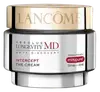
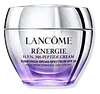
Lancôme Absolue Longevity MD Intercept The Cream Versus Lancôme Rénergie H.P.N. 300-Peptide Cream SPF 25
This anti-aging moisturizer is formulated around Niacinamide to soften the look of wrinkles and strengthen the skin barrier.
This anti-aging day moisturizer is formulated around Adenosine to soften the look of wrinkles.

What's inside
What's inside
 Key Ingredients
Benefits
Concerns
Ingredients Side-by-side
Water
Skin ConditioningGlycerin
Humectant


Rhamnose
HumectantHydrogenated Polyisobutene
EmollientNiacinamide
Smoothing









Butylene Glycol
Humectant
Dimethicone
Emollient
Bis-Behenyl/Isostearyl/Phytosteryl Dimer Dilinoleyl Dimer Dilinoleate
EmollientButyrospermum Parkii Butter
Skin Conditioning




Limnanthes Alba Seed Oil
Skin Conditioning
Stearyl Alcohol
Emollient
C30-45 Alkyl Dimethicone
Skin Conditioning
PEG-20 Stearate
Emulsifying
Hydroxypropyl Tetrahydropyrantriol
Skin ConditioningSilica
Abrasive
Urolithin A
Rosa Damascena Flower Water
Masking
Potassium Hydroxide
BufferingCarbomer
Emulsion StabilisingGlyceryl Stearate
Emollient
PEG-100 Stearate
Surfactant
Sodium Lactate
Buffering
Sodium Polyacrylate
Absorbent
Arginine
Masking
Palmitoyl Tetrapeptide-7
Skin Conditioning
Palmitoyl Tripeptide-1
Skin Conditioning
Adenosine
Skin Conditioning
Ammonium Polyacryloyldimethyl Taurate
Emulsion StabilisingPropanediol
Solvent
Propylene Glycol
Humectant
Capryloyl Salicylic Acid
Exfoliating
Caprylyl Glycol
Emollient
Tetrasodium EDTA
ChelatingCitric Acid
Buffering
Taurine
BufferingPolysorbate 20
Emulsifying
Acrylates/C10-30 Alkyl Acrylate Crosspolymer
Emulsion StabilisingOctyldodecanol
Emollient
Tocopherol
Antioxidant

Pentaerythrityl Tetra-Di-T-Butyl Hydroxyhydrocinnamate
Antioxidant
Salicylic Acid
Masking



Phenoxyethanol
Preservative
Chlorphenesin
Antimicrobial
Caramel
Cosmetic ColorantParfum
Masking

Water, Glycerin, Rhamnose, Hydrogenated Polyisobutene, Niacinamide, Butylene Glycol, Dimethicone, Bis-Behenyl/Isostearyl/Phytosteryl Dimer Dilinoleyl Dimer Dilinoleate, Butyrospermum Parkii Butter, Limnanthes Alba Seed Oil, Stearyl Alcohol, C30-45 Alkyl Dimethicone, PEG-20 Stearate, Hydroxypropyl Tetrahydropyrantriol, Silica, Urolithin A, Rosa Damascena Flower Water, Potassium Hydroxide, Carbomer, Glyceryl Stearate, PEG-100 Stearate, Sodium Lactate, Sodium Polyacrylate, Arginine, Palmitoyl Tetrapeptide-7, Palmitoyl Tripeptide-1, Adenosine, Ammonium Polyacryloyldimethyl Taurate, Propanediol, Propylene Glycol, Capryloyl Salicylic Acid, Caprylyl Glycol, Tetrasodium EDTA, Citric Acid, Taurine, Polysorbate 20, Acrylates/C10-30 Alkyl Acrylate Crosspolymer, Octyldodecanol, Tocopherol, Pentaerythrityl Tetra-Di-T-Butyl Hydroxyhydrocinnamate, Salicylic Acid, Phenoxyethanol, Chlorphenesin, Caramel, Parfum
Butyl Methoxydibenzoylmethane 3%
UV Absorber
Ethylhexyl Salicylate 5%
UV Absorber
Octocrylene 7%
UV Absorber
Water
Skin ConditioningGlycerin
Humectant
Silica
Abrasive
Dimethicone
Emollient
Isononyl Isononanoate
EmollientPropanediol
Solvent
Bis-PEG-18 Methyl Ether Dimethyl Silane
EmollientPolyglyceryl-6 Distearate
Emulsifying
Jojoba Esters
Emollient
Tocopherol
Antioxidant
Limnanthes Alba Seed Oil
Skin Conditioning
Cyclodextrin
AbsorbentHydrolyzed Lupine Protein
Skin ConditioningPisum Sativum Extract
Skin ConditioningAdenosine
Skin Conditioning
Capryloyl Salicylic Acid
Exfoliating
Citric Acid
Buffering
Disodium EDTA
ChelatingHydrolyzed Linseed Extract
Skin ConditioningHydroxyacetophenone
Antioxidant
Scutellaria Baicalensis Root Extract
Astringent
Sodium Hyaluronate
Humectant
Sodium Hydroxide
BufferingTitanium Dioxide
Cosmetic Colorant
Acacia Decurrens Flower Wax
Emollient
Ammonium Acryloyldimethyltaurate/Steareth-25 Methacrylate Crosspolymer
Emulsion StabilisingCaprylyl Glycol
Emollient
Cetyl Alcohol
Emollient
Disodium Stearoyl Glutamate
CleansingHelianthus Annuus Seed Wax
Skin Conditioning
Polyglycerin-3
Humectant
Polyglyceryl-3 Beeswax
Emulsifying
Xanthan Gum
EmulsifyingDimethicone/Vinyl Dimethicone Crosspolymer
Skin Conditioning
Dimethiconol
Emollient
Benzyl Alcohol
Perfuming

Geraniol
Perfuming
Limonene
Perfuming
CI 17200
Cosmetic ColorantPhenoxyethanol
Preservative
Sodium Benzoate
Masking
Parfum
Masking
Butyl Methoxydibenzoylmethane 3%, Ethylhexyl Salicylate 5%, Octocrylene 7%, Water, Glycerin, Silica, Dimethicone, Isononyl Isononanoate, Propanediol, Bis-PEG-18 Methyl Ether Dimethyl Silane, Polyglyceryl-6 Distearate, Jojoba Esters, Tocopherol, Limnanthes Alba Seed Oil, Cyclodextrin, Hydrolyzed Lupine Protein, Pisum Sativum Extract, Adenosine, Capryloyl Salicylic Acid, Citric Acid, Disodium EDTA, Hydrolyzed Linseed Extract, Hydroxyacetophenone, Scutellaria Baicalensis Root Extract, Sodium Hyaluronate, Sodium Hydroxide, Titanium Dioxide, Acacia Decurrens Flower Wax, Ammonium Acryloyldimethyltaurate/Steareth-25 Methacrylate Crosspolymer, Caprylyl Glycol, Cetyl Alcohol, Disodium Stearoyl Glutamate, Helianthus Annuus Seed Wax, Polyglycerin-3, Polyglyceryl-3 Beeswax, Xanthan Gum, Dimethicone/Vinyl Dimethicone Crosspolymer, Dimethiconol, Benzyl Alcohol, Geraniol, Limonene, CI 17200, Phenoxyethanol, Sodium Benzoate, Parfum
Ingredients Explained
These ingredients are found in both products.
Ingredients higher up in an ingredient list are typically present in a larger amount.
Adenosine is a purine nucleoside that your body already makes in every cell. In skincare, it acts mainly as a skin conditioning and anti-aging agent.
The way it works is fairly well mapped out:
Your skin has cells called fibroblasts that build collagen (the stuff that keeps skin firm and smooth). Adenosine basically flips a switch on these cells that tells them to get to work making more collagen and other proteins. These cells slow down on their own as skin ages, so Adenosine helps give them a little nudge to keep going.
The clinical backing is pretty solid too.
A blind, randomized, placebo-controlled trial of 126 women aged 45-65 tested a 0.1% cream twice daily and found real improvements in crow's feet and frown lines using a precise 3D skin-mapping technique; these changes showed up by week 3 and held at 2 months.
A later study using Adenosine-loaded dissolving microneedle patches reported gains in wrinkle depth, dermal density, elasticity, and hydration.
On concentrations, South Korea's Ministry of Food and Drug Safety has set 0.04% as the approved functional anti-wrinkle level. You'll typically see this ingredient used somewhere in the 0.04-0.1% range since it works at low doses.
This ingredient has been found safe for cosmetics with the data showing no irritation or sensitization.
Overall, this is a great ingredient for any anti-aging routine and has no photosensitizing effect, so it suits both AM and PM use.
Learn more about AdenosineCapryloyl Salicylic Acid comes from salicylic acid, the famous acne-fighting BHA.
It usually goes by a more common name of LHA, or lipohydroxy acid.
Like salicylic acid, this ingredient is a chemical exfoliant that can help break down the oil in your pores and reduce inflammation.
Though studies for LHA do show it to be less effective than salicylic acid. To be fair, salicylic acid is the reigning monarch of acne treatments.
However, a study from 2009 found LHA to be comparable to BPO, making it a good alternative for people with sensitive skin. Another study of 14 patients found a significant decrease in comedones after using LHA.
Another pro of LHA? It is less irritating than salicylic acid due to its large molecule size.
Large molecules cannot penetrate skin as well, so they are gentler on the skin. LHA is much less penetrative than salicylic acid.
An in-vitro study (not done on a living organism) found only 6% of LHA penetrated past the statum corneum compared to 58% of salicylic acid. An in-vivo (done on a living organism) analysis revealed ~17% of LHA was still present in the top layer of skin after 4 days, versus ~9% of salicylic acid.
Interestingly, a study from 2008 found LHA comparable to another famous acid, glycolic acid.
This study found about 10% of LHA is as effective as 20-50% of glycolic acid in treating hyperpigmentation and fine-lines.
Hydroxy acids have been found to stimulate skin protein, lipids, and thermal thickening. This may have anti-aging benefits.
Learn more about Capryloyl Salicylic AcidCaprylyl Glycol is a humectant, skin conditioner, emollient, and preservative booster derived from either caprylic acid or synthetically created.
Typical use levels vary from 0.3-1% as a preservative booster and go up to 2% to condition skin.
Because it is not a free-fatty acid, this ingredient is fungal acne safe (there's nothing for Malassezia to feed on).
Learn more about Caprylyl GlycolCitric Acid is an alpha hydroxy acid (AHA) naturally found in citrus fruits like oranges, lemons, and limes.
Like other AHAs, citric acid can exfoliate skin by breaking down the bonds that hold dead skin cells together. This helps reveal smoother and brighter skin underneath.
However, this exfoliating effect only happens at high concentrations (20%) which can be hard to find in cosmetic products.
Due to this, citric acid is usually included in small amounts as a pH adjuster. This helps keep products slightly more acidic and compatible with skin's natural pH.
In skincare formulas, citric acid can:
While it can provide some skin benefits, research shows lactic acid and glycolic acid are generally more effective and less irritating exfoliants.
Most citric acid used in skincare today is made by fermenting sugars (usually from molasses). This synthetic version is identical to the natural citrus form but easier to stabilize and use in formulations.
Rosacea skin has a lower threshold for acids generally, with 62.5% of rosacea subjects in one study reacting to lactic acid in a sting test. This is why we mark citric acid as a potential rosacea trigger.
However, this ingredient shows up as a pH adjuster or chelator at roughly 0.1-1% in many products. These low levels are unlikely to be an issue for rosacea skin and becomes a potential trigger at exfoliating concentrations (20%). Because everybody's skin is unique, we recommend a patch test if you are unsure.
Learn more about Citric AcidDimethicone is a type of synthetic silicone created from natural materials such as quartz. It is also known as polydimethylsiloxane.
What it does:
Dimethicone comes in different viscosities:
Depending on the viscosity, dimethicone has different properties.
Ingredients lists don't always show which type is used, so we recommend reaching out to the brand if you have questions about the viscosity.
This ingredient is unlikely to cause irritation because it does not get absorbed into skin. However, people with silicone allergies should be careful about using this ingredient.
Note: Dimethicone may contribute to pilling. This is because it is not oil or water soluble, so pilling may occur when layered with products. When mixed with heavy oils in a formula, the outcome is also quite greasy.
Learn more about DimethiconeGlycerin (or glycerol) is a compound naturally found in your skin. It's a powerhouse humectant that pulls water into the stratum corneum.
Topically, glycerin does several things at once:
Your skin makes glycerin on its own (mostly from sebaceous oil breakdown) and shuttles it to your outermost layer of skin, or your epidermis, via aquaporin-3.
Aquaporin-3 is a transporter that is essential for normal skin hydration, elasticity, and repair. Interestingly, mice lacking in AQP3 have dry and less elastic skin that can be fully corrected with glycerin.
This ingredient is non-irritating, plays well with almost every ingredient, and works across all skin types. Typical use is anywhere between 3-10% but can go up to 79% in some leave-on products.
Just know very high concentrations (>40%) can feel tacky in low humidity.
Glycerin is the name for this ingredient in American English. British English uses Glycerol/Glycerine.
Learn more about GlycerinLimnanthes Alba Seed Oil is from the seeds of the meadowfoam plant. It is a skin conditioning agent and emollient that sits on top of skin to soften and hydrate it.
Over 98% of the oil is made up of long-chain fatty acids, mostly aachidic acid (61%), docosenoic acid (~16%), and docosadienoic acid (~18%).
This combination is not really found in any other plant oil and is the reason this is one of the most stable botanical oils available.
Some studies show it to be more stable than jojoba oil, helps a product resist going rancid, and can help extend the shelf life of a formula.
It also naturally contains vitamin E and phytosterols that give it a mild antioxidant benefit.
This ingredient is typically used from around 1% to fairly high levels since it's gentle; it's well-tolerated and low on the irritation scale.
Learn more about Limnanthes Alba Seed OilParfum is a catch-all term for an ingredient or more that is used to give a scent to products.
Also called "fragrance", this ingredient can be a blend of hundreds of chemicals or plant oils. This means every product with "fragrance" or "parfum" in the ingredients list is a different mixture.
For instance, Habanolide is a proprietary trade name for a specific aroma chemical. When used as a fragrance ingredient in cosmetics, most aroma chemicals fall under the broad labeling category of “FRAGRANCE” or “PARFUM” according to EU and US regulations.
The term 'parfum' or 'fragrance' is not regulated in many countries. In many cases, it is up to the brand to define this term.
For instance, many brands choose to label themselves as "fragrance-free" because they are not using synthetic fragrances. However, their products may still contain ingredients such as essential oils that are considered a fragrance by INCI standards.
One example is Calendula flower extract. Calendula is an essential oil that still imparts a scent or 'fragrance'.
Depending on the blend, the ingredients in the mixture can cause allergies and sensitivities on the skin. Some ingredients that are known EU allergens include linalool and citronellol.
Parfum can also be used to mask or cover an unpleasant scent.
The bottom line is: not all fragrances/parfum/ingredients are created equally. If you are worried about fragrances, we recommend taking a closer look at an ingredient. And of course, we always recommend speaking with a professional.
Learn more about ParfumPhenoxyethanol is one of the most widely used preservatives in skincare (and for good reason!).
It has a large spectrum of antimicrobial activity and especially effective bacteria, yeast, and mold while only having a weak effect on your skin's natural microbiome.
On a cellular level, it disrupts the cell membranes of microbes by poking holes that make the cell leak. This shuts down the chemical reactions the microbe needs to make energy so it can no longer survive.
Another perk of this ingredient is that it stays functional across a wide pH range (3-10).
You'll often see it paired with boosters like Ethylhexylglycerin; one study showed that a 1:9 ratio of Ethylhexylglycerin to Phenoxyethanol damages bacterial membranes as effectively as doubling the Phenoxyethanol concentration on its own.
Typical use concentrations range from 0.3-1% depending on the formula, and this ingredient is capped at 1% int the EU.
Safety-wise, the fear mongering does not hold up to the evidence. The EU's Scientific Committee on Consumer Safety and FDA consider it safe as a preservative at up to 1%, including for children of all ages.
Adverse systemic effects only showed up in animal studies at exposures roughly 200x higher than what people get from cosmetics. And despite its very widespread use, this ingredient is a rare sensitizer and allergic reactions are uncommon.
Learn more about PhenoxyethanolPropanediol is an all-star ingredient. It softens, hydrates, and smooths the skin.
It’s often used to:
Propanediol is not likely to cause sensitivity and considered safe to use. It is derived from corn or petroleum with a clear color and no scent.
Learn more about PropanediolSilica, also known as silicon dioxide, is a naturally occurring mineral. It is used as a fine, spherical, and porous powder in cosmetics.
Though it has exfoliant properties, the function of silica varies depending on the product.
The unique structure of silica enhances the spreadability and adds smoothness, making it a great texture enhancer.
It is also used as an active carrier, emulsifier, and mattifier due to its ability to absorb excess oil.
In some products, tiny microneedles called spicules are made from silica or hydrolyzed sponge. When you rub them in, they lightly polish away dead skin layers and enhance the penetration of active ingredients.
Learn more about SilicaTocopherol is a fat-soluble antioxidant known as Vitamin E.
You'll find this ingredient in the vast majority of skincare (for good reason). It works to neutralize free radicals, or unstable molecules generated by UV exposure, pollution, and other environmental stressors, before they can cause oxidative damage to your skin cells.
Topically applied tocopherol has been shown to protect against UV damage by ramping up the skin's own natural defense enzymes.
It also acts as a skin conditioning agent; some studies show that regular topical use can improve the skin's water-binding capacity over 2-4 weeks.
This ingredient is especially loved for being a team player. When combined with Vitamin C, the photoprotective effect of both ingredients roughly doubles and the combo also helps reduce UV-induced DNA damage.
This ingredient has some brightening potential but it's more of a prevention ingredient than spot-fader. Cell studies show it can slow down melanin production but it's worth noting that it's not the most powerful brightener out there.
In formulations, it also serves as a stabilizer that helps protect other oxidation-prone ingredients from degrading.
Concentrations usually range from 0.1-1% in most leave-on products.
Learn more about TocopherolWater. It's the most common cosmetic ingredient of all. You'll usually see it at the top of ingredient lists, meaning that it makes up the largest part of the product.
So why is it so popular? Water most often acts as a solvent - this means that it helps dissolve other ingredients into the formulation.
You'll also recognize water as that liquid we all need to stay alive. If you see this, drink a glass of water. Remember to stay hydrated!
Learn more about Water

