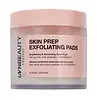
This smoothing exfoliating pad uses a pre-saturated pad with Glycolic Acid and Gluconolactone to refine skin texture and brighten dull-looking skin.
This smoothing toner is formulated around Niacinamide and Gluconolactone to refine skin texture and brighten dull-looking skin.


What's inside
What's inside
 Key Ingredients
Benefits
Concerns
Ingredients Side-by-side
Water
Skin ConditioningGlycolic Acid
Buffering











Pentylene Glycol
Skin Conditioning
Glycerin
Humectant
Gluconolactone
Chelating
Sodium Hydroxide
Buffering1,2-Hexanediol
Skin Conditioning
Ectoin
Skin Conditioning


Mandelic Acid
Antimicrobial
Tropaeolum Majus Flower/Leaf/Stem Extract
Skin ConditioningHexapeptide-9
Skin Conditioning
Tetrapeptide-4
Skin Conditioning
Squalane
Emollient
Maltobionic Acid
Buffering
Punica Granatum Fruit Extract
Antioxidant
Citrus Limon Fruit Extract
Masking
Terminalia Ferdinandiana Fruit Extract
Antioxidant
Creatine
Skin ConditioningAllantoin
Skin Conditioning
Sodium Polyglutamate
HumectantButylene Glycol
Humectant
Propanediol
Solvent
Centella Asiatica Extract
Cleansing
Cucumis Sativus Fruit Extract
Emollient
Hibiscus Sabdariffa Flower Extract
Skin ConditioningRosa Canina Fruit Extract
Astringent
Rose Extract
Skin ConditioningRumex Acetosella Extract
Skin ConditioningSorbitol
Humectant
Panthenol
Skin Conditioning
Tremella Fuciformis Extract
Humectant
Carthamus Tinctorius Flower Extract
Skin ConditioningBromelain
Skin Conditioning
Papain
Skin Conditioning
Sodium Benzoate
Masking
Hydroxyacetophenone
Antioxidant
Ethylhexylglycerin
Skin ConditioningSodium Phytate
ChelatingHydrogenated Lecithin
Emulsifying
Tocopherol
Antioxidant
Maltodextrin
Absorbent
Water, Glycolic Acid, Pentylene Glycol, Glycerin, Gluconolactone, Sodium Hydroxide, 1,2-Hexanediol, Ectoin, Mandelic Acid, Tropaeolum Majus Flower/Leaf/Stem Extract, Hexapeptide-9, Tetrapeptide-4, Squalane, Maltobionic Acid, Punica Granatum Fruit Extract, Citrus Limon Fruit Extract, Terminalia Ferdinandiana Fruit Extract, Creatine, Allantoin, Sodium Polyglutamate, Butylene Glycol, Propanediol, Centella Asiatica Extract, Cucumis Sativus Fruit Extract, Hibiscus Sabdariffa Flower Extract, Rosa Canina Fruit Extract, Rose Extract, Rumex Acetosella Extract, Sorbitol, Panthenol, Tremella Fuciformis Extract, Carthamus Tinctorius Flower Extract, Bromelain, Papain, Sodium Benzoate, Hydroxyacetophenone, Ethylhexylglycerin, Sodium Phytate, Hydrogenated Lecithin, Tocopherol, Maltodextrin
Water
Skin ConditioningPropanediol
Solvent
Butylene Glycol
Humectant
1,2-Hexanediol
Skin Conditioning
Niacinamide
Smoothing
Gluconolactone
Chelating
Inonotus Obliquus Extract
Skin ConditioningPotentilla Anserina Extract
Skin ConditioningAvena Sativa Kernel Extract
Abrasive
Cynara Scolymus Leaf Extract
Skin ConditioningJuniperus Communis Fruit Extract
Perfuming
Ficus Carica Fruit Extract
Humectant
Centella Asiatica Extract
Cleansing
Hydrogenated Lecithin
Emulsifying
Camellia Sinensis Leaf Extract
Antimicrobial
Methylpropanediol
SolventGlycerin
Humectant
Sodium Citrate
BufferingXanthan Gum
EmulsifyingHydroxyacetophenone
Antioxidant
Citric Acid
Buffering
Ethylhexylglycerin
Skin ConditioningAdenosine
Skin Conditioning
Disodium EDTA
ChelatingPolyquaternium-51
Skin Conditioning
Beta-Glucan
Skin Conditioning
Lactobacillus Ferment
Skin Conditioning
Polyglyceryl-10 Stearate
Skin Conditioning
Glutathione
Panthenol
Skin Conditioning
Sodium Ascorbyl Phosphate
Antioxidant
Tocopherol
Antioxidant
Tocopheryl Acetate
Antioxidant
Ceramide NP
Skin Conditioning
Retinyl Palmitate
Skin Conditioning
Biotin
AntiseborrhoeicThiamine Hcl
MaskingFolic Acid
Skin ConditioningPyridoxine
Skin ConditioningSucrose Distearate
Emollient
Caprylic/Capric Triglyceride
Masking
Hydroxypropyl Cyclodextrin
MaskingCyanocobalamin
Skin ConditioningWater, Propanediol, Butylene Glycol, 1,2-Hexanediol, Niacinamide, Gluconolactone, Inonotus Obliquus Extract, Potentilla Anserina Extract, Avena Sativa Kernel Extract, Cynara Scolymus Leaf Extract, Juniperus Communis Fruit Extract, Ficus Carica Fruit Extract, Centella Asiatica Extract, Hydrogenated Lecithin, Camellia Sinensis Leaf Extract, Methylpropanediol, Glycerin, Sodium Citrate, Xanthan Gum, Hydroxyacetophenone, Citric Acid, Ethylhexylglycerin, Adenosine, Disodium EDTA, Polyquaternium-51, Beta-Glucan, Lactobacillus Ferment, Polyglyceryl-10 Stearate, Glutathione, Panthenol, Sodium Ascorbyl Phosphate, Tocopherol, Tocopheryl Acetate, Ceramide NP, Retinyl Palmitate, Biotin, Thiamine Hcl, Folic Acid, Pyridoxine, Sucrose Distearate, Caprylic/Capric Triglyceride, Hydroxypropyl Cyclodextrin, Cyanocobalamin
Ingredients Explained
These ingredients are found in both products.
Ingredients higher up in an ingredient list are typically present in a larger amount.
1,2-Hexanediol is a synthetic liquid and another multi-functional powerhouse.
It is a:
- Humectant, drawing moisture into the skin
- Emollient, helping to soften skin
- Solvent, dispersing and stabilizing formulas
- Preservative booster, enhancing the antimicrobial activity of other preservatives
Butylene Glycol (or BG) is used within cosmetic products for a few different reasons:
Overall, Butylene Glycol is a safe and well-rounded ingredient that works well with other ingredients.
Though this ingredient works well with most skin types, some people with sensitive skin may experience a reaction such as allergic rashes, closed comedones, or itchiness.
Learn more about Butylene GlycolCentella Asiatica Extract (Centella) is one of the most researched botanical extracts in skincare with decades of studies backing its effects on inflammation, collagen, and the skin barrier.
That research keeps pointing back to the same four triterpenoid saponins: Asiaticoside, Madecassoside, Asiatic Acid, and Madecassic Acid.
These compounds allow centella to dial back inflammation, encourage the skin to build and hold onto collagen, support the barrier and hydration, and bring solid antioxidant activity to protect against signs of aging.
Centella also carries a nice supporting cast of Vitamin A, vitamin C, several B vitamins, and amino acids. Put it all together and you get an ingredient that soothes, hydrates, and protects, all at once.
Most of centella's magic comes from the four big compounds (Asiaticoside, Madecassoside, Asiatic Acid, and Madecassic Acid). These are the actives doing the heavy lifting in almost every centella study.
Here is the short version of what they do in the skin:
So it is not just soothing for the sake of soothing. Centella calms the skin AND helps it rebuild.
Just FYI, not all centella on an ingredient list is the same. What you are getting actually depends on the extract:
Fun fact on the ratios: the leaves tend to be richest in Madecassoside and Asiaticoside, and lower in the two acids. The exact amounts shift with where the plant is grown and how it is processed. This means purity really does vary brand to brand.
Centella is one of the most easygoing actives out there.
It layers well with basically everything: niacinamide, hyaluronic acid, peptides, and vitamin C, and also pairs nicely with stronger actives like retinoids and exfoliating acids where it can help take the edge off irritation.
On the safety side, centella and its triterpenes are classified as weak sensitizers, meaning allergic reactions are possible but uncommon.
Patch tests at 1% and 5% came back negative in test panels, and creams at typical use levels did not cause allergic reactions across large groups of people.
But as with any new active, a patch test is still a smart move for very reactive skin.
Centella is widely used because it is effective at low percentages. For context, human safety testing found no meaningful irritation from creams containing centella extract at everyday use levels (the tested amounts were well under 1%).
The irritancy threshold in animal testing was also above 30% (so real-world formulas sit far below anything concerning).
In collagen lab studies, higher concentrations drove more collagen synthesis, so serums built around centella tend to feature it more prominently.
Bottom line: you will find centella working nicely anywhere from a fraction of a percent up to hero-ingredient levels depending on whether it is a supporting soother or the main event.
Fun fact: Centella has been used as a medicine and in food for many centuries. As a medicine, it is used to treat burns, scratches, and wounds.
Learn more about Centella Asiatica ExtractEthylhexylglycerin is created from glycerin. It is a multitasker ingredient that:
The CIR Expert Panel found minimal skin absorption or sensitization of any kind in a safety assessment. Though this ingredient is considered well-tolerated, a small number of cases of allergic dermatitis have been published since 2002. Just be sure to patch test if you are unsure.
Industry-reported use ranges from 8% in rinse-off products and 2% in leave-on formulations.
Learn more about EthylhexylglycerinGluconolactone is a PHA. PHAs are a great gentle alternative to traditional AHAs.
When applied, Gluconolactone has the same affect on skin as AHAs such as lactic acid. It helps dissolve the dead skin cells in the top layer of your skin. This improves texture and brightens the skin.
PHAs are more gentle than AHAs due to their larger structure. They do not penetrate as deeply as AHAs and take a longer time to dissolve dead cells. Studies show PHAs do not cause as much irritation.
Gluconolactone has some interesting properties:
In a 2004 study, Gluconolactone was found to prevent UV damage in mouse skin cells and has not been found to increase sun sensitivity. However, we still recommend wearing SPF daily.
This ingredient is is an created by reacting gluconic acid with an alcohol.
Learn more about GluconolactoneGlycerin (or glycerol) is a compound naturally found in your skin. It's a powerhouse humectant that pulls water into the stratum corneum.
Topically, glycerin does several things at once:
Your skin makes glycerin on its own (mostly from sebaceous oil breakdown) and shuttles it to your outermost layer of skin, or your epidermis, via aquaporin-3.
Aquaporin-3 is a transporter that is essential for normal skin hydration, elasticity, and repair. Interestingly, mice lacking in AQP3 have dry and less elastic skin that can be fully corrected with glycerin.
This ingredient is non-irritating, plays well with almost every ingredient, and works across all skin types. Typical use is anywhere between 3-10% but can go up to 79% in some leave-on products.
Just know very high concentrations (>40%) can feel tacky in low humidity.
Glycerin is the name for this ingredient in American English. British English uses Glycerol/Glycerine.
Learn more about GlycerinHydrogenated Lecithin is a more stable version of lecithin.
It's made by taking lecithin (a phospholipid commonly found in soybeans and egg yolks) and hydrogenating it. This just means the unsaturated fatty acids are turned into saturated ones so they don't go bad as easily.
This ingredient is an emollient, emulsifier, and penetration enhancer. As an emollient, it helps soften and hydrate skin by trapping moisture within. As an emulsifier, it prevents oil and water ingredients from separating.
Hydrogenated Lecithin can form tiny spherical structures made of phospholipid bilayers called liposomes. These liposomes are able to capture compounds inside their structure and deliver them through the skin barrier.
Because phospholipids are a natural component of our cell membranes, this ingredient is inherently compatible with skin.
A 2021 study found lecithin-based surfactants were less harsh and more tolerable comared to Sodium Lauryl Sulfate (SLS).
Learn more about Hydrogenated LecithinHydroxyacetophenone is a small phenolic molecule that earns its place in a formulas as an antioxidant and preservative booster.
As a phenol, it is able to neutralize free radicals to protect both the product and the skin from oxidative stress.
Though it can't kill microbes on its own, it works as a good supporting agent when combined with other preservatives like Phenoxyethanol or 1,2-Hexanediol.
This ingredient naturally occurs as piceol in Norwegian spruce needles (~0.4-1.1% dry weight and in cloudberries). Though the cosmetic-grade material is synthesized for purity and consistency.
You'll usually see it used at low levels and suppliers recommend up to 1% added to a water phase.
Safety testing was done at concentrations like 0.05% in SPF products and 0.5% in a Human Repeated Insult Patch Test. The safety evidence is assuring; this ingredient is safe for cosmetics in current use and also holds safety status as a food flavoring as well.
An honest caveat: the "soothing" and "anti-inflammatory" claims come mostly from supplier marketing rather than published clinical trials. The Cosmetic Ingredient Review's own literature search found no useful efficacy studies on this ingredient.
So the antioxidant and preservative-boosting roles are the well supported ones while the calming benefit is plausible but thinly evidenced.
Overall, this is a well-tolerated, low-irritation multitasker that quietly helps a formula stay fresh and stable.
Learn more about HydroxyacetophenonePanthenol is a common ingredient that helps hydrate and soothe the skin. It is found naturally in our skin and hair.
There are two forms of panthenol: D and L.
D-panthenol is also known as dexpanthenol. Most cosmetics use dexpanthenol or a mixture of D and L-panthenol.
Panthenol is famous due to its ability to go deeper into the skin's layers. Using this ingredient has numerous pros (and no cons):
Like hyaluronic acid, panthenol is a humectant. Humectants are able to bind and hold large amounts of water to keep skin hydrated.
This ingredient works well for wound healing. It works by increasing tissue in the wound and helps close open wounds.
Once oxidized, panthenol converts to pantothenic acid. Panthothenic acid is found in all living cells.
This ingredient is also referred to as pro-vitamin B5.
Learn more about PanthenolPropanediol is an all-star ingredient. It softens, hydrates, and smooths the skin.
It’s often used to:
Propanediol is not likely to cause sensitivity and considered safe to use. It is derived from corn or petroleum with a clear color and no scent.
Learn more about PropanediolTocopherol is a fat-soluble antioxidant known as Vitamin E.
You'll find this ingredient in the vast majority of skincare (for good reason). It works to neutralize free radicals, or unstable molecules generated by UV exposure, pollution, and other environmental stressors, before they can cause oxidative damage to your skin cells.
Topically applied tocopherol has been shown to protect against UV damage by ramping up the skin's own natural defense enzymes.
It also acts as a skin conditioning agent; some studies show that regular topical use can improve the skin's water-binding capacity over 2-4 weeks.
This ingredient is especially loved for being a team player. When combined with Vitamin C, the photoprotective effect of both ingredients roughly doubles and the combo also helps reduce UV-induced DNA damage.
This ingredient has some brightening potential but it's more of a prevention ingredient than spot-fader. Cell studies show it can slow down melanin production but it's worth noting that it's not the most powerful brightener out there.
In formulations, it also serves as a stabilizer that helps protect other oxidation-prone ingredients from degrading.
Concentrations usually range from 0.1-1% in most leave-on products.
Learn more about TocopherolWater. It's the most common cosmetic ingredient of all. You'll usually see it at the top of ingredient lists, meaning that it makes up the largest part of the product.
So why is it so popular? Water most often acts as a solvent - this means that it helps dissolve other ingredients into the formulation.
You'll also recognize water as that liquid we all need to stay alive. If you see this, drink a glass of water. Remember to stay hydrated!
Learn more about Water

