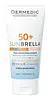
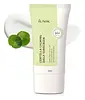
Dermedic Sunbrella-Protective Cream For Face With Vascular Problems SPF50+ Versus iUNIK Centella Calming Daily Sunscreen SPF50+ PA++++
This chemical sunscreen covers the full UV range and blocks ~98% of UVB at SPF 50.


What's inside
What's inside
 Key Ingredients
Benefits
Concerns
Ingredients Side-by-side
Water
Skin ConditioningOctocrylene
UV Absorber



Ethylhexyl Methoxycinnamate
UV Absorber
Diethylamino Hydroxybenzoyl Hexyl Benzoate
UV Filter
Cocos Nucifera Oil
Masking







C12-15 Alkyl Benzoate
AntimicrobialCyclohexasiloxane
Emollient
Glyceryl Stearate
Emollient
PEG-100 Stearate
Surfactant
Methylene Bis-Benzotriazolyl Tetramethylbutylphenol
UV Filter
Decyl Glucoside
Cleansing
Propylene Glycol
Humectant
Xanthan Gum
EmulsifyingStearyl Alcohol
Emollient
Glycerin
Humectant

Titanium Dioxide
Cosmetic Colorant
Hydrogenated Polydecene
EmollientPolyhydroxystearic Acid
Emulsifying
Alumina
Abrasive
Dimethicone
Emollient
Bis-Ethylhexyloxyphenol Methoxyphenyl Triazine
UV Absorber
Polyacrylamide
C13-14 Isoparaffin
Emollient
Laureth-7
EmulsifyingPhysalis Angulata Extract
Skin ProtectingCaprylic/Capric Triglyceride
Masking
Tocopherol
Antioxidant





Hamamelis Virginiana Leaf Extract
Skin Conditioning
Aesculus Hippocastanum Extract
Antioxidant
Vitis Vinifera Leaf Extract
Skin ConditioningHypericum Perforatum Extract
AntimicrobialArnica Montana Flower Extract
Masking
Hedera Helix Extract
AntimicrobialPhenoxyethanol
Preservative
Stearic Acid
Cleansing
Bis-Ethylhexyl Hydroxydimethoxy Benzylmalonate
Antioxidant
Allantoin
Skin Conditioning
Dehydroacetic Acid
Preservative
Benzyl Alcohol
Perfuming


Parfum
Masking
Benzyl Salicylate
Perfuming
Butylphenyl Methylpropional
Perfuming
Linalool
Perfuming
Citronellol
Perfuming
Hexyl Cinnamal
Perfuming
Limonene
Perfuming
Water, Octocrylene, Ethylhexyl Methoxycinnamate, Diethylamino Hydroxybenzoyl Hexyl Benzoate, Cocos Nucifera Oil, C12-15 Alkyl Benzoate, Cyclohexasiloxane, Glyceryl Stearate, PEG-100 Stearate, Methylene Bis-Benzotriazolyl Tetramethylbutylphenol, Decyl Glucoside, Propylene Glycol, Xanthan Gum, Stearyl Alcohol, Glycerin, Titanium Dioxide, Hydrogenated Polydecene, Polyhydroxystearic Acid, Alumina, Dimethicone, Bis-Ethylhexyloxyphenol Methoxyphenyl Triazine, Polyacrylamide, C13-14 Isoparaffin, Laureth-7, Physalis Angulata Extract, Caprylic/Capric Triglyceride, Tocopherol, Hamamelis Virginiana Leaf Extract, Aesculus Hippocastanum Extract, Vitis Vinifera Leaf Extract, Hypericum Perforatum Extract, Arnica Montana Flower Extract, Hedera Helix Extract, Phenoxyethanol, Stearic Acid, Bis-Ethylhexyl Hydroxydimethoxy Benzylmalonate, Allantoin, Dehydroacetic Acid, Benzyl Alcohol, Parfum, Benzyl Salicylate, Butylphenyl Methylpropional, Linalool, Citronellol, Hexyl Cinnamal, Limonene
Centella Asiatica Extract 49%
Cleansing
Water
Skin ConditioningDibutyl Adipate
EmollientDiethylamino Hydroxybenzoyl Hexyl Benzoate
UV Filter
Ethylhexyl Triazone
UV Absorber
Glycerin
Humectant
Niacinamide
Smoothing



Polymethyl Methacrylate
Methylene Bis-Benzotriazolyl Tetramethylbutylphenol
UV Filter
Polysilicone-15
UV Filter
1,2-Hexanediol
Skin Conditioning
Beta-Glucan
Skin Conditioning
Allantoin
Skin Conditioning
Butylene Glycol
Humectant
Pentylene Glycol
Skin Conditioning
Arachidyl Alcohol
Emollient
Sodium Stearoyl Glutamate
CleansingPolyglyceryl-3 Methylglucose Distearate
Emulsifying
Sorbitan Sesquioleate
Emulsifying
Behenyl Alcohol
Emollient
Decyl Glucoside
Cleansing
Caprylyl Glycol
Emollient
Arachidyl Glucoside
EmulsifyingHydroxyacetophenone
Antioxidant
Acrylates/C10-30 Alkyl Acrylate Crosspolymer
Emulsion StabilisingCarbomer
Emulsion StabilisingPolyacrylate Crosspolymer-6
Emulsion StabilisingAdenosine
Skin Conditioning
Dipotassium Glycyrrhizate
Humectant
Glucose
Humectant
T-Butyl Alcohol
Perfuming
Xanthan Gum
EmulsifyingTromethamine
BufferingDisodium EDTA
ChelatingCentella Asiatica Extract 49%, Water, Dibutyl Adipate, Diethylamino Hydroxybenzoyl Hexyl Benzoate, Ethylhexyl Triazone, Glycerin, Niacinamide, Polymethyl Methacrylate, Methylene Bis-Benzotriazolyl Tetramethylbutylphenol, Polysilicone-15, 1,2-Hexanediol, Beta-Glucan, Allantoin, Butylene Glycol, Pentylene Glycol, Arachidyl Alcohol, Sodium Stearoyl Glutamate, Polyglyceryl-3 Methylglucose Distearate, Sorbitan Sesquioleate, Behenyl Alcohol, Decyl Glucoside, Caprylyl Glycol, Arachidyl Glucoside, Hydroxyacetophenone, Acrylates/C10-30 Alkyl Acrylate Crosspolymer, Carbomer, Polyacrylate Crosspolymer-6, Adenosine, Dipotassium Glycyrrhizate, Glucose, T-Butyl Alcohol, Xanthan Gum, Tromethamine, Disodium EDTA
Reviews
Ingredients Explained
These ingredients are found in both products.
Ingredients higher up in an ingredient list are typically present in a larger amount.
Allantoin is a soothing ingredient known for its protective and moisturizing properties; it's basically a quiet workhorse ingredient you can find in a huge range of cosmetics.
Though it can be derived from the comfrey plant, allantoin is produced synthetically for cosmetic products to ensure purity.
Research shows it can encourage your skin cells to turn over and renew by stimulating keratinocyte and fibroblast proliferation.
It also has mild keratolytic properties to help loosen and shed dead skin cells without being harsh.
Studies also suggest allantoin can help calm inflammation by dialing down some of the chemical signals your skin sends out when it is irritated.
This ingredient is typically used in the 0.1-0.5% range, and the FDA recognizes it as a skin protectant in OTC products up to 2%.
Overall, allantoin is a wonderful addition to most routines; it is stable across a wide pH range (~4-8), works well with other ingredients, and is considered non-sensitizing/non-irritating.
Fun fact: Allantoin is naturally occurring in comfrey root, beets, chamomile, and wheat sprouts. Our bodies even produce it as a byproduct of uric acid metabolism.
Learn more about AllantoinDecyl Glucoside is a plant-derived surfactant and emulsion stabilizer. It is created by reacting glucose with the fatty acids from plants.
Like all surfactants, it works by lowering the surface tension between water and oil. This makes it so that dirt, sebum, and makeup can be lifted off your skin and rinsed away. It also produces a dense and creamy foam.
Because it has a neutral charge, it is compatible with a wide range of ingredients and stays stable across a broad pH range/water hardiness conditions.
Patch testing has shown it to have the lowest irritation potential among common cleansing surfactants (like SLS).
Typical use levels range from 5-20% in rinse-off cleansers.
One thing worth knowing: The American Contact Dermatitis Society named the parent family, alkyl glucosides, "Allergen of the Year" in 2017. The prevalence of allergy is pretty low but be sure to patch test if you've reacted to "gentle" or sulfate-free cleansers before.
This ingredient is fungal acne safe because the fatty alcohol portion of this ingredient is not within the C11-24 chain length that Malassezia can metabolize.
Learn more about Decyl GlucosideDiethylamino Hydroxybenzoyl Hexyl Benzoate (DHHB) is a chemical UV-A absorber. It is formulated for high UVA protection (320-400 nm).
DHHB is well-liked for:
DHHB has been approved by the EU, Japan, Taiwan, and South America for use up to 10%. Unfortunately, it has not been approved for use in the US or Canada due to slow regulatory processes.
This ingredient is soluble in oils, fats, and lipids.
Learn more about Diethylamino Hydroxybenzoyl Hexyl BenzoateGlycerin (or glycerol) is a compound naturally found in your skin. It's a powerhouse humectant that pulls water into the stratum corneum.
Topically, glycerin does several things at once:
Your skin makes glycerin on its own (mostly from sebaceous oil breakdown) and shuttles it to your outermost layer of skin, or your epidermis, via aquaporin-3.
Aquaporin-3 is a transporter that is essential for normal skin hydration, elasticity, and repair. Interestingly, mice lacking in AQP3 have dry and less elastic skin that can be fully corrected with glycerin.
This ingredient is non-irritating, plays well with almost every ingredient, and works across all skin types. Typical use is anywhere between 3-10% but can go up to 79% in some leave-on products.
Just know very high concentrations (>40%) can feel tacky in low humidity.
Glycerin is the name for this ingredient in American English. British English uses Glycerol/Glycerine.
Learn more about GlycerinThis ingredient is also known as Tinosorb M or Bisoctrizole and is a bit of an overachiever in the sunscreen world.
It's a hybrid broad-spectrum filter that covers UVA and UVB (~280-400nm) with peak absorption around 305nm for UVB or 360nm for UVA (and a tiny bit in blue-light territory as well).
One of its best party tricks is photostability; it doesn't break down with repeated sun exposure and doesn't generate free radicals in the process either. You'll also see it paired with wobbly filters like avobenzone because it helps stabilize them.
The safety profile is assuring as well. Because it's a large molecule, it doesn't easily absorb into skin and rarely causes irritation.
It's approved in the EU, Asia, and Australia up to 10% and most formulas land somewhere in the 2-10% range.
You won't find it as a sunscreen active in the US, but it can make an appearance as a formula-protecting UV-absorber.
Learn more about Methylene Bis-Benzotriazolyl TetramethylbutylphenolWater. It's the most common cosmetic ingredient of all. You'll usually see it at the top of ingredient lists, meaning that it makes up the largest part of the product.
So why is it so popular? Water most often acts as a solvent - this means that it helps dissolve other ingredients into the formulation.
You'll also recognize water as that liquid we all need to stay alive. If you see this, drink a glass of water. Remember to stay hydrated!
Learn more about WaterXanthan gum is used as a stabilizer and thickener within cosmetic products. It helps give products a sticky, thick feeling - preventing them from being too runny.
On the technical side of things, xanthan gum is a polysaccharide - a combination consisting of multiple sugar molecules bonded together.
Xanthan gum is a pretty common and great ingredient. It is a natural, non-toxic, non-irritating ingredient that is also commonly used in food products.
Learn more about Xanthan Gum

