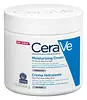
This barrier-repair moisturizer is formulated around Ceramide NP and Ceramide AP to strengthen the skin barrier and hydrate skin.


What's inside
What's inside
 Key Ingredients
Benefits
Concerns
Ingredients Side-by-side
Water
Skin ConditioningGlycerin
Humectant


Cetearyl Alcohol
Emollient






Caprylic/Capric Triglyceride
Masking
Cetyl Alcohol
Emollient
Ceteareth-20
Cleansing
Petrolatum
Emollient

Potassium Phosphate
BufferingCeramide NP
Skin Conditioning



Ceramide AP
Skin Conditioning
Ceramide EOP
Skin Conditioning
Carbomer
Emulsion StabilisingDimethicone
Emollient
Behentrimonium Methosulfate
SurfactantSodium Lauroyl Lactylate
EmulsifyingSodium Hyaluronate
Humectant
Cholesterol
Emollient
Phenoxyethanol
Preservative
Disodium EDTA
Dipotassium Phosphate
BufferingTocopherol
Antioxidant



Phytosphingosine
Skin Conditioning
Xanthan Gum
EmulsifyingEthylhexylglycerin
Skin ConditioningWater, Glycerin, Cetearyl Alcohol, Caprylic/Capric Triglyceride, Cetyl Alcohol, Ceteareth-20, Petrolatum, Potassium Phosphate, Ceramide NP, Ceramide AP, Ceramide EOP, Carbomer, Dimethicone, Behentrimonium Methosulfate, Sodium Lauroyl Lactylate, Sodium Hyaluronate, Cholesterol, Phenoxyethanol, Disodium EDTA, Dipotassium Phosphate, Tocopherol, Phytosphingosine, Xanthan Gum, Ethylhexylglycerin
Water
Skin ConditioningCyclomethicone
Emollient
Triphenyl Trimethicone
Emollient
Butylene Glycol
Humectant
PEG/PPG-18/18 Dimethicone
Emulsifying
Isononyl Isononanoate
EmollientPolysilicone-11

Diisopropyl Dimer Dilinoleate
Emollient
Ethylhexyl Hydroxystearate
Emollient
C18-36 Acid Triglyceride
EmollientGlycoproteins
Skin Conditioning
Panax Ginseng Extract
Antioxidant
Equisetum Arvense Extract
AstringentGlycyrrhiza Glabra Root Extract
Bleaching
Lactobacillus Ferment
Skin Conditioning
Tocopheryl Acetate
Antioxidant
Glycine Soja Oil
Emollient
Malt Extract
Skin ProtectingPanthenol
Skin Conditioning
Hydrolyzed Wheat Protein
Skin ConditioningArnica Montana Extract
Skin ConditioningCeramide NP
Skin Conditioning
Tocopherol
Antioxidant
Glycerin
Humectant
Phospholipids
Skin Conditioning
Sodium PCA
Humectant
Lysine
Skin ConditioningProline
Skin Conditioning
Glycine
Buffering
Arginine
Masking
Methionine
Skin ConditioningPetrolatum
Emollient
Dimethicone
Emollient
Tocopheryl Linoleate
Antioxidant
Acrylates Copolymer
Propylene Glycol
Humectant
Polymethyl Methacrylate
Lauryl Methacrylate
Methicone
Emollient
Xanthan Gum
EmulsifyingGlucuronic Acid
Buffering
Trihydroxystearin
Skin Conditioning
Sodium Chloride
MaskingParfum
Masking

Benzyl Alcohol
Perfuming

Linalool
Perfuming
Hydroxycitronellal
Perfuming
Alpha-Isomethyl Ionone
Perfuming
Amyl Cinnamal
Perfuming
Hexyl Cinnamal
Perfuming
Geraniol
Perfuming
Benzyl Benzoate
Antimicrobial
Butylphenyl Methylpropional
Perfuming
Methylparaben
Preservative

Propylparaben
Preservative
Phenoxyethanol
Preservative
Ethylparaben
Preservative
Butylparaben
Masking
Isobutylparaben
Antimicrobial
Titanium Dioxide
Cosmetic Colorant
Iron Oxides
Isopropyl Palmitate
Emollient
Isostearyl Behenate
EmollientSilica
Abrasive

Cera Microcristallina
Emulsion StabilisingNylon-12
Ozokerite
Emulsion StabilisingGlyceryl Dibehenate
Emollient
Mica
Cosmetic ColorantLavandula Angustifolia Extract
Skin Conditioning
Camellia Sinensis Leaf Extract
Antimicrobial
Citrus Nobilis Peel Extract
Masking
Retinyl Palmitate
Skin Conditioning
Ascorbyl Palmitate
Antioxidant
Tribehenin
Emollient
Triethanolamine
BufferingGlyceryl Behenate
Emollient
Isopropyl Myristate
Emollient
Isopropyl Titanium Triisostearate
Emollient
Polyglucuronic Acid
Skin ConditioningEthylhexyl Methoxycinnamate
UV Absorber
Algae
Skin Conditioning
Caviar Extract
Skin ConditioningEvernia Prunastri Extract
Perfuming
Water, Cyclomethicone, Triphenyl Trimethicone, Butylene Glycol, PEG/PPG-18/18 Dimethicone, Isononyl Isononanoate, Polysilicone-11, Diisopropyl Dimer Dilinoleate, Ethylhexyl Hydroxystearate, C18-36 Acid Triglyceride, Glycoproteins, Panax Ginseng Extract, Equisetum Arvense Extract, Glycyrrhiza Glabra Root Extract, Lactobacillus Ferment, Tocopheryl Acetate, Glycine Soja Oil, Malt Extract, Panthenol, Hydrolyzed Wheat Protein, Arnica Montana Extract, Ceramide NP, Tocopherol, Glycerin, Phospholipids, Sodium PCA, Lysine, Proline, Glycine, Arginine, Methionine, Petrolatum, Dimethicone, Tocopheryl Linoleate, Acrylates Copolymer, Propylene Glycol, Polymethyl Methacrylate, Lauryl Methacrylate, Methicone, Xanthan Gum, Glucuronic Acid, Trihydroxystearin, Sodium Chloride, Parfum, Benzyl Alcohol, Linalool, Hydroxycitronellal, Alpha-Isomethyl Ionone, Amyl Cinnamal, Hexyl Cinnamal, Geraniol, Benzyl Benzoate, Butylphenyl Methylpropional, Methylparaben, Propylparaben, Phenoxyethanol, Ethylparaben, Butylparaben, Isobutylparaben, Titanium Dioxide, Iron Oxides, Isopropyl Palmitate, Isostearyl Behenate, Silica, Cera Microcristallina, Nylon-12, Ozokerite, Glyceryl Dibehenate, Mica, Lavandula Angustifolia Extract, Camellia Sinensis Leaf Extract, Citrus Nobilis Peel Extract, Retinyl Palmitate, Ascorbyl Palmitate, Tribehenin, Triethanolamine, Glyceryl Behenate, Isopropyl Myristate, Isopropyl Titanium Triisostearate, Polyglucuronic Acid, Ethylhexyl Methoxycinnamate, Algae, Caviar Extract, Evernia Prunastri Extract
Reviews
Alternatives
Ingredients Explained
These ingredients are found in both products.
Ingredients higher up in an ingredient list are typically present in a larger amount.
Ceramide NP (formerly known as Ceramide 3) is one of the skin's naturally occurring lipids.
Since ceramides are the major lipid components of the skin, they are crucial for maintaining skin barrier and hydration. Ceramide NP most closely mirrors the dominant kind in human skin amongst ceramide subtypes.
This ceramide works by slotting into gaps within the stratum corneum's lipid matrix to limit trans-epidermal water loss (TEWL) and shield the skin against external irritants.
A study with 312 patients found that using a ceramide-containing routine for 4 weeks reduced the severity of atopic dermatitis by over 61%.
Another clinical study in subjects aged 60 and older found that a ceramide body wash and moisturizer improved skin dryness and itchy skin in 15 days.
Overall, ceramides are considered non-irritating and safety tests have found little to no observable adverse effects from using this ingredient.
Ceramide NP is usually sourced from plants (like soybean or rice bran), or produced synthetically.
Learn more about Ceramide NPDimethicone is a type of synthetic silicone created from natural materials such as quartz. It is also known as polydimethylsiloxane.
What it does:
Dimethicone comes in different viscosities:
Depending on the viscosity, dimethicone has different properties.
Ingredients lists don't always show which type is used, so we recommend reaching out to the brand if you have questions about the viscosity.
This ingredient is unlikely to cause irritation because it does not get absorbed into skin. However, people with silicone allergies should be careful about using this ingredient.
Note: Dimethicone may contribute to pilling. This is because it is not oil or water soluble, so pilling may occur when layered with products. When mixed with heavy oils in a formula, the outcome is also quite greasy.
Learn more about DimethiconeGlycerin (or glycerol) is a compound naturally found in your skin. It's a powerhouse humectant that pulls water into the stratum corneum.
Topically, glycerin does several things at once:
Your skin makes glycerin on its own (mostly from sebaceous oil breakdown) and shuttles it to your outermost layer of skin, or your epidermis, via aquaporin-3.
Aquaporin-3 is a transporter that is essential for normal skin hydration, elasticity, and repair. Interestingly, mice lacking in AQP3 have dry and less elastic skin that can be fully corrected with glycerin.
This ingredient is non-irritating, plays well with almost every ingredient, and works across all skin types. Typical use is anywhere between 3-10% but can go up to 79% in some leave-on products.
Just know very high concentrations (>40%) can feel tacky in low humidity.
Glycerin is the name for this ingredient in American English. British English uses Glycerol/Glycerine.
Learn more about GlycerinPetrolatum is more commonly known as petroleum jelly. It is created by mixing waxes and mineral oils.
This ingredient is effective at reducing water loss by 99%. This is because it is an occlusive. Occlusives create a hydrophobic barrier on the skin to prevent evaporation. This property makes it great for hydrating dry skin.
Pro tip: Use occlusives, such as this ingredient, on damp skin for the best results.
The quality or origin of petrolatum is only known when disclosed by the brand. Most cosmetic petrolatum has gone through several purification stages.
Another benefit of occlusives is it protects your skin against infection or allergies.
Petrolatum is fungal acne safe. It is a hydrocarbon with no fatty acid structure, so Malassezia cannot metabolize it. In-vitro studies support negligible growth stimulation as well.
It's also worth noting that petrolatum has a comedogenic rating of 0. In updated rabbit ear testing (and in human testing), petrolatum was found to be not comedogenic. This means it didn’t promote comedone formation in standard models.
Learn more about PetrolatumPhenoxyethanol is one of the most widely used preservatives in skincare (and for good reason!).
It has a large spectrum of antimicrobial activity and especially effective bacteria, yeast, and mold while only having a weak effect on your skin's natural microbiome.
On a cellular level, it disrupts the cell membranes of microbes by poking holes that make the cell leak. This shuts down the chemical reactions the microbe needs to make energy so it can no longer survive.
Another perk of this ingredient is that it stays functional across a wide pH range (3-10).
You'll often see it paired with boosters like Ethylhexylglycerin; one study showed that a 1:9 ratio of Ethylhexylglycerin to Phenoxyethanol damages bacterial membranes as effectively as doubling the Phenoxyethanol concentration on its own.
Typical use concentrations range from 0.3-1% depending on the formula, and this ingredient is capped at 1% int the EU.
Safety-wise, the fear mongering does not hold up to the evidence. The EU's Scientific Committee on Consumer Safety and FDA consider it safe as a preservative at up to 1%, including for children of all ages.
Adverse systemic effects only showed up in animal studies at exposures roughly 200x higher than what people get from cosmetics. And despite its very widespread use, this ingredient is a rare sensitizer and allergic reactions are uncommon.
Learn more about PhenoxyethanolTocopherol is a fat-soluble antioxidant known as Vitamin E.
You'll find this ingredient in the vast majority of skincare (for good reason). It works to neutralize free radicals, or unstable molecules generated by UV exposure, pollution, and other environmental stressors, before they can cause oxidative damage to your skin cells.
Topically applied tocopherol has been shown to protect against UV damage by ramping up the skin's own natural defense enzymes.
It also acts as a skin conditioning agent; some studies show that regular topical use can improve the skin's water-binding capacity over 2-4 weeks.
This ingredient is especially loved for being a team player. When combined with Vitamin C, the photoprotective effect of both ingredients roughly doubles and the combo also helps reduce UV-induced DNA damage.
This ingredient has some brightening potential but it's more of a prevention ingredient than spot-fader. Cell studies show it can slow down melanin production but it's worth noting that it's not the most powerful brightener out there.
In formulations, it also serves as a stabilizer that helps protect other oxidation-prone ingredients from degrading.
Concentrations usually range from 0.1-1% in most leave-on products.
Learn more about TocopherolWater. It's the most common cosmetic ingredient of all. You'll usually see it at the top of ingredient lists, meaning that it makes up the largest part of the product.
So why is it so popular? Water most often acts as a solvent - this means that it helps dissolve other ingredients into the formulation.
You'll also recognize water as that liquid we all need to stay alive. If you see this, drink a glass of water. Remember to stay hydrated!
Learn more about WaterXanthan gum is used as a stabilizer and thickener within cosmetic products. It helps give products a sticky, thick feeling - preventing them from being too runny.
On the technical side of things, xanthan gum is a polysaccharide - a combination consisting of multiple sugar molecules bonded together.
Xanthan gum is a pretty common and great ingredient. It is a natural, non-toxic, non-irritating ingredient that is also commonly used in food products.
Learn more about Xanthan Gum

