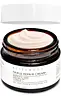
This anti-aging night moisturizer is formulated around Sodium Hyaluronate and Palmitoyl Tetrapeptide-7 to soften the look of wrinkles and strengthen the skin barrier.
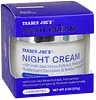
This barrier-repair night moisturizer is formulated around Butyrospermum Parkii Butter and Chamomilla Recutita Flower Extract to strengthen the skin barrier and hydrate skin.

What's inside
What's inside
 Key Ingredients
Benefits
Concerns
Ingredients Side-by-side
Water
Skin ConditioningSodium Hyaluronate
Humectant




Caprylic/Capric Triglyceride
Masking
Cetearyl Alcohol
Emollient





Cetearyl Wheat Straw Glycosides
EmulsifyingButyrospermum Parkii Butter
Skin Conditioning
Algae Extract
Emollient
Butylene Glycol
Humectant
Palmitoyl Tetrapeptide-7
Skin Conditioning


Palmitoyl Tripeptide-1
Skin Conditioning
PEG-40 Hydrogenated Castor Oil
Emulsifying
Bentonite
Absorbent


Glycerin
Humectant
Acetic Acid
BufferingAcetyl Hexapeptide-8
Humectant
Phenoxyethanol
Preservative
Potassium Sorbate
Preservative
Magnesium Ascorbyl Phosphate
Antioxidant


Xanthan Gum
EmulsifyingTocopheryl Acetate
Antioxidant
Glyceryl Stearate
Emollient
Ethylhexylglycerin
Skin ConditioningWater, Sodium Hyaluronate, Caprylic/Capric Triglyceride, Cetearyl Alcohol, Cetearyl Wheat Straw Glycosides, Butyrospermum Parkii Butter, Algae Extract, Butylene Glycol, Palmitoyl Tetrapeptide-7, Palmitoyl Tripeptide-1, PEG-40 Hydrogenated Castor Oil, Bentonite, Glycerin, Acetic Acid, Acetyl Hexapeptide-8, Phenoxyethanol, Potassium Sorbate, Magnesium Ascorbyl Phosphate, Xanthan Gum, Tocopheryl Acetate, Glyceryl Stearate, Ethylhexylglycerin
Water
Skin ConditioningButyrospermum Parkii Butter
Skin Conditioning
Cetyl Alcohol
Emollient
Glycerin
Humectant
Glyceryl Stearate
Emollient
PEG-100 Stearate
Surfactant
Caprylic Acid
CleansingCaprylic/Capric Triglyceride
Masking
Dicaprylyl Carbonate
EmollientSimmondsia Chinensis Seed Oil
Emollient
Chamomilla Recutita Flower Extract
Masking
Chondrus Crispus Extract
Skin Conditioning
Glycine Soja Sterols
Emollient
Helichrysum Italicum Extract
AntiseborrhoeicPhaseolus Angularis Seed Extract
Antioxidant
Argania Spinosa Kernel Oil
Emollient
Vetiveria Zizanoides Root Oil
Masking


Helianthus Annuus Seed Oil
Emollient
Macadamia Ternifolia Seed Oil
Emollient
Olea Europaea Fruit Oil
Masking
Sclerocarya Birrea Seed Oil
Humectant
Bacillus
Skin ConditioningCordyceps Sinensis Extract
Antioxidant
Ganoderma Lucidum Extract
Skin Protecting
Inonotus Obliquus Extract
Skin ConditioningLentinus Edodes Extract
Skin ConditioningPhellinus Linteus Ferment Filtrate
Schizophyllum Commune Mycelium
EmollientTricholoma Matsutake Mycelium Ferment Extract
HumectantLactobacillus Ferment
Skin Conditioning
Lactobacillus
Skin ConditioningCentella Asiatica Extract
Cleansing
Gleditsia Australis Thorn Extract
Skin ConditioningHouttuynia Cordata Extract
Skin Conditioning
Phellodendron Amurense Bark
Abrasive
Polygonum Cuspidatum Root Extract
Antioxidant
Prunella Vulgaris
Skin ConditioningTorilis Japonica Extract
Antimicrobial
Rice Ferment Filtrate
Skin Conditioning
Saccharomyces Lysate
Skin Conditioning
Saccharomyces/Camellia Sinensis Extract Ferment Filtrate
Skin Conditioning
Tocopheryl Acetate
Antioxidant
Phenoxyethanol
Preservative
Bisabolol
Antioxidant
Xylitylglucoside
Humectant
Acrylates/C10-30 Alkyl Acrylate Crosspolymer
Emulsion StabilisingAnhydroxylitol
Humectant
Pentylene Glycol
Skin Conditioning
Ethylhexylglycerin
Skin ConditioningCaffeine
Skin Conditioning
Dipotassium Glycyrrhizate
Humectant
Sodium Hyaluronate
Humectant
Xanthan Gum
EmulsifyingButylene Glycol
Humectant
Xylitol
Humectant
Phospholipids
Skin Conditioning
Sodium Hydroxide
BufferingDisodium EDTA
ChelatingTetrahexyldecyl Ascorbate
Antioxidant
Sphingolipids
Emollient
Linoleic Acid
Cleansing
Acetic Acid
BufferingPotassium Sorbate
Preservative
Acetyl Hexapeptide-8
Humectant
Water, Butyrospermum Parkii Butter, Cetyl Alcohol, Glycerin, Glyceryl Stearate, PEG-100 Stearate, Caprylic Acid, Caprylic/Capric Triglyceride, Dicaprylyl Carbonate, Simmondsia Chinensis Seed Oil, Chamomilla Recutita Flower Extract, Chondrus Crispus Extract, Glycine Soja Sterols, Helichrysum Italicum Extract, Phaseolus Angularis Seed Extract, Argania Spinosa Kernel Oil, Vetiveria Zizanoides Root Oil, Helianthus Annuus Seed Oil, Macadamia Ternifolia Seed Oil, Olea Europaea Fruit Oil, Sclerocarya Birrea Seed Oil, Bacillus, Cordyceps Sinensis Extract, Ganoderma Lucidum Extract, Inonotus Obliquus Extract, Lentinus Edodes Extract, Phellinus Linteus Ferment Filtrate, Schizophyllum Commune Mycelium, Tricholoma Matsutake Mycelium Ferment Extract, Lactobacillus Ferment, Lactobacillus, Centella Asiatica Extract, Gleditsia Australis Thorn Extract, Houttuynia Cordata Extract, Phellodendron Amurense Bark, Polygonum Cuspidatum Root Extract, Prunella Vulgaris, Torilis Japonica Extract, Rice Ferment Filtrate, Saccharomyces Lysate, Saccharomyces/Camellia Sinensis Extract Ferment Filtrate, Tocopheryl Acetate, Phenoxyethanol, Bisabolol, Xylitylglucoside, Acrylates/C10-30 Alkyl Acrylate Crosspolymer, Anhydroxylitol, Pentylene Glycol, Ethylhexylglycerin, Caffeine, Dipotassium Glycyrrhizate, Sodium Hyaluronate, Xanthan Gum, Butylene Glycol, Xylitol, Phospholipids, Sodium Hydroxide, Disodium EDTA, Tetrahexyldecyl Ascorbate, Sphingolipids, Linoleic Acid, Acetic Acid, Potassium Sorbate, Acetyl Hexapeptide-8
Ingredients Explained
These ingredients are found in both products.
Ingredients higher up in an ingredient list are typically present in a larger amount.
Acetic Acid is created during the process of fermenting ethanol. It is used to help adjust the pH of cosmetics.
The pH of your skin is important to maintaining a healthy barrier. This barrier keeps your skin hydrated and protects your skin from external factors such as bacteria.
Acetyl Hexapeptide-8 (also known as Argireline) is a synthetic hexapeptide that is often called a "topical Botox alternative".
It works by mimicking how Botox relaxes muscles; it interferes with the signaling process that tells your facial muscles to contract. This can help soften expression lines like forehead wrinkles or crow's feet over time.
The comparison to Botox does have limits because the molecule is water-loving and relatively large.
Acetyl Hexapeptide-8 has a hard time absorbing deeply enough through the skin's outer barrier to actually reach the muscles.
So whether it truly works the way Botox does at a biological level is still up for debate, but early clinical outcomes are fairly encouraging.
A 12 week human study of a multi-ingredient regimen containing this ingredient saw:
While some studies have observed improvements in wrinkle appearance, it is important to note that more consistent results are seen in multi-ingredient formulations (vs just Acetyl Hexapeptide-8 alone).
Some research studies also used higher concentrations (up to 10%) while this ingredient is usually found in concentrations up to 0.005% in leave-on formulations.
Learn more about Acetyl Hexapeptide-8Butylene Glycol (or BG) is used within cosmetic products for a few different reasons:
Overall, Butylene Glycol is a safe and well-rounded ingredient that works well with other ingredients.
Though this ingredient works well with most skin types, some people with sensitive skin may experience a reaction such as allergic rashes, closed comedones, or itchiness.
Learn more about Butylene GlycolThis ingredient is also known as shea butter. It is a plant-derived extract from the nuts of the Africa shea tree and one of the most well-studied emollients.
Because it has a high concentration of fatty acids (primarily oleic, stearic, and linoleic) it is able to form a protective barrier on the skin's surface. This helps seal in moisture and prevents transepidermal water loss (TEWL).
In vitro research found an increase in skin hydration by 58% and a decrease in TEWL by 37.8% after 24 hours of applying this ingredient (pretty impressive for a single ingredient!).
Besides hydration, shea butter also contains triterpenes that have anti-inflammatory potential. In particule, lupeol cinnamate has shown the highest anti-inflammatory activity in vivo.
Shea butter also contains vitamins A and E which may contribute to antioxidant activity.
While Shea Butter has an SPF rating of about 3-4, it is not a sunscreen replacement.
This ingredient may not be fungal acne safe because its fatty acids fall within the C11-C24 range that the Malassezia yeast can metabolize.
This ingredient shows up on a lot of "pore-clogging" lists but there's no real evidence behind that. It doesn't even have a comedogenic rating from an actual study; the numbers you'll find online come from blogs citing other blogs.
Ratings for other ingredients mostly come from a 1980s rabbit ear test. This test doesn't translate well to human skin or to real products because the ingredient sits at a much lower percentage.
Some people still find it breaks them out. So if that's you, definitely trust your skin. Just know this one's based on experience and not evidence.
Learn more about Butyrospermum Parkii ButterCaprylic/Capric Triglyceride (aka MCT Oil) is a lightweight emollient, solvent, and texture enhancer. It is considered a skin-softener by helping to prevent moisture loss.
Though it behaves like an oil, it is not technically one due to its chemical composition. One perk of this ingredient is that it is very stable, resistant to oxidation, and unlikely to go rancid.
In practice, that translates to a long shelf life and a consistently elegant skin feel.
While there is an assumption Caprylic Triglyceride can clog pores due to it being derived from coconut oil, there is no research supporting this. Just patch test if you have concerns.
Fractionated coconut oil and MCT Oil are both listed as Caprylic/Capric Triglyceride according to INCI. This is because INCI names are based on the ingredient’s final chemical composition and not its marketing name or source.
This ingredient is treated as the gold standard fungal acne safe oil. Even though it is coconut derived, the problematic lauric acid is stripped out.
This leaves just caprylic (C8) and capric (C10) acid. These chain lengths actually trend antifungal; a 2020 study found caprylic acid was enough to disrupt Malassezia furfur cell membrane, with a caprylic acid derivative damaging membrane structures at concentrations as low as 0.2%.
Learn more about Caprylic/Capric TriglycerideEthylhexylglycerin is created from glycerin. It is a multitasker ingredient that:
The CIR Expert Panel found minimal skin absorption or sensitization of any kind in a safety assessment. Though this ingredient is considered well-tolerated, a small number of cases of allergic dermatitis have been published since 2002. Just be sure to patch test if you are unsure.
Industry-reported use ranges from 8% in rinse-off products and 2% in leave-on formulations.
Learn more about EthylhexylglycerinGlycerin (or glycerol) is a compound naturally found in your skin. It's a powerhouse humectant that pulls water into the stratum corneum.
Topically, glycerin does several things at once:
Your skin makes glycerin on its own (mostly from sebaceous oil breakdown) and shuttles it to your outermost layer of skin, or your epidermis, via aquaporin-3.
Aquaporin-3 is a transporter that is essential for normal skin hydration, elasticity, and repair. Interestingly, mice lacking in AQP3 have dry and less elastic skin that can be fully corrected with glycerin.
This ingredient is non-irritating, plays well with almost every ingredient, and works across all skin types. Typical use is anywhere between 3-10% but can go up to 79% in some leave-on products.
Just know very high concentrations (>40%) can feel tacky in low humidity.
Glycerin is the name for this ingredient in American English. British English uses Glycerol/Glycerine.
Learn more about GlycerinGlyceryl Stearate is made by reacting glycerin with stearic acid (typically sourced from plant oils like palm or coconut). It's an emulsifier, emollient, and mild occlusive.
Emulsifiers help ingredients like oil and water stay mixed so your formula stays nicely blended and uniform in texture.
This ingredient is typically used in concentrations between 1-10%. Studies have found it to be non-sensitizing, non-phototoxic, and non-photoallergenic.
A close cousin of this ingredient is Glyceryl Stearate SE ("self-emulsifying"). This just has a small amount of sodium or potassium stearate added so it can emulsify without a co-emulsifier.
Since this ingredient is an ester of a C18 fatty acid, it may not be fungal acne safe. The Malassezia yeast can potentially metabolize within the C11-C24 range.
Fun fact: The human body also creates Glyceryl Stearate naturally.
Learn more about Glyceryl StearatePhenoxyethanol is one of the most widely used preservatives in skincare (and for good reason!).
It has a large spectrum of antimicrobial activity and especially effective bacteria, yeast, and mold while only having a weak effect on your skin's natural microbiome.
On a cellular level, it disrupts the cell membranes of microbes by poking holes that make the cell leak. This shuts down the chemical reactions the microbe needs to make energy so it can no longer survive.
Another perk of this ingredient is that it stays functional across a wide pH range (3-10).
You'll often see it paired with boosters like Ethylhexylglycerin; one study showed that a 1:9 ratio of Ethylhexylglycerin to Phenoxyethanol damages bacterial membranes as effectively as doubling the Phenoxyethanol concentration on its own.
Typical use concentrations range from 0.3-1% depending on the formula, and this ingredient is capped at 1% int the EU.
Safety-wise, the fear mongering does not hold up to the evidence. The EU's Scientific Committee on Consumer Safety and FDA consider it safe as a preservative at up to 1%, including for children of all ages.
Adverse systemic effects only showed up in animal studies at exposures roughly 200x higher than what people get from cosmetics. And despite its very widespread use, this ingredient is a rare sensitizer and allergic reactions are uncommon.
Learn more about PhenoxyethanolPotassium Sorbate is a preservative used to prevent yeast and mold in products. It is commonly found in both cosmetic and food products.
This ingredient comes from potassium salt derived from sorbic acid. Sorbic acid is a natural antibiotic and effective against fungus.
Both potassium sorbate and sorbic acid can be found in baked goods, cheeses, dried meats, dried fruit, ice cream, pickles, wine, yogurt, and more.
You'll often find this ingredient used with other preservatives.
Learn more about Potassium SorbateSodium Hyaluronate is the salt form of hyaluronic acid. It is a long sugar chain that is naturally found in your skin, joints, and connective tissue that maintains hydration and elasticity.
In skincare, it works as a humectant. It pulls water from the environment and deeper layers of skin and binds it to the surface.
Interestingly, the size of the molecule affects its behavior:
Some clinical evidence links low molecular weight versions to improved wrinkle depth, elasticity, anti-inflammatory effects, and barrier repair.
Many serums use a blend of both weights so you can get surface hydration plus longer-lasting and deeper effects.
You'll typically see concentrations between 0.1-2% for this ingredient.
Learn more about Sodium HyaluronateTocopheryl Acetate is a stable, shelf-friendly form of vitamin E.
Formulators love it because plain vitamin E oxidizes quickly once it hits air. This acetate version stays stable and resists going off, helping to extend a product's shelf life.
It's actually inactive on its own and works like a slow-release "storage" form; the enzymes in your skin called esterases gradually convert it into active vitamin E over time.
One in vivo study showed 5% of the acetate in the living layer of the epidermis converted to vitamin E after 5 days of application. This study also found the skin gained protection against UV damage even though the conversion was slow and small.
Once converted, vitamin E acts as a skin's main fat-soluble antioxidant that fights free radicals to protect skin from damage.
Topical vitamin E generally boosts the skin's photoprotection, and it reduced UV-damage in animal models.
This ingredient has some brightening potential but it's more of a prevention ingredient than spot-fader. Cell studies show it can slow down melanin production but it's worth noting that it's not the most powerful brightener out there.
Overall, it has a pretty solid safety profile and has been found to be non-irritating and non-comedogenic. Allergic reactions may happen but stay rare due to how widely the ingredient gets used.
The concentration will vary depending on the formula; industry data shows 0.1% in baby lotions, 3% in lipsticks, and 5% in foot powders. You can also find this ingredient at 100% in a pure vitamin E oil.
Most leave-on skincare keeps it at the lower end, often between 0.5-1%.
Learn more about Tocopheryl AcetateWater. It's the most common cosmetic ingredient of all. You'll usually see it at the top of ingredient lists, meaning that it makes up the largest part of the product.
So why is it so popular? Water most often acts as a solvent - this means that it helps dissolve other ingredients into the formulation.
You'll also recognize water as that liquid we all need to stay alive. If you see this, drink a glass of water. Remember to stay hydrated!
Learn more about WaterXanthan gum is used as a stabilizer and thickener within cosmetic products. It helps give products a sticky, thick feeling - preventing them from being too runny.
On the technical side of things, xanthan gum is a polysaccharide - a combination consisting of multiple sugar molecules bonded together.
Xanthan gum is a pretty common and great ingredient. It is a natural, non-toxic, non-irritating ingredient that is also commonly used in food products.
Learn more about Xanthan Gum

