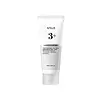
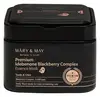
Anua 3 Ceramide Panthenol Moisture Barrier Cream Versus Mary & May Premium Idebenone Blackberry Complex Essence Mask

What's inside
What's inside
 Key Ingredients
Benefits
Concerns
Ingredients Side-by-side
Water
Skin ConditioningPanthenol
Skin Conditioning




Butylene Glycol
Humectant
Propanediol
Solvent
Caprylic/Capric Triglyceride
Masking
Glycerin
Humectant
Cetyl Ethylhexanoate
EmollientBehenyl Alcohol
Emollient
Octyldodecanol
Emollient
Phenyl Trimethicone
Skin Conditioning
Vinyldimethicone
1,2-Hexanediol
Skin Conditioning
Bis-Diglyceryl Polyacyladipate-2
Emollient

Pentylene Glycol
Skin Conditioning
Caprylyl Methicone
Skin Conditioning
Centella Asiatica Extract
Cleansing

Polyglyceryl-3 Methylglucose Distearate
Emulsifying
Betaine
Humectant
C14-22 Alcohols
Emulsion Stabilising
Ceramide NP
Skin Conditioning
Phytosterols
Skin Conditioning
Hydroxyethyl Acrylate/Sodium Acryloyldimethyl Taurate Copolymer
Emulsion StabilisingHydrogenated Rice Bran Oil
Skin Conditioning
C12-20 Alkyl Glucoside
EmulsifyingAmmonium Acryloyldimethyltaurate/Vp Copolymer
Glyceryl Stearate
Emollient
Dimethiconol
Emollient
Glyceryl Caprylate
EmollientSodium Stearoyl Glutamate
CleansingHydrogenated Lecithin
Emulsifying
Glyceryl Glucoside
Humectant
Acrylates/C10-30 Alkyl Acrylate Crosspolymer
Emulsion StabilisingTromethamine
BufferingSodium Phytate
Polyglyceryl-10 Stearate
Skin Conditioning
Ethylhexylglycerin
Skin ConditioningSodium Hyaluronate
Humectant
Ethylhexyl Olivate
Skin Conditioning
Dipropylene Glycol
HumectantSodium Acrylates Copolymer
Polyglyceryl-4 Oleate
Emulsifying
Linolenic Acid
Cleansing

Polyglyceryl-10 Laurate
Skin Conditioning
Sphingolipids
Emollient
Phosphatidylcholine
Emulsifying4-Terpineol
Masking
Allantoin
Skin Conditioning
Ectoin
Skin Conditioning
Hyaluronic Acid
Humectant
Squalane
Emollient
Lecithin
Emollient
Asiaticoside
Antioxidant
Escin
TonicMadecassic Acid
Skin Conditioning
Asiatic Acid
Skin Conditioning
Beta-Sitosterol
Emulsion Stabilising
Tremella Fuciformis Extract
Humectant
Ceramide AP
Skin Conditioning
Ceramide EOP
Skin Conditioning
Glycine
Buffering
Glutamic Acid
Humectant
Serine
Masking
Alanine
Masking
Lysine
Skin ConditioningArginine
Masking
Proline
Skin Conditioning
Threonine
Water, Panthenol, Butylene Glycol, Propanediol, Caprylic/Capric Triglyceride, Glycerin, Cetyl Ethylhexanoate, Behenyl Alcohol, Octyldodecanol, Phenyl Trimethicone, Vinyldimethicone, 1,2-Hexanediol, Bis-Diglyceryl Polyacyladipate-2, Pentylene Glycol, Caprylyl Methicone, Centella Asiatica Extract, Polyglyceryl-3 Methylglucose Distearate, Betaine, C14-22 Alcohols, Ceramide NP, Phytosterols, Hydroxyethyl Acrylate/Sodium Acryloyldimethyl Taurate Copolymer, Hydrogenated Rice Bran Oil, C12-20 Alkyl Glucoside, Ammonium Acryloyldimethyltaurate/Vp Copolymer, Glyceryl Stearate, Dimethiconol, Glyceryl Caprylate, Sodium Stearoyl Glutamate, Hydrogenated Lecithin, Glyceryl Glucoside, Acrylates/C10-30 Alkyl Acrylate Crosspolymer, Tromethamine, Sodium Phytate, Polyglyceryl-10 Stearate, Ethylhexylglycerin, Sodium Hyaluronate, Ethylhexyl Olivate, Dipropylene Glycol, Sodium Acrylates Copolymer, Polyglyceryl-4 Oleate, Linolenic Acid, Polyglyceryl-10 Laurate, Sphingolipids, Phosphatidylcholine, 4-Terpineol, Allantoin, Ectoin, Hyaluronic Acid, Squalane, Lecithin, Asiaticoside, Escin, Madecassic Acid, Asiatic Acid, Beta-Sitosterol, Tremella Fuciformis Extract, Ceramide AP, Ceramide EOP, Glycine, Glutamic Acid, Serine, Alanine, Lysine, Arginine, Proline, Threonine
Water
Skin ConditioningTriticum Vulgare Seed Extract
BufferingMelaleuca Alternifolia Leaf Extract
Perfuming
Glycerin
Humectant
Butylene Glycol
Humectant
Caprylic/Capric Triglyceride
Masking
Ethylhexyl Palmitate
Emollient


1,2-Hexanediol
Skin Conditioning
Polyglyceryl-3 Methylglucose Distearate
Emulsifying
Isododecane
EmollientPanthenol
Skin Conditioning
Arginine
Masking
Acrylates/C10-30 Alkyl Acrylate Crosspolymer
Emulsion StabilisingAmmonium Acryloyldimethyltaurate/Vp Copolymer
Ethylhexylglycerin
Skin ConditioningPentylene Glycol
Skin Conditioning
Disodium EDTA
Caprylyl Glycol
Emollient
Dipotassium Glycyrrhizate
Humectant
Glyceryl Acrylate/Acrylic Acid Copolymer
HumectantSodium Hyaluronate
Humectant
Sodium Hyaluronate Crosspolymer
Humectant
Hydrolyzed Hyaluronic Acid
Humectant
Hyaluronic Acid
Humectant
Hydrolyzed Sodium Hyaluronate
Skin Conditioning
Water, Triticum Vulgare Seed Extract, Melaleuca Alternifolia Leaf Extract, Glycerin, Butylene Glycol, Caprylic/Capric Triglyceride, Ethylhexyl Palmitate, 1,2-Hexanediol, Polyglyceryl-3 Methylglucose Distearate, Isododecane, Panthenol, Arginine, Acrylates/C10-30 Alkyl Acrylate Crosspolymer, Ammonium Acryloyldimethyltaurate/Vp Copolymer, Ethylhexylglycerin, Pentylene Glycol, Disodium EDTA, Caprylyl Glycol, Dipotassium Glycyrrhizate, Glyceryl Acrylate/Acrylic Acid Copolymer, Sodium Hyaluronate, Sodium Hyaluronate Crosspolymer, Hydrolyzed Hyaluronic Acid, Hyaluronic Acid, Hydrolyzed Sodium Hyaluronate
Reviews
Ingredients Explained
These ingredients are found in both products.
Ingredients higher up in an ingredient list are typically present in a larger amount.
1,2-Hexanediol is a synthetic liquid and another multi-functional powerhouse.
It is a:
- Humectant, drawing moisture into the skin
- Emollient, helping to soften skin
- Solvent, dispersing and stabilizing formulas
- Preservative booster, enhancing the antimicrobial activity of other preservatives
Acrylates/C10-30 Alkyl Acrylate Crosspolymer is a synthetic polymer. It is used to thicken, emulsify, and improve the texture of products.
As an emulsifier, it helps stabilize oil-in-water emulsions to give products an elegant feel when applied.
It can also form a thin protective film on skin. One study found that a formula using this polymer helped slow down how quickly other ingredients (like DEET) were absorbed through skin.
A 2024 study of over 1,300 patients confirmed that sensitization to this ingredient is rare. It is also non-mutagenic and has a clean track record.
Learn more about Acrylates/C10-30 Alkyl Acrylate CrosspolymerAmmonium Acryloyldimethyltaurate/Vp Copolymer is a synthetically created polymer. It's used as a film-forming agent and used to thicken the consistency of products.
Think of it as a supportive ingredient that helps your gel-creams feel silky, "cloud cream-like", and spread evenly without being greasy.
The Cosmetic Ingredient Review (CIR) Expert Panel evaluated it (along with 22 other acryloyldimethyltaurate polymers) and concluded it's:
Due to its large molecular size, it sits on the surface of skin rather than penetrating it.
Learn more about Ammonium Acryloyldimethyltaurate/Vp CopolymerArginine is a semi-essential amino acid. This just means our bodies can product a bit on its own, but sometimes needs a little boost from food sources.
It is a part of your skin's natural moisturizing factor (NMF), or the water-loving molecules in your outermost layer of skin (stratum corneum) that keeps everything hydrated and happy.
Here's an interesting thing about Arginine: your skin converts it into urea through the Krebs-Henseleit urea cycle. Urea is one of the most effective humectants your skin naturally produces.
A clinical study showed applying 2.5% arginine hydrochloride to atopic dermatitis skin showed significant urea levels in the stratum corneum and improved moisture in just four weeks.
Arginine is also a precursor to nitric oxide; nitric oxide improves microcirculation and supports wound healing and collagen synthesis.
One study found that an amino acid complex containing Arginine reduced skin irritation, improved hydration, and accelerated skin repair in clinical / in-vivo studies.
Arginine itself is an amino acid and not a fatty acid, oil, or ester. On its own, it's not a direct food source for Malassezia, or the yeast that causes fungal acne.
Learn more about ArginineButylene Glycol (or BG) is used within cosmetic products for a few different reasons:
Overall, Butylene Glycol is a safe and well-rounded ingredient that works well with other ingredients.
Though this ingredient works well with most skin types, some people with sensitive skin may experience a reaction such as allergic rashes, closed comedones, or itchiness.
Learn more about Butylene GlycolCaprylic/Capric Triglyceride (aka MCT Oil) is a lightweight emollient, solvent, and texture enhancer. It is considered a skin-softener by helping to prevent moisture loss.
Though it behaves like an oil, it is not technically one due to its chemical composition. One perk of this ingredient is that it is very stable, resistant to oxidation, and unlikely to go rancid.
In practice, that translates to a long shelf life and a consistently elegant skin feel.
While there is an assumption Caprylic Triglyceride can clog pores due to it being derived from coconut oil, there is no research supporting this. Just patch test if you have concerns.
Fractionated coconut oil and MCT Oil are both listed as Caprylic/Capric Triglyceride according to INCI. This is because INCI names are based on the ingredient’s final chemical composition and not its marketing name or source.
This ingredient is treated as the gold standard fungal acne safe oil. Even though it is coconut derived, the problematic lauric acid is stripped out.
This leaves just caprylic (C8) and capric (C10) acid. These chain lengths actually trend antifungal; a 2020 study found caprylic acid was enough to disrupt Malassezia furfur cell membrane, with a caprylic acid derivative damaging membrane structures at concentrations as low as 0.2%.
Learn more about Caprylic/Capric TriglycerideEthylhexylglycerin is created from glycerin. It is a multitasker ingredient that:
The CIR Expert Panel found minimal skin absorption or sensitization of any kind in a safety assessment. Though this ingredient is considered well-tolerated, a small number of cases of allergic dermatitis have been published since 2002. Just be sure to patch test if you are unsure.
Industry-reported use ranges from 8% in rinse-off products and 2% in leave-on formulations.
Learn more about EthylhexylglycerinGlycerin (or glycerol) is a compound naturally found in your skin. It's a powerhouse humectant that pulls water into the stratum corneum.
Topically, glycerin does several things at once:
Your skin makes glycerin on its own (mostly from sebaceous oil breakdown) and shuttles it to your outermost layer of skin, or your epidermis, via aquaporin-3.
Aquaporin-3 is a transporter that is essential for normal skin hydration, elasticity, and repair. Interestingly, mice lacking in AQP3 have dry and less elastic skin that can be fully corrected with glycerin.
This ingredient is non-irritating, plays well with almost every ingredient, and works across all skin types. Typical use is anywhere between 3-10% but can go up to 79% in some leave-on products.
Just know very high concentrations (>40%) can feel tacky in low humidity.
Glycerin is the name for this ingredient in American English. British English uses Glycerol/Glycerine.
Learn more about GlycerinHyaluronic acid (HA) is a glycosaminoglycan (basically a long sugar chain) that your skin already makes on its own. In your skin, HA lives in the extracellular matrix and acts as the body's moisture reservoir.
Topically, HA is a humectant that binds water and helps skin look more plump, smooth, and hydrated.
The only catch is that HA isn't a single thing; it actually comes in a wide range of molecular weights (~50 - 2,000+ kDA) and size matters.
Some clinical evidence links low molecular weight versions to improved wrinkle depth, elasticity, anti-inflammatory effects, and barrier repair.
This is why the best HA serums blend the two sizes together so you get the best of both worlds.
The majority of cosmetic HA is produced by bacterial fermentation, typically using Streptococcus or Bacillus strains. Typical use levels in skincare sit around 0.1-2%.
A clinical study using a 0.2% low-molecular weight HA gel showed improvement in facial seborrheic dermatitis with excellent tolerance.
These are some other common types of Hyaluronic Acid:
Learn more about Hyaluronic AcidPanthenol is a common ingredient that helps hydrate and soothe the skin. It is found naturally in our skin and hair.
There are two forms of panthenol: D and L.
D-panthenol is also known as dexpanthenol. Most cosmetics use dexpanthenol or a mixture of D and L-panthenol.
Panthenol is famous due to its ability to go deeper into the skin's layers. Using this ingredient has numerous pros (and no cons):
Like hyaluronic acid, panthenol is a humectant. Humectants are able to bind and hold large amounts of water to keep skin hydrated.
This ingredient works well for wound healing. It works by increasing tissue in the wound and helps close open wounds.
Once oxidized, panthenol converts to pantothenic acid. Panthothenic acid is found in all living cells.
This ingredient is also referred to as pro-vitamin B5.
Learn more about PanthenolPentylene Glycol (1,2-pentanediol) is a multitasking little diol with three main roles in a formula:
Research on alkanediols (the family pentylene glycol belongs to) show they work by disrupting microbial cell membranes. This disruption helps the primary preservative system in a product work more effectively at lower doses.
On the safety side, the Cosmetic Ingredient Review Expert Panel has concluded this ingredient to be safe as used in current cosmetic practices + concentrations.
Typical use levels in a formula run about 1-5%.
Learn more about Pentylene GlycolPolyglyceryl-3 Methylglucose Distearate is a plant-derived emulsifier whose only job is to keep the oily and watery parts of a formula blended so it doesn't separate into layers.
It's compatible with a wide-range of active ingredients and especially good at making emulsions survive heat/freeze cycles.
Typical use concentrations range from 2-3% and it works across a pH of 4.5-8.5.
This ingredient has been found safe to use in cosmetics and has a low irritation profile.
Because it's build on stearic acid, it may not be fungal acne safe. Stearic acid is a C18 fatty acid that falls within the range (C11-24) that Malassezia can feed on.
Learn more about Polyglyceryl-3 Methylglucose DistearateSodium Hyaluronate is the salt form of hyaluronic acid. It is a long sugar chain that is naturally found in your skin, joints, and connective tissue that maintains hydration and elasticity.
In skincare, it works as a humectant. It pulls water from the environment and deeper layers of skin and binds it to the surface.
Interestingly, the size of the molecule affects its behavior:
Some clinical evidence links low molecular weight versions to improved wrinkle depth, elasticity, anti-inflammatory effects, and barrier repair.
Many serums use a blend of both weights so you can get surface hydration plus longer-lasting and deeper effects.
You'll typically see concentrations between 0.1-2% for this ingredient.
Learn more about Sodium HyaluronateWater. It's the most common cosmetic ingredient of all. You'll usually see it at the top of ingredient lists, meaning that it makes up the largest part of the product.
So why is it so popular? Water most often acts as a solvent - this means that it helps dissolve other ingredients into the formulation.
You'll also recognize water as that liquid we all need to stay alive. If you see this, drink a glass of water. Remember to stay hydrated!
Learn more about Water

