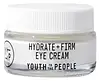
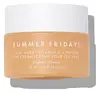
Youth To The People Superfood Hydrate + Firm Peptide Eye Cream Versus Summer Fridays Light Aura Vitamin C + Peptide Eye Cream
This anti-aging eye moisturizer is formulated around Camellia Sinensis Leaf Extract and Palmitoyl Tripeptide-5 to soften the look of wrinkles and hydrate skin.
This brightening eye moisturizer is formulated around Niacinamide and Tetrahexyldecyl Ascorbate to brighten dull-looking skin and soften the look of wrinkles.

What's inside
What's inside
 Key Ingredients
Benefits
Concerns
Ingredients Side-by-side
Water
Skin ConditioningGlycerin
Humectant


Brassica Oleracea Acephala Leaf Extract
HumectantSpinacia Oleracea Leaf Extract
Skin ConditioningCamellia Sinensis Leaf Extract
Antimicrobial






Chamomilla Recutita Flower Extract
Masking
Medicago Sativa Extract
TonicAloe Barbadensis Leaf Extract
Emollient
Spirulina Platensis Extract
Skin ProtectingPalmitoyl Tripeptide-5
Skin Conditioning

Palmitoyl Dipeptide-5 Diaminobutyroyl Hydroxythreonine
Skin Conditioning
Tetradecyl Aminobutyroylvalylaminobutyric Urea Trifluoroacetate
Skin ConditioningSodium Hyaluronate Crosspolymer
Humectant
Helianthus Annuus Seed Oil
Emollient


Stearic Acid
Cleansing
Glyceryl Stearate
Emollient
Cetyl Alcohol
Emollient

Lecithin
Emollient
Ascorbic Acid
Antioxidant

Panthenol
Skin Conditioning
Sodium Hyaluronate
Humectant
Tocopheryl Acetate
Antioxidant
Parfum
Masking



Hydroxyethylcellulose
Emulsion StabilisingPentylene Glycol
Skin Conditioning
Ethylhexylglycerin
Skin ConditioningMagnesium Chloride
Phenoxyethanol
Preservative
Potassium Sorbate
Preservative
Water, Glycerin, Brassica Oleracea Acephala Leaf Extract, Spinacia Oleracea Leaf Extract, Camellia Sinensis Leaf Extract, Chamomilla Recutita Flower Extract, Medicago Sativa Extract, Aloe Barbadensis Leaf Extract, Spirulina Platensis Extract, Palmitoyl Tripeptide-5, Palmitoyl Dipeptide-5 Diaminobutyroyl Hydroxythreonine, Tetradecyl Aminobutyroylvalylaminobutyric Urea Trifluoroacetate, Sodium Hyaluronate Crosspolymer, Helianthus Annuus Seed Oil, Stearic Acid, Glyceryl Stearate, Cetyl Alcohol, Lecithin, Ascorbic Acid, Panthenol, Sodium Hyaluronate, Tocopheryl Acetate, Parfum, Hydroxyethylcellulose, Pentylene Glycol, Ethylhexylglycerin, Magnesium Chloride, Phenoxyethanol, Potassium Sorbate
Water
Skin ConditioningBehenyl Alcohol
Emollient
Glycerin
Humectant
Butyrospermum Parkii Butter
Skin Conditioning
Pentylene Glycol
Skin Conditioning
Coco-Caprylate
Emollient
Cetearyl Alcohol
Emollient
Caprylic/Capric Triglyceride
Masking
Niacinamide
Smoothing

Hydroxyethyl Acrylate/Sodium Acryloyldimethyl Taurate Copolymer
Emulsion StabilisingGlyceryl Stearate
Emollient
Jojoba Esters
Emollient
Tetrahexyldecyl Ascorbate
Antioxidant
Isostearyl Isostearate
Emollient
Sodium Hyaluronate
Humectant
Acetyl Hexapeptide-8
Humectant
Persea Gratissima Oil
Skin Conditioning
Rosa Canina Seed Oil
Emollient
Caffeine
Skin Conditioning
Allantoin
Skin Conditioning
Propanediol
Solvent
Phospholipids
Skin Conditioning
Prunus Amygdalus Dulcis Oil
Skin Conditioning
Papaver Rhoeas Extract
EmollientTocopherol
Antioxidant
Carica Papaya Leaf Extract
TonicCurcuma Longa Root Extract
Antioxidant
Corallina Officinalis Extract
Skin Conditioning
Coccinia Indica Fruit Extract
Skin Conditioning
Helianthus Annuus Seed Wax
Skin Conditioning
Ocimum Sanctum Leaf Extract
Skin ConditioningOcimum Basilicum Flower/Leaf Extract
TonicSimmondsia Chinensis Seed Oil
Emollient
Bambusa Vulgaris Leaf/Stem Extract
HumectantPisum Sativum Extract
Skin ConditioningGlucosamine Hcl
Silica
Abrasive
Melia Azadirachta Flower Extract
Skin ConditioningMelia Azadirachta Leaf Extract
Skin ConditioningSodium Stearoyl Glutamate
CleansingPolyglycerin-3
Humectant
Diheptyl Succinate
EmollientCapryloyl Glycerin/Sebacic Acid Copolymer
Skin ConditioningSorbitan Isostearate
Emulsifying
Sodium Phytate
ChelatingGlyceryl Caprylate
EmollientGlyceryl Undecylenate
Emollient
Xanthan Gum
Emulsifying1,2-Hexanediol
Skin Conditioning
Caprylyl Glycol
Emollient
Sodium Benzoate
Masking
Phenethyl Alcohol
MaskingPolysorbate 60
Emulsifying
Mica
Cosmetic ColorantCI 77891
Cosmetic ColorantWater, Behenyl Alcohol, Glycerin, Butyrospermum Parkii Butter, Pentylene Glycol, Coco-Caprylate, Cetearyl Alcohol, Caprylic/Capric Triglyceride, Niacinamide, Hydroxyethyl Acrylate/Sodium Acryloyldimethyl Taurate Copolymer, Glyceryl Stearate, Jojoba Esters, Tetrahexyldecyl Ascorbate, Isostearyl Isostearate, Sodium Hyaluronate, Acetyl Hexapeptide-8, Persea Gratissima Oil, Rosa Canina Seed Oil, Caffeine, Allantoin, Propanediol, Phospholipids, Prunus Amygdalus Dulcis Oil, Papaver Rhoeas Extract, Tocopherol, Carica Papaya Leaf Extract, Curcuma Longa Root Extract, Corallina Officinalis Extract, Coccinia Indica Fruit Extract, Helianthus Annuus Seed Wax, Ocimum Sanctum Leaf Extract, Ocimum Basilicum Flower/Leaf Extract, Simmondsia Chinensis Seed Oil, Bambusa Vulgaris Leaf/Stem Extract, Pisum Sativum Extract, Glucosamine Hcl, Silica, Melia Azadirachta Flower Extract, Melia Azadirachta Leaf Extract, Sodium Stearoyl Glutamate, Polyglycerin-3, Diheptyl Succinate, Capryloyl Glycerin/Sebacic Acid Copolymer, Sorbitan Isostearate, Sodium Phytate, Glyceryl Caprylate, Glyceryl Undecylenate, Xanthan Gum, 1,2-Hexanediol, Caprylyl Glycol, Sodium Benzoate, Phenethyl Alcohol, Polysorbate 60, Mica, CI 77891
Reviews
Ingredients Explained
These ingredients are found in both products.
Ingredients higher up in an ingredient list are typically present in a larger amount.
Glycerin (or glycerol) is a compound naturally found in your skin. It's a powerhouse humectant that pulls water into the stratum corneum.
Topically, glycerin does several things at once:
Your skin makes glycerin on its own (mostly from sebaceous oil breakdown) and shuttles it to your outermost layer of skin, or your epidermis, via aquaporin-3.
Aquaporin-3 is a transporter that is essential for normal skin hydration, elasticity, and repair. Interestingly, mice lacking in AQP3 have dry and less elastic skin that can be fully corrected with glycerin.
This ingredient is non-irritating, plays well with almost every ingredient, and works across all skin types. Typical use is anywhere between 3-10% but can go up to 79% in some leave-on products.
Just know very high concentrations (>40%) can feel tacky in low humidity.
Glycerin is the name for this ingredient in American English. British English uses Glycerol/Glycerine.
Learn more about GlycerinGlyceryl Stearate is made by reacting glycerin with stearic acid (typically sourced from plant oils like palm or coconut). It's an emulsifier, emollient, and mild occlusive.
Emulsifiers help ingredients like oil and water stay mixed so your formula stays nicely blended and uniform in texture.
This ingredient is typically used in concentrations between 1-10%. Studies have found it to be non-sensitizing, non-phototoxic, and non-photoallergenic.
A close cousin of this ingredient is Glyceryl Stearate SE ("self-emulsifying"). This just has a small amount of sodium or potassium stearate added so it can emulsify without a co-emulsifier.
Since this ingredient is an ester of a C18 fatty acid, it may not be fungal acne safe. The Malassezia yeast can potentially metabolize within the C11-C24 range.
Fun fact: The human body also creates Glyceryl Stearate naturally.
Learn more about Glyceryl StearatePentylene Glycol (1,2-pentanediol) is a multitasking little diol with three main roles in a formula:
Research on alkanediols (the family pentylene glycol belongs to) show they work by disrupting microbial cell membranes. This disruption helps the primary preservative system in a product work more effectively at lower doses.
On the safety side, the Cosmetic Ingredient Review Expert Panel has concluded this ingredient to be safe as used in current cosmetic practices + concentrations.
Typical use levels in a formula run about 1-5%.
Learn more about Pentylene GlycolSodium Hyaluronate is the salt form of hyaluronic acid. It is a long sugar chain that is naturally found in your skin, joints, and connective tissue that maintains hydration and elasticity.
In skincare, it works as a humectant. It pulls water from the environment and deeper layers of skin and binds it to the surface.
Interestingly, the size of the molecule affects its behavior:
Some clinical evidence links low molecular weight versions to improved wrinkle depth, elasticity, anti-inflammatory effects, and barrier repair.
Many serums use a blend of both weights so you can get surface hydration plus longer-lasting and deeper effects.
You'll typically see concentrations between 0.1-2% for this ingredient.
Learn more about Sodium HyaluronateWater. It's the most common cosmetic ingredient of all. You'll usually see it at the top of ingredient lists, meaning that it makes up the largest part of the product.
So why is it so popular? Water most often acts as a solvent - this means that it helps dissolve other ingredients into the formulation.
You'll also recognize water as that liquid we all need to stay alive. If you see this, drink a glass of water. Remember to stay hydrated!
Learn more about Water

