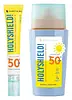
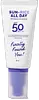
Somethinc Holyshield! Sunscreen Comfort Corrector Serum SPF 50+ PA++++ Versus Finally Found You! Sun Rice All Day Invisible UV Fluid SPF 50
This mineral sunscreen covers the full UV range and blocks ~98% of UVB at SPF 50.
This chemical sunscreen covers the full UV range and blocks ~98% of UVB at SPF 50.

What's inside
What's inside
 Key Ingredients
Benefits
Concerns
Ingredients Side-by-side
Cyclopentasiloxane
Emollient
Water
Skin ConditioningPropanediol
Solvent

Zinc Oxide
Cosmetic Colorant


Caprylyl Methicone
Skin Conditioning
Diphenylsiloxy Phenyl Trimethicone
Skin Conditioning
Dimethicone/Vinyl Dimethicone Crosspolymer
Skin Conditioning
Acrylates Copolymer
Lauryl PEG-10 Tris(Trimethylsiloxy)Silylethyl Dimethicone
Emulsifying
Trimethylsiloxysilicate
Emollient
Polyhydroxystearic Acid
Emulsifying

Sodium Chloride
MaskingPolyglyceryl-3 Polydimethylsiloxyethyl Dimethicone
Skin Conditioning
Cetyl PEG/PPG-10/1 Dimethicone
Emulsifying
Triethoxycaprylylsilane
Aluminum Hydroxide
EmollientDimethicone Crosspolymer
Emulsion Stabilising
PEG-35 Castor Oil
Emulsifying
Polymethyl Methacrylate
Stearic Acid
Cleansing
Glyceryl Caprylate
EmollientButylene Glycol
Humectant
Caprylyl Glycol
Emollient
CI 77288
Cosmetic ColorantAesculus Hippocastanum Seed Extract
Skin ConditioningAlcohol
Antimicrobial



Polysorbate 20
Emulsifying
Disodium EDTA
ChelatingTocopherol
Antioxidant





Epigallocatechin Gallate
Antioxidant
1,2-Hexanediol
Skin Conditioning
Calcium Pantothenate
Retinyl Palmitate
Skin Conditioning

Linoleic Acid
Cleansing
Diethyl Phthalate
Masking
Biotin
AntiseborrhoeicCyclopentasiloxane, Water, Propanediol, Zinc Oxide, Caprylyl Methicone, Diphenylsiloxy Phenyl Trimethicone, Dimethicone/Vinyl Dimethicone Crosspolymer, Acrylates Copolymer, Lauryl PEG-10 Tris(Trimethylsiloxy)Silylethyl Dimethicone, Trimethylsiloxysilicate, Polyhydroxystearic Acid, Sodium Chloride, Polyglyceryl-3 Polydimethylsiloxyethyl Dimethicone, Cetyl PEG/PPG-10/1 Dimethicone, Triethoxycaprylylsilane, Aluminum Hydroxide, Dimethicone Crosspolymer, PEG-35 Castor Oil, Polymethyl Methacrylate, Stearic Acid, Glyceryl Caprylate, Butylene Glycol, Caprylyl Glycol, CI 77288, Aesculus Hippocastanum Seed Extract, Alcohol, Polysorbate 20, Disodium EDTA, Tocopherol, Epigallocatechin Gallate, 1,2-Hexanediol, Calcium Pantothenate, Retinyl Palmitate, Linoleic Acid, Diethyl Phthalate, Biotin
Water
Skin ConditioningEthylhexyl Methoxycinnamate
UV Absorber
Butylene Glycol
Humectant
Ethylhexyl Triazone
UV Absorber
Pentylene Glycol
Skin Conditioning
Oryza Sativa Bran Water
Masking
Methylene Bis-Benzotriazolyl Tetramethylbutylphenol
UV Filter
Niacinamide
Smoothing



Dibutyl Adipate
EmollientVinyldimethicone
Bis-Ethylhexyloxyphenol Methoxyphenyl Triazine
UV Absorber
Glyceryl Glucoside
Humectant
Diisopropyl Adipate
EmollientC12-15 Alkyl Benzoate
AntimicrobialCaprylyl Methicone
Skin Conditioning
Panthenol
Skin Conditioning
Polyglyceryl-3 Methylglucose Distearate
Emulsifying
Behenyl Alcohol
Emollient
Polysilicone-15
UV Filter
Glycerin
Humectant
Decyl Glucoside
Cleansing
Ammonium Acryloyldimethyltaurate/Vp Copolymer
Hydroxyacetophenone
Antioxidant
Acrylates/C10-30 Alkyl Acrylate Crosspolymer
Emulsion StabilisingPotassium Cetyl Phosphate
EmulsifyingPoly C10-30 Alkyl Acrylate
Emulsion StabilisingSodium Acrylates Crosspolymer-2
Absorbent1,2-Hexanediol
Skin Conditioning
Ethylhexylglycerin
Skin ConditioningXanthan Gum
EmulsifyingBHT
Antioxidant
Tocopherol
Antioxidant
Hydrogenated Lecithin
Emulsifying
Cetearyl Alcohol
Emollient
Stearic Acid
Cleansing
Sodium Hyaluronate
Humectant
Ectoin
Skin Conditioning
Ceramide NP
Skin Conditioning
Cholesterol
Emollient
Phytosphingosine
Skin Conditioning
Hydroxypropyltrimonium Hyaluronate
Ceramide Ns
Skin Conditioning
Ceramide Ng
Skin Conditioning
Ceramide AP
Skin Conditioning
Ceramide As
Skin Conditioning
Sodium Acetylated Hyaluronate
Humectant
Hydrolyzed Hyaluronic Acid
Humectant
Artemisia Princeps Leaf Extract
Skin ConditioningXanthium Strumarium Fruit Extract
Skin ConditioningHyaluronic Acid
Humectant
Prunella Vulgaris Flower/Leaf/Stem Extract
Skin ProtectingCetraria Islandica Extract
CleansingSodium Hyaluronate Crosspolymer
Humectant
Oleanolic Acid
Skin ConditioningHydrolyzed Sodium Hyaluronate
Skin Conditioning
Potassium Hyaluronate
Skin ConditioningCeramide EOP
Skin Conditioning
Water, Ethylhexyl Methoxycinnamate, Butylene Glycol, Ethylhexyl Triazone, Pentylene Glycol, Oryza Sativa Bran Water, Methylene Bis-Benzotriazolyl Tetramethylbutylphenol, Niacinamide, Dibutyl Adipate, Vinyldimethicone, Bis-Ethylhexyloxyphenol Methoxyphenyl Triazine, Glyceryl Glucoside, Diisopropyl Adipate, C12-15 Alkyl Benzoate, Caprylyl Methicone, Panthenol, Polyglyceryl-3 Methylglucose Distearate, Behenyl Alcohol, Polysilicone-15, Glycerin, Decyl Glucoside, Ammonium Acryloyldimethyltaurate/Vp Copolymer, Hydroxyacetophenone, Acrylates/C10-30 Alkyl Acrylate Crosspolymer, Potassium Cetyl Phosphate, Poly C10-30 Alkyl Acrylate, Sodium Acrylates Crosspolymer-2, 1,2-Hexanediol, Ethylhexylglycerin, Xanthan Gum, BHT, Tocopherol, Hydrogenated Lecithin, Cetearyl Alcohol, Stearic Acid, Sodium Hyaluronate, Ectoin, Ceramide NP, Cholesterol, Phytosphingosine, Hydroxypropyltrimonium Hyaluronate, Ceramide Ns, Ceramide Ng, Ceramide AP, Ceramide As, Sodium Acetylated Hyaluronate, Hydrolyzed Hyaluronic Acid, Artemisia Princeps Leaf Extract, Xanthium Strumarium Fruit Extract, Hyaluronic Acid, Prunella Vulgaris Flower/Leaf/Stem Extract, Cetraria Islandica Extract, Sodium Hyaluronate Crosspolymer, Oleanolic Acid, Hydrolyzed Sodium Hyaluronate, Potassium Hyaluronate, Ceramide EOP
Reviews
Ingredients Explained
These ingredients are found in both products.
Ingredients higher up in an ingredient list are typically present in a larger amount.
1,2-Hexanediol is a synthetic liquid and another multi-functional powerhouse.
It is a:
- Humectant, drawing moisture into the skin
- Emollient, helping to soften skin
- Solvent, dispersing and stabilizing formulas
- Preservative booster, enhancing the antimicrobial activity of other preservatives
Butylene Glycol (or BG) is used within cosmetic products for a few different reasons:
Overall, Butylene Glycol is a safe and well-rounded ingredient that works well with other ingredients.
Though this ingredient works well with most skin types, some people with sensitive skin may experience a reaction such as allergic rashes, closed comedones, or itchiness.
Learn more about Butylene GlycolCaprylyl Methicone is a synthetic and lightweight silicone fluid. It gives products a silky, dry-touch finish without the heaviness of pure oils.
Though the EU CosIng Database lists this ingredient as a skin conditioner, it is also used for sensory reasons. It spreads easily, cuts greasiness, and reduces tackiness.
This ingredient is volatile which means it will mostly evaporate (but it evaporates slower than older cyclomethicones, like Cyclotetrasiloxane).
Typical concentration ranges from 1-30% depending on if it's being used to tweak the feel of a product or acting as the main emollient.
Learn more about Caprylyl MethiconeStearic Acid is a fatty acid that is already found in your skin. It's one of the free fatty acids that works alongside ceramides and cholesterols to maintain your barrier.
In cosmetics, it is a multitasker:
Safety-wise, the CIR Expert Panel has concluded it to be safe in cosmetics when formulated to be non-irritating and non-sensitizing.
Free stearic acid is a C18 fatty acid that the Malassezia yeast can substrate, so this ingredient may not be fungal acne safe.
This ingredient does have a comedogenic rating of 2-3, but this doesn't mean a formula with this ingredient will clog pores.
Human testing has proved that any finished product with this ingredient won't automatically make you break out; it really comes down to concentration, formula, and your skin.
Learn more about Stearic AcidTocopherol is a fat-soluble antioxidant known as Vitamin E.
You'll find this ingredient in the vast majority of skincare (for good reason). It works to neutralize free radicals, or unstable molecules generated by UV exposure, pollution, and other environmental stressors, before they can cause oxidative damage to your skin cells.
Topically applied tocopherol has been shown to protect against UV damage by ramping up the skin's own natural defense enzymes.
It also acts as a skin conditioning agent; some studies show that regular topical use can improve the skin's water-binding capacity over 2-4 weeks.
This ingredient is especially loved for being a team player. When combined with Vitamin C, the photoprotective effect of both ingredients roughly doubles and the combo also helps reduce UV-induced DNA damage.
This ingredient has some brightening potential but it's more of a prevention ingredient than spot-fader. Cell studies show it can slow down melanin production but it's worth noting that it's not the most powerful brightener out there.
In formulations, it also serves as a stabilizer that helps protect other oxidation-prone ingredients from degrading.
Concentrations usually range from 0.1-1% in most leave-on products.
Learn more about TocopherolWater. It's the most common cosmetic ingredient of all. You'll usually see it at the top of ingredient lists, meaning that it makes up the largest part of the product.
So why is it so popular? Water most often acts as a solvent - this means that it helps dissolve other ingredients into the formulation.
You'll also recognize water as that liquid we all need to stay alive. If you see this, drink a glass of water. Remember to stay hydrated!
Learn more about Water

