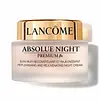
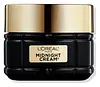
Lancôme Absolue Premium βx Replenishing And Rejuvenating Night Cream Versus L'Oreal Age Perfect Cell Renewal Midnight Cream
This anti-aging night moisturizer is formulated around Butyrospermum Parkii Butter and Adenosine to soften the look of wrinkles and hydrate skin.
This night moisturizer is formulated around Saccharomyces/Xylinum/Black Tea Ferment and Capryloyl Salicylic Acid to calm irritation and control oil.

What's inside
What's inside
 Key Ingredients
Benefits
Concerns
Ingredients Side-by-side
Water
Skin ConditioningGlycerin
Humectant


Butyrospermum Parkii Butter
Skin Conditioning




Cetearyl Alcohol
Emollient

Dimethicone
Emollient
Hydrogenated Polyisobutene
EmollientAlcohol Denat.
Antimicrobial


Copernicia Cerifera Cera
Emollient
Silica
Abrasive


Petrolatum
Emollient
Glyceryl Stearate
Emollient
PEG-100 Stearate
Surfactant
PEG-20
HumectantCI 15985
Cosmetic ColorantCI 19140
Cosmetic ColorantCI 14700
Cosmetic ColorantC13-14 Isoparaffin
Emollient
Tocopherol
Antioxidant





Hydroxypropyl Tetrahydropyrantriol
Skin ConditioningHydrolyzed Malt Extract
Skin ConditioningHydroxyethylpiperazine Ethane Sulfonic Acid
BufferingHydrolyzed Lupine Protein
Skin ConditioningPadina Pavonica Extract
Skin ConditioningHydrolyzed Soy Protein
Humectant
Phenoxyethanol
Preservative
Adenosine
Skin Conditioning
Triethanolamine
BufferingPolyacrylamide
Dimethiconol
Emollient
Dimethyl Isosorbide
SolventLimonene
Perfuming

Linalool
Perfuming
Propylene Glycol
Humectant
Dioscorea Villosa Root Extract
Skin Conditioning
Capryloyl Salicylic Acid
Exfoliating
Paraffin
Skin Conditioning
Cetearyl Glucoside
Emulsifying
Methylparaben
Preservative

Ceteareth-25
CleansingPotassium Cetyl Phosphate
EmulsifyingOctyldodecanol
Emollient
Tetrasodium EDTA
ChelatingCitronellol
Perfuming
Laureth-7
EmulsifyingHexyldecanol
Emollient
Glycine Soja Oil
Emollient
Parfum
Masking
Sodium Benzoate
Masking
Water, Glycerin, Butyrospermum Parkii Butter, Cetearyl Alcohol, Dimethicone, Hydrogenated Polyisobutene, Alcohol Denat., Copernicia Cerifera Cera, Silica, Petrolatum, Glyceryl Stearate, PEG-100 Stearate, PEG-20, CI 15985, CI 19140, CI 14700, C13-14 Isoparaffin, Tocopherol, Hydroxypropyl Tetrahydropyrantriol, Hydrolyzed Malt Extract, Hydroxyethylpiperazine Ethane Sulfonic Acid, Hydrolyzed Lupine Protein, Padina Pavonica Extract, Hydrolyzed Soy Protein, Phenoxyethanol, Adenosine, Triethanolamine, Polyacrylamide, Dimethiconol, Dimethyl Isosorbide, Limonene, Linalool, Propylene Glycol, Dioscorea Villosa Root Extract, Capryloyl Salicylic Acid, Paraffin, Cetearyl Glucoside, Methylparaben, Ceteareth-25, Potassium Cetyl Phosphate, Octyldodecanol, Tetrasodium EDTA, Citronellol, Laureth-7, Hexyldecanol, Glycine Soja Oil, Parfum, Sodium Benzoate
Water
Skin ConditioningGlycerin
Humectant
Hydrogenated Polyisobutene
EmollientDimethicone
Emollient
Butylene Glycol
Humectant
Bis-Behenyl/Isostearyl/Phytosteryl Dimer Dilinoleyl Dimer Dilinoleate
EmollientButyrospermum Parkii Butter
Skin Conditioning
Limnanthes Alba Seed Oil
Skin Conditioning
Stearyl Alcohol
Emollient
C30-45 Alkyl Dimethicone
Skin Conditioning
PEG-20 Stearate
Emulsifying
Saccharomyces/Xylinum/Black Tea Ferment
Skin Conditioning
Panthenol
Skin Conditioning
Silica
Abrasive
Adenosine
Skin Conditioning
Capryloyl Salicylic Acid
Exfoliating
Hydroxyacetophenone
Antioxidant
Hydroxypropyl Tetrahydropyrantriol
Skin ConditioningNeohesperidin Dihydrochalcone
Masking
Pentaerythrityl Tetra-Di-T-Butyl Hydroxyhydrocinnamate
Antioxidant
Potassium Hydroxide
BufferingTetrasodium Glutamate Diacetate
ChelatingTocopherol
Antioxidant
Octyldodecanol
Emollient
Acrylates/C10-30 Alkyl Acrylate Crosspolymer
Emulsion StabilisingAmmonium Polyacryloyldimethyl Taurate
Emulsion StabilisingCaprylyl Glycol
Emollient
Carbomer
Emulsion StabilisingCitric Acid
Buffering
Glyceryl Stearate
Emollient
PEG-100 Stearate
Surfactant
PEG-30 Dipolyhydroxystearate
Emulsifying
Propylene Glycol
Humectant
Trideceth-6
EmulsifyingAlpha-Isomethyl Ionone
Perfuming
Benzyl Alcohol
Perfuming
Benzyl Salicylate
Perfuming
Citronellol
Perfuming
Geraniol
Perfuming
Hexyl Cinnamal
Perfuming
Hydroxycitronellal
Perfuming
Limonene
Perfuming
Linalool
Perfuming
CI 14700
Cosmetic ColorantCI 19140
Cosmetic ColorantChlorphenesin
Antimicrobial
Potassium Sorbate
Preservative
Sodium Benzoate
Masking
Parfum
Masking
Water, Glycerin, Hydrogenated Polyisobutene, Dimethicone, Butylene Glycol, Bis-Behenyl/Isostearyl/Phytosteryl Dimer Dilinoleyl Dimer Dilinoleate, Butyrospermum Parkii Butter, Limnanthes Alba Seed Oil, Stearyl Alcohol, C30-45 Alkyl Dimethicone, PEG-20 Stearate, Saccharomyces/Xylinum/Black Tea Ferment, Panthenol, Silica, Adenosine, Capryloyl Salicylic Acid, Hydroxyacetophenone, Hydroxypropyl Tetrahydropyrantriol, Neohesperidin Dihydrochalcone, Pentaerythrityl Tetra-Di-T-Butyl Hydroxyhydrocinnamate, Potassium Hydroxide, Tetrasodium Glutamate Diacetate, Tocopherol, Octyldodecanol, Acrylates/C10-30 Alkyl Acrylate Crosspolymer, Ammonium Polyacryloyldimethyl Taurate, Caprylyl Glycol, Carbomer, Citric Acid, Glyceryl Stearate, PEG-100 Stearate, PEG-30 Dipolyhydroxystearate, Propylene Glycol, Trideceth-6, Alpha-Isomethyl Ionone, Benzyl Alcohol, Benzyl Salicylate, Citronellol, Geraniol, Hexyl Cinnamal, Hydroxycitronellal, Limonene, Linalool, CI 14700, CI 19140, Chlorphenesin, Potassium Sorbate, Sodium Benzoate, Parfum
Reviews
Ingredients Explained
These ingredients are found in both products.
Ingredients higher up in an ingredient list are typically present in a larger amount.
Adenosine is a purine nucleoside that your body already makes in every cell. In skincare, it acts mainly as a skin conditioning and anti-aging agent.
The way it works is fairly well mapped out:
Your skin has cells called fibroblasts that build collagen (the stuff that keeps skin firm and smooth). Adenosine basically flips a switch on these cells that tells them to get to work making more collagen and other proteins. These cells slow down on their own as skin ages, so Adenosine helps give them a little nudge to keep going.
The clinical backing is pretty solid too.
A blind, randomized, placebo-controlled trial of 126 women aged 45-65 tested a 0.1% cream twice daily and found real improvements in crow's feet and frown lines using a precise 3D skin-mapping technique; these changes showed up by week 3 and held at 2 months.
A later study using Adenosine-loaded dissolving microneedle patches reported gains in wrinkle depth, dermal density, elasticity, and hydration.
On concentrations, South Korea's Ministry of Food and Drug Safety has set 0.04% as the approved functional anti-wrinkle level. You'll typically see this ingredient used somewhere in the 0.04-0.1% range since it works at low doses.
This ingredient has been found safe for cosmetics with the data showing no irritation or sensitization.
Overall, this is a great ingredient for any anti-aging routine and has no photosensitizing effect, so it suits both AM and PM use.
Learn more about AdenosineThis ingredient is also known as shea butter. It is a plant-derived extract from the nuts of the Africa shea tree and one of the most well-studied emollients.
Because it has a high concentration of fatty acids (primarily oleic, stearic, and linoleic) it is able to form a protective barrier on the skin's surface. This helps seal in moisture and prevents transepidermal water loss (TEWL).
In vitro research found an increase in skin hydration by 58% and a decrease in TEWL by 37.8% after 24 hours of applying this ingredient (pretty impressive for a single ingredient!).
Besides hydration, shea butter also contains triterpenes that have anti-inflammatory potential. In particule, lupeol cinnamate has shown the highest anti-inflammatory activity in vivo.
Shea butter also contains vitamins A and E which may contribute to antioxidant activity.
While Shea Butter has an SPF rating of about 3-4, it is not a sunscreen replacement.
This ingredient may not be fungal acne safe because its fatty acids fall within the C11-C24 range that the Malassezia yeast can metabolize.
This ingredient shows up on a lot of "pore-clogging" lists but there's no real evidence behind that. It doesn't even have a comedogenic rating from an actual study; the numbers you'll find online come from blogs citing other blogs.
Ratings for other ingredients mostly come from a 1980s rabbit ear test. This test doesn't translate well to human skin or to real products because the ingredient sits at a much lower percentage.
Some people still find it breaks them out. So if that's you, definitely trust your skin. Just know this one's based on experience and not evidence.
Learn more about Butyrospermum Parkii ButterCapryloyl Salicylic Acid comes from salicylic acid, the famous acne-fighting BHA.
It usually goes by a more common name of LHA, or lipohydroxy acid.
Like salicylic acid, this ingredient is a chemical exfoliant that can help break down the oil in your pores and reduce inflammation.
Though studies for LHA do show it to be less effective than salicylic acid. To be fair, salicylic acid is the reigning monarch of acne treatments.
However, a study from 2009 found LHA to be comparable to BPO, making it a good alternative for people with sensitive skin. Another study of 14 patients found a significant decrease in comedones after using LHA.
Another pro of LHA? It is less irritating than salicylic acid due to its large molecule size.
Large molecules cannot penetrate skin as well, so they are gentler on the skin. LHA is much less penetrative than salicylic acid.
An in-vitro study (not done on a living organism) found only 6% of LHA penetrated past the statum corneum compared to 58% of salicylic acid. An in-vivo (done on a living organism) analysis revealed ~17% of LHA was still present in the top layer of skin after 4 days, versus ~9% of salicylic acid.
Interestingly, a study from 2008 found LHA comparable to another famous acid, glycolic acid.
This study found about 10% of LHA is as effective as 20-50% of glycolic acid in treating hyperpigmentation and fine-lines.
Hydroxy acids have been found to stimulate skin protein, lipids, and thermal thickening. This may have anti-aging benefits.
Learn more about Capryloyl Salicylic AcidCi 14700, also known as Red No. 4, is a synthetic red dye derived from petroleum. It is water soluble.
CI 19140 is also known as Tartrazine. Tartrazine is a synthetic dye used in cosmetics, foods, and medicine to add a yellow color.
Tartrazine is created from petroleum and is water-soluble.
Some people may experience allergies from this dye, especially asthmatics and those with an aspirin intolerance.
Learn more about CI 19140Citronellol is used to add fragrance/parfum to a product. It is often derived from plants such as roses. In fact, it can be found in many essential oils including geranium, lavender, neroli, and more. The scent of Citronellol is often described as "fresh, grassy, and citrus-like".
Since the Citronellol molecule is already unstable, Citronellol becomes irritating on the skin when exposed to air.
Citronellol is a modified terpene. Terpenes are unsaturated hydrocarbons found in plants. They make up the primary part of essential oils.
Citronellol is not able to be absorbed into deeper layers of the skin. It has low permeability,
Citronellol is also a natural insect repellent.
Learn more about CitronellolDimethicone is a type of synthetic silicone created from natural materials such as quartz. It is also known as polydimethylsiloxane.
What it does:
Dimethicone comes in different viscosities:
Depending on the viscosity, dimethicone has different properties.
Ingredients lists don't always show which type is used, so we recommend reaching out to the brand if you have questions about the viscosity.
This ingredient is unlikely to cause irritation because it does not get absorbed into skin. However, people with silicone allergies should be careful about using this ingredient.
Note: Dimethicone may contribute to pilling. This is because it is not oil or water soluble, so pilling may occur when layered with products. When mixed with heavy oils in a formula, the outcome is also quite greasy.
Learn more about DimethiconeGlycerin (or glycerol) is a compound naturally found in your skin. It's a powerhouse humectant that pulls water into the stratum corneum.
Topically, glycerin does several things at once:
Your skin makes glycerin on its own (mostly from sebaceous oil breakdown) and shuttles it to your outermost layer of skin, or your epidermis, via aquaporin-3.
Aquaporin-3 is a transporter that is essential for normal skin hydration, elasticity, and repair. Interestingly, mice lacking in AQP3 have dry and less elastic skin that can be fully corrected with glycerin.
This ingredient is non-irritating, plays well with almost every ingredient, and works across all skin types. Typical use is anywhere between 3-10% but can go up to 79% in some leave-on products.
Just know very high concentrations (>40%) can feel tacky in low humidity.
Glycerin is the name for this ingredient in American English. British English uses Glycerol/Glycerine.
Learn more about GlycerinGlyceryl Stearate is made by reacting glycerin with stearic acid (typically sourced from plant oils like palm or coconut). It's an emulsifier, emollient, and mild occlusive.
Emulsifiers help ingredients like oil and water stay mixed so your formula stays nicely blended and uniform in texture.
This ingredient is typically used in concentrations between 1-10%. Studies have found it to be non-sensitizing, non-phototoxic, and non-photoallergenic.
A close cousin of this ingredient is Glyceryl Stearate SE ("self-emulsifying"). This just has a small amount of sodium or potassium stearate added so it can emulsify without a co-emulsifier.
Since this ingredient is an ester of a C18 fatty acid, it may not be fungal acne safe. The Malassezia yeast can potentially metabolize within the C11-C24 range.
Fun fact: The human body also creates Glyceryl Stearate naturally.
Learn more about Glyceryl StearateHydrogenated Polyisobutene is a synthetic polymer. Polymers are compounds with high molecular weight. Hydrogenated Polyisobutene is an emollient and texture enhancer.
In one study, Hydrogenated Polyisobutene showed better skin hydration levels than Caprylic/Capric Triglyceride. As an emollient, it helps keep your skin soft and hydrated by trapping moisture in.
Hydrogenated Polyisobutene is often used as a mineral oil replacement.
Learn more about Hydrogenated PolyisobuteneThis ingredient is often marketed as Pro-Xylane. It was developed by L'Oreal in 2006 and comes from xylose, a natural sugar extracted from beech wood.
In L'Oreal's published chemistry work, this ingredient was identified as a strong activator of sulfated glycosaminoglycan (GAG) biosynthesis.
This ingredient helped skin make more of its own natural “water-holding” molecules (called GAGs) in lab studies and skin models, which are important for keeping skin plump and hydrated. It also supported proteins that help anchor and support the skin’s layers.
Most human studies look at full skincare formulas rather than the ingredient on its own.
In one 12-week study, a facial serum containing Pro-Xylane was linked to improvements in skin hydration, firmness, and the appearance of sun-damaged skin.
In a more recent study, a product with hydroxypropyl tetrahydropyrantriol plus niacinamide was used after laser treatments and showed visible improvements in fine lines, wrinkles, and overall skin appearance within about 8 weeks, along with signs that the skin was calming and repairing itself.
Learn more about Hydroxypropyl TetrahydropyrantriolLimonene is the compound that gives citrus peel its smell.
In skincare, it shows up as a standalone fragrance ingredient or as a natural compound of citrus and other essential oils.
You'll typically see this ingredient used in very small amounts; anything above 0.001% in a leave-on product or 0.01% in a rinse-off has to be named on the label in the EU. The citrus oils that carry it sit around 0.5-1% in a finished formula.
Fresh limonene is a weak allergen; the real issue is that it slowly reacts with air and then breaks down from oxidation to create hydroperoxides (which are strong sensitizers). This is why suppliers are required to keep the peroxide value below 20 mmol.
Positive reactions in people being investigated for eczema vary:
It's worth skipping if you have a known fragrance allergy or a compromised barrier, but the risk is low for most people.
Older or long-opened products are also more likely to bother you than fresh ones due to oxidation.
Learn more about LimoneneLinalool is a small, naturally occurring scent molecule found in plants like lavender, coriander, bergamot, and more.
It is one of the two most-used fragrance ingredients in cosmetics and added purely for smell. Since it's not used for a skin benefit, there's no "effective dose". Concentration depends on the fragrance load of the product.
The EU requires it to be named on the label above 0.001% in leave-on and 0.01% in rinse-off products.
Fresh linalool is a weak sensitizer but air exposure turns some of it into hydroperoxides, which are strong sensitizers. Those oxidation products are the actual allergy concern.
Patch-test clinics see positive reactions to linalool hydroperoxides in about 4% to 12% of dermatitis patients depending on country and test concentration.
Resassuringly, one analytical study found hydroperoxide levels in real fragranced products to be orders of magnitude below what induced sensitization in animal studies with no evidence of oxidation building up during normal storage.
The practical takeaway is that linalool is fine for most people but worth avoiding if you have a confirmed fragrance contact allergy or a badly compromised barrier.
Products stored a long time after opening are also the high-risk scenario since that is when oxidation happens.
The scent of linalool is described as floral, spicy tropical, and citrus-like.
Learn more about LinaloolOctyldodecanol is a fatty alcohol sourced from plant oils like coconut or palm (or made synthetically).
It is:
You'll likely see this in many BHA products because this is the go-to solvent for salicylic acid.
This ingredient is typically used at levels between 2-20%.
Regarding fungal acne:
In 2019, this ingredient was tested against multiple Malassezia species (the yeast that causes fungal acne) and showed no growth.
Parfum is a catch-all term for an ingredient or more that is used to give a scent to products.
Also called "fragrance", this ingredient can be a blend of hundreds of chemicals or plant oils. This means every product with "fragrance" or "parfum" in the ingredients list is a different mixture.
For instance, Habanolide is a proprietary trade name for a specific aroma chemical. When used as a fragrance ingredient in cosmetics, most aroma chemicals fall under the broad labeling category of “FRAGRANCE” or “PARFUM” according to EU and US regulations.
The term 'parfum' or 'fragrance' is not regulated in many countries. In many cases, it is up to the brand to define this term.
For instance, many brands choose to label themselves as "fragrance-free" because they are not using synthetic fragrances. However, their products may still contain ingredients such as essential oils that are considered a fragrance by INCI standards.
One example is Calendula flower extract. Calendula is an essential oil that still imparts a scent or 'fragrance'.
Depending on the blend, the ingredients in the mixture can cause allergies and sensitivities on the skin. Some ingredients that are known EU allergens include linalool and citronellol.
Parfum can also be used to mask or cover an unpleasant scent.
The bottom line is: not all fragrances/parfum/ingredients are created equally. If you are worried about fragrances, we recommend taking a closer look at an ingredient. And of course, we always recommend speaking with a professional.
Learn more about ParfumPeg-100 Stearate is an emollient and emulsifier. As an emollient, it helps keep skin soft by trapping moisture in. On the other hand, emulsifiers help prevent oil and water from separating in a product.
PEGS are a hydrophilic polyether compound . There are 100 ethylene oxide monomers in Peg-100 Stearate. Peg-100 Stearate is polyethylene glycol ester of stearic acid.
Propylene Glycol is a synthetic, colorless, odorless liquid that has been a staple in cosmetics for decades. It is a skin conditioning agent, humectant, and solvent.
As a humectant, it draw water to the skin to reduce flaking and restore suppleness. It's also a solvent that helps dissolve other actives and keeps formulas stable across temperature changes.
The CIR Expert Panel has confirmed this ingredient to be nontoxic and clinical studies show no sensitization at cosmetic use concentrations.
True allergic reactions are quite rare: a 15-year retrospective study of 6,751 patients found only 0.31% had a positive reaction (and less than half were considered clinically relevant).
It seemed that when sensitization does occur, it's most commonly linked to topical medication (like corticosteroids) and not cosmetics. Allergic contact dermatitis also appears largely limited to individuals with underlying skin conditions.
Overall, propylene glycol is a well-studied ingredient that most people can tolerate without issue.
Learn more about Propylene GlycolSilica, also known as silicon dioxide, is a naturally occurring mineral. It is used as a fine, spherical, and porous powder in cosmetics.
Though it has exfoliant properties, the function of silica varies depending on the product.
The unique structure of silica enhances the spreadability and adds smoothness, making it a great texture enhancer.
It is also used as an active carrier, emulsifier, and mattifier due to its ability to absorb excess oil.
In some products, tiny microneedles called spicules are made from silica or hydrolyzed sponge. When you rub them in, they lightly polish away dead skin layers and enhance the penetration of active ingredients.
Learn more about SilicaSodium Benzoate is a preservative. It's used in both cosmetic and food products to inhibit the growth of mold and bacteria. It is typically produced synthetically.
Both the US FDA and EU Health Committee have approved the use of sodium benzoate. In the US, levels of 0.1% (of the total product) are allowed.
Sodium benzoate works as a preservative by inhibiting the growth of bacteria inside of cells. It prevents the cell from fermenting a type of sugar using an enzyme called phosphofructokinase.
It is the salt of benzoic acid. Foods containing sodium benzoate include soda, salad dressings, condiments, fruit juices, wines, and snack foods.
Studies for using ascorbic acid and sodium benzoate in cosmetics are lacking, especially in skincare routines with multiple steps.
We always recommend speaking with a professional, such as a dermatologist, if you have any concerns.
Learn more about Sodium BenzoateTocopherol is a fat-soluble antioxidant known as Vitamin E.
You'll find this ingredient in the vast majority of skincare (for good reason). It works to neutralize free radicals, or unstable molecules generated by UV exposure, pollution, and other environmental stressors, before they can cause oxidative damage to your skin cells.
Topically applied tocopherol has been shown to protect against UV damage by ramping up the skin's own natural defense enzymes.
It also acts as a skin conditioning agent; some studies show that regular topical use can improve the skin's water-binding capacity over 2-4 weeks.
This ingredient is especially loved for being a team player. When combined with Vitamin C, the photoprotective effect of both ingredients roughly doubles and the combo also helps reduce UV-induced DNA damage.
This ingredient has some brightening potential but it's more of a prevention ingredient than spot-fader. Cell studies show it can slow down melanin production but it's worth noting that it's not the most powerful brightener out there.
In formulations, it also serves as a stabilizer that helps protect other oxidation-prone ingredients from degrading.
Concentrations usually range from 0.1-1% in most leave-on products.
Learn more about TocopherolWater. It's the most common cosmetic ingredient of all. You'll usually see it at the top of ingredient lists, meaning that it makes up the largest part of the product.
So why is it so popular? Water most often acts as a solvent - this means that it helps dissolve other ingredients into the formulation.
You'll also recognize water as that liquid we all need to stay alive. If you see this, drink a glass of water. Remember to stay hydrated!
Learn more about Water