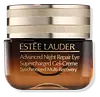
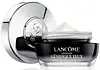
Estée Lauder Advanced Night Repair Supercharged Eye Gel-Cream Versus Lancôme Advanced Génifique Eye Cream
This barrier-repair eye moisturizer is formulated around Bifida Ferment Lysate and Caffeine to strengthen the skin barrier and soften the look of wrinkles.
This barrier-repair eye moisturizer is formulated around Bifida Ferment Lysate and Ascorbyl Glucoside to strengthen the skin barrier and soften the look of wrinkles.


What's inside
What's inside
 Key Ingredients
Benefits
Concerns
Ingredients Side-by-side
Water
Skin ConditioningDimethicone
Emollient

Methyl Trimethicone
Skin Conditioning
Bifida Ferment Lysate
Skin Conditioning



Dimethicone/Vinyl Dimethicone Crosspolymer
Skin Conditioning
Propanediol
Solvent
Petrolatum
Emollient


Sucrose
Humectant
Glycerin
Humectant
Butylene Glycol
Humectant
Acrylamide/Sodium Acryloyldimethyltaurate Copolymer
Emulsion StabilisingTrehalose
Humectant
Tripeptide-32
Skin Conditioning
Adansonia Digitata Seed Extract
Skin ConditioningLavandula Angustifolia Flower Extract
Cleansing
Sodium Hyaluronate
Humectant
Lactobacillus Ferment
Skin Conditioning
Tocopheryl Acetate
Antioxidant


Faex Extract
Skin ConditioningHypnea Musciformis Extract
Skin Protecting

Sodium Rna
Skin ConditioningCaffeine
Skin Conditioning
Squalane
Emollient
Anthemis Nobilis Flower Oil
Masking

Poria Cocos Sclerotium Extract
AstringentCitrullus Lanatus Fruit Extract
Skin Conditioning
Lens Esculenta Fruit Extract
Skin ConditioningPyrus Malus Fruit Extract
Skin Conditioning
Ethylhexylglycerin
Skin ConditioningSodium PCA
Humectant
Phytosphingosine
Skin Conditioning
Hydrolyzed Algin
Hordeum Distichon Extract
Skin ProtectingJojoba Esters
Emollient

Triticum Vulgare Germ Oil
Emollient
Hydrogenated Lecithin
Emulsifying
Lecithin
Emollient
Isohexadecane
EmollientJojoba Alcohol
Emollient
Isopropyl Jojobate
EmollientPEG/PPG-18/18 Dimethicone
Emulsifying
Polysorbate 80
Emulsifying
Acrylates/C10-30 Alkyl Acrylate Crosspolymer
Emulsion StabilisingTromethamine
BufferingSorbitan Oleate
Emulsifying
Sodium Lactate
Buffering
Polysorbate 40
Emulsifying
Potassium Gluconate
ChelatingTocopherol
Antioxidant
BHT
Antioxidant
Phenoxyethanol
Preservative
Potassium Sorbate
Preservative
Sodium Benzoate
Masking
CI 77491
Cosmetic ColorantCI 77492
Cosmetic ColorantWater, Dimethicone, Methyl Trimethicone, Bifida Ferment Lysate, Dimethicone/Vinyl Dimethicone Crosspolymer, Propanediol, Petrolatum, Sucrose, Glycerin, Butylene Glycol, Acrylamide/Sodium Acryloyldimethyltaurate Copolymer, Trehalose, Tripeptide-32, Adansonia Digitata Seed Extract, Lavandula Angustifolia Flower Extract, Sodium Hyaluronate, Lactobacillus Ferment, Tocopheryl Acetate, Faex Extract, Hypnea Musciformis Extract, Sodium Rna, Caffeine, Squalane, Anthemis Nobilis Flower Oil, Poria Cocos Sclerotium Extract, Citrullus Lanatus Fruit Extract, Lens Esculenta Fruit Extract, Pyrus Malus Fruit Extract, Ethylhexylglycerin, Sodium PCA, Phytosphingosine, Hydrolyzed Algin, Hordeum Distichon Extract, Jojoba Esters, Triticum Vulgare Germ Oil, Hydrogenated Lecithin, Lecithin, Isohexadecane, Jojoba Alcohol, Isopropyl Jojobate, PEG/PPG-18/18 Dimethicone, Polysorbate 80, Acrylates/C10-30 Alkyl Acrylate Crosspolymer, Tromethamine, Sorbitan Oleate, Sodium Lactate, Polysorbate 40, Potassium Gluconate, Tocopherol, BHT, Phenoxyethanol, Potassium Sorbate, Sodium Benzoate, CI 77491, CI 77492
Water
Skin ConditioningDimethicone
Emollient
Bifida Ferment Lysate
Skin Conditioning
Glycerin
Humectant
Propanediol
Solvent
Alcohol Denat.
Antimicrobial

Polysilicone-11

Silica
Abrasive

Dimethicone/PEG-10/15 Crosspolymer
PEG-10 Dimethicone
Skin Conditioning
Di-C12-13 Alkyl Malate
EmollientAmmonium Polyacryloyldimethyl Taurate
Emulsion StabilisingCI 77891
Cosmetic ColorantAscorbyl Glucoside
Antioxidant
Lactic Acid
Buffering

Lactobacillus
Skin ConditioningTocopherol
Antioxidant
Hydrogenated Vegetable Oil
Emollient
Sodium Hydroxide
BufferingSodium Benzoate
Masking
Sodium Hyaluronate
Humectant
Sodium Citrate
BufferingAdenosine
Skin Conditioning
Yeast Extract
Skin ConditioningAcetic Acid
BufferingTrisodium Ethylenediamine Disuccinate
ChelatingChlorphenesin
Antimicrobial
Polymnia Sonchifolia Root Juice
Skin ConditioningChlorhexidine Digluconate
Antimicrobial
Polygonum Fagopyrum Seed Extract
Skin ConditioningMaltodextrin
Absorbent
Salicyloyl Phytosphingosine
Skin ConditioningChlorella Vulgaris Extract
Skin ConditioningDimethiconol
Emollient
Limonene
Perfuming
Mannose
HumectantPentylene Glycol
Skin Conditioning
Synthetic Fluorphlogopite
Linalool
Perfuming
Pentaerythrityl Tetra-Di-T-Butyl Hydroxyhydrocinnamate
Antioxidant
Biosaccharide Gum-1
Humectant
Caprylic/Capric Triglyceride
Masking
Alpha-Glucan Oligosaccharide
Cleansing
Caprylyl Glycol
Emollient
Dipropylene Glycol
HumectantCarbomer
Emulsion StabilisingBoron Nitride
Absorbent
Acrylates/C10-30 Alkyl Acrylate Crosspolymer
Emulsion StabilisingGeraniol
Perfuming
Bis-PEG/PPG-16/16 PEG/PPG-16/16 Dimethicone
Emollient
Ceteareth-20
Cleansing
Potassium Cetyl Phosphate
EmulsifyingCitronellol
Perfuming
Alumina
Abrasive
Parfum
Masking
Water, Dimethicone, Bifida Ferment Lysate, Glycerin, Propanediol, Alcohol Denat., Polysilicone-11, Silica, Dimethicone/PEG-10/15 Crosspolymer, PEG-10 Dimethicone, Di-C12-13 Alkyl Malate, Ammonium Polyacryloyldimethyl Taurate, CI 77891, Ascorbyl Glucoside, Lactic Acid, Lactobacillus, Tocopherol, Hydrogenated Vegetable Oil, Sodium Hydroxide, Sodium Benzoate, Sodium Hyaluronate, Sodium Citrate, Adenosine, Yeast Extract, Acetic Acid, Trisodium Ethylenediamine Disuccinate, Chlorphenesin, Polymnia Sonchifolia Root Juice, Chlorhexidine Digluconate, Polygonum Fagopyrum Seed Extract, Maltodextrin, Salicyloyl Phytosphingosine, Chlorella Vulgaris Extract, Dimethiconol, Limonene, Mannose, Pentylene Glycol, Synthetic Fluorphlogopite, Linalool, Pentaerythrityl Tetra-Di-T-Butyl Hydroxyhydrocinnamate, Biosaccharide Gum-1, Caprylic/Capric Triglyceride, Alpha-Glucan Oligosaccharide, Caprylyl Glycol, Dipropylene Glycol, Carbomer, Boron Nitride, Acrylates/C10-30 Alkyl Acrylate Crosspolymer, Geraniol, Bis-PEG/PPG-16/16 PEG/PPG-16/16 Dimethicone, Ceteareth-20, Potassium Cetyl Phosphate, Citronellol, Alumina, Parfum
Reviews
Ingredients Explained
These ingredients are found in both products.
Ingredients higher up in an ingredient list are typically present in a larger amount.
Acrylates/C10-30 Alkyl Acrylate Crosspolymer is a synthetic polymer. It is used to thicken, emulsify, and improve the texture of products.
As an emulsifier, it helps stabilize oil-in-water emulsions to give products an elegant feel when applied.
It can also form a thin protective film on skin. One study found that a formula using this polymer helped slow down how quickly other ingredients (like DEET) were absorbed through skin.
A 2024 study of over 1,300 patients confirmed that sensitization to this ingredient is rare. It is also non-mutagenic and has a clean track record.
Learn more about Acrylates/C10-30 Alkyl Acrylate CrosspolymerBifida Ferment Lysate is a postbiotic ingredient made by fermenting Bifidobacterium to extract a nutrient-rich mix of peptides, amino acids, vitamins, organic acids, and polysaccharides.
These components are basically the building blocks that your skin already uses to stay hydrated, repair itself, and maintain its barrier. That's why this ingredient helps your skin hold onto moisture and stay resilient against irritation.
One in-vitro study found that this ingredient tells your skin cells to produce more of the proteins (filaggrin, loricrin, and involucrin) for building a strong and healthy barrier. This study also found this ingredient to be a solid antioxidant that helped neutralize damage against UV and pollution.
A study with people from 2010 found that sensitive, reactive skin using a cream with 10% of this ingredient for a month became noticeably less dry, less reactive, and harder to irritate compared to the group using a plain cream.
In short, this ingredient is a well-tolerated ingredient that can help with barrier repair, antioxidant protection, and calming reactive skin.
This ingredient is generally considered fungal acne (Malassezia) safe; Bifidobacterium is a bacterium, not a yeast or fungus.
The fungal acne concern with fermented ingredients mainly applies to yeast-derived ferments like Saccharomyces and Galactomyces, because those are in the same kingdom as Malassezia and could theoretically contain residual compounds that feed it.
Bifida is a completely different organism, so on its own it doesn't provide a food source for the Malassezia yeast that causes fungal acne.
Learn more about Bifida Ferment LysateDimethicone is a type of synthetic silicone created from natural materials such as quartz. It is also known as polydimethylsiloxane.
What it does:
Dimethicone comes in different viscosities:
Depending on the viscosity, dimethicone has different properties.
Ingredients lists don't always show which type is used, so we recommend reaching out to the brand if you have questions about the viscosity.
This ingredient is unlikely to cause irritation because it does not get absorbed into skin. However, people with silicone allergies should be careful about using this ingredient.
Note: Dimethicone may contribute to pilling. This is because it is not oil or water soluble, so pilling may occur when layered with products. When mixed with heavy oils in a formula, the outcome is also quite greasy.
Learn more about DimethiconeGlycerin (or glycerol) is a compound naturally found in your skin. It's a powerhouse humectant that pulls water into the stratum corneum.
Topically, glycerin does several things at once:
Your skin makes glycerin on its own (mostly from sebaceous oil breakdown) and shuttles it to your outermost layer of skin, or your epidermis, via aquaporin-3.
Aquaporin-3 is a transporter that is essential for normal skin hydration, elasticity, and repair. Interestingly, mice lacking in AQP3 have dry and less elastic skin that can be fully corrected with glycerin.
This ingredient is non-irritating, plays well with almost every ingredient, and works across all skin types. Typical use is anywhere between 3-10% but can go up to 79% in some leave-on products.
Just know very high concentrations (>40%) can feel tacky in low humidity.
Glycerin is the name for this ingredient in American English. British English uses Glycerol/Glycerine.
Learn more about GlycerinPropanediol is an all-star ingredient. It softens, hydrates, and smooths the skin.
It’s often used to:
Propanediol is not likely to cause sensitivity and considered safe to use. It is derived from corn or petroleum with a clear color and no scent.
Learn more about PropanediolSodium Benzoate is a preservative. It's used in both cosmetic and food products to inhibit the growth of mold and bacteria. It is typically produced synthetically.
Both the US FDA and EU Health Committee have approved the use of sodium benzoate. In the US, levels of 0.1% (of the total product) are allowed.
Sodium benzoate works as a preservative by inhibiting the growth of bacteria inside of cells. It prevents the cell from fermenting a type of sugar using an enzyme called phosphofructokinase.
It is the salt of benzoic acid. Foods containing sodium benzoate include soda, salad dressings, condiments, fruit juices, wines, and snack foods.
Studies for using ascorbic acid and sodium benzoate in cosmetics are lacking, especially in skincare routines with multiple steps.
We always recommend speaking with a professional, such as a dermatologist, if you have any concerns.
Learn more about Sodium BenzoateSodium Hyaluronate is the salt form of hyaluronic acid. It is a long sugar chain that is naturally found in your skin, joints, and connective tissue that maintains hydration and elasticity.
In skincare, it works as a humectant. It pulls water from the environment and deeper layers of skin and binds it to the surface.
Interestingly, the size of the molecule affects its behavior:
Some clinical evidence links low molecular weight versions to improved wrinkle depth, elasticity, anti-inflammatory effects, and barrier repair.
Many serums use a blend of both weights so you can get surface hydration plus longer-lasting and deeper effects.
You'll typically see concentrations between 0.1-2% for this ingredient.
Learn more about Sodium HyaluronateTocopherol is a fat-soluble antioxidant known as Vitamin E.
You'll find this ingredient in the vast majority of skincare (for good reason). It works to neutralize free radicals, or unstable molecules generated by UV exposure, pollution, and other environmental stressors, before they can cause oxidative damage to your skin cells.
Topically applied tocopherol has been shown to protect against UV damage by ramping up the skin's own natural defense enzymes.
It also acts as a skin conditioning agent; some studies show that regular topical use can improve the skin's water-binding capacity over 2-4 weeks.
This ingredient is especially loved for being a team player. When combined with Vitamin C, the photoprotective effect of both ingredients roughly doubles and the combo also helps reduce UV-induced DNA damage.
This ingredient has some brightening potential but it's more of a prevention ingredient than spot-fader. Cell studies show it can slow down melanin production but it's worth noting that it's not the most powerful brightener out there.
In formulations, it also serves as a stabilizer that helps protect other oxidation-prone ingredients from degrading.
Concentrations usually range from 0.1-1% in most leave-on products.
Learn more about TocopherolWater. It's the most common cosmetic ingredient of all. You'll usually see it at the top of ingredient lists, meaning that it makes up the largest part of the product.
So why is it so popular? Water most often acts as a solvent - this means that it helps dissolve other ingredients into the formulation.
You'll also recognize water as that liquid we all need to stay alive. If you see this, drink a glass of water. Remember to stay hydrated!
Learn more about Water

