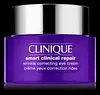
Clinique Smart Clinical Repair Wrinkle Correcting Eye Cream Versus Dr Sam’s Flawless Brightly Eye Serum
This anti-aging eye moisturizer is formulated around Acetyl Hexapeptide-8 and Palmitoyl Tripeptide-1 to soften the look of wrinkles and strengthen the skin barrier.
This brightening eye moisturizer is formulated around Niacinamide and Ectoin to brighten dull-looking skin and fade the look of dark spots.


What's inside
What's inside
 Key Ingredients
Benefits
Concerns
Ingredients Side-by-side
Water
Skin ConditioningTridecyl Trimellitate
EmollientGlycerin
Humectant


Neopentyl Glycol Diethylhexanoate
Emollient
Polyglyceryl-6 Distearate
Emulsifying

Glyceryl Behenate
Emollient
Mangifera Indica Seed Butter
Skin Conditioning
Propanediol
Solvent
Butyrospermum Parkii Butter
Skin Conditioning


Cetearyl Wheat Straw Glycosides
EmulsifyingHypnea Musciformis Extract
Skin Protecting
Gelidiella Acerosa Extract
Skin Protecting
Polygonum Cuspidatum Root Extract
Antioxidant
Laminaria Digitata Extract
Skin Protecting
Saccharomyces Lysate Extract
Humectant
Camellia Sinensis Leaf Extract
Antimicrobial





Sigesbeckia Orientalis Extract
Skin ConditioningWhey Protein
Skin ConditioningPrunus Amygdalus Dulcis Seed Extract
Skin ConditioningAcetyl Hexapeptide-8
Humectant
Acetyl Octapeptide-3
Humectant
Palmitoyl Tripeptide-1
Skin Conditioning
Palmitoyl Tetrapeptide-7
Skin Conditioning
Palmitoyl Hexapeptide-12
Skin Conditioning
Phytosteryl/Isostearyl/Cetyl/Stearyl/Behenyl Dimer Dilinoleate
Skin Conditioning
Lactobacillus Ferment
Skin Conditioning
Sodium Hyaluronate
Humectant
Tocopheryl Acetate
Antioxidant
Butylene Glycol
Humectant
Cetearyl Alcohol
Emollient

Caffeine
Skin Conditioning
Tetrahexyldecyl Ascorbate
Antioxidant
Sucrose
Humectant
Acetyl Glucosamine
Skin Conditioning
Dipotassium Glycyrrhizate
Humectant
Arachidyl Glucoside
EmulsifyingJojoba Esters
Emollient
Tridecyl Stearate
Emollient
Dipentaerythrityl Hexacaprylate/Hexacaprate
EmulsifyingMolasses Extract
Skin ConditioningTrehalose
Humectant
Ethylhexylglycerin
Skin ConditioningCholesterol
Emollient
Bisabolol
Antioxidant
PEG-8
HumectantCera Alba
Emollient
Glyceryl Acrylate/Acrylic Acid Copolymer
HumectantGlycine Soja Seed Extract
Skin Conditioning
Caprylyl Glycol
Emollient
Tocopherol
Antioxidant
Nylon-12

Potassium Cetyl Phosphate
EmulsifyingGlyceryl Polymethacrylate
Acrylates/C10-30 Alkyl Acrylate Crosspolymer
Emulsion StabilisingAmmonium Acryloyldimethyltaurate/Vp Copolymer
Arachidyl Alcohol
Emollient
Cetyl Alcohol
Emollient
Polyglyceryl-3 Beeswax
Emulsifying
Behenyl Alcohol
Emollient
Glyceryl Stearate
Emollient
Stearic Acid
Cleansing
Carbomer
Emulsion StabilisingPolysorbate 20
Emulsifying
Sodium Hydroxide
BufferingBHT
Antioxidant
Disodium EDTA
ChelatingSodium Citrate
BufferingPotassium Sorbate
Preservative
Sodium Benzoate
Masking
Phenoxyethanol
Preservative
Water, Tridecyl Trimellitate, Glycerin, Neopentyl Glycol Diethylhexanoate, Polyglyceryl-6 Distearate, Glyceryl Behenate, Mangifera Indica Seed Butter, Propanediol, Butyrospermum Parkii Butter, Cetearyl Wheat Straw Glycosides, Hypnea Musciformis Extract, Gelidiella Acerosa Extract, Polygonum Cuspidatum Root Extract, Laminaria Digitata Extract, Saccharomyces Lysate Extract, Camellia Sinensis Leaf Extract, Sigesbeckia Orientalis Extract, Whey Protein, Prunus Amygdalus Dulcis Seed Extract, Acetyl Hexapeptide-8, Acetyl Octapeptide-3, Palmitoyl Tripeptide-1, Palmitoyl Tetrapeptide-7, Palmitoyl Hexapeptide-12, Phytosteryl/Isostearyl/Cetyl/Stearyl/Behenyl Dimer Dilinoleate, Lactobacillus Ferment, Sodium Hyaluronate, Tocopheryl Acetate, Butylene Glycol, Cetearyl Alcohol, Caffeine, Tetrahexyldecyl Ascorbate, Sucrose, Acetyl Glucosamine, Dipotassium Glycyrrhizate, Arachidyl Glucoside, Jojoba Esters, Tridecyl Stearate, Dipentaerythrityl Hexacaprylate/Hexacaprate, Molasses Extract, Trehalose, Ethylhexylglycerin, Cholesterol, Bisabolol, PEG-8, Cera Alba, Glyceryl Acrylate/Acrylic Acid Copolymer, Glycine Soja Seed Extract, Caprylyl Glycol, Tocopherol, Nylon-12, Potassium Cetyl Phosphate, Glyceryl Polymethacrylate, Acrylates/C10-30 Alkyl Acrylate Crosspolymer, Ammonium Acryloyldimethyltaurate/Vp Copolymer, Arachidyl Alcohol, Cetyl Alcohol, Polyglyceryl-3 Beeswax, Behenyl Alcohol, Glyceryl Stearate, Stearic Acid, Carbomer, Polysorbate 20, Sodium Hydroxide, BHT, Disodium EDTA, Sodium Citrate, Potassium Sorbate, Sodium Benzoate, Phenoxyethanol
Water
Skin ConditioningButyrospermum Parkii Butter
Skin Conditioning
Dimethicone
Emollient
Niacinamide
Smoothing

Mangifera Indica Seed Butter
Skin Conditioning
Persea Gratissima Oil
Skin Conditioning
Sorbitan Stearate
Emulsifying
Stearic Acid
Cleansing
Glycerin
Humectant
CI 77891
Cosmetic ColorantPolysorbate 60
Emulsifying
Sodium Polystyrene Sulfonate
Emulsion StabilisingEctoin
Skin Conditioning
Maltodextrin
Absorbent
Dimethicone/Vinyl Dimethicone Crosspolymer
Skin Conditioning
Mica
Cosmetic ColorantPropanediol
Solvent
Bakuchiol
Antimicrobial
Glucosyl Hesperidin
HumectantSilybum Marianum Extract
Skin Conditioning
Helianthus Annuus Sprout Extract
Skin ConditioningGleditsia Triacanthos Seed Extract
CI 77492
Cosmetic ColorantPhenoxyethanol
Preservative
Carbomer
Emulsion StabilisingSodium Hydroxide
BufferingTin Oxide
Abrasive
Ethylhexylglycerin
Skin ConditioningCI 77491
Cosmetic ColorantGlyceryl Caprylate
EmollientCI 77499
Cosmetic ColorantWater, Butyrospermum Parkii Butter, Dimethicone, Niacinamide, Mangifera Indica Seed Butter, Persea Gratissima Oil, Sorbitan Stearate, Stearic Acid, Glycerin, CI 77891, Polysorbate 60, Sodium Polystyrene Sulfonate, Ectoin, Maltodextrin, Dimethicone/Vinyl Dimethicone Crosspolymer, Mica, Propanediol, Bakuchiol, Glucosyl Hesperidin, Silybum Marianum Extract, Helianthus Annuus Sprout Extract, Gleditsia Triacanthos Seed Extract, CI 77492, Phenoxyethanol, Carbomer, Sodium Hydroxide, Tin Oxide, Ethylhexylglycerin, CI 77491, Glyceryl Caprylate, CI 77499
Ingredients Explained
These ingredients are found in both products.
Ingredients higher up in an ingredient list are typically present in a larger amount.
This ingredient is also known as shea butter. It is a plant-derived extract from the nuts of the Africa shea tree and one of the most well-studied emollients.
Because it has a high concentration of fatty acids (primarily oleic, stearic, and linoleic) it is able to form a protective barrier on the skin's surface. This helps seal in moisture and prevents transepidermal water loss (TEWL).
In vitro research found an increase in skin hydration by 58% and a decrease in TEWL by 37.8% after 24 hours of applying this ingredient (pretty impressive for a single ingredient!).
Besides hydration, shea butter also contains triterpenes that have anti-inflammatory potential. In particule, lupeol cinnamate has shown the highest anti-inflammatory activity in vivo.
Shea butter also contains vitamins A and E which may contribute to antioxidant activity.
While Shea Butter has an SPF rating of about 3-4, it is not a sunscreen replacement.
This ingredient may not be fungal acne safe because its fatty acids fall within the C11-C24 range that the Malassezia yeast can metabolize.
This ingredient shows up on a lot of "pore-clogging" lists but there's no real evidence behind that. It doesn't even have a comedogenic rating from an actual study; the numbers you'll find online come from blogs citing other blogs.
Ratings for other ingredients mostly come from a 1980s rabbit ear test. This test doesn't translate well to human skin or to real products because the ingredient sits at a much lower percentage.
Some people still find it breaks them out. So if that's you, definitely trust your skin. Just know this one's based on experience and not evidence.
Learn more about Butyrospermum Parkii ButterCarbomer is a synthetic thickening and gelling agent. It's basically the ingredient that gives a lot of serums, gels, creams, and sunscreens their smooth, non-sticky texture.
Although legally permitted at very high levels, carbomers are normally used at concentrations below 1%.
It also needs to be neutralized to actually thicken, and because it is a large molecule, it doesn't really penetrate the skin barrier.
Allergy-wise, the risk is very low. Clinical studies show carbomers have low potential for skin irritation/sensitization even at concentrations up to 100%.
A 2024 UK study patch-tested 1,302 patients and found true allergy to the parent group of carbomer to be rare with no confirmed relevant reactions.
Learn more about CarbomerEthylhexylglycerin is created from glycerin. It is a multitasker ingredient that:
The CIR Expert Panel found minimal skin absorption or sensitization of any kind in a safety assessment. Though this ingredient is considered well-tolerated, a small number of cases of allergic dermatitis have been published since 2002. Just be sure to patch test if you are unsure.
Industry-reported use ranges from 8% in rinse-off products and 2% in leave-on formulations.
Learn more about EthylhexylglycerinGlycerin (or glycerol) is a compound naturally found in your skin. It's a powerhouse humectant that pulls water into the stratum corneum.
Topically, glycerin does several things at once:
Your skin makes glycerin on its own (mostly from sebaceous oil breakdown) and shuttles it to your outermost layer of skin, or your epidermis, via aquaporin-3.
Aquaporin-3 is a transporter that is essential for normal skin hydration, elasticity, and repair. Interestingly, mice lacking in AQP3 have dry and less elastic skin that can be fully corrected with glycerin.
This ingredient is non-irritating, plays well with almost every ingredient, and works across all skin types. Typical use is anywhere between 3-10% but can go up to 79% in some leave-on products.
Just know very high concentrations (>40%) can feel tacky in low humidity.
Glycerin is the name for this ingredient in American English. British English uses Glycerol/Glycerine.
Learn more about GlycerinThough this ingredient might sound like a juicy fruit extract, it's actually the fat pressed from the mango seed kernel (or the pit).
In skincare, it behaves more like shea butter and cocoa butter than like a plant active.
The fatty acid makeup of mango seed butter makes it special; it's typically rich in stearic acid and oleic acid, with small amounts of palmitic and linoleic acid.
This combo helps it melt on skin, feel creamy, and leave behind a protective "seal" that slows down water loss.
It also contains a small amount of "extras" like tocopherols (vitamin E) and phytosterols, which are often used to support skin soothing.
Due to its fatty acid content (like oleic acid), this ingredient may not be fungal acne safe. In vitro studies have shown that Oleic Acid is one of the fatty acids that induce rapid Malassezia growth in lab settings.
Learn more about Mangifera Indica Seed ButterPhenoxyethanol is one of the most widely used preservatives in skincare (and for good reason!).
It has a large spectrum of antimicrobial activity and especially effective bacteria, yeast, and mold while only having a weak effect on your skin's natural microbiome.
On a cellular level, it disrupts the cell membranes of microbes by poking holes that make the cell leak. This shuts down the chemical reactions the microbe needs to make energy so it can no longer survive.
Another perk of this ingredient is that it stays functional across a wide pH range (3-10).
You'll often see it paired with boosters like Ethylhexylglycerin; one study showed that a 1:9 ratio of Ethylhexylglycerin to Phenoxyethanol damages bacterial membranes as effectively as doubling the Phenoxyethanol concentration on its own.
Typical use concentrations range from 0.3-1% depending on the formula, and this ingredient is capped at 1% int the EU.
Safety-wise, the fear mongering does not hold up to the evidence. The EU's Scientific Committee on Consumer Safety and FDA consider it safe as a preservative at up to 1%, including for children of all ages.
Adverse systemic effects only showed up in animal studies at exposures roughly 200x higher than what people get from cosmetics. And despite its very widespread use, this ingredient is a rare sensitizer and allergic reactions are uncommon.
Learn more about PhenoxyethanolPropanediol is an all-star ingredient. It softens, hydrates, and smooths the skin.
It’s often used to:
Propanediol is not likely to cause sensitivity and considered safe to use. It is derived from corn or petroleum with a clear color and no scent.
Learn more about PropanediolSodium Hydroxide is also known as lye or caustic soda. It is used to adjust the pH of products; many ingredients require a specific pH to be effective.
In small amounts, sodium hydroxide is considered safe to use. However, large amounts may cause chemical burns due to its high alkaline.
Your skin has a natural pH and acid mantle. This acid mantle helps prevent harmful bacteria from breaking through. The acid mantle also helps keep your skin hydrated.
"Alkaline" refers to a high pH level. A low pH level would be considered acidic.
Learn more about Sodium HydroxideStearic Acid is a fatty acid that is already found in your skin. It's one of the free fatty acids that works alongside ceramides and cholesterols to maintain your barrier.
In cosmetics, it is a multitasker:
Safety-wise, the CIR Expert Panel has concluded it to be safe in cosmetics when formulated to be non-irritating and non-sensitizing.
Free stearic acid is a C18 fatty acid that the Malassezia yeast can substrate, so this ingredient may not be fungal acne safe.
This ingredient does have a comedogenic rating of 2-3, but this doesn't mean a formula with this ingredient will clog pores.
Human testing has proved that any finished product with this ingredient won't automatically make you break out; it really comes down to concentration, formula, and your skin.
Learn more about Stearic AcidWater. It's the most common cosmetic ingredient of all. You'll usually see it at the top of ingredient lists, meaning that it makes up the largest part of the product.
So why is it so popular? Water most often acts as a solvent - this means that it helps dissolve other ingredients into the formulation.
You'll also recognize water as that liquid we all need to stay alive. If you see this, drink a glass of water. Remember to stay hydrated!
Learn more about Water

