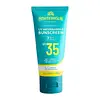
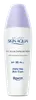
This chemical sunscreen covers most of the UV range, lighter on the deep UVA that drives aging.
This chemical sunscreen covers the full UV range and blocks ~97% of UVB at SPF 35.


What's inside
What's inside
 Key Ingredients
Benefits
Concerns
Ingredients Side-by-side
Water
Skin ConditioningNeopentyl Glycol Diheptanoate
EmollientGlycerin
Humectant


Butyl Methoxydibenzoylmethane
UV Absorber
Ethylhexyl Methoxycinnamate
UV Absorber

Cetyl Alcohol
Emollient



Silica
Abrasive


Urea
Buffering

Octocrylene
UV Absorber
Hydrolyzed Jojoba Esters
Skin Conditioning
Helianthus Annuus Seed Oil
Emollient
Vitis Vinifera Leaf Extract
Skin ConditioningCentella Asiatica Extract
Cleansing


Avena Sativa Kernel Extract
Abrasive
Rosmarinus Officinalis Leaf Extract
AntimicrobialCeramide AP
Skin Conditioning
Ceramide As
Skin Conditioning
Ceramide EOP
Skin Conditioning
Ceramide NP
Skin Conditioning
Ceramide Ns
Skin Conditioning
Tocopherol
Antioxidant


Laminaria Digitata Extract
Skin Protecting
Cholesterol
Emollient
Sodium Acrylate/Sodium Acryloyldimethyl Taurate Copolymer
Emulsion StabilisingButylene Glycol
Humectant
Glyceryl Stearate
Emollient
PEG-100 Stearate
Surfactant
Isohexadecane
EmollientPolysorbate 80
Emulsifying
Triethanolamine
BufferingLecithin
Emollient
BHT
Antioxidant
Phenoxyethanol
Preservative
Disodium EDTA
Sorbitan Oleate
Emulsifying
Propanediol
Solvent
Ethyl Ferulate
Antioxidant
Polyglyceryl-5 Trioleate
Emollient
Propylene Glycol
Humectant
Disodium Uridine Phosphate
Skin Conditioning1,2-Hexanediol
Skin Conditioning
Hydrogenated Lecithin
Emulsifying
Citric Acid
Buffering
Sodium Benzoate
Masking
Potassium Sorbate
Preservative
Cetyl-Pg Hydroxyethyl Palmitamide
Skin ConditioningWater, Neopentyl Glycol Diheptanoate, Glycerin, Butyl Methoxydibenzoylmethane, Ethylhexyl Methoxycinnamate, Cetyl Alcohol, Silica, Urea, Octocrylene, Hydrolyzed Jojoba Esters, Helianthus Annuus Seed Oil, Vitis Vinifera Leaf Extract, Centella Asiatica Extract, Avena Sativa Kernel Extract, Rosmarinus Officinalis Leaf Extract, Ceramide AP, Ceramide As, Ceramide EOP, Ceramide NP, Ceramide Ns, Tocopherol, Laminaria Digitata Extract, Cholesterol, Sodium Acrylate/Sodium Acryloyldimethyl Taurate Copolymer, Butylene Glycol, Glyceryl Stearate, PEG-100 Stearate, Isohexadecane, Polysorbate 80, Triethanolamine, Lecithin, BHT, Phenoxyethanol, Disodium EDTA, Sorbitan Oleate, Propanediol, Ethyl Ferulate, Polyglyceryl-5 Trioleate, Propylene Glycol, Disodium Uridine Phosphate, 1,2-Hexanediol, Hydrogenated Lecithin, Citric Acid, Sodium Benzoate, Potassium Sorbate, Cetyl-Pg Hydroxyethyl Palmitamide
Water
Skin ConditioningEthylhexyl Methoxycinnamate
UV Absorber
Caprylyl Methicone
Skin Conditioning
Methylene Bis-Benzotriazolyl Tetramethylbutylphenol
UV Filter
Pentylene Glycol
Skin Conditioning
Methyl Methacrylate Crosspolymer
Ethylhexyl Triazone
UV Absorber
Polysorbate 60
Emulsifying
Diethylamino Hydroxybenzoyl Hexyl Benzoate
UV Filter
Betaine
Humectant
Phenoxyethanol
Preservative
Decyl Glucoside
Cleansing
Ammonium Acryloyldimethyltaurate/Vp Copolymer
Propanediol
Solvent
Hydrolyzed Jojoba Esters
Skin Conditioning
Acrylates/C10-30 Alkyl Acrylate Crosspolymer
Emulsion StabilisingArginine
Masking
Hydrogenated Lecithin
Emulsifying
O-Cymen-5-Ol
Antimicrobial
Disodium EDTA
Propylene Glycol
Humectant
Panthenol
Skin Conditioning
Sodium Hyaluronate
Humectant
Chlorella Vulgaris Extract
Skin ConditioningXanthan Gum
EmulsifyingBHT
Antioxidant
Lactic Acid
Buffering
Sodium Acetylated Hyaluronate
Humectant
Hydrolyzed Collagen
Emollient
Dipotassium Glycyrrhizate
Humectant
Ascorbyl Tetraisopalmitate
Antioxidant
Tocopheryl Acetate
Antioxidant
Water, Ethylhexyl Methoxycinnamate, Caprylyl Methicone, Methylene Bis-Benzotriazolyl Tetramethylbutylphenol, Pentylene Glycol, Methyl Methacrylate Crosspolymer, Ethylhexyl Triazone, Polysorbate 60, Diethylamino Hydroxybenzoyl Hexyl Benzoate, Betaine, Phenoxyethanol, Decyl Glucoside, Ammonium Acryloyldimethyltaurate/Vp Copolymer, Propanediol, Hydrolyzed Jojoba Esters, Acrylates/C10-30 Alkyl Acrylate Crosspolymer, Arginine, Hydrogenated Lecithin, O-Cymen-5-Ol, Disodium EDTA, Propylene Glycol, Panthenol, Sodium Hyaluronate, Chlorella Vulgaris Extract, Xanthan Gum, BHT, Lactic Acid, Sodium Acetylated Hyaluronate, Hydrolyzed Collagen, Dipotassium Glycyrrhizate, Ascorbyl Tetraisopalmitate, Tocopheryl Acetate
Reviews
Ingredients Explained
These ingredients are found in both products.
Ingredients higher up in an ingredient list are typically present in a larger amount.
BHT is a synthetic antioxidant and preservative.
As an antioxidant, it helps your body fight off free-radicals. Free-radicals are molecules that may damage your skin cells.
As a preservative, it is used to stabilize products and prevent them from degrading. Specifically, BHT prevents degradation from oxidation.
The concerns related to BHT come from oral studies; this ingredient is currently allowed for use by both the FDA and EU.
However, it was recently restricted for use in the UK as of April 2024.
Learn more about BHTDisodium EDTA is a chelating agent. It grabs onto and deactivates metal ions that sneak into your products from water, packaging, or air.
This ingredient mainly works behind the scenes and helps with:
On top of that, this ingredient can counteract the effects of hard water by binding to the minerals in it.
One thing worth knowing is that Disodium EDTA has been shown to be a mild penetration enhancer. It can help other ingredients absorb into skin more effectively which can be a double-edged sword (great for actives, but can also make the active too strong if you have sensitive skin).
Clinical patch testing showed no significant skin irritation at typical use concentrations and minimal dermal absorption.
You'll most likely see this ingredient near the end of an ingredient list. It's typically found in concentrations less than 1%.
Learn more about Disodium EDTAThis ingredient is also known as Octinoxate and is one of the oldest and most widely used chemical UV filters in skincare.
It has a simple job: soap up UVB radiation (290-320 nm), the wavelengths responsible for sunburn and a big chunk of long-term sun damage.
In formulas, it's always paired with a separate UVA filter because octinoxate solely protects skin from UVB.
Because it's an oil-soluble liquid, it's easy to blend into the oil phase of lotions/creams and gives a cosmetically elegant feel.
The one quirk about formulating this ingredient is photostability; the molecule slowly changes shape into a less effective version when sunlight hits it. So the longer you're in the sun, the weaker its protection gets. The drop can be more than 30% in some formulas.
It also doesn't play nice with Avobenzone (the common UVA filter) since avobenzone destabilizes octinoxate and the two degrade each other. But don't worry: brands have solved this issue by adding photostabilizers like Tinosorb S to prevent degradation and keep SPF stable under heavy UV exposure.
The maximum allowed level is 10% in the EU and Australia, 7.5% in the US and Canada, and 20% in Japan.
The Cosmetic Ingredient Review Panel has concluded this ingredient to be safe in cosmetics up to 10%.
One last thing worth knowing for context:
Octinoxate has been the subject of ongoing review in Europe where the Scientific Committee on Consumer Safety's (SCCS) 2025 final opinion is that this ingredient is an endocrine-active substance.
Lab and animal studies suggest it can act a bit like a hormone in the body (mildly mimicking estrogen and slightly blocking male hormones). It's important to know this hasn't really been shown to happen in everyday human use.
This ingredient is also banned in Hawaii over coral reef concerns.
Learn more about Ethylhexyl MethoxycinnamateHydrogenated Lecithin is a more stable version of lecithin.
It's made by taking lecithin (a phospholipid commonly found in soybeans and egg yolks) and hydrogenating it. This just means the unsaturated fatty acids are turned into saturated ones so they don't go bad as easily.
This ingredient is an emollient, emulsifier, and penetration enhancer. As an emollient, it helps soften and hydrate skin by trapping moisture within. As an emulsifier, it prevents oil and water ingredients from separating.
Hydrogenated Lecithin can form tiny spherical structures made of phospholipid bilayers called liposomes. These liposomes are able to capture compounds inside their structure and deliver them through the skin barrier.
Because phospholipids are a natural component of our cell membranes, this ingredient is inherently compatible with skin.
A 2021 study found lecithin-based surfactants were less harsh and more tolerable comared to Sodium Lauryl Sulfate (SLS).
Learn more about Hydrogenated LecithinHydrolyzed Jojoba Esters (HJE) are an emollient and skin-conditioning agent made by breaking down jojoba oil into a blend of fatty acids and fatty alcohols.
Jojoba is pretty cool because it's a liquid wax ester rather than a triglyceride like most plant oils. Its structure closely resembles the wax esters in human sebum so it slots nicely into the skin's own lipid layer.
In cosmetics, HJE works mainly to soften skin, reinforce the barrier, and lock in moisture by reducing water loss. This ingredient also holds onto the skin even after rinsing which is why you'll see it in cleansers or wipes.
There's a decent clinical backing for the moisturizing claims: a small controlled study found that pairing HJE with glycerin lowered transepidermal water loss significantly than glycerin alone (and this effect lasted up to 24 hours).
Follow-up work showed HJE appear to "trap" glycerin in the film they form on skin to boost its hydrating power.
Typical use levels are low: the glycering-synergy research used around 1.25% (a common pairing is roughly 1.25% HJE and 3.75% glycerin).
This ingredient has been found safe as used in cosmetics with low irritation risk.
As for fungal acne, the fatty acids and alcohols in jojoba fall in roughly the C18-24 range. This overlaps the C11-24 window that Malassezia yeast can feed on in lab studies, so this ingredient may not be fungal acne safe.
Learn more about Hydrolyzed Jojoba EstersPhenoxyethanol is one of the most widely used preservatives in skincare (and for good reason!).
It has a large spectrum of antimicrobial activity and especially effective bacteria, yeast, and mold while only having a weak effect on your skin's natural microbiome.
On a cellular level, it disrupts the cell membranes of microbes by poking holes that make the cell leak. This shuts down the chemical reactions the microbe needs to make energy so it can no longer survive.
Another perk of this ingredient is that it stays functional across a wide pH range (3-10).
You'll often see it paired with boosters like Ethylhexylglycerin; one study showed that a 1:9 ratio of Ethylhexylglycerin to Phenoxyethanol damages bacterial membranes as effectively as doubling the Phenoxyethanol concentration on its own.
Typical use concentrations range from 0.3-1% depending on the formula, and this ingredient is capped at 1% int the EU.
Safety-wise, the fear mongering does not hold up to the evidence. The EU's Scientific Committee on Consumer Safety and FDA consider it safe as a preservative at up to 1%, including for children of all ages.
Adverse systemic effects only showed up in animal studies at exposures roughly 200x higher than what people get from cosmetics. And despite its very widespread use, this ingredient is a rare sensitizer and allergic reactions are uncommon.
Learn more about PhenoxyethanolPropanediol is an all-star ingredient. It softens, hydrates, and smooths the skin.
It’s often used to:
Propanediol is not likely to cause sensitivity and considered safe to use. It is derived from corn or petroleum with a clear color and no scent.
Learn more about PropanediolPropylene Glycol is a synthetic, colorless, odorless liquid that has been a staple in cosmetics for decades. It is a skin conditioning agent, humectant, and solvent.
As a humectant, it draw water to the skin to reduce flaking and restore suppleness. It's also a solvent that helps dissolve other actives and keeps formulas stable across temperature changes.
The CIR Expert Panel has confirmed this ingredient to be nontoxic and clinical studies show no sensitization at cosmetic use concentrations.
True allergic reactions are quite rare: a 15-year retrospective study of 6,751 patients found only 0.31% had a positive reaction (and less than half were considered clinically relevant).
It seemed that when sensitization does occur, it's most commonly linked to topical medication (like corticosteroids) and not cosmetics. Allergic contact dermatitis also appears largely limited to individuals with underlying skin conditions.
Overall, propylene glycol is a well-studied ingredient that most people can tolerate without issue.
Learn more about Propylene GlycolWater. It's the most common cosmetic ingredient of all. You'll usually see it at the top of ingredient lists, meaning that it makes up the largest part of the product.
So why is it so popular? Water most often acts as a solvent - this means that it helps dissolve other ingredients into the formulation.
You'll also recognize water as that liquid we all need to stay alive. If you see this, drink a glass of water. Remember to stay hydrated!
Learn more about Water

