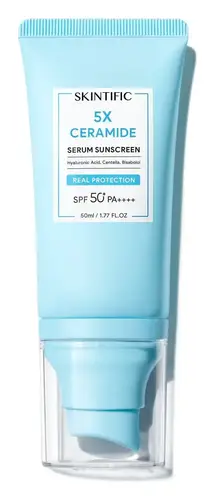
This chemical sunscreen covers the full UV range and blocks ~98% of UVB at SPF 50.
This hybrid sunscreen covers the full UV range and blocks ~98% of UVB at SPF 50.

What's inside
What's inside
 Key Ingredients
Benefits
Concerns
Ingredients Side-by-side
Water
Skin ConditioningEthylhexyl Methoxycinnamate
UV Absorber


Isododecane
EmollientGlycerin
Humectant


Cyclopentasiloxane
Emollient
Homosalate
Skin Conditioning
Polymethylsilsesquioxane
Methylene Bis-Benzotriazolyl Tetramethylbutylphenol
UV Filter
Octyldodecanol
Emollient
Diethylamino Hydroxybenzoyl Hexyl Benzoate
UV Filter
Ethylhexyl Triazone
UV Absorber
Hydroxyethyl Acrylate/Sodium Acryloyldimethyl Taurate Copolymer
Emulsion StabilisingOctyldodecyl Xyloside
EmulsifyingPEG-30 Dipolyhydroxystearate
Emulsifying

Bis-Ethylhexyloxyphenol Methoxyphenyl Triazine
UV Absorber
Phenoxyethanol
Preservative
Decyl Glucoside
Cleansing
Hydroxyacetophenone
Antioxidant
Polyisobutene
Trimethylsiloxysilicate
Emollient
PEG-7 Trimethylolpropane Coconut Ether
Emulsifying
Disodium EDTA
ChelatingSorbitan Isostearate
Emulsifying
Xanthan Gum
EmulsifyingCaprylic/Capric Triglyceride
Masking
Propylene Glycol
Humectant
Xylose
HumectantEctoin
Skin Conditioning



Magnesium Ascorbyl Phosphate
Antioxidant



Sodium Hyaluronate
Humectant
Tocopheryl Acetate
Antioxidant
Laminaria Ochroleuca Extract
Skin Conditioning
Water, Ethylhexyl Methoxycinnamate, Isododecane, Glycerin, Cyclopentasiloxane, Homosalate, Polymethylsilsesquioxane, Methylene Bis-Benzotriazolyl Tetramethylbutylphenol, Octyldodecanol, Diethylamino Hydroxybenzoyl Hexyl Benzoate, Ethylhexyl Triazone, Hydroxyethyl Acrylate/Sodium Acryloyldimethyl Taurate Copolymer, Octyldodecyl Xyloside, PEG-30 Dipolyhydroxystearate, Bis-Ethylhexyloxyphenol Methoxyphenyl Triazine, Phenoxyethanol, Decyl Glucoside, Hydroxyacetophenone, Polyisobutene, Trimethylsiloxysilicate, PEG-7 Trimethylolpropane Coconut Ether, Disodium EDTA, Sorbitan Isostearate, Xanthan Gum, Caprylic/Capric Triglyceride, Propylene Glycol, Xylose, Ectoin, Magnesium Ascorbyl Phosphate, Sodium Hyaluronate, Tocopheryl Acetate, Laminaria Ochroleuca Extract
Water
Skin ConditioningZinc Oxide
Cosmetic Colorant
Butyloctyl Salicylate
Skin Conditioning
Isododecane
EmollientPolymethylsilsesquioxane
Acrylates Copolymer
Caprylyl Methicone
Skin Conditioning
Hexyl Laurate
Emollient
Methylpropanediol
SolventGlycerin
Humectant
Ethylhexyl Palmitate
Emollient

C13-16 Isoparaffin
Solvent
Sorbitan Isostearate
Emulsifying
Sucrose Palmitate
EmollientCaprylic/Capric Triglyceride
Masking
Triethoxycaprylylsilane
Pentylene Glycol
Skin Conditioning
Polyglyceryl-3 Polyricinoleate
Emulsifying
Poly C10-30 Alkyl Acrylate
Emulsion StabilisingStearic Acid
Cleansing
Magnesium Sulfate
Xanthan Gum
EmulsifyingBisabolol
Antioxidant
Stearalkonium Hectorite
Gel FormingDisodium EDTA
ChelatingHydrogenated Polyisobutene
EmollientTrehalose
Humectant
Opuntia Ficus-Indica Stem Extract
Skin Conditioning
Citrus Sinensis Peel Extract
Perfuming
Butylene Glycol
Humectant
Propylene Carbonate
SolventInonotus Obliquus Extract
Skin ConditioningCeramide AP
Skin Conditioning
1,2-Hexanediol
Skin Conditioning
Citrus Limon Peel Oil
Masking



Pelargonium Graveolens Flower Oil
Masking
Citrus Aurantium Bergamia Fruit Oil
Masking
Elettaria Cardamomum Seed Oil
Masking
Theobroma Grandiflorum Seed Butter
Skin Conditioning
Tapioca Starch
Polianthes Tuberosa Extract
MaskingCananga Odorata Flower Oil
Masking
Zingiber Officinale Root Extract
Masking
Biosaccharide Gum-1
Humectant
Carnosine
Skin Conditioning
Ectoin
Skin Conditioning
Hydrolyzed Sodium Hyaluronate
Skin Conditioning
Phytic Acid
Chelating
Sodium Hyaluronate
Humectant
Yeast Polysaccharides
Skin ConditioningPhenoxyethanol
Preservative
Moringa Oleifera Seed Extract
Skin Conditioning
Theobroma Cacao Seed Extract
Antioxidant
Biosaccharide Gum-4
Skin Conditioning
Disodium Phosphate
BufferingCitric Acid
Buffering
Water, Zinc Oxide, Butyloctyl Salicylate, Isododecane, Polymethylsilsesquioxane, Acrylates Copolymer, Caprylyl Methicone, Hexyl Laurate, Methylpropanediol, Glycerin, Ethylhexyl Palmitate, C13-16 Isoparaffin, Sorbitan Isostearate, Sucrose Palmitate, Caprylic/Capric Triglyceride, Triethoxycaprylylsilane, Pentylene Glycol, Polyglyceryl-3 Polyricinoleate, Poly C10-30 Alkyl Acrylate, Stearic Acid, Magnesium Sulfate, Xanthan Gum, Bisabolol, Stearalkonium Hectorite, Disodium EDTA, Hydrogenated Polyisobutene, Trehalose, Opuntia Ficus-Indica Stem Extract, Citrus Sinensis Peel Extract, Butylene Glycol, Propylene Carbonate, Inonotus Obliquus Extract, Ceramide AP, 1,2-Hexanediol, Citrus Limon Peel Oil, Pelargonium Graveolens Flower Oil, Citrus Aurantium Bergamia Fruit Oil, Elettaria Cardamomum Seed Oil, Theobroma Grandiflorum Seed Butter, Tapioca Starch, Polianthes Tuberosa Extract, Cananga Odorata Flower Oil, Zingiber Officinale Root Extract, Biosaccharide Gum-1, Carnosine, Ectoin, Hydrolyzed Sodium Hyaluronate, Phytic Acid, Sodium Hyaluronate, Yeast Polysaccharides, Phenoxyethanol, Moringa Oleifera Seed Extract, Theobroma Cacao Seed Extract, Biosaccharide Gum-4, Disodium Phosphate, Citric Acid
Reviews
Ingredients Explained
These ingredients are found in both products.
Ingredients higher up in an ingredient list are typically present in a larger amount.
Caprylic/Capric Triglyceride (aka MCT Oil) is a lightweight emollient, solvent, and texture enhancer. It is considered a skin-softener by helping to prevent moisture loss.
Though it behaves like an oil, it is not technically one due to its chemical composition. One perk of this ingredient is that it is very stable, resistant to oxidation, and unlikely to go rancid.
In practice, that translates to a long shelf life and a consistently elegant skin feel.
While there is an assumption Caprylic Triglyceride can clog pores due to it being derived from coconut oil, there is no research supporting this. Just patch test if you have concerns.
Fractionated coconut oil and MCT Oil are both listed as Caprylic/Capric Triglyceride according to INCI. This is because INCI names are based on the ingredient’s final chemical composition and not its marketing name or source.
This ingredient is treated as the gold standard fungal acne safe oil. Even though it is coconut derived, the problematic lauric acid is stripped out.
This leaves just caprylic (C8) and capric (C10) acid. These chain lengths actually trend antifungal; a 2020 study found caprylic acid was enough to disrupt Malassezia furfur cell membrane, with a caprylic acid derivative damaging membrane structures at concentrations as low as 0.2%.
Learn more about Caprylic/Capric TriglycerideDisodium EDTA is a chelating agent. It grabs onto and deactivates metal ions that sneak into your products from water, packaging, or air.
This ingredient mainly works behind the scenes and helps with:
On top of that, this ingredient can counteract the effects of hard water by binding to the minerals in it.
One thing worth knowing is that Disodium EDTA has been shown to be a mild penetration enhancer. It can help other ingredients absorb into skin more effectively which can be a double-edged sword (great for actives, but can also make the active too strong if you have sensitive skin).
Clinical patch testing showed no significant skin irritation at typical use concentrations and minimal dermal absorption.
You'll most likely see this ingredient near the end of an ingredient list. It's typically found in concentrations less than 1%.
Learn more about Disodium EDTAEctoin is a compound found naturally in some species of bacteria. It can be synthetically created for skincare use.
This ingredient is an osmolyte; Osmolytes help organisms survive osmotic shock (it protects them from extreme conditions). It does this by influencing the properties of biological fluids within cells.
When applied to the skin, ectoin helps bind water molecules to protect our skin. The water forms a sort of armor for the parts of our skin cells, enzymes, proteins, and more.
Besides this, ectoin has many uses in skincare:
A study from 2004 found ectoin to counteract the damage from UV-A exposure at different cell levels. It has also been shown to protect skin against both UV-A, UV-B rays, infrared light, and visible light.
Studies show ectoin to have dual-action pollution protection: first, it protects our skin from further pollution damage. Second, it helps repair damage from pollution.
In fact, ectoin has been shown to help with:
Fun fact: In the EU, ectoin is used in inhalation medication as an anti-pollution ingredient.
Ectoin is a highly stable ingredient. It has a wide pH range of 1-9. Light, oxygen, and temperature do not affect this ingredient.
The chemical name for this ingredient is Tetrahydromethylpyrimidine Carboxylic Acid.
Learn more about EctoinGlycerin (or glycerol) is a compound naturally found in your skin. It's a powerhouse humectant that pulls water into the stratum corneum.
Topically, glycerin does several things at once:
Your skin makes glycerin on its own (mostly from sebaceous oil breakdown) and shuttles it to your outermost layer of skin, or your epidermis, via aquaporin-3.
Aquaporin-3 is a transporter that is essential for normal skin hydration, elasticity, and repair. Interestingly, mice lacking in AQP3 have dry and less elastic skin that can be fully corrected with glycerin.
This ingredient is non-irritating, plays well with almost every ingredient, and works across all skin types. Typical use is anywhere between 3-10% but can go up to 79% in some leave-on products.
Just know very high concentrations (>40%) can feel tacky in low humidity.
Glycerin is the name for this ingredient in American English. British English uses Glycerol/Glycerine.
Learn more about GlycerinIsododecane is a fragrance, emollient, and solvent.
As an emollient, it helps your skin stay soft and hydrated. Emollients help trap moisture into your skin.
Isododecane's role as a solvent makes it a great texture enhancer. It spreads smoothly on skin and does not leave a sticky feeling behind. Isododecane also helps prevent color transfer in makeup products.
Isododecane is not absorbed into skin.
The chemical name for this ingredient is 2,2,4,6,6-PENTAMETHYLHEPTANE.
Learn more about IsododecanePhenoxyethanol is one of the most widely used preservatives in skincare (and for good reason!).
It has a large spectrum of antimicrobial activity and especially effective bacteria, yeast, and mold while only having a weak effect on your skin's natural microbiome.
On a cellular level, it disrupts the cell membranes of microbes by poking holes that make the cell leak. This shuts down the chemical reactions the microbe needs to make energy so it can no longer survive.
Another perk of this ingredient is that it stays functional across a wide pH range (3-10).
You'll often see it paired with boosters like Ethylhexylglycerin; one study showed that a 1:9 ratio of Ethylhexylglycerin to Phenoxyethanol damages bacterial membranes as effectively as doubling the Phenoxyethanol concentration on its own.
Typical use concentrations range from 0.3-1% depending on the formula, and this ingredient is capped at 1% int the EU.
Safety-wise, the fear mongering does not hold up to the evidence. The EU's Scientific Committee on Consumer Safety and FDA consider it safe as a preservative at up to 1%, including for children of all ages.
Adverse systemic effects only showed up in animal studies at exposures roughly 200x higher than what people get from cosmetics. And despite its very widespread use, this ingredient is a rare sensitizer and allergic reactions are uncommon.
Learn more about PhenoxyethanolPolymethylsilsesquioxane is a silicone used as a film forming agent.
When applied to the skin, this ingredient creates an invisible film on the surface. This film still allows oxygen to pass through, but prevents moisture from escaping. This can help condition and hydrate the skin. It also leaves a silky feel when applied.
Polymethylsilsesquioxane has not been shown to clog pores. It has been deemed safe to use up to 55%, but most cosmetics use much less.
If you have concerns about using this ingredient, we recommend speaking with a professional.
Learn more about PolymethylsilsesquioxaneSodium Hyaluronate is the salt form of hyaluronic acid. It is a long sugar chain that is naturally found in your skin, joints, and connective tissue that maintains hydration and elasticity.
In skincare, it works as a humectant. It pulls water from the environment and deeper layers of skin and binds it to the surface.
Interestingly, the size of the molecule affects its behavior:
Some clinical evidence links low molecular weight versions to improved wrinkle depth, elasticity, anti-inflammatory effects, and barrier repair.
Many serums use a blend of both weights so you can get surface hydration plus longer-lasting and deeper effects.
You'll typically see concentrations between 0.1-2% for this ingredient.
Learn more about Sodium HyaluronateSorbitan Isostearate is an emulsifer. It is created from isostearic acid and sorbitol.
As an emulsifier, it keeps the water and oil ingredients from separating. This keeps formulas stable and smooth.
In a 24 hour occlusive patch test on 56 subjects, 10% sorbitan isostearate was completely non-irritating. Most formulas use less than 10%.
Because it's a fatty acid ester, it may not be fungal acne safe since the Malassezia yeast can utilize it as a nutrient source.
Learn more about Sorbitan IsostearateWater. It's the most common cosmetic ingredient of all. You'll usually see it at the top of ingredient lists, meaning that it makes up the largest part of the product.
So why is it so popular? Water most often acts as a solvent - this means that it helps dissolve other ingredients into the formulation.
You'll also recognize water as that liquid we all need to stay alive. If you see this, drink a glass of water. Remember to stay hydrated!
Learn more about WaterXanthan gum is used as a stabilizer and thickener within cosmetic products. It helps give products a sticky, thick feeling - preventing them from being too runny.
On the technical side of things, xanthan gum is a polysaccharide - a combination consisting of multiple sugar molecules bonded together.
Xanthan gum is a pretty common and great ingredient. It is a natural, non-toxic, non-irritating ingredient that is also commonly used in food products.
Learn more about Xanthan Gum