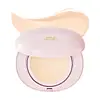
Milk Touch All-Day Skin Fit Milky Glow Cushion Versus Heveblue Pentaberry Panthenol Repair Glow Foundation Cushion

What's inside
What's inside
 Key Ingredients
Benefits
Concerns
Ingredients Side-by-side
Water
Skin ConditioningCI 77891
Cosmetic ColorantAluminum Hydroxide
EmollientTriethoxycaprylylsilane

Homosalate
Skin Conditioning

Cyclopentasiloxane
Emollient
Mentha Aquatica Extract
Tonic1,2-Hexanediol
Skin Conditioning
Butylene Glycol
Humectant
Dimethicone
Emollient
Diphenylsiloxy Phenyl Trimethicone
Skin Conditioning
Alumina
Abrasive
Propanediol
Solvent
Hyaluronic Acid
Humectant

Hydrolyzed Hyaluronic Acid
Humectant
Sodium Hyaluronate
Humectant
Alcohol Denat.
Antimicrobial




Stearic Acid
Cleansing

Phenylbenzimidazole Sulfonic Acid
UV Absorber
Glycerin
Humectant
Lauryl PEG-10 Tris(Trimethylsiloxy)Silylethyl Dimethicone
Emulsifying
Tocopherol
Antioxidant



Propylene Glycol Dibenzoate
Skin ConditioningNiacinamide
Smoothing





Diethylamino Hydroxybenzoyl Hexyl Benzoate
UV Filter
Polymethyl Methacrylate
Vp/Hexadecene Copolymer
Tromethamine
BufferingPortulaca Oleracea Extract
Skin Conditioning
PEG-10 Dimethicone
Skin Conditioning
Magnesium Sulfate
Disteardimonium Hectorite
StabilisingGlyceryl Caprylate
EmollientEthylhexylglycerin
Skin ConditioningCI 77492
Cosmetic ColorantPanthenol
Skin Conditioning
Caprylic/Capric Triglyceride
Masking
Dimer Dilinoleyl Dimer Dilinoleate
EmollientMethyl Hydrogenated Rosinate
Perfuming

C30-45 Alkyldimethylsilyl Polypropylsilsesquioxane
Polysorbate 80
Emulsifying
Trisodium Ethylenediamine Disuccinate
ChelatingHydrogenated Lecithin
Emulsifying
CI 77491
Cosmetic ColorantPyridoxine
Skin ConditioningThiamine Hcl
MaskingAscorbic Acid
Antioxidant
Bioflavonoids
Skin ConditioningBiotin
AntiseborrhoeicCarnitine
Cleansing
Folic Acid
Skin ConditioningNiacin
SmoothingRiboflavin
Cosmetic ColorantTocopheryl Acetate
Antioxidant
Polyglutamic Acid
Skin Conditioning
Hydrolyzed Sodium Hyaluronate
Skin Conditioning
Hydroxypropyltrimonium Hyaluronate
Potassium Hyaluronate
Skin ConditioningSodium Hyaluronate Crosspolymer
Humectant
Pentylene Glycol
Skin Conditioning
Sodium Acetylated Hyaluronate
Humectant
Centella Asiatica Leaf Extract
Skin Conditioning
Hedera Helix Extract
AntimicrobialAdenosine
Skin Conditioning
CI 77499
Cosmetic ColorantGlutathione
Water, CI 77891, Aluminum Hydroxide, Triethoxycaprylylsilane, Homosalate, Cyclopentasiloxane, Mentha Aquatica Extract, 1,2-Hexanediol, Butylene Glycol, Dimethicone, Diphenylsiloxy Phenyl Trimethicone, Alumina, Propanediol, Hyaluronic Acid, Hydrolyzed Hyaluronic Acid, Sodium Hyaluronate, Alcohol Denat., Stearic Acid, Phenylbenzimidazole Sulfonic Acid, Glycerin, Lauryl PEG-10 Tris(Trimethylsiloxy)Silylethyl Dimethicone, Tocopherol, Propylene Glycol Dibenzoate, Niacinamide, Diethylamino Hydroxybenzoyl Hexyl Benzoate, Polymethyl Methacrylate, Vp/Hexadecene Copolymer, Tromethamine, Portulaca Oleracea Extract, PEG-10 Dimethicone, Magnesium Sulfate, Disteardimonium Hectorite, Glyceryl Caprylate, Ethylhexylglycerin, CI 77492, Panthenol, Caprylic/Capric Triglyceride, Dimer Dilinoleyl Dimer Dilinoleate, Methyl Hydrogenated Rosinate, C30-45 Alkyldimethylsilyl Polypropylsilsesquioxane, Polysorbate 80, Trisodium Ethylenediamine Disuccinate, Hydrogenated Lecithin, CI 77491, Pyridoxine, Thiamine Hcl, Ascorbic Acid, Bioflavonoids, Biotin, Carnitine, Folic Acid, Niacin, Riboflavin, Tocopheryl Acetate, Polyglutamic Acid, Hydrolyzed Sodium Hyaluronate, Hydroxypropyltrimonium Hyaluronate, Potassium Hyaluronate, Sodium Hyaluronate Crosspolymer, Pentylene Glycol, Sodium Acetylated Hyaluronate, Centella Asiatica Leaf Extract, Hedera Helix Extract, Adenosine, CI 77499, Glutathione
Houttuynia Cordata Water
MaskingTitanium Dioxide
Cosmetic Colorant
C12-15 Alkyl Benzoate
AntimicrobialCyclopentasiloxane
Emollient
Propanediol
Solvent
Dibutyl Adipate
EmollientDiphenylsiloxy Phenyl Trimethicone
Skin Conditioning
Cyclohexasiloxane
Emollient
Glycerin
Humectant
Niacinamide
Smoothing
Sorbitan Isostearate
Emulsifying
Lauryl PEG-9 Polydimethylsiloxyethyl Dimethicone
Skin Conditioning
Mica
Cosmetic ColorantDimethicone/Vinyl Dimethicone Crosspolymer
Skin Conditioning
Aluminum Stearate
Cosmetic ColorantCetyl PEG/PPG-10/1 Dimethicone
Emulsifying
Magnesium Sulfate
Panthenol
Skin Conditioning
Centella Asiatica Leaf Extract
Skin Conditioning
Ectoin
Skin Conditioning
Camellia Sinensis Leaf Water
Masking
Lactococcus Ferment
Skin ConditioningSchisandra Chinensis Fruit Extract
Skin Conditioning
Vaccinium Macrocarpon Fruit Extract
AstringentFragaria Chiloensis Fruit Extract
Skin Conditioning
Rubus Idaeus Fruit Extract
AstringentVaccinium Angustifolium Fruit Extract
Skin Protecting
Cornus Officinalis Fruit Extract
Skin ConditioningEuterpe Oleracea Fruit Extract
Sambucus Nigra Fruit Extract
AstringentPanax Ginseng Berry Extract
Skin Conditioning
Vaccinium Myrtillus Fruit Extract
Skin ConditioningTocopherol
Antioxidant
Adenosine
Skin Conditioning
Glyceryl Caprylate
EmollientEthylhexylglycerin
Skin ConditioningDisodium EDTA
ChelatingCaprylyl Glycol
Emollient
Triethoxycaprylylsilane
Aluminum Hydroxide
EmollientAmmonium Acryloyldimethyltaurate/Vp Copolymer
CI 77492
Cosmetic ColorantAlumina
Abrasive
Polyhydroxystearic Acid
Emulsifying
1,2-Hexanediol
Skin Conditioning
CI 77491
Cosmetic ColorantCI 77499
Cosmetic ColorantWater
Skin ConditioningHouttuynia Cordata Water, Titanium Dioxide, C12-15 Alkyl Benzoate, Cyclopentasiloxane, Propanediol, Dibutyl Adipate, Diphenylsiloxy Phenyl Trimethicone, Cyclohexasiloxane, Glycerin, Niacinamide, Sorbitan Isostearate, Lauryl PEG-9 Polydimethylsiloxyethyl Dimethicone, Mica, Dimethicone/Vinyl Dimethicone Crosspolymer, Aluminum Stearate, Cetyl PEG/PPG-10/1 Dimethicone, Magnesium Sulfate, Panthenol, Centella Asiatica Leaf Extract, Ectoin, Camellia Sinensis Leaf Water, Lactococcus Ferment, Schisandra Chinensis Fruit Extract, Vaccinium Macrocarpon Fruit Extract, Fragaria Chiloensis Fruit Extract, Rubus Idaeus Fruit Extract, Vaccinium Angustifolium Fruit Extract, Cornus Officinalis Fruit Extract, Euterpe Oleracea Fruit Extract, Sambucus Nigra Fruit Extract, Panax Ginseng Berry Extract, Vaccinium Myrtillus Fruit Extract, Tocopherol, Adenosine, Glyceryl Caprylate, Ethylhexylglycerin, Disodium EDTA, Caprylyl Glycol, Triethoxycaprylylsilane, Aluminum Hydroxide, Ammonium Acryloyldimethyltaurate/Vp Copolymer, CI 77492, Alumina, Polyhydroxystearic Acid, 1,2-Hexanediol, CI 77491, CI 77499, Water
Ingredients Explained
These ingredients are found in both products.
Ingredients higher up in an ingredient list are typically present in a larger amount.
1,2-Hexanediol is a synthetic liquid and another multi-functional powerhouse.
It is a:
- Humectant, drawing moisture into the skin
- Emollient, helping to soften skin
- Solvent, dispersing and stabilizing formulas
- Preservative booster, enhancing the antimicrobial activity of other preservatives
Adenosine is a purine nucleoside that your body already makes in every cell. In skincare, it acts mainly as a skin conditioning and anti-aging agent.
The way it works is fairly well mapped out:
Your skin has cells called fibroblasts that build collagen (the stuff that keeps skin firm and smooth). Adenosine basically flips a switch on these cells that tells them to get to work making more collagen and other proteins. These cells slow down on their own as skin ages, so Adenosine helps give them a little nudge to keep going.
The clinical backing is pretty solid too.
A blind, randomized, placebo-controlled trial of 126 women aged 45-65 tested a 0.1% cream twice daily and found real improvements in crow's feet and frown lines using a precise 3D skin-mapping technique; these changes showed up by week 3 and held at 2 months.
A later study using Adenosine-loaded dissolving microneedle patches reported gains in wrinkle depth, dermal density, elasticity, and hydration.
On concentrations, South Korea's Ministry of Food and Drug Safety has set 0.04% as the approved functional anti-wrinkle level. You'll typically see this ingredient used somewhere in the 0.04-0.1% range since it works at low doses.
This ingredient has been found safe for cosmetics with the data showing no irritation or sensitization.
Overall, this is a great ingredient for any anti-aging routine and has no photosensitizing effect, so it suits both AM and PM use.
Learn more about AdenosineAlumina (aka aluminum oxide) is an inorganic mineral powder refined from bauxite that works as a quiet workhorse in a formula.
It shows up often as an abrasive, absorbent, anticaking, bulking, and viscosity-controlling agent.
One of its most common jobs is acting as a pigment carrier and dispersant.
Alumina platelets are often blended with inorganic sunscreens like Titanium Dioxide (or with colorants) and then coated with a silicone such as Triethoxycaprylylsilane so the pigment spreads evenly and smoothly.
In makeup, it can also double as a light-diffusing powder or oil absorber to keep formulas from looking greasy.
The Cosmetic Ingredient Review Expert Panel has concluded alumina to be safe in present practices of use and concentration.
They note it's a stable, oxidized compound and scientific research has failed to establish links to health issues.
Concentrations vary depending on the product:
Learn more about AluminaAluminum Hydroxide is a form of aluminum. It can be naturally found in nature as the mineral gibbsite. In cosmetics, Aluminum Hydroxide is used as a colorant, pH adjuster, and absorbent.
As a colorant, Aluminum Hydroxide may add opacity, or reduce the transparency. Aluminum hydroxide is contains both basic and acidic properties.
According to manufacturers, this ingredient is an emollient and humectant. This means it helps hydrate the skin.
In medicine, this ingredient is used to help relieve heartburn and help heal ulcers.
There is currently no credible scientific evidence linking aluminum hydroxide in cosmetics to increased cancer risk.
Major health organizations allow the use of aluminum hydroxide in personal care products and have not flagged it as a carcinogenic risk at typical usage levels.
Learn more about Aluminum HydroxideCentella Asiatica Leaf Extract comes from the leaves of an herb plant native to Southeast Asia. Centella Asiatica is rich in antioxidants and amino acids. It can help reduce irritation and soothe the skin.
Many active components found in centella asiatica, such as Madecassic Acid and Asiaticoside, encourage the skin to naturally produce hyaluronic acid. This helps keep our skin hydrated. Many of these components also show antioxidant activity and may help reduce the signs of aging.
Research shows centella asiatica can help increase Type I collagen production by increasing fibroblast production. Fibroblast helps form connective tissue.
The combination of all these properties makes centella asiatica leaf extract effective at soothing the skin.
Other components of centella asiatica leaf extract include Vitamin A, vitamin C, several B vitamins, and Asiatic Acid.
Recent studies found madecassoside may help prevent damage from UV rays by preventing UV-induced inflammation. Further research is needed.
This plant has been used as a medicine and in food for many centuries. As a medicine, it is used to treat burns, scratches, and wounds.
Learn more about Centella Asiatica Leaf ExtractCi 77491 is also hydrated iron III oxide. It's sole purpose is to give a red/pink hue to products.
Iron III oxides are classified as inorganic chemicals for coloring.
Synthetically created Ci 77491 is considered safer than those naturally found. This is because the synthetically created version may contain less impurities. Iron oxides are generally non-toxic and non-allergenic.
Learn more about CI 77491CI 77492 is also hydrated iron III oxide. It's sole purpose is to give a yellow hue to products.
Iron III oxides are classified as inorganic chemicals for coloring.
Synthetically created CI 77492 is considered safer than those naturally found. This is because the synthetically created version may contain less impurities. Iron oxides are generally non-toxic and non-allergenic.
Learn more about CI 77492Ci 77499 is also hydrated iron III oxide. It is created from mixing red and black iron oxides. This helps give shades of darkness to a product.
Iron III oxides are classified as inorganic chemicals for coloring.
Cyclopentasiloxane (D5) is a lightweight silicone that mostly acts as an emollient and solvent in cosmetics. Its the reason your products feel silky, fast-spreading, and non-greasy.
Since D5 is volatile, it does its thing and then evaporates off the skin quickly.
The safety profile of this ingredient is reassuring; the US CIR Expert Panel concluded D5 is safe as used in cosmetics and Health Canada concluded that D5 is not harmful to human health or the environment as currently used in cosmetics
There's a study that people mention about D5 in a rat study showing tumors. This study is related to long-term inhalation of high D5 levels.
Regulatory bodies have judged this study to be not applicable in topical skincare since skin absorption of D5 is very low and we're not really inhaling huge amounts of D5.
The only restriction for this ingredient is environmental. The European Chemicals Agency (ECHA) restricted D5 in wash-off cosmetics at or above 0.1% due to their persistence in water.
Learn more about CyclopentasiloxaneDiphenylsiloxy Phenyl Trimethicone is a silicone. It has a high refractive index and adds shine to formulations.
According to the safety review by the Cosmetic Ingredient Review (CIR) Expert Panel, it is safe for use in cosmetics under the current practices and concentrations.
Ethylhexylglycerin is created from glycerin. It is a multitasker ingredient that:
The CIR Expert Panel found minimal skin absorption or sensitization of any kind in a safety assessment. Though this ingredient is considered well-tolerated, a small number of cases of allergic dermatitis have been published since 2002. Just be sure to patch test if you are unsure.
Industry-reported use ranges from 8% in rinse-off products and 2% in leave-on formulations.
Learn more about EthylhexylglycerinGlycerin (or glycerol) is a compound naturally found in your skin. It's a powerhouse humectant that pulls water into the stratum corneum.
Topically, glycerin does several things at once:
Your skin makes glycerin on its own (mostly from sebaceous oil breakdown) and shuttles it to your outermost layer of skin, or your epidermis, via aquaporin-3.
Aquaporin-3 is a transporter that is essential for normal skin hydration, elasticity, and repair. Interestingly, mice lacking in AQP3 have dry and less elastic skin that can be fully corrected with glycerin.
This ingredient is non-irritating, plays well with almost every ingredient, and works across all skin types. Typical use is anywhere between 3-10% but can go up to 79% in some leave-on products.
Just know very high concentrations (>40%) can feel tacky in low humidity.
Glycerin is the name for this ingredient in American English. British English uses Glycerol/Glycerine.
Learn more about GlycerinGlyceryl Caprylate comes from glycerin and caprylic acid. It is an emollient, co-emulsifier, and preservative booster.
Its short C8 fatty acid chain makes it behave differently from its longer-chain emollient cousins like Glyceryl Stearate. It feels more lightweight, fast-absorbing, and silky instead of rich and waxy.
As a co-emulsifier, its "head" and "tail" sit at the oil-water interface. But overall, the short C8 tail and not being water soluble means it doesn't really have the muscle to emulsify a formula on its own. That's why you'll often see it paired with a primary emulsifier like Cetearyl Glucoside.
Interestingly, Glyceryl Caprylate acts as a preservative booster. This is because its fatty-acid backbone disrupts microbial lipid membranes. It shows excellent activity against bacteria and yeast but is weaker against mold.
Typical concentrations range from 0.5-1% and this ingredient is generally non-irritating.
Because this ingredient has a C8 fatty acid chain, it is outside the range that the Malassezia yeast metabolizes (making it fungal acne safe).
Learn more about Glyceryl CaprylateMagnesium Sulfate is a salt. More specifically, it is an epsom salt, or the bath salt used to help relieve muscle aches.
Despite having ‘sulfate’ in the name, it isn’t a surfactant or cleansing agent like sodium lauryl sulfate. Unlike those sulfates, magnesium sulfate doesn’t have the same cleansing or foaming properties (it's simply a type of salt).
In cosmetics, Magnesium Sulfate is used to thicken a product or help dilute other solids. It is a non-reactive and non-irritating ingredient.
One study shows magnesium deficiency may lead to inflammation of the skin. Applying magnesium topically may help reduce inflammation.
You can find this ingredient in sea water or mineral deposits.
Learn more about Magnesium SulfateNiacinamide is a multitasking form of vitamin B3 that strengthens the skin barrier, reduces pores and dark spots, regulates oil, and improves signs of aging.
And the best part? It's gentle and well-tolerated by most skin types, including sensitive and reactive skin.
You might have heard of "niacin flush", or the reddening of skin that causes itchiness. Niacinamide has not been found to cause this.
In very rare cases, some individuals may not be able to tolerate niacinamide at all or experience an allergic reaction to it.
If you are experiencing flaking, irritation, and dryness with this ingredient, be sure to double check all your products as this ingredient can be found in all categories of skincare.
When incorporating niacinamide into your routine, look out for concentration amounts. Typically, 5% niacinamide provides benefits such as fading dark spots. However, if you have sensitive skin, it is better to begin with a smaller concentration.
When you apply niacinamide to your skin, your body converts it into nicotinamide adenine dinucleotide (NAD). NAD is an essential coenzyme that is already found in your cells as "fuel" and powers countless biological processes.
In your skin, NAD helps repair cell damage, produce new healthy cells, support collagen production, strengthen the skin barrier, and fight environmental stressors (like UV and pollution).
Our natural NAD levels start to decline with age, leading to slower skin repair, visible aging, and a weaker skin barrier. By providing your skin niacinamide, you're recharging your skin's NAD levels. This leads to stronger, healthier, and younger looking skin.
Another name for vitamin B3 is nicotinamide. This vitamin is water-soluble and our bodies don't store it. We obtain Vitamin B3 from either food or skincare. Meat, fish, wheat, yeast, and leafy greens contain vitamin B3.
The type of niacinamide used in skincare is synthetically created.
Learn more about NiacinamidePanthenol is a common ingredient that helps hydrate and soothe the skin. It is found naturally in our skin and hair.
There are two forms of panthenol: D and L.
D-panthenol is also known as dexpanthenol. Most cosmetics use dexpanthenol or a mixture of D and L-panthenol.
Panthenol is famous due to its ability to go deeper into the skin's layers. Using this ingredient has numerous pros (and no cons):
Like hyaluronic acid, panthenol is a humectant. Humectants are able to bind and hold large amounts of water to keep skin hydrated.
This ingredient works well for wound healing. It works by increasing tissue in the wound and helps close open wounds.
Once oxidized, panthenol converts to pantothenic acid. Panthothenic acid is found in all living cells.
This ingredient is also referred to as pro-vitamin B5.
Learn more about PanthenolPropanediol is an all-star ingredient. It softens, hydrates, and smooths the skin.
It’s often used to:
Propanediol is not likely to cause sensitivity and considered safe to use. It is derived from corn or petroleum with a clear color and no scent.
Learn more about PropanediolTocopherol is a fat-soluble antioxidant known as Vitamin E.
You'll find this ingredient in the vast majority of skincare (for good reason). It works to neutralize free radicals, or unstable molecules generated by UV exposure, pollution, and other environmental stressors, before they can cause oxidative damage to your skin cells.
Topically applied tocopherol has been shown to protect against UV damage by ramping up the skin's own natural defense enzymes.
It also acts as a skin conditioning agent; some studies show that regular topical use can improve the skin's water-binding capacity over 2-4 weeks.
This ingredient is especially loved for being a team player. When combined with Vitamin C, the photoprotective effect of both ingredients roughly doubles and the combo also helps reduce UV-induced DNA damage.
This ingredient has some brightening potential but it's more of a prevention ingredient than spot-fader. Cell studies show it can slow down melanin production but it's worth noting that it's not the most powerful brightener out there.
In formulations, it also serves as a stabilizer that helps protect other oxidation-prone ingredients from degrading.
Concentrations usually range from 0.1-1% in most leave-on products.
Learn more about TocopherolTriethoxycaprylylsilane is a silicon-based surface modifier that makes sunscreens feel silky and makeup stay put.
Its main job is to coat mineral particles like titanium dioxide, zinc oxide, and color pigments in a thin, oily layer so they spread smoothly, don't clump, and stick to skin better.
This ingredient is typically used at low levels (up to 2.5% in eyeshadow and 1% in lipstick).
Learn more about TriethoxycaprylylsilaneWater. It's the most common cosmetic ingredient of all. You'll usually see it at the top of ingredient lists, meaning that it makes up the largest part of the product.
So why is it so popular? Water most often acts as a solvent - this means that it helps dissolve other ingredients into the formulation.
You'll also recognize water as that liquid we all need to stay alive. If you see this, drink a glass of water. Remember to stay hydrated!
Learn more about Water

