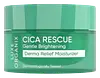
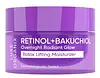
Luxe Organix Cica Rescue Gentle Brightening Derma Relief Moisturizer Versus Luxe Organix Retinol + Bakuchiol Overnight Radiant Glow Botox Lifting Moisturizer
This calming moisturizer is formulated around Centella Asiatica Leaf Water and Niacinamide to calm redness and strengthen the skin barrier.
This anti-aging night moisturizer is formulated around Bakuchiol and Retinyl Palmitate to soften the look of wrinkles and brighten dull-looking skin.

What's inside
What's inside
 Key Ingredients
Benefits
Concerns
Ingredients Side-by-side
Water
Skin ConditioningCentella Asiatica Leaf Water
Skin Conditioning


Caprylic/Capric Triglyceride
Masking

Glycerin
Humectant
Butylene Glycol
Humectant
Niacinamide
Smoothing







Dimethicone
Emollient
Polysorbate 60
Emulsifying

Propanediol
Solvent
Glyceryl Stearate
Emollient
Glyceryl Stearate Se
Emulsifying


PEG-100 Stearate
Surfactant
Polyacrylate-13
Arginine
Masking
Carbomer
Emulsion StabilisingPolyisobutene
Caprylyl Glycol
Emollient
Octyldodecanol
Emollient
Pentylene Glycol
Skin Conditioning
Polysorbate 20
Emulsifying
1,2-Hexanediol
Skin Conditioning
Hydrogenated Lecithin
Emulsifying
Ceramide NP
Skin Conditioning
Ethylhexylglycerin
Skin ConditioningAdenosine
Skin Conditioning
Disodium EDTA
ChelatingXanthan Gum
EmulsifyingCeramide Ns
Skin Conditioning
Ceramide As
Skin Conditioning
Ceramide EOP
Skin Conditioning
Ceramide AP
Skin Conditioning
Adansonia Digitata Seed Oil
Emollient
Centella Asiatica Extract
Cleansing
Sodium Hyaluronate
Humectant
Tocopherol
Antioxidant

Propolis Extract
Skin Conditioning
Asiaticoside
Antioxidant
Madecassic Acid
Skin Conditioning
Asiatic Acid
Skin Conditioning
Madecassoside
Antioxidant
Water, Centella Asiatica Leaf Water, Caprylic/Capric Triglyceride, Glycerin, Butylene Glycol, Niacinamide, Dimethicone, Polysorbate 60, Propanediol, Glyceryl Stearate, Glyceryl Stearate Se, PEG-100 Stearate, Polyacrylate-13, Arginine, Carbomer, Polyisobutene, Caprylyl Glycol, Octyldodecanol, Pentylene Glycol, Polysorbate 20, 1,2-Hexanediol, Hydrogenated Lecithin, Ceramide NP, Ethylhexylglycerin, Adenosine, Disodium EDTA, Xanthan Gum, Ceramide Ns, Ceramide As, Ceramide EOP, Ceramide AP, Adansonia Digitata Seed Oil, Centella Asiatica Extract, Sodium Hyaluronate, Tocopherol, Propolis Extract, Asiaticoside, Madecassic Acid, Asiatic Acid, Madecassoside
Water
Skin ConditioningCetearyl Alcohol
Emollient
Cetyl Ethylhexanoate
EmollientGlycerin
Humectant
Butylene Glycol Oleate
EmollientPropanediol
Solvent
Sorbitan Olivate
Emulsifying
1,2-Hexanediol
Skin Conditioning
Dimethicone
Emollient
Betaine
Humectant
Polyglyceryl-3 Methylglucose Distearate
Emulsifying
Arginine
Masking
Carbomer
Emulsion StabilisingAllantoin
Skin Conditioning
Panthenol
Skin Conditioning
Xanthan Gum
EmulsifyingSodium Hyaluronate
Humectant
Olea Europaea Fruit Oil
Masking
Simmondsia Chinensis Seed Oil
Emollient
Persea Gratissima Oil
Skin Conditioning
Vegetable Oil
Skin Conditioning
Bakuchiol
Antimicrobial
Retinyl Palmitate
Skin Conditioning
Retinol
Skin Conditioning
Arachis Hypogaea Oil
Skin Conditioning
Ascorbyl Glucoside
Antioxidant
Ascorbic Acid
Antioxidant
Tocopherol
Antioxidant
Polyglyceryl-10 Laurate
Skin Conditioning
Palmitoyl Tripeptide-1
Skin Conditioning
Copper Tripeptide-1
Skin Conditioning
Olea Europaea Leaf Extract
Perfuming
Zinc PCA
Humectant
Caprylyl Glycol
Emollient
Ethylhexylglycerin
Skin ConditioningDisodium EDTA
ChelatingPolysorbate 20
Emulsifying
BHT
Antioxidant
BHA
Antioxidant
Water, Cetearyl Alcohol, Cetyl Ethylhexanoate, Glycerin, Butylene Glycol Oleate, Propanediol, Sorbitan Olivate, 1,2-Hexanediol, Dimethicone, Betaine, Polyglyceryl-3 Methylglucose Distearate, Arginine, Carbomer, Allantoin, Panthenol, Xanthan Gum, Sodium Hyaluronate, Olea Europaea Fruit Oil, Simmondsia Chinensis Seed Oil, Persea Gratissima Oil, Vegetable Oil, Bakuchiol, Retinyl Palmitate, Retinol, Arachis Hypogaea Oil, Ascorbyl Glucoside, Ascorbic Acid, Tocopherol, Polyglyceryl-10 Laurate, Palmitoyl Tripeptide-1, Copper Tripeptide-1, Olea Europaea Leaf Extract, Zinc PCA, Caprylyl Glycol, Ethylhexylglycerin, Disodium EDTA, Polysorbate 20, BHT, BHA
Reviews
Ingredients Explained
These ingredients are found in both products.
Ingredients higher up in an ingredient list are typically present in a larger amount.
1,2-Hexanediol is a synthetic liquid and another multi-functional powerhouse.
It is a:
- Humectant, drawing moisture into the skin
- Emollient, helping to soften skin
- Solvent, dispersing and stabilizing formulas
- Preservative booster, enhancing the antimicrobial activity of other preservatives
Arginine is a semi-essential amino acid. This just means our bodies can product a bit on its own, but sometimes needs a little boost from food sources.
It is a part of your skin's natural moisturizing factor (NMF), or the water-loving molecules in your outermost layer of skin (stratum corneum) that keeps everything hydrated and happy.
Here's an interesting thing about Arginine: your skin converts it into urea through the Krebs-Henseleit urea cycle. Urea is one of the most effective humectants your skin naturally produces.
A clinical study showed applying 2.5% arginine hydrochloride to atopic dermatitis skin showed significant urea levels in the stratum corneum and improved moisture in just four weeks.
Arginine is also a precursor to nitric oxide; nitric oxide improves microcirculation and supports wound healing and collagen synthesis.
One study found that an amino acid complex containing Arginine reduced skin irritation, improved hydration, and accelerated skin repair in clinical / in-vivo studies.
Arginine itself is an amino acid and not a fatty acid, oil, or ester. On its own, it's not a direct food source for Malassezia, or the yeast that causes fungal acne.
Learn more about ArginineCaprylyl Glycol is a humectant, skin conditioner, emollient, and preservative booster derived from either caprylic acid or synthetically created.
Typical use levels vary from 0.3-1% as a preservative booster and go up to 2% to condition skin.
Because it is not a free-fatty acid, this ingredient is fungal acne safe (there's nothing for Malassezia to feed on).
Learn more about Caprylyl GlycolCarbomer is a synthetic thickening and gelling agent. It's basically the ingredient that gives a lot of serums, gels, creams, and sunscreens their smooth, non-sticky texture.
Although legally permitted at very high levels, carbomers are normally used at concentrations below 1%.
It also needs to be neutralized to actually thicken, and because it is a large molecule, it doesn't really penetrate the skin barrier.
Allergy-wise, the risk is very low. Clinical studies show carbomers have low potential for skin irritation/sensitization even at concentrations up to 100%.
A 2024 UK study patch-tested 1,302 patients and found true allergy to the parent group of carbomer to be rare with no confirmed relevant reactions.
Learn more about CarbomerDimethicone is a type of synthetic silicone created from natural materials such as quartz. It is also known as polydimethylsiloxane.
What it does:
Dimethicone comes in different viscosities:
Depending on the viscosity, dimethicone has different properties.
Ingredients lists don't always show which type is used, so we recommend reaching out to the brand if you have questions about the viscosity.
This ingredient is unlikely to cause irritation because it does not get absorbed into skin. However, people with silicone allergies should be careful about using this ingredient.
Note: Dimethicone may contribute to pilling. This is because it is not oil or water soluble, so pilling may occur when layered with products. When mixed with heavy oils in a formula, the outcome is also quite greasy.
Learn more about DimethiconeDisodium EDTA is a chelating agent. It grabs onto and deactivates metal ions that sneak into your products from water, packaging, or air.
This ingredient mainly works behind the scenes and helps with:
On top of that, this ingredient can counteract the effects of hard water by binding to the minerals in it.
One thing worth knowing is that Disodium EDTA has been shown to be a mild penetration enhancer. It can help other ingredients absorb into skin more effectively which can be a double-edged sword (great for actives, but can also make the active too strong if you have sensitive skin).
Clinical patch testing showed no significant skin irritation at typical use concentrations and minimal dermal absorption.
You'll most likely see this ingredient near the end of an ingredient list. It's typically found in concentrations less than 1%.
Learn more about Disodium EDTAEthylhexylglycerin is created from glycerin. It is a multitasker ingredient that:
The CIR Expert Panel found minimal skin absorption or sensitization of any kind in a safety assessment. Though this ingredient is considered well-tolerated, a small number of cases of allergic dermatitis have been published since 2002. Just be sure to patch test if you are unsure.
Industry-reported use ranges from 8% in rinse-off products and 2% in leave-on formulations.
Learn more about EthylhexylglycerinGlycerin (or glycerol) is a compound naturally found in your skin. It's a powerhouse humectant that pulls water into the stratum corneum.
Topically, glycerin does several things at once:
Your skin makes glycerin on its own (mostly from sebaceous oil breakdown) and shuttles it to your outermost layer of skin, or your epidermis, via aquaporin-3.
Aquaporin-3 is a transporter that is essential for normal skin hydration, elasticity, and repair. Interestingly, mice lacking in AQP3 have dry and less elastic skin that can be fully corrected with glycerin.
This ingredient is non-irritating, plays well with almost every ingredient, and works across all skin types. Typical use is anywhere between 3-10% but can go up to 79% in some leave-on products.
Just know very high concentrations (>40%) can feel tacky in low humidity.
Glycerin is the name for this ingredient in American English. British English uses Glycerol/Glycerine.
Learn more about GlycerinPolysorbate 20 is a gentle, water-soluble emulsifier and mild surfactant. It stops oil and water from separating to keep your formulas blended and stable.
It also acts as a mild penetration enhancer by helping active ingredients absorb slightly better.
The common safety discussion around this ingredient involves a manufacturing byproduct called 1,4-dioxane.
Trace amounts can form during production but the EU's Scientific Committee on Consumer Safety has concluded that levels at/below 10 ppm in finished products are safe (commercial products consistently fall within acceptable margins).
True allergic reactions are uncommon and the CIR Expert Panel has confirmed this ingredient to be safe as used in cosmetics.
Because it is derived from lauric acid, it may not be fungal acne safe.
Learn more about Polysorbate 20Propanediol is an all-star ingredient. It softens, hydrates, and smooths the skin.
It’s often used to:
Propanediol is not likely to cause sensitivity and considered safe to use. It is derived from corn or petroleum with a clear color and no scent.
Learn more about PropanediolSodium Hyaluronate is the salt form of hyaluronic acid. It is a long sugar chain that is naturally found in your skin, joints, and connective tissue that maintains hydration and elasticity.
In skincare, it works as a humectant. It pulls water from the environment and deeper layers of skin and binds it to the surface.
Interestingly, the size of the molecule affects its behavior:
Some clinical evidence links low molecular weight versions to improved wrinkle depth, elasticity, anti-inflammatory effects, and barrier repair.
Many serums use a blend of both weights so you can get surface hydration plus longer-lasting and deeper effects.
You'll typically see concentrations between 0.1-2% for this ingredient.
Learn more about Sodium HyaluronateTocopherol is a fat-soluble antioxidant known as Vitamin E.
You'll find this ingredient in the vast majority of skincare (for good reason). It works to neutralize free radicals, or unstable molecules generated by UV exposure, pollution, and other environmental stressors, before they can cause oxidative damage to your skin cells.
Topically applied tocopherol has been shown to protect against UV damage by ramping up the skin's own natural defense enzymes.
It also acts as a skin conditioning agent; some studies show that regular topical use can improve the skin's water-binding capacity over 2-4 weeks.
This ingredient is especially loved for being a team player. When combined with Vitamin C, the photoprotective effect of both ingredients roughly doubles and the combo also helps reduce UV-induced DNA damage.
This ingredient has some brightening potential but it's more of a prevention ingredient than spot-fader. Cell studies show it can slow down melanin production but it's worth noting that it's not the most powerful brightener out there.
In formulations, it also serves as a stabilizer that helps protect other oxidation-prone ingredients from degrading.
Concentrations usually range from 0.1-1% in most leave-on products.
Learn more about TocopherolWater. It's the most common cosmetic ingredient of all. You'll usually see it at the top of ingredient lists, meaning that it makes up the largest part of the product.
So why is it so popular? Water most often acts as a solvent - this means that it helps dissolve other ingredients into the formulation.
You'll also recognize water as that liquid we all need to stay alive. If you see this, drink a glass of water. Remember to stay hydrated!
Learn more about WaterXanthan gum is used as a stabilizer and thickener within cosmetic products. It helps give products a sticky, thick feeling - preventing them from being too runny.
On the technical side of things, xanthan gum is a polysaccharide - a combination consisting of multiple sugar molecules bonded together.
Xanthan gum is a pretty common and great ingredient. It is a natural, non-toxic, non-irritating ingredient that is also commonly used in food products.
Learn more about Xanthan Gum

