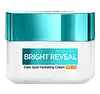
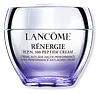
L'Oreal Bright Reveal Dark Spot Hydrating Cream SPF 50 Versus Lancôme Rénergie H.P.N. 300-Peptide Cream
This chemical sunscreen covers the full UV range and blocks ~98% of UVB at SPF 50.
This anti-aging moisturizer is formulated around Niacinamide and Adenosine to soften the look of wrinkles and refine skin texture.

What's inside
What's inside
 Key Ingredients
Benefits
Concerns
Ingredients Side-by-side
Water
Skin ConditioningDiisopropyl Sebacate
EmollientDiisopropyl Adipate
EmollientSilica
Abrasive


Bis-Ethylhexyloxyphenol Methoxyphenyl Triazine
UV Absorber
Ethylhexyl Triazone
UV Absorber
Propylene Glycol
Humectant


Butyl Methoxydibenzoylmethane
UV Absorber
Alcohol Denat.
Antimicrobial


C12-15 Alkyl Benzoate
AntimicrobialNiacinamide
Smoothing









Aluminum Starch Octenylsuccinate
Absorbent
Dipropylene Glycol
HumectantStearic Acid
Cleansing

Potassium Cetyl Phosphate
EmulsifyingMethoxypropylamino Cyclohexenylidene Ethoxyethylcyanoacetate
Stabilising
Oryza Sativa Cera
Skin ConditioningOryza Sativa Bran Wax
Skin Conditioning
CI 16035
Cosmetic ColorantTocopherol
Antioxidant

Sodium Cocoyl Sarcosinate
Cleansing
Sodium Polyacrylate
Absorbent
Sodium Chloride
MaskingPhenoxyethanol
Preservative
Phenylethyl Resorcinol
Antioxidant
PEG-100 Stearate
Surfactant
Triethanolamine
BufferingTrisodium Ethylenediamine Disuccinate
ChelatingPalmitic Acid
Emollient
Pentaerythrityl Tetra-Di-T-Butyl Hydroxyhydrocinnamate
Antioxidant
Xanthan Gum
EmulsifyingDrometrizole Trisiloxane
UV Absorber
Acrylates/C10-30 Alkyl Acrylate Crosspolymer
Emulsion StabilisingMyristic Acid
Cleansing
Glyceryl Stearate
Emollient
Parfum
Masking

Water, Diisopropyl Sebacate, Diisopropyl Adipate, Silica, Bis-Ethylhexyloxyphenol Methoxyphenyl Triazine, Ethylhexyl Triazone, Propylene Glycol, Butyl Methoxydibenzoylmethane, Alcohol Denat., C12-15 Alkyl Benzoate, Niacinamide, Aluminum Starch Octenylsuccinate, Dipropylene Glycol, Stearic Acid, Potassium Cetyl Phosphate, Methoxypropylamino Cyclohexenylidene Ethoxyethylcyanoacetate, Oryza Sativa Cera, Oryza Sativa Bran Wax, CI 16035, Tocopherol, Sodium Cocoyl Sarcosinate, Sodium Polyacrylate, Sodium Chloride, Phenoxyethanol, Phenylethyl Resorcinol, PEG-100 Stearate, Triethanolamine, Trisodium Ethylenediamine Disuccinate, Palmitic Acid, Pentaerythrityl Tetra-Di-T-Butyl Hydroxyhydrocinnamate, Xanthan Gum, Drometrizole Trisiloxane, Acrylates/C10-30 Alkyl Acrylate Crosspolymer, Myristic Acid, Glyceryl Stearate, Parfum
Water
Skin ConditioningGlycerin
Humectant
Dimethicone
Emollient
Cetearyl Alcohol
Emollient
Theobroma Grandiflorum Seed Butter
Skin Conditioning
Alcohol Denat.
Antimicrobial
Cetearyl Isononanoate
Emollient
Niacinamide
Smoothing
Glyceryl Stearate
Emollient
PEG-100 Stearate
Surfactant
Isopropyl Palmitate
Emollient
Octyldodecanol
Emollient
Cyclodextrin
AbsorbentHydrolyzed Lupine Protein
Skin ConditioningPisum Sativum Extract
Skin ConditioningAdenosine
Skin Conditioning
Capryloyl Salicylic Acid
Exfoliating
Hydrolyzed Hyaluronic Acid
Humectant
Hydrolyzed Linseed Extract
Skin ConditioningPentaerythrityl Tetra-Di-T-Butyl Hydroxyhydrocinnamate
Antioxidant
Trisodium Ethylenediamine Disuccinate
ChelatingTocopheryl Acetate
Antioxidant
Cera Alba
Emollient
Orbignya Oleifera Seed Oil
Emollient
Simmondsia Chinensis Butter
Skin Conditioning
Cetearyl Glucoside
Emulsifying
Citric Acid
Buffering
Hydroxyethyl Acrylate/Sodium Acryloyldimethyl Taurate Copolymer
Emulsion StabilisingPolysorbate 60
Emulsifying
Potassium Cetyl Phosphate
EmulsifyingSorbitan Isostearate
Emulsifying
Tocopherol
Antioxidant
Dimethicone/Polyglycerin-3 Crosspolymer
Cleansing
Benzyl Alcohol
Perfuming
Geraniol
Perfuming
Limonene
Perfuming
Chlorphenesin
Antimicrobial
Dipropylene Glycol
HumectantPhenoxyethanol
Preservative
Sodium Benzoate
Masking
Parfum
Masking
Water, Glycerin, Dimethicone, Cetearyl Alcohol, Theobroma Grandiflorum Seed Butter, Alcohol Denat., Cetearyl Isononanoate, Niacinamide, Glyceryl Stearate, PEG-100 Stearate, Isopropyl Palmitate, Octyldodecanol, Cyclodextrin, Hydrolyzed Lupine Protein, Pisum Sativum Extract, Adenosine, Capryloyl Salicylic Acid, Hydrolyzed Hyaluronic Acid, Hydrolyzed Linseed Extract, Pentaerythrityl Tetra-Di-T-Butyl Hydroxyhydrocinnamate, Trisodium Ethylenediamine Disuccinate, Tocopheryl Acetate, Cera Alba, Orbignya Oleifera Seed Oil, Simmondsia Chinensis Butter, Cetearyl Glucoside, Citric Acid, Hydroxyethyl Acrylate/Sodium Acryloyldimethyl Taurate Copolymer, Polysorbate 60, Potassium Cetyl Phosphate, Sorbitan Isostearate, Tocopherol, Dimethicone/Polyglycerin-3 Crosspolymer, Benzyl Alcohol, Geraniol, Limonene, Chlorphenesin, Dipropylene Glycol, Phenoxyethanol, Sodium Benzoate, Parfum
Reviews
Ingredients Explained
These ingredients are found in both products.
Ingredients higher up in an ingredient list are typically present in a larger amount.
Alcohol Denat. is an alcohol with a denaturant property. It is created by mixing ethanol with other additives.
The "denat" part just means "denatured"; common denaturants include Denatonium Benzoate, t-butyl alcohol, and Diethyl Phthalate. This step makes the alcohol undrinkable (and lets brand skip taxes related to beverage alcohol).
This ingredient gets a bad rep because it is irritating and drying due to its astringent property. Astringents draw out natural oils in tissue to constrict pores and dry out your skin.
However, alcohol denat. is not all that bad.
Due to its low molecular weight, alcohol denat. tends to evaporate quickly. One study on pig skin found half of applied alcohol evaporated in 10 seconds and less than 3% stayed on skin.
This also helps other ingredients become better absorbed upon application.
Studies are conflicted about whether this ingredient causes skin dehydration. One study from 2005 found adding emollients to propanol-based sanitizer decreased skin dryness and irritation. Another study found irritation only occurs if your skin is already damaged.
Small amounts of alcohol are generally tolerated by oily skin or people who live in humid environments.
The rule of thumb is this ingredient will probably not affect your skin much if it is near the end of an ingredients list.
One thing to note:
People with ALDH2 (aldehyde dehydrogenase 2) deficiency may experience skin irritation from continued alcohol use. About 8% of the world's population have this deficiency.
The Cosmetic Ingredient Review Expert Panel has determined denatured alcohols to be safe for use in concentrations between 0.05% and 12% (depending on which denaturant is used).
Also...
This ingredient has antimicrobial and solvent properties.
The antimicrobial property helps preserve products and increase their shelf life. As a solvent, it helps dissolve other ingredients.
Look for formulas that contain glycerin, hyaluronic acid, or panthenol if you want to offset any drying effect.
This ingredient will trip away your skin's natural oils/lipids that help it lock in moisture. This can worsen dryness, trigger eczema flare-ups, and aggravate rosacea.
Be sure to patch test any product with this ingredient if you have dry or sensitive skin, eczema, or rosacea.
Learn more about Alcohol Denat.Dipropylene Glycol is a synthetically created humectant, stabilizer, and solvent.
This ingredient helps:
Dipropylene glycol is technically an alcohol, but it belongs to the glycol family (often considered part of the ‘good’ alcohols). This means it is hydrating and gentle on skin unlike drying solvent alcohols like denatured alcohol.
As a masking agent, Dipropylene Glycol can be used to cover the smell of other ingredients. However, it does not have a scent.
Studies show Dipropylene Glycol is considered safe to use in skincare.
Learn more about Dipropylene GlycolGlyceryl Stearate is made by reacting glycerin with stearic acid (typically sourced from plant oils like palm or coconut). It's an emulsifier, emollient, and mild occlusive.
Emulsifiers help ingredients like oil and water stay mixed so your formula stays nicely blended and uniform in texture.
This ingredient is typically used in concentrations between 1-10%. Studies have found it to be non-sensitizing, non-phototoxic, and non-photoallergenic.
A close cousin of this ingredient is Glyceryl Stearate SE ("self-emulsifying"). This just has a small amount of sodium or potassium stearate added so it can emulsify without a co-emulsifier.
Since this ingredient is an ester of a C18 fatty acid, it may not be fungal acne safe. The Malassezia yeast can potentially metabolize within the C11-C24 range.
Fun fact: The human body also creates Glyceryl Stearate naturally.
Learn more about Glyceryl StearateNiacinamide is a multitasking form of vitamin B3 that strengthens the skin barrier, reduces pores and dark spots, regulates oil, and improves signs of aging.
And the best part? It's gentle and well-tolerated by most skin types, including sensitive and reactive skin.
You might have heard of "niacin flush", or the reddening of skin that causes itchiness. Niacinamide has not been found to cause this.
In very rare cases, some individuals may not be able to tolerate niacinamide at all or experience an allergic reaction to it.
If you are experiencing flaking, irritation, and dryness with this ingredient, be sure to double check all your products as this ingredient can be found in all categories of skincare.
When incorporating niacinamide into your routine, look out for concentration amounts. Typically, 5% niacinamide provides benefits such as fading dark spots. However, if you have sensitive skin, it is better to begin with a smaller concentration.
When you apply niacinamide to your skin, your body converts it into nicotinamide adenine dinucleotide (NAD). NAD is an essential coenzyme that is already found in your cells as "fuel" and powers countless biological processes.
In your skin, NAD helps repair cell damage, produce new healthy cells, support collagen production, strengthen the skin barrier, and fight environmental stressors (like UV and pollution).
Our natural NAD levels start to decline with age, leading to slower skin repair, visible aging, and a weaker skin barrier. By providing your skin niacinamide, you're recharging your skin's NAD levels. This leads to stronger, healthier, and younger looking skin.
Another name for vitamin B3 is nicotinamide. This vitamin is water-soluble and our bodies don't store it. We obtain Vitamin B3 from either food or skincare. Meat, fish, wheat, yeast, and leafy greens contain vitamin B3.
The type of niacinamide used in skincare is synthetically created.
Learn more about NiacinamideParfum is a catch-all term for an ingredient or more that is used to give a scent to products.
Also called "fragrance", this ingredient can be a blend of hundreds of chemicals or plant oils. This means every product with "fragrance" or "parfum" in the ingredients list is a different mixture.
For instance, Habanolide is a proprietary trade name for a specific aroma chemical. When used as a fragrance ingredient in cosmetics, most aroma chemicals fall under the broad labeling category of “FRAGRANCE” or “PARFUM” according to EU and US regulations.
The term 'parfum' or 'fragrance' is not regulated in many countries. In many cases, it is up to the brand to define this term.
For instance, many brands choose to label themselves as "fragrance-free" because they are not using synthetic fragrances. However, their products may still contain ingredients such as essential oils that are considered a fragrance by INCI standards.
One example is Calendula flower extract. Calendula is an essential oil that still imparts a scent or 'fragrance'.
Depending on the blend, the ingredients in the mixture can cause allergies and sensitivities on the skin. Some ingredients that are known EU allergens include linalool and citronellol.
Parfum can also be used to mask or cover an unpleasant scent.
The bottom line is: not all fragrances/parfum/ingredients are created equally. If you are worried about fragrances, we recommend taking a closer look at an ingredient. And of course, we always recommend speaking with a professional.
Learn more about ParfumPeg-100 Stearate is an emollient and emulsifier. As an emollient, it helps keep skin soft by trapping moisture in. On the other hand, emulsifiers help prevent oil and water from separating in a product.
PEGS are a hydrophilic polyether compound . There are 100 ethylene oxide monomers in Peg-100 Stearate. Peg-100 Stearate is polyethylene glycol ester of stearic acid.
Pentaerythrityl Tetra-Di-T-Butyl Hydroxyhydrocinnamate (long name, huh?) is a synthetic antioxidant.
It is used to help stabilize other antioxidants or prevent the color from changing in a product.
As an antioxidant, it helps fight free-radical molecules. Free-radical molecules are capable of damaging our cells and other genetic material. Thus, antioxidants may reduce the signs of aging.
This ingredient is oil-soluble.
Learn more about Pentaerythrityl Tetra-Di-T-Butyl HydroxyhydrocinnamatePhenoxyethanol is one of the most widely used preservatives in skincare (and for good reason!).
It has a large spectrum of antimicrobial activity and especially effective bacteria, yeast, and mold while only having a weak effect on your skin's natural microbiome.
On a cellular level, it disrupts the cell membranes of microbes by poking holes that make the cell leak. This shuts down the chemical reactions the microbe needs to make energy so it can no longer survive.
Another perk of this ingredient is that it stays functional across a wide pH range (3-10).
You'll often see it paired with boosters like Ethylhexylglycerin; one study showed that a 1:9 ratio of Ethylhexylglycerin to Phenoxyethanol damages bacterial membranes as effectively as doubling the Phenoxyethanol concentration on its own.
Typical use concentrations range from 0.3-1% depending on the formula, and this ingredient is capped at 1% int the EU.
Safety-wise, the fear mongering does not hold up to the evidence. The EU's Scientific Committee on Consumer Safety and FDA consider it safe as a preservative at up to 1%, including for children of all ages.
Adverse systemic effects only showed up in animal studies at exposures roughly 200x higher than what people get from cosmetics. And despite its very widespread use, this ingredient is a rare sensitizer and allergic reactions are uncommon.
Learn more about PhenoxyethanolPotassium Cetyl Phosphate is the potassium salt of a mixture. This mixture consists of the esters from phosphoricacid and cetyl alcohol.
Potassium Cetyl Phosphate is an emulsifier and cleansing agent. Emulsifiers help stabilize a product. It does this by preventing certain ingredients from separating.
As a cleansing agent, Potassium Cetyl Phosphate helps gather oils, dirts, and pollutants from your skin. This makes it easier to rinse them away with water.
Learn more about Potassium Cetyl PhosphateTocopherol is a fat-soluble antioxidant known as Vitamin E.
You'll find this ingredient in the vast majority of skincare (for good reason). It works to neutralize free radicals, or unstable molecules generated by UV exposure, pollution, and other environmental stressors, before they can cause oxidative damage to your skin cells.
Topically applied tocopherol has been shown to protect against UV damage by ramping up the skin's own natural defense enzymes.
It also acts as a skin conditioning agent; some studies show that regular topical use can improve the skin's water-binding capacity over 2-4 weeks.
This ingredient is especially loved for being a team player. When combined with Vitamin C, the photoprotective effect of both ingredients roughly doubles and the combo also helps reduce UV-induced DNA damage.
This ingredient has some brightening potential but it's more of a prevention ingredient than spot-fader. Cell studies show it can slow down melanin production but it's worth noting that it's not the most powerful brightener out there.
In formulations, it also serves as a stabilizer that helps protect other oxidation-prone ingredients from degrading.
Concentrations usually range from 0.1-1% in most leave-on products.
Learn more about TocopherolTrisodium Ethylenediamine Disuccinate is used to help stabilize a product.
It is a chelating agent, meaning it helps prevent metal ions from binding to other ingredients. This prevents unwanted reactions in products. Metal ions can come into a product via the water ingredient. They are found in trace amounts and are not known to be harmful.
Water. It's the most common cosmetic ingredient of all. You'll usually see it at the top of ingredient lists, meaning that it makes up the largest part of the product.
So why is it so popular? Water most often acts as a solvent - this means that it helps dissolve other ingredients into the formulation.
You'll also recognize water as that liquid we all need to stay alive. If you see this, drink a glass of water. Remember to stay hydrated!
Learn more about Water

