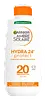
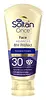
Garnier Ambre Solaire Hydra 24H Protect SPF 20 Versus Boots Soltan Once Advanced Face 8Hr Protect SPF30 Sun Cream


What's inside
What's inside
 Key Ingredients
Benefits
Concerns
Ingredients Side-by-side
Water
Skin ConditioningGlycerin
Humectant


C12-15 Alkyl Benzoate
AntimicrobialIsopropyl Palmitate
Emollient


Ethylhexyl Salicylate
UV Absorber

Octocrylene
UV Absorber

Alcohol Denat.
Antimicrobial


Butyl Methoxydibenzoylmethane
UV Absorber
Talc
Abrasive
Titanium Dioxide
Cosmetic Colorant
Potassium Cetyl Phosphate
EmulsifyingSynthetic Wax
Abrasive
Tocopherol
Antioxidant





Stearic Acid
Cleansing
Phenoxyethanol
Preservative
Thermus Thermophillus Ferment
Skin ConditioningPEG-100 Stearate
Surfactant
Eugenol
Perfuming

Triethanolamine
BufferingPalmitic Acid
Emollient
Dimethicone
Emollient
Linalool
Perfuming
Benzyl Alcohol
Perfuming
Caprylyl Glycol
Emollient
Terephthalylidene Dicamphor Sulfonic Acid
UV Absorber
Acrylates/C10-30 Alkyl Acrylate Crosspolymer
Emulsion StabilisingMyristic Acid
Cleansing
Disodium EDTA
Butyrospermum Parkii Butter
Skin Conditioning
Potassium Sorbate
Preservative
Citric Acid
Buffering
Aluminum Hydroxide
EmollientGlyceryl Stearate
Emollient
Parfum
Masking
Water, Glycerin, C12-15 Alkyl Benzoate, Isopropyl Palmitate, Ethylhexyl Salicylate, Octocrylene, Alcohol Denat., Butyl Methoxydibenzoylmethane, Talc, Titanium Dioxide, Potassium Cetyl Phosphate, Synthetic Wax, Tocopherol, Stearic Acid, Phenoxyethanol, Thermus Thermophillus Ferment, PEG-100 Stearate, Eugenol, Triethanolamine, Palmitic Acid, Dimethicone, Linalool, Benzyl Alcohol, Caprylyl Glycol, Terephthalylidene Dicamphor Sulfonic Acid, Acrylates/C10-30 Alkyl Acrylate Crosspolymer, Myristic Acid, Disodium EDTA, Butyrospermum Parkii Butter, Potassium Sorbate, Citric Acid, Aluminum Hydroxide, Glyceryl Stearate, Parfum
Water
Skin ConditioningC12-15 Alkyl Benzoate
AntimicrobialButylene Glycol
Humectant
Octocrylene
UV Absorber
Butyl Methoxydibenzoylmethane
UV Absorber
Polyglyceryl-3 Methylglucose Distearate
Emulsifying
Vp/Eicosene Copolymer
Ethylhexyl Salicylate
UV Absorber
Adipic Acid/Diglycol Crosspolymer
Dimethicone
Emollient
Tribehenin
Emollient
Bis-Ethylhexyloxyphenol Methoxyphenyl Triazine
Skin Conditioning
Phenoxyethanol
Preservative
Butyrospermum Parkii Butter
Skin Conditioning
Panthenol
Skin Conditioning
Ammonium Acryloyldimethyltaurate/Vp Copolymer
Glycerin
Humectant
Potassium Cetyl Phosphate
EmulsifyingDimethiconol
Emollient
Diethylhexyl Butamido Triazone
UV Absorber
Caprylyl Glycol
Emollient
Methylparaben
Preservative
Parfum
Masking
Ethylparaben
Preservative
Ethylhexylglycerin
Skin ConditioningVitis Vinifera Seed Oil
Emollient
Tocopheryl Acetate
Antioxidant
Dipropylene Glycol
HumectantTetrasodium EDTA
Citric Acid
Buffering
T-Butyl Alcohol
Perfuming
Sodium Ascorbyl Phosphate
Antioxidant


Panax Ginseng Root Extract
Emollient
Water, C12-15 Alkyl Benzoate, Butylene Glycol, Octocrylene, Butyl Methoxydibenzoylmethane, Polyglyceryl-3 Methylglucose Distearate, Vp/Eicosene Copolymer, Ethylhexyl Salicylate, Adipic Acid/Diglycol Crosspolymer, Dimethicone, Tribehenin, Bis-Ethylhexyloxyphenol Methoxyphenyl Triazine, Phenoxyethanol, Butyrospermum Parkii Butter, Panthenol, Ammonium Acryloyldimethyltaurate/Vp Copolymer, Glycerin, Potassium Cetyl Phosphate, Dimethiconol, Diethylhexyl Butamido Triazone, Caprylyl Glycol, Methylparaben, Parfum, Ethylparaben, Ethylhexylglycerin, Vitis Vinifera Seed Oil, Tocopheryl Acetate, Dipropylene Glycol, Tetrasodium EDTA, Citric Acid, T-Butyl Alcohol, Sodium Ascorbyl Phosphate, Panax Ginseng Root Extract
Reviews
Ingredients Explained
These ingredients are found in both products.
Ingredients higher up in an ingredient list are typically present in a larger amount.
Also known as Avobenzone, this ingredient is a chemical sunscreen filter that provides protection in the UV-A range.
Avobenzone is globally approved and is the most commonly used UV-A filter in the world.
Studies have found that avobenzone becomes ineffective when exposed to UV light (it is not photostable; meaning that it breaks down in sunlight). Because of this, formulations that include avobenzone will usually contain stabilizers such as octocrylene.
However, some modern formulations (looking at you, EU!) are able to stabilize avobenzone by coating the molecules.
Avobenzone does not protect against the UV-B range, so it's important to check that the sunscreen you're using contains other UV filters that do!
The highest concentration of avobenzone permitted is 3% in the US, and 5% in the EU.
Learn more about Butyl MethoxydibenzoylmethaneThis ingredient is also known as shea butter. It is a plant-derived extract from the nuts of the Africa shea tree and one of the most well-studied emollients.
Because it has a high concentration of fatty acids (primarily oleic, stearic, and linoleic) it is able to form a protective barrier on the skin's surface. This helps seal in moisture and prevents transepidermal water loss (TEWL).
In vitro research found an increase in skin hydration by 58% and a decrease in TEWL by 37.8% after 24 hours of applying this ingredient (pretty impressive for a single ingredient!).
Besides hydration, shea butter also contains triterpenes that have anti-inflammatory potential. In particule, lupeol cinnamate has shown the highest anti-inflammatory activity in vivo.
Shea butter also contains vitamins A and E which may contribute to antioxidant activity.
While Shea Butter has an SPF rating of about 3-4, it is not a sunscreen replacement.
This ingredient may not be fungal acne safe because its fatty acids fall within the C11-C24 range that the Malassezia yeast can metabolize.
Learn more about Butyrospermum Parkii ButterC12-15 Alkyl Benzoate is made up of Benzoic Acid and long chain alcohols. It has a low molecular weight.
C12-15 Alkyl Benzoate is an emollient and texture enhancer. Due to its solubility, it is often used in sunscreens to help evenly distribute active ingredients.
As an emollient, C12-15 Alkyl Benzoate helps soften and hydrate your skin. Emollients create a film on your skin that traps moisture within.
This ingredient has been reported to cause eye irritation.
Learn more about C12-15 Alkyl BenzoateCaprylyl Glycol is a humectant, skin conditioner, emollient, and preservative booster derived from either caprylic acid or synthetically created.
Typical use levels vary from 0.3-1% as a preservative booster and go up to 2% to condition skin.
Because it is not a free-fatty acid or alcohol, this ingredient is fungal acne safe (there's nothing for Malassezia to feed on).
Learn more about Caprylyl GlycolCitric Acid is an alpha hydroxy acid (AHA) naturally found in citrus fruits like oranges, lemons, and limes.
Like other AHAs, citric acid can exfoliate skin by breaking down the bonds that hold dead skin cells together. This helps reveal smoother and brighter skin underneath.
However, this exfoliating effect only happens at high concentrations (20%) which can be hard to find in cosmetic products.
Due to this, citric acid is usually included in small amounts as a pH adjuster. This helps keep products slightly more acidic and compatible with skin's natural pH.
In skincare formulas, citric acid can:
While it can provide some skin benefits, research shows lactic acid and glycolic acid are generally more effective and less irritating exfoliants.
Most citric acid used in skincare today is made by fermenting sugars (usually from molasses). This synthetic version is identical to the natural citrus form but easier to stabilize and use in formulations.
Read more about some other popular AHA's here:
Learn more about Citric AcidDimethicone is a type of synthetic silicone created from natural materials such as quartz. It is also known as polydimethylsiloxane.
What it does:
Dimethicone comes in different viscosities:
Depending on the viscosity, dimethicone has different properties.
Ingredients lists don't always show which type is used, so we recommend reaching out to the brand if you have questions about the viscosity.
This ingredient is unlikely to cause irritation because it does not get absorbed into skin. However, people with silicone allergies should be careful about using this ingredient.
Note: Dimethicone may contribute to pilling. This is because it is not oil or water soluble, so pilling may occur when layered with products. When mixed with heavy oils in a formula, the outcome is also quite greasy.
Learn more about DimethiconeEthylhexyl Salicylate is an organic compound used to block UV rays. It primarily absorbs UVB rays but offers a small amount of UVA protection as well.
Commonly found in sunscreens, Ethylhexyl Salicylate is created from salicylic acid and 2-ethylhexanol. You might know salicylic acid as the effective acne fighter ingredient and BHA.
The ethylhexanol in this ingredient is a fatty alcohol and helps hydrate your skin, similar to oils. It is an emollient, which means it traps moisture into the skin.
According to manufacturers, Ethylhexyl Salicylate absorbs UV wavelength of 295-315 nm, with a peak absorption at 307-310 nm. UVA rays are linked to long term skin damage, such as hyperpigmentation. UVB rays emit more energy and are capable of damaging our DNA. UVB rays cause sunburn.
Learn more about Ethylhexyl SalicylateGlycerin (or glycerol) is a compound naturally found in your skin. It's a powerhouse humectant that pulls water into the stratum corneum.
Topically, glycerin does several things at once:
Your skin makes glycerin on its own (mostly from sebaceous oil breakdown) and shuttles it to your outermost layer of skin, or your epidermis, via aquaporin-3.
Aquaporin-3 is a transporter that is essential for normal skin hydration, elasticity, and repair. Interestingly, mice lacking in AQP3 have dry and less elastic skin that can be fully corrected with glycerin.
This ingredient is non-irritating, plays well with almost every ingredient, and works across all skin types. Typical use is anywhere between 3-10% but can go up to 79% in some leave-on products.
Just know very high concentrations (>40%) can feel tacky in low humidity.
Glycerin is the name for this ingredient in American English. British English uses Glycerol/Glycerine.
Learn more about GlycerinOctocrylene protects skin from sun damage. It absorbs UV-B with peak absorption of 304 nm. It is a common sunscreen ingredient and often paired with avobenzone, a UVA filter. This is because octocrylene stabilizes other sunscreen ingredients by protecting them from degradation when exposed to sunlight. Octocrylene is a photostable ingredient and loses about 10% of SPF in 95 minutes.
Octocrylene also acts as an emollient, meaning it helps skin retain moisture and softens skin. It is oil-soluble and hydrophobic, enhancing water-resistant properties in a product.
Those who are using ketoprofen, a topical anti-inflammatory drug, may experience an allergic reaction when using octocrylene. It is best to speak with a healthcare professional about using sunscreens with octocrylene.
The EU allows a maximum of these concentrations:
Learn more about OctocryleneParfum is a catch-all term for an ingredient or more that is used to give a scent to products.
Also called "fragrance", this ingredient can be a blend of hundreds of chemicals or plant oils. This means every product with "fragrance" or "parfum" in the ingredients list is a different mixture.
For instance, Habanolide is a proprietary trade name for a specific aroma chemical. When used as a fragrance ingredient in cosmetics, most aroma chemicals fall under the broad labeling category of “FRAGRANCE” or “PARFUM” according to EU and US regulations.
The term 'parfum' or 'fragrance' is not regulated in many countries. In many cases, it is up to the brand to define this term.
For instance, many brands choose to label themselves as "fragrance-free" because they are not using synthetic fragrances. However, their products may still contain ingredients such as essential oils that are considered a fragrance by INCI standards.
One example is Calendula flower extract. Calendula is an essential oil that still imparts a scent or 'fragrance'.
Depending on the blend, the ingredients in the mixture can cause allergies and sensitivities on the skin. Some ingredients that are known EU allergens include linalool and citronellol.
Parfum can also be used to mask or cover an unpleasant scent.
The bottom line is: not all fragrances/parfum/ingredients are created equally. If you are worried about fragrances, we recommend taking a closer look at an ingredient. And of course, we always recommend speaking with a professional.
Learn more about ParfumPhenoxyethanol is a preservative that has germicide, antimicrobial, and aromatic properties. Studies show that phenoxyethanol can prevent microbial growth. By itself, it has a scent that is similar to that of a rose.
It's often used in formulations along with Caprylyl Glycol to preserve the shelf life of products.
Potassium Cetyl Phosphate is the potassium salt of a mixture. This mixture consists of the esters from phosphoricacid and cetyl alcohol.
Potassium Cetyl Phosphate is an emulsifier and cleansing agent. Emulsifiers help stabilize a product. It does this by preventing certain ingredients from separating.
As a cleansing agent, Potassium Cetyl Phosphate helps gather oils, dirts, and pollutants from your skin. This makes it easier to rinse them away with water.
Learn more about Potassium Cetyl PhosphateWater. It's the most common cosmetic ingredient of all. You'll usually see it at the top of ingredient lists, meaning that it makes up the largest part of the product.
So why is it so popular? Water most often acts as a solvent - this means that it helps dissolve other ingredients into the formulation.
You'll also recognize water as that liquid we all need to stay alive. If you see this, drink a glass of water. Remember to stay hydrated!
Learn more about Water
