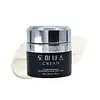
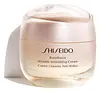
Dominas Exceptional Brightening And Dark Spot Correcting Dermo-Cream Versus Shiseido Benefiance Wrinkle Smoothing Cream
This brightening moisturizer is formulated around Niacinamide and Bakuchiol to fade the look of dark spots and brighten dull-looking skin.
This anti-aging moisturizer is formulated around Niacinamide and Caffeine to soften the look of wrinkles and refine skin texture.


What's inside
What's inside
 Key Ingredients
Benefits
Concerns
Ingredients Side-by-side
Water
Skin ConditioningDipropylene Glycol
HumectantHydrogenated Polyisobutene
EmollientNiacinamide
Smoothing











Butylene Glycol
Humectant
Cyclohexasiloxane
Emollient
Hexyldecyl Ethylhexanoate
EmollientPanthenol
Skin Conditioning
Glycerin
Humectant
Triethylhexanoin
MaskingCetearyl Alcohol
Emollient






1,2-Hexanediol
Skin Conditioning
C14-22 Alcohols
Emulsion Stabilising
Glyceryl Stearate
Emollient
Pentaerythrityl Tetraethylhexanoate
Emollient
Trehalose
Humectant
Butyrospermum Parkii Butter
Skin Conditioning
Cetearyl Olivate
PEG-100 Stearate
Surfactant
Serine
Masking
Dimethicone
Emollient
Sorbitan Olivate
Emulsifying
C12-20 Alkyl Glucoside
EmulsifyingPhytosteryl/Octyldodecyl Lauroyl Glutamate
Skin ConditioningSilica
Abrasive
Ammonium Acryloyldimethyltaurate/Vp Copolymer
Arachidyl Alcohol
Emollient
Bisabolol
Antioxidant
Dipentaerythrityl Hexa C5-9 Acid Esters
Skin ConditioningBehenyl Alcohol
Emollient
Allantoin
Skin Conditioning
Arginine Glutamate
Skin ConditioningSodium Pyruvate
Skin ConditioningAloe Barbadensis Leaf Juice
Skin Conditioning
Arachidyl Glucoside
EmulsifyingDimethiconol
Emollient
Carbomer
Emulsion StabilisingAdenosine
Skin Conditioning
Tocopherol
Antioxidant
Caprylic/Capric Triglyceride
Masking
Trisodium EDTA
ChelatingUbiquinone
Antioxidant
Glycine Soja Oil
Emollient
Potassium Hydroxide
BufferingCI 77891
Cosmetic ColorantMica
Cosmetic ColorantHydrogenated Lecithin
Emulsifying
Bakuchiol
Antimicrobial
Xanthan Gum
EmulsifyingPolydatin
Antioxidant
Tranexamic Acid
Astringent
Beta-Glucan
Skin Conditioning
CI 77491
Cosmetic ColorantHydroxydecyl Ubiquinone
Antioxidant
Polyglyceryl-10 Oleate
Skin Conditioning
Glucose
Humectant
Aloe Barbadensis Leaf Polysaccharides
Emollient
Parfum
Masking


Benzyl Benzoate
Antimicrobial
Linalool
Perfuming
Hydroxycitronellal
Perfuming
Limonene
Perfuming
Hexyl Cinnamal
Perfuming
Citronellol
Perfuming
Water, Dipropylene Glycol, Hydrogenated Polyisobutene, Niacinamide, Butylene Glycol, Cyclohexasiloxane, Hexyldecyl Ethylhexanoate, Panthenol, Glycerin, Triethylhexanoin, Cetearyl Alcohol, 1,2-Hexanediol, C14-22 Alcohols, Glyceryl Stearate, Pentaerythrityl Tetraethylhexanoate, Trehalose, Butyrospermum Parkii Butter, Cetearyl Olivate, PEG-100 Stearate, Serine, Dimethicone, Sorbitan Olivate, C12-20 Alkyl Glucoside, Phytosteryl/Octyldodecyl Lauroyl Glutamate, Silica, Ammonium Acryloyldimethyltaurate/Vp Copolymer, Arachidyl Alcohol, Bisabolol, Dipentaerythrityl Hexa C5-9 Acid Esters, Behenyl Alcohol, Allantoin, Arginine Glutamate, Sodium Pyruvate, Aloe Barbadensis Leaf Juice, Arachidyl Glucoside, Dimethiconol, Carbomer, Adenosine, Tocopherol, Caprylic/Capric Triglyceride, Trisodium EDTA, Ubiquinone, Glycine Soja Oil, Potassium Hydroxide, CI 77891, Mica, Hydrogenated Lecithin, Bakuchiol, Xanthan Gum, Polydatin, Tranexamic Acid, Beta-Glucan, CI 77491, Hydroxydecyl Ubiquinone, Polyglyceryl-10 Oleate, Glucose, Aloe Barbadensis Leaf Polysaccharides, Parfum, Benzyl Benzoate, Linalool, Hydroxycitronellal, Limonene, Hexyl Cinnamal, Citronellol
Water
Skin ConditioningSd Alcohol 40-B
Astringent

Glycerin
Humectant
Dipropylene Glycol
HumectantNiacinamide
Smoothing
Cyclohexasiloxane
Emollient
Cetyl Ethylhexanoate
EmollientHydrogenated Polydecene
EmollientPhytosteryl/Octyldodecyl Lauroyl Glutamate
Skin ConditioningDimethicone
Emollient
PPG-3 Dipivalate
Skin ConditioningMyristyl Myristate
Emollient
Methyl Methacrylate Crosspolymer
Hydrogenated Palm Oil
Emollient
Ammonium Acryloyldimethyltaurate/Vp Copolymer
Behenyl Alcohol
Emollient
Polysorbate 60
Emulsifying
PEG-30 Phytosterol
EmulsifyingPhenoxyethanol
Preservative
Dimethicone/Vinyl Dimethicone Crosspolymer
Skin Conditioning
Batyl Alcohol
EmollientAlcohol
Antimicrobial
Tocopheryl Acetate
Antioxidant
Erythritol
Humectant
PEG/PPG-14/7 Dimethyl Ether
Skin ConditioningPEG/PPG-17/4 Dimethyl Ether
Skin ConditioningButylene Glycol
Humectant
Parfum
Masking
Carbomer
Emulsion StabilisingAcrylates/C10-30 Alkyl Acrylate Crosspolymer
Emulsion StabilisingPotassium Hydroxide
BufferingCaffeine
Skin Conditioning
Disodium EDTA
ChelatingSodium Metaphosphate
BufferingTocopherol
Antioxidant
Sapindus Mukorossi Peel Extract
Skin ConditioningCI 77492
Cosmetic ColorantLinalool
Perfuming
Sodium Metabisulfite
Antioxidant
Limonene
Perfuming
Citronellol
Perfuming
Angelica Keiskei Leaf/Stem Extract
Skin ConditioningGeraniol
Perfuming
Camellia Sinensis Leaf Extract
Antimicrobial
Citrus Junos Seed Extract
Antioxidant
Hdi/Trimethylol Hexyllactone Crosspolymer
Ziziphus Jujuba Fruit Extract
Skin ConditioningCI 77491
Cosmetic ColorantEucheuma Serra/Grateloupia Sparsa/Saccharina Angustata/Ulva Linza/Undaria Pinnatifida Extract
EmollientCurcuma Longa Rhizome Extract
Skin ConditioningSaccharina Angustata/Undaria Pinnatifida Extract
EmollientChlorella Vulgaris Extract
Skin ConditioningSilica
Abrasive
Water, Sd Alcohol 40-B, Glycerin, Dipropylene Glycol, Niacinamide, Cyclohexasiloxane, Cetyl Ethylhexanoate, Hydrogenated Polydecene, Phytosteryl/Octyldodecyl Lauroyl Glutamate, Dimethicone, PPG-3 Dipivalate, Myristyl Myristate, Methyl Methacrylate Crosspolymer, Hydrogenated Palm Oil, Ammonium Acryloyldimethyltaurate/Vp Copolymer, Behenyl Alcohol, Polysorbate 60, PEG-30 Phytosterol, Phenoxyethanol, Dimethicone/Vinyl Dimethicone Crosspolymer, Batyl Alcohol, Alcohol, Tocopheryl Acetate, Erythritol, PEG/PPG-14/7 Dimethyl Ether, PEG/PPG-17/4 Dimethyl Ether, Butylene Glycol, Parfum, Carbomer, Acrylates/C10-30 Alkyl Acrylate Crosspolymer, Potassium Hydroxide, Caffeine, Disodium EDTA, Sodium Metaphosphate, Tocopherol, Sapindus Mukorossi Peel Extract, CI 77492, Linalool, Sodium Metabisulfite, Limonene, Citronellol, Angelica Keiskei Leaf/Stem Extract, Geraniol, Camellia Sinensis Leaf Extract, Citrus Junos Seed Extract, Hdi/Trimethylol Hexyllactone Crosspolymer, Ziziphus Jujuba Fruit Extract, CI 77491, Eucheuma Serra/Grateloupia Sparsa/Saccharina Angustata/Ulva Linza/Undaria Pinnatifida Extract, Curcuma Longa Rhizome Extract, Saccharina Angustata/Undaria Pinnatifida Extract, Chlorella Vulgaris Extract, Silica
Reviews
Ingredients Explained
These ingredients are found in both products.
Ingredients higher up in an ingredient list are typically present in a larger amount.
Ammonium Acryloyldimethyltaurate/Vp Copolymer is a synthetically created polymer. It's used as a film-forming agent and used to thicken the consistency of products.
Think of it as a supportive ingredient that helps your gel-creams feel silky, "cloud cream-like", and spread evenly without being greasy.
The Cosmetic Ingredient Review (CIR) Expert Panel evaluated it (along with 22 other acryloyldimethyltaurate polymers) and concluded it's:
Due to its large molecular size, it sits on the surface of skin rather than penetrating it.
Learn more about Ammonium Acryloyldimethyltaurate/Vp CopolymerBehenyl Alcohol is a type of fatty alcohol (these are different from the drying, solvent alcohols).
Fatty Alcohols have hydrating properties and are most often used as an emollient or to thicken a product. They are usually derived from natural fats and oils; behenyl alcohol is derived from the fats of vegetable oils.
Emollients help keep your skin soft and hydrated by creating a film that traps moisture in.
In 2000, Behenyl Alcohol was approved by the US as medicine to reduce the duration of cold sores.
Learn more about Behenyl AlcoholButylene Glycol (or BG) is used within cosmetic products for a few different reasons:
Overall, Butylene Glycol is a safe and well-rounded ingredient that works well with other ingredients.
Though this ingredient works well with most skin types, some people with sensitive skin may experience a reaction such as allergic rashes, closed comedones, or itchiness.
Learn more about Butylene GlycolCarbomer is a synthetic thickening and gelling agent. It's basically the ingredient that gives a lot of serums, gels, creams, and sunscreens their smooth, non-sticky texture.
Although legally permitted at very high levels, carbomers are normally used at concentrations below 1%.
It also needs to be neutralized to actually thicken, and because it is a large molecule, it doesn't really penetrate the skin barrier.
Allergy-wise, the risk is very low. Clinical studies show carbomers have low potential for skin irritation/sensitization even at concentrations up to 100%.
A 2024 UK study patch-tested 1,302 patients and found true allergy to the parent group of carbomer to be rare with no confirmed relevant reactions.
Learn more about CarbomerCi 77491 is also hydrated iron III oxide. It's sole purpose is to give a red/pink hue to products.
Iron III oxides are classified as inorganic chemicals for coloring.
Synthetically created Ci 77491 is considered safer than those naturally found. This is because the synthetically created version may contain less impurities. Iron oxides are generally non-toxic and non-allergenic.
Learn more about CI 77491Citronellol is used to add fragrance/parfum to a product. It is often derived from plants such as roses. In fact, it can be found in many essential oils including geranium, lavender, neroli, and more. The scent of Citronellol is often described as "fresh, grassy, and citrus-like".
Since the Citronellol molecule is already unstable, Citronellol becomes irritating on the skin when exposed to air.
Citronellol is a modified terpene. Terpenes are unsaturated hydrocarbons found in plants. They make up the primary part of essential oils.
Citronellol is not able to be absorbed into deeper layers of the skin. It has low permeability,
Citronellol is also a natural insect repellent.
Learn more about CitronellolCyclohexasiloxane is a type of silicone more commonly known as D6. It is an emollient and solvent.
Cyclohexasiloxane is used to evenly distribute ingredients throughout the product. When applied to the skin, Cyclohexasiloxane evaporates and leaves behind a silky feel.
As an emollient, it can help the skin feel soft and hydrated. It is also used to reduce frizz in hair products.
Learn more about CyclohexasiloxaneDimethicone is a type of synthetic silicone created from natural materials such as quartz. It is also known as polydimethylsiloxane.
What it does:
Dimethicone comes in different viscosities:
Depending on the viscosity, dimethicone has different properties.
Ingredients lists don't always show which type is used, so we recommend reaching out to the brand if you have questions about the viscosity.
This ingredient is unlikely to cause irritation because it does not get absorbed into skin. However, people with silicone allergies should be careful about using this ingredient.
Note: Dimethicone may contribute to pilling. This is because it is not oil or water soluble, so pilling may occur when layered with products. When mixed with heavy oils in a formula, the outcome is also quite greasy.
Learn more about DimethiconeDipropylene Glycol is a synthetically created humectant, stabilizer, and solvent.
This ingredient helps:
Dipropylene glycol is technically an alcohol, but it belongs to the glycol family (often considered part of the ‘good’ alcohols). This means it is hydrating and gentle on skin unlike drying solvent alcohols like denatured alcohol.
As a masking agent, Dipropylene Glycol can be used to cover the smell of other ingredients. However, it does not have a scent.
Studies show Dipropylene Glycol is considered safe to use in skincare.
Learn more about Dipropylene GlycolGlycerin (or glycerol) is a compound naturally found in your skin. It's a powerhouse humectant that pulls water into the stratum corneum.
Topically, glycerin does several things at once:
Your skin makes glycerin on its own (mostly from sebaceous oil breakdown) and shuttles it to your outermost layer of skin, or your epidermis, via aquaporin-3.
Aquaporin-3 is a transporter that is essential for normal skin hydration, elasticity, and repair. Interestingly, mice lacking in AQP3 have dry and less elastic skin that can be fully corrected with glycerin.
This ingredient is non-irritating, plays well with almost every ingredient, and works across all skin types. Typical use is anywhere between 3-10% but can go up to 79% in some leave-on products.
Just know very high concentrations (>40%) can feel tacky in low humidity.
Glycerin is the name for this ingredient in American English. British English uses Glycerol/Glycerine.
Learn more about GlycerinLimonene is the compound that gives citrus peel its smell.
In skincare, it shows up as a standalone fragrance ingredient or as a natural compound of citrus and other essential oils.
You'll typically see this ingredient used in very small amounts; anything above 0.001% in a leave-on product or 0.01% in a rinse-off has to be named on the label in the EU. The citrus oils that carry it sit around 0.5-1% in a finished formula.
Fresh limonene is a weak allergen; the real issue is that it slowly reacts with air and then breaks down from oxidation to create hydroperoxides (which are strong sensitizers). This is why suppliers are required to keep the peroxide value below 20 mmol.
Positive reactions in people being investigated for eczema vary:
It's worth skipping if you have a known fragrance allergy or a compromised barrier, but the risk is low for most people.
Older or long-opened products are also more likely to bother you than fresh ones due to oxidation.
Learn more about LimoneneLinalool is a small, naturally occurring scent molecule found in plants like lavender, coriander, bergamot, and more.
It is one of the two most-used fragrance ingredients in cosmetics and added purely for smell. Since it's not used for a skin benefit, there's no "effective dose". Concentration depends on the fragrance load of the product.
The EU requires it to be named on the label above 0.001% in leave-on and 0.01% in rinse-off products.
Fresh linalool is a weak sensitizer but air exposure turns some of it into hydroperoxides, which are strong sensitizers. Those oxidation products are the actual allergy concern.
Patch-test clinics see positive reactions to linalool hydroperoxides in about 4% to 12% of dermatitis patients depending on country and test concentration.
Resassuringly, one analytical study found hydroperoxide levels in real fragranced products to be orders of magnitude below what induced sensitization in animal studies with no evidence of oxidation building up during normal storage.
The practical takeaway is that linalool is fine for most people but worth avoiding if you have a confirmed fragrance contact allergy or a badly compromised barrier.
Products stored a long time after opening are also the high-risk scenario since that is when oxidation happens.
The scent of linalool is described as floral, spicy tropical, and citrus-like.
Learn more about LinaloolNiacinamide is a multitasking form of vitamin B3 that strengthens the skin barrier, reduces pores and dark spots, regulates oil, and improves signs of aging.
And the best part? It's gentle and well-tolerated by most skin types, including sensitive and reactive skin.
You might have heard of "niacin flush", or the reddening of skin that causes itchiness. Niacinamide has not been found to cause this.
In very rare cases, some individuals may not be able to tolerate niacinamide at all or experience an allergic reaction to it.
If you are experiencing flaking, irritation, and dryness with this ingredient, be sure to double check all your products as this ingredient can be found in all categories of skincare.
When incorporating niacinamide into your routine, look out for concentration amounts. Typically, 5% niacinamide provides benefits such as fading dark spots. However, if you have sensitive skin, it is better to begin with a smaller concentration.
When you apply niacinamide to your skin, your body converts it into nicotinamide adenine dinucleotide (NAD). NAD is an essential coenzyme that is already found in your cells as "fuel" and powers countless biological processes.
In your skin, NAD helps repair cell damage, produce new healthy cells, support collagen production, strengthen the skin barrier, and fight environmental stressors (like UV and pollution).
Our natural NAD levels start to decline with age, leading to slower skin repair, visible aging, and a weaker skin barrier. By providing your skin niacinamide, you're recharging your skin's NAD levels. This leads to stronger, healthier, and younger looking skin.
Another name for vitamin B3 is nicotinamide. This vitamin is water-soluble and our bodies don't store it. We obtain Vitamin B3 from either food or skincare. Meat, fish, wheat, yeast, and leafy greens contain vitamin B3.
The type of niacinamide used in skincare is synthetically created.
Learn more about NiacinamideParfum is a catch-all term for an ingredient or more that is used to give a scent to products.
Also called "fragrance", this ingredient can be a blend of hundreds of chemicals or plant oils. This means every product with "fragrance" or "parfum" in the ingredients list is a different mixture.
For instance, Habanolide is a proprietary trade name for a specific aroma chemical. When used as a fragrance ingredient in cosmetics, most aroma chemicals fall under the broad labeling category of “FRAGRANCE” or “PARFUM” according to EU and US regulations.
The term 'parfum' or 'fragrance' is not regulated in many countries. In many cases, it is up to the brand to define this term.
For instance, many brands choose to label themselves as "fragrance-free" because they are not using synthetic fragrances. However, their products may still contain ingredients such as essential oils that are considered a fragrance by INCI standards.
One example is Calendula flower extract. Calendula is an essential oil that still imparts a scent or 'fragrance'.
Depending on the blend, the ingredients in the mixture can cause allergies and sensitivities on the skin. Some ingredients that are known EU allergens include linalool and citronellol.
Parfum can also be used to mask or cover an unpleasant scent.
The bottom line is: not all fragrances/parfum/ingredients are created equally. If you are worried about fragrances, we recommend taking a closer look at an ingredient. And of course, we always recommend speaking with a professional.
Learn more about ParfumWe don't have a description for Phytosteryl/Octyldodecyl Lauroyl Glutamate yet.
Potassium Hydroxide (also known as potash) is a strong alkaline ingredient that does one job: it nudges a product's pH up so the whole formula lands in a skin-friendly range.
It's also the base that turns oils into liquid soap during the soap making process.
An expert safety panel reviewed it and found it safe when formulations are made to be non-irritating.
As a pH adjuster, it's typically used well under 1% though regulatory caps go much higher: 5% in nail cuticle removers and 2-4.5% in hair straighteners.
Though there is some concern for irritation from raw or high pH material, a well-balanced formula will be a non-issue for the vast majority of people.
Learn more about Potassium HydroxideSilica, also known as silicon dioxide, is a naturally occurring mineral. It is used as a fine, spherical, and porous powder in cosmetics.
Though it has exfoliant properties, the function of silica varies depending on the product.
The unique structure of silica enhances the spreadability and adds smoothness, making it a great texture enhancer.
It is also used as an active carrier, emulsifier, and mattifier due to its ability to absorb excess oil.
In some products, tiny microneedles called spicules are made from silica or hydrolyzed sponge. When you rub them in, they lightly polish away dead skin layers and enhance the penetration of active ingredients.
Learn more about SilicaTocopherol is a fat-soluble antioxidant known as Vitamin E.
You'll find this ingredient in the vast majority of skincare (for good reason). It works to neutralize free radicals, or unstable molecules generated by UV exposure, pollution, and other environmental stressors, before they can cause oxidative damage to your skin cells.
Topically applied tocopherol has been shown to protect against UV damage by ramping up the skin's own natural defense enzymes.
It also acts as a skin conditioning agent; some studies show that regular topical use can improve the skin's water-binding capacity over 2-4 weeks.
This ingredient is especially loved for being a team player. When combined with Vitamin C, the photoprotective effect of both ingredients roughly doubles and the combo also helps reduce UV-induced DNA damage.
This ingredient has some brightening potential but it's more of a prevention ingredient than spot-fader. Cell studies show it can slow down melanin production but it's worth noting that it's not the most powerful brightener out there.
In formulations, it also serves as a stabilizer that helps protect other oxidation-prone ingredients from degrading.
Concentrations usually range from 0.1-1% in most leave-on products.
Learn more about TocopherolWater. It's the most common cosmetic ingredient of all. You'll usually see it at the top of ingredient lists, meaning that it makes up the largest part of the product.
So why is it so popular? Water most often acts as a solvent - this means that it helps dissolve other ingredients into the formulation.
You'll also recognize water as that liquid we all need to stay alive. If you see this, drink a glass of water. Remember to stay hydrated!
Learn more about Water

