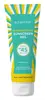
This chemical sunscreen covers most of the UV range, lighter on the deep UVA that drives aging.
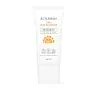
This hybrid sunscreen covers the full UV range and blocks ~98% of UVB at SPF 50.

What's inside
What's inside
 Key Ingredients
Benefits
Concerns
Ingredients Side-by-side
Water
Skin ConditioningGlycerin
Humectant


Propanediol
Solvent
Ethylhexyl Methoxycinnamate
UV Absorber


Butyl Methoxydibenzoylmethane
UV Absorber
Cucumis Sativus Fruit Extract
Emollient

Octocrylene
UV Absorber
Butylene Glycol
Humectant
Aloe Barbadensis Leaf Juice
Skin Conditioning
Polymethyl Methacrylate

Portulaca Oleracea Extract
Skin Conditioning
Sodium Hyaluronate
Humectant

Camellia Sinensis Leaf Extract
Antimicrobial


Ectoin
Skin Conditioning
Phenoxyethanol
Preservative
Acrylates/C10-30 Alkyl Acrylate Crosspolymer
Emulsion StabilisingRoyal Jelly
Centella Asiatica Extract
Cleansing
Allantoin
Skin Conditioning
Panthenol
Skin Conditioning
Resveratrol
Antioxidant
Lecithin
Emollient
Disodium EDTA
Water, Glycerin, Propanediol, Ethylhexyl Methoxycinnamate, Butyl Methoxydibenzoylmethane, Cucumis Sativus Fruit Extract, Octocrylene, Butylene Glycol, Aloe Barbadensis Leaf Juice, Polymethyl Methacrylate, Portulaca Oleracea Extract, Sodium Hyaluronate, Camellia Sinensis Leaf Extract, Ectoin, Phenoxyethanol, Acrylates/C10-30 Alkyl Acrylate Crosspolymer, Royal Jelly, Centella Asiatica Extract, Allantoin, Panthenol, Resveratrol, Lecithin, Disodium EDTA
Water
Skin ConditioningButylene Glycol
Humectant
Glycerin
Humectant
Ethylhexyl Methoxycinnamate
UV Absorber
Octocrylene
UV Absorber
Ethylhexyl Salicylate
UV Absorber
Salicylic Acid
Masking



Cyclopentasiloxane
Emollient
Succinic Acid
Buffering1,2-Hexanediol
Skin Conditioning
Hydroxyacetophenone
Antioxidant
Cetearyl Alcohol
Emollient




Diglycerin
Humectant
Carbomer
Emulsion StabilisingPolysorbate 80
Emulsifying
Potassium Cetyl Phosphate
EmulsifyingTriethanolamine
BufferingPolyglyceryl-6 Distearate
Emulsifying
Propylene Glycol
Humectant
Sodium Polyglutamate
HumectantAllantoin
Skin Conditioning
Sorbitan Oleate
Emulsifying
Squalane
Emollient
Zinc Oxide
Cosmetic Colorant
Adenosine
Skin Conditioning
Jojoba Esters
Emollient
Sodium Hyaluronate
Humectant
Caprylic/Capric Triglyceride
Masking
Glucose
Humectant
Polyglyceryl-3 Beeswax
Emulsifying
Cetyl Alcohol
Emollient
Hydrogenated Lecithin
Emulsifying
Hexylene Glycol
EmulsifyingStearic Acid
Cleansing
Cholesterol
Emollient
Ceramide NP
Skin Conditioning
Centella Asiatica Extract
Cleansing
Camellia Sinensis Leaf Extract
Antimicrobial
Polygonum Cuspidatum Root Extract
Antioxidant
Glycyrrhiza Glabra Root Extract
Bleaching
Chamomilla Recutita Flower Extract
Masking
Rosmarinus Officinalis Leaf Extract
AntimicrobialPotassium Sorbate
Preservative
Sodium Benzoate
Masking
Polysorbate 20
Emulsifying
Saccharomyces/Xylinum/Black Tea Ferment
Skin Conditioning
Ethylhexylglycerin
Skin ConditioningPalmitoyl Tripeptide-1
Skin Conditioning
Water, Butylene Glycol, Glycerin, Ethylhexyl Methoxycinnamate, Octocrylene, Ethylhexyl Salicylate, Salicylic Acid, Cyclopentasiloxane, Succinic Acid, 1,2-Hexanediol, Hydroxyacetophenone, Cetearyl Alcohol, Diglycerin, Carbomer, Polysorbate 80, Potassium Cetyl Phosphate, Triethanolamine, Polyglyceryl-6 Distearate, Propylene Glycol, Sodium Polyglutamate, Allantoin, Sorbitan Oleate, Squalane, Zinc Oxide, Adenosine, Jojoba Esters, Sodium Hyaluronate, Caprylic/Capric Triglyceride, Glucose, Polyglyceryl-3 Beeswax, Cetyl Alcohol, Hydrogenated Lecithin, Hexylene Glycol, Stearic Acid, Cholesterol, Ceramide NP, Centella Asiatica Extract, Camellia Sinensis Leaf Extract, Polygonum Cuspidatum Root Extract, Glycyrrhiza Glabra Root Extract, Chamomilla Recutita Flower Extract, Rosmarinus Officinalis Leaf Extract, Potassium Sorbate, Sodium Benzoate, Polysorbate 20, Saccharomyces/Xylinum/Black Tea Ferment, Ethylhexylglycerin, Palmitoyl Tripeptide-1
Reviews
Ingredients Explained
These ingredients are found in both products.
Ingredients higher up in an ingredient list are typically present in a larger amount.
Allantoin is a soothing ingredient known for its protective and moisturizing properties; it's basically a quiet workhorse ingredient you can find in a huge range of cosmetics.
Though it can be derived from the comfrey plant, allantoin is produced synthetically for cosmetic products to ensure purity.
Research shows it can encourage your skin cells to turn over and renew by stimulating keratinocyte and fibroblast proliferation.
It also has mild keratolytic properties to help loosen and shed dead skin cells without being harsh.
Studies also suggest allantoin can help calm inflammation by dialing down some of the chemical signals your skin sends out when it is irritated.
This ingredient is typically used in the 0.1-0.5% range, and the FDA recognizes it as a skin protectant in OTC products up to 2%.
Overall, allantoin is a wonderful addition to most routines; it is stable across a wide pH range (~4-8), works well with other ingredients, and is considered non-sensitizing/non-irritating.
Fun fact: Allantoin is naturally occurring in comfrey root, beets, chamomile, and wheat sprouts. Our bodies even produce it as a byproduct of uric acid metabolism.
Learn more about AllantoinButylene Glycol (or BG) is used within cosmetic products for a few different reasons:
Overall, Butylene Glycol is a safe and well-rounded ingredient that works well with other ingredients.
Though this ingredient works well with most skin types, some people with sensitive skin may experience a reaction such as allergic rashes, closed comedones, or itchiness.
Learn more about Butylene GlycolCamellia Sinensis Leaf Extract (tea extract) is one of the most well-researched plant extracts in skincare with an impressive resume.
Black tea, green tea, and oolong tea are all harvested from the Camellia Sinensis plant.
Studies show green tea extract and its catechins (like epigallocatechin gallate (EGCG)) help your skin cells product energy more efficiently and reducing the number of free-radicals that can damage your skin from the inside.
In lab-grown skin models, this translated to younger, healthier, and stronger skin.
There's also good sun protection data; researchers saw less DNA damage and redness on human skin when green tea was applied before UVB exposure. And the more they applied, the better the protection.
Needless to say, this ingredient shouldn't replace your sunscreen. But it is a great supportive ingredient that you can already find in many sunscreens and antioxidant serums.
A 2009 study found a 2% green tea lotion was effective for mild-to-moderate acne thanks to its anti-inflammatory and mild antimicrobial activity.
The quality of the extract matters a lot here:
Good extracts contain 50-90% catechins while lower quality ones are mostly there for marketing. We recommend reaching out to the brand if you have questions about the quality or source of their ingredients.
Human Repeated Insult Patch Testing showed no irritation or sensitization at use concentrations (0.86% in leave-on products and up to 30% as leaf water).
Learn more about Camellia Sinensis Leaf ExtractCentella Asiatica Extract (Centella) is one of the most researched botanical extracts in skincare with decades of studies backing its effects on inflammation, collagen, and the skin barrier.
That research keeps pointing back to the same four triterpenoid saponins: Asiaticoside, Madecassoside, Asiatic Acid, and Madecassic Acid.
These compounds allow centella to dial back inflammation, encourage the skin to build and hold onto collagen, support the barrier and hydration, and bring solid antioxidant activity to protect against signs of aging.
Centella also carries a nice supporting cast of Vitamin A, vitamin C, several B vitamins, and amino acids. Put it all together and you get an ingredient that soothes, hydrates, and protects, all at once.
Most of centella's magic comes from the four big compounds (Asiaticoside, Madecassoside, Asiatic Acid, and Madecassic Acid). These are the actives doing the heavy lifting in almost every centella study.
Here is the short version of what they do in the skin:
So it is not just soothing for the sake of soothing. Centella calms the skin AND helps it rebuild.
Just FYI, not all centella on an ingredient list is the same. What you are getting actually depends on the extract:
Fun fact on the ratios: the leaves tend to be richest in Madecassoside and Asiaticoside, and lower in the two acids. The exact amounts shift with where the plant is grown and how it is processed. This means purity really does vary brand to brand.
Centella is one of the most easygoing actives out there.
It layers well with basically everything: niacinamide, hyaluronic acid, peptides, and vitamin C, and also pairs nicely with stronger actives like retinoids and exfoliating acids where it can help take the edge off irritation.
On the safety side, centella and its triterpenes are classified as weak sensitizers, meaning allergic reactions are possible but uncommon.
Patch tests at 1% and 5% came back negative in test panels, and creams at typical use levels did not cause allergic reactions across large groups of people.
But as with any new active, a patch test is still a smart move for very reactive skin.
Centella is widely used because it is effective at low percentages. For context, human safety testing found no meaningful irritation from creams containing centella extract at everyday use levels (the tested amounts were well under 1%).
The irritancy threshold in animal testing was also above 30% (so real-world formulas sit far below anything concerning).
In collagen lab studies, higher concentrations drove more collagen synthesis, so serums built around centella tend to feature it more prominently.
Bottom line: you will find centella working nicely anywhere from a fraction of a percent up to hero-ingredient levels depending on whether it is a supporting soother or the main event.
Fun fact: Centella has been used as a medicine and in food for many centuries. As a medicine, it is used to treat burns, scratches, and wounds.
Learn more about Centella Asiatica ExtractThis ingredient is also known as Octinoxate and is one of the oldest and most widely used chemical UV filters in skincare.
It has a simple job: soap up UVB radiation (290-320 nm), the wavelengths responsible for sunburn and a big chunk of long-term sun damage.
In formulas, it's always paired with a separate UVA filter because octinoxate solely protects skin from UVB.
Because it's an oil-soluble liquid, it's easy to blend into the oil phase of lotions/creams and gives a cosmetically elegant feel.
The one quirk about formulating this ingredient is photostability; the molecule slowly changes shape into a less effective version when sunlight hits it. So the longer you're in the sun, the weaker its protection gets. The drop can be more than 30% in some formulas.
It also doesn't play nice with Avobenzone (the common UVA filter) since avobenzone destabilizes octinoxate and the two degrade each other. But don't worry: brands have solved this issue by adding photostabilizers like Tinosorb S to prevent degradation and keep SPF stable under heavy UV exposure.
The maximum allowed level is 10% in the EU and Australia, 7.5% in the US and Canada, and 20% in Japan.
The Cosmetic Ingredient Review Panel has concluded this ingredient to be safe in cosmetics up to 10%.
One last thing worth knowing for context:
Octinoxate has been the subject of ongoing review in Europe where the Scientific Committee on Consumer Safety's (SCCS) 2025 final opinion is that this ingredient is an endocrine-active substance.
Lab and animal studies suggest it can act a bit like a hormone in the body (mildly mimicking estrogen and slightly blocking male hormones). It's important to know this hasn't really been shown to happen in everyday human use.
This ingredient is also banned in Hawaii over coral reef concerns.
Learn more about Ethylhexyl MethoxycinnamateGlycerin (or glycerol) is a compound naturally found in your skin. It's a powerhouse humectant that pulls water into the stratum corneum.
Topically, glycerin does several things at once:
Your skin makes glycerin on its own (mostly from sebaceous oil breakdown) and shuttles it to your outermost layer of skin, or your epidermis, via aquaporin-3.
Aquaporin-3 is a transporter that is essential for normal skin hydration, elasticity, and repair. Interestingly, mice lacking in AQP3 have dry and less elastic skin that can be fully corrected with glycerin.
This ingredient is non-irritating, plays well with almost every ingredient, and works across all skin types. Typical use is anywhere between 3-10% but can go up to 79% in some leave-on products.
Just know very high concentrations (>40%) can feel tacky in low humidity.
Glycerin is the name for this ingredient in American English. British English uses Glycerol/Glycerine.
Learn more about GlycerinOctocrylene is an oil-soluble organic UV filter that mainly absorbs UVB and short wave UVA II light.
Its real superpower is teamwork: octocrylene is remarkably photostable and is most famous for stabilizing avobenzone (the workhorse UVA filter).
This ingredient is commonly used to enhance both UVB and UVA protection due to its unique property in stabilizing avobenzone. It also pulls double duty by boosting water resistance and giving formulas a smooth, spreadable feel.
The EU's Scientific Committee on Consumer Safety (SCCS) has deemed octocrylene to be safe as a UV-filter at concentrations up to 10% (capped at 9% in propellant sprays). The US also permits it up to 10%.
Two things worth knowing:
You'll usually see this ingredient used in concentrations between 2-10% (higher amounts when used as a stabilizer for avobenzone).
Learn more about OctocryleneSodium Hyaluronate is the salt form of hyaluronic acid. It is a long sugar chain that is naturally found in your skin, joints, and connective tissue that maintains hydration and elasticity.
In skincare, it works as a humectant. It pulls water from the environment and deeper layers of skin and binds it to the surface.
Interestingly, the size of the molecule affects its behavior:
Some clinical evidence links low molecular weight versions to improved wrinkle depth, elasticity, anti-inflammatory effects, and barrier repair.
Many serums use a blend of both weights so you can get surface hydration plus longer-lasting and deeper effects.
You'll typically see concentrations between 0.1-2% for this ingredient.
Learn more about Sodium HyaluronateWater. It's the most common cosmetic ingredient of all. You'll usually see it at the top of ingredient lists, meaning that it makes up the largest part of the product.
So why is it so popular? Water most often acts as a solvent - this means that it helps dissolve other ingredients into the formulation.
You'll also recognize water as that liquid we all need to stay alive. If you see this, drink a glass of water. Remember to stay hydrated!
Learn more about Water

