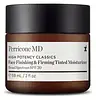
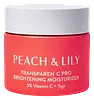
Perricone MD High Potency Classics Face Finishing & Firming Tinted Moisturizer SPF 30 Versus Peach & Lily Transparen C Pro Brightening Moisturizer
This anti-aging day moisturizer is formulated around Tetrahexyldecyl Ascorbate and Thioctic Acid to soften the look of wrinkles and brighten dull-looking skin.
This brightening moisturizer is formulated around Ascorbyl Tetraisopalmitate and Glycyrrhiza Glabra Root Extract to brighten dull-looking skin and fade the look of dark spots.


What's inside
What's inside
 Key Ingredients
Benefits
Concerns
Ingredients Side-by-side
Titanium Dioxide 4.2%
Cosmetic Colorant

Water
Skin ConditioningGlycerin
Humectant


Cyclopentasiloxane
Emollient
Dimethicone
Emollient
Pentylene Glycol
Skin Conditioning
Ethylhexyl Methoxycrylene
Skin Conditioning
Polyester-8
Skin Conditioning
Polyglyceryl-3 Polydimethylsiloxyethyl Dimethicone
Skin Conditioning
Hydroxyethyl Acrylate/Sodium Acryloyldimethyl Taurate Copolymer
Emulsion StabilisingBenzyl Alcohol
Perfuming






Aluminum Hydroxide
EmollientStearic Acid
Cleansing


CI 77491
Cosmetic ColorantCI 77492
Cosmetic ColorantCI 77499
Cosmetic ColorantDiethylhexyl Syringylidenemalonate
Skin Protecting
Hydrogenated Lecithin
Emulsifying
CI 77891
Cosmetic ColorantIsohexadecane
EmollientBisabolol
Antioxidant


Mica
Cosmetic ColorantTetrahexyldecyl Ascorbate
Antioxidant



Phenoxyethanol
Preservative
Silica Dimethyl Silylate
EmollientPolyester-1
Polysilicone-11

Polysorbate 60
Emulsifying
Caprylic/Capric Triglyceride
Masking
Sodium Benzoate
Masking
Potassium Sorbate
Preservative
Parfum
Masking
Xanthan Gum
EmulsifyingHydrogenated Phosphatidylcholine
Emulsifying
Citronellol
Perfuming
Thioctic Acid
Antioxidant
Geraniol
Perfuming
Astaxanthin
Skin Conditioning
Hydroxycitronellal
Perfuming
Butylphenyl Methylpropional
Perfuming
Titanium Dioxide 4.2%, Water, Glycerin, Cyclopentasiloxane, Dimethicone, Pentylene Glycol, Ethylhexyl Methoxycrylene, Polyester-8, Polyglyceryl-3 Polydimethylsiloxyethyl Dimethicone, Hydroxyethyl Acrylate/Sodium Acryloyldimethyl Taurate Copolymer, Benzyl Alcohol, Aluminum Hydroxide, Stearic Acid, CI 77491, CI 77492, CI 77499, Diethylhexyl Syringylidenemalonate, Hydrogenated Lecithin, CI 77891, Isohexadecane, Bisabolol, Mica, Tetrahexyldecyl Ascorbate, Phenoxyethanol, Silica Dimethyl Silylate, Polyester-1, Polysilicone-11, Polysorbate 60, Caprylic/Capric Triglyceride, Sodium Benzoate, Potassium Sorbate, Parfum, Xanthan Gum, Hydrogenated Phosphatidylcholine, Citronellol, Thioctic Acid, Geraniol, Astaxanthin, Hydroxycitronellal, Butylphenyl Methylpropional
Water
Skin ConditioningButylene Glycol
Humectant
Ascorbyl Tetraisopalmitate
Antioxidant
Glycerin
Humectant
Caprylic/Capric Triglyceride
Masking
Hydrogenated Polydecene
EmollientPolyglyceryl-6 Distearate
Emulsifying
1,2-Hexanediol
Skin Conditioning
Dipropylene Glycol
HumectantCetearyl Alcohol
Emollient

Candelilla/Jojoba/Rice Bran Polyglyceryl-3 Esters
Emulsifying
Citrus Junos Fruit Extract
Skin ConditioningBacillus/Spirodela Polyrhiza Extract/Volcanic Ash Extract Ferment Filtrate
Skin ConditioningBacillus/Houttuynia Cordata Leaf Extract/Volcanic Ash Ferment Filtrate
Skin ConditioningSodium Hyaluronate
Humectant
Hydrolyzed Hyaluronic Acid
Humectant
Hyaluronic Acid
Humectant
Hydrolyzed Sodium Hyaluronate
Skin Conditioning
Camellia Sinensis Leaf Extract
Antimicrobial
Polygonum Cuspidatum Root Extract
Antioxidant
Scutellaria Baicalensis Root Extract
Astringent
Zingiber Officinale Root Extract
Masking
Tremella Fuciformis Extract
Humectant
Sodium Hyaluronate Crosspolymer
Humectant
Glycyrrhiza Glabra Root Extract
Bleaching
Arginine
Masking
Centella Asiatica Extract
Cleansing
Lactobacillus/Papaya Fruit Ferment Extract
Abrasive
Chamomilla Recutita Flower Extract
Masking
Ananas Sativus Fruit Extract
Skin ConditioningFerulic Acid
Antimicrobial
Morus Alba Root Extract
BleachingCetearyl Olivate
Tocopherol
Antioxidant
Carbomer
Emulsion StabilisingAllantoin
Skin Conditioning
Sorbitan Olivate
Emulsifying
Xanthan Gum
EmulsifyingPaeonia Albiflora Root Extract
Skin ConditioningRosmarinus Officinalis Leaf Extract
AntimicrobialEthylhexylglycerin
Skin ConditioningCaprylyl Glycol
Emollient
Pentylene Glycol
Skin Conditioning
Sodium Polyacryloyldimethyl Taurate
Emulsion StabilisingSodium Phytate
ChelatingWater, Butylene Glycol, Ascorbyl Tetraisopalmitate, Glycerin, Caprylic/Capric Triglyceride, Hydrogenated Polydecene, Polyglyceryl-6 Distearate, 1,2-Hexanediol, Dipropylene Glycol, Cetearyl Alcohol, Candelilla/Jojoba/Rice Bran Polyglyceryl-3 Esters, Citrus Junos Fruit Extract, Bacillus/Spirodela Polyrhiza Extract/Volcanic Ash Extract Ferment Filtrate, Bacillus/Houttuynia Cordata Leaf Extract/Volcanic Ash Ferment Filtrate, Sodium Hyaluronate, Hydrolyzed Hyaluronic Acid, Hyaluronic Acid, Hydrolyzed Sodium Hyaluronate, Camellia Sinensis Leaf Extract, Polygonum Cuspidatum Root Extract, Scutellaria Baicalensis Root Extract, Zingiber Officinale Root Extract, Tremella Fuciformis Extract, Sodium Hyaluronate Crosspolymer, Glycyrrhiza Glabra Root Extract, Arginine, Centella Asiatica Extract, Lactobacillus/Papaya Fruit Ferment Extract, Chamomilla Recutita Flower Extract, Ananas Sativus Fruit Extract, Ferulic Acid, Morus Alba Root Extract, Cetearyl Olivate, Tocopherol, Carbomer, Allantoin, Sorbitan Olivate, Xanthan Gum, Paeonia Albiflora Root Extract, Rosmarinus Officinalis Leaf Extract, Ethylhexylglycerin, Caprylyl Glycol, Pentylene Glycol, Sodium Polyacryloyldimethyl Taurate, Sodium Phytate
Reviews
Ingredients Explained
These ingredients are found in both products.
Ingredients higher up in an ingredient list are typically present in a larger amount.
Caprylic/Capric Triglyceride (aka MCT Oil) is a lightweight emollient, solvent, and texture enhancer. It is considered a skin-softener by helping to prevent moisture loss.
Though it behaves like an oil, it is not technically one due to its chemical composition. One perk of this ingredient is that it is very stable, resistant to oxidation, and unlikely to go rancid.
In practice, that translates to a long shelf life and a consistently elegant skin feel.
While there is an assumption Caprylic Triglyceride can clog pores due to it being derived from coconut oil, there is no research supporting this. Just patch test if you have concerns.
Fractionated coconut oil and MCT Oil are both listed as Caprylic/Capric Triglyceride according to INCI. This is because INCI names are based on the ingredient’s final chemical composition and not its marketing name or source.
This ingredient is treated as the gold standard fungal acne safe oil. Even though it is coconut derived, the problematic lauric acid is stripped out.
This leaves just caprylic (C8) and capric (C10) acid. These chain lengths actually trend antifungal; a 2020 study found caprylic acid was enough to disrupt Malassezia furfur cell membrane, with a caprylic acid derivative damaging membrane structures at concentrations as low as 0.2%.
Learn more about Caprylic/Capric TriglycerideGlycerin (or glycerol) is a compound naturally found in your skin. It's a powerhouse humectant that pulls water into the stratum corneum.
Topically, glycerin does several things at once:
Your skin makes glycerin on its own (mostly from sebaceous oil breakdown) and shuttles it to your outermost layer of skin, or your epidermis, via aquaporin-3.
Aquaporin-3 is a transporter that is essential for normal skin hydration, elasticity, and repair. Interestingly, mice lacking in AQP3 have dry and less elastic skin that can be fully corrected with glycerin.
This ingredient is non-irritating, plays well with almost every ingredient, and works across all skin types. Typical use is anywhere between 3-10% but can go up to 79% in some leave-on products.
Just know very high concentrations (>40%) can feel tacky in low humidity.
Glycerin is the name for this ingredient in American English. British English uses Glycerol/Glycerine.
Learn more about GlycerinPentylene Glycol (1,2-pentanediol) is a multitasking little diol with three main roles in a formula:
Research on alkanediols (the family pentylene glycol belongs to) show they work by disrupting microbial cell membranes. This disruption helps the primary preservative system in a product work more effectively at lower doses.
On the safety side, the Cosmetic Ingredient Review Expert Panel has concluded this ingredient to be safe as used in current cosmetic practices + concentrations.
Typical use levels in a formula run about 1-5%.
Learn more about Pentylene GlycolWater. It's the most common cosmetic ingredient of all. You'll usually see it at the top of ingredient lists, meaning that it makes up the largest part of the product.
So why is it so popular? Water most often acts as a solvent - this means that it helps dissolve other ingredients into the formulation.
You'll also recognize water as that liquid we all need to stay alive. If you see this, drink a glass of water. Remember to stay hydrated!
Learn more about WaterXanthan gum is used as a stabilizer and thickener within cosmetic products. It helps give products a sticky, thick feeling - preventing them from being too runny.
On the technical side of things, xanthan gum is a polysaccharide - a combination consisting of multiple sugar molecules bonded together.
Xanthan gum is a pretty common and great ingredient. It is a natural, non-toxic, non-irritating ingredient that is also commonly used in food products.
Learn more about Xanthan Gum

