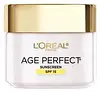
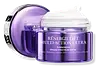
L'Oreal Age Perfect Day Cream SPF 15 Versus Lancôme Rénergie Lift Multi-Action Ultra Face Cream with SPF 30
This day moisturizer is formulated around Capryloyl Salicylic Acid to fight breakouts and control oil.
This anti-aging day moisturizer is formulated around Adenosine and Capryloyl Salicylic Acid to soften the look of wrinkles and fade the look of dark spots.

What's inside
What's inside
 Key Ingredients
Benefits
Concerns
Ingredients Side-by-side
Phenylbenzimidazole Sulfonic Acid 1.7%
UV Absorber
Ethylhexyl Methoxycinnamate 7.5%
UV Absorber

Water
Skin ConditioningCyclopentasiloxane
Emollient
Glycerin
Humectant


Paraffinum Liquidum
Emollient

Myristyl Myristate
Emollient



Stearic Acid
Cleansing
Triethanolamine
BufferingPalmitic Acid
Emollient
Ammonium Polyacryloyldimethyl Taurate
Emulsion StabilisingTitanium Dioxide
Cosmetic Colorant
PEG-100 Stearate
Surfactant
Glyceryl Stearate
Emollient
Mannitol
Humectant
PEG-20 Stearate
Emulsifying
Stearyl Alcohol
Emollient
Phenoxyethanol
Preservative
Tocopheryl Acetate
Antioxidant


Panthenol
Skin Conditioning

Cetyl Alcohol
Emollient
Capryloyl Salicylic Acid
Exfoliating




Acrylates Copolymer
Butylene Glycol
Humectant
Alumina
Abrasive
Cyclodextrin
AbsorbentYeast Extract
Skin ConditioningSoluble Collagen
Humectant
Disodium Succinate
MaskingScutellaria Baicalensis Root Extract
Astringent
Morus Bombycis Root Extract
Skin ConditioningDiazolidinyl Urea
Preservative
Methylparaben
Preservative
Butylparaben
Masking
Disodium EDTA
ChelatingParfum
Masking

Phenylbenzimidazole Sulfonic Acid 1.7%, Ethylhexyl Methoxycinnamate 7.5%, Water, Cyclopentasiloxane, Glycerin, Paraffinum Liquidum, Myristyl Myristate, Stearic Acid, Triethanolamine, Palmitic Acid, Ammonium Polyacryloyldimethyl Taurate, Titanium Dioxide, PEG-100 Stearate, Glyceryl Stearate, Mannitol, PEG-20 Stearate, Stearyl Alcohol, Phenoxyethanol, Tocopheryl Acetate, Panthenol, Cetyl Alcohol, Capryloyl Salicylic Acid, Acrylates Copolymer, Butylene Glycol, Alumina, Cyclodextrin, Yeast Extract, Soluble Collagen, Disodium Succinate, Scutellaria Baicalensis Root Extract, Morus Bombycis Root Extract, Diazolidinyl Urea, Methylparaben, Butylparaben, Disodium EDTA, Parfum
Butyl Methoxydibenzoylmethane 3%
UV Absorber
Ethylhexyl Salicylate 5%
UV Absorber
Octocrylene 7%
UV Absorber
Water
Skin ConditioningGlycerin
Humectant
Dimethicone
Emollient
Isononyl Isononanoate
EmollientPropanediol
Solvent
Vinyl Dimethicone/Methicone Silsesquioxane Crosspolymer
Alcohol Denat.
Antimicrobial

Bis-PEG-18 Methyl Ether Dimethyl Silane
EmollientPolyglyceryl-6 Distearate
Emulsifying
Jojoba Esters
Emollient
Tocopherol
Antioxidant
Limnanthes Alba Seed Oil
Skin Conditioning
Acacia Decurrens Flower Wax
Emollient
Guanosine
Skin ConditioningCyathea Medullaris Leaf Extract
Skin ConditioningSodium Hyaluronate
Humectant
Hydrolyzed Linseed Extract
Skin ConditioningSodium Hydroxide
BufferingSodium Dodecylbenzenesulfonate
CleansingSodium Benzoate
Masking
CI 17200
Cosmetic ColorantSodium Levulinate
Skin ConditioningPhenoxyethanol
Preservative
Adenosine
Skin Conditioning
PEG-8 Laurate
Emulsifying
Helianthus Annuus Seed Wax
Skin Conditioning
Polyglyceryl-3 Beeswax
Emulsifying
Polyglycerin-3
Humectant
Ammonium Acryloyldimethyltaurate/Steareth-25 Methacrylate Crosspolymer
Emulsion StabilisingDimethicone/Vinyl Dimethicone Crosspolymer
Skin Conditioning
Dimethiconol
Emollient
Limonene
Perfuming
Xanthan Gum
EmulsifyingBenzyl Alcohol
Perfuming
Cinnamic Acid
Perfuming
Leontopodium Alpinum Flower/Leaf Extract
Skin ConditioningCapryloyl Salicylic Acid
Exfoliating
Caprylyl Glycol
Emollient
Geraniol
Perfuming
Disodium Stearoyl Glutamate
CleansingDisodium EDTA
ChelatingCetyl Alcohol
Emollient
Citric Acid
Buffering
Potassium Sorbate
Preservative
Scutellaria Baicalensis Root Extract
Astringent
Levulinic Acid
Perfuming
Styrene/Acrylates Copolymer
Glyceryl Caprylate
EmollientParfum
Masking
Butyl Methoxydibenzoylmethane 3%, Ethylhexyl Salicylate 5%, Octocrylene 7%, Water, Glycerin, Dimethicone, Isononyl Isononanoate, Propanediol, Vinyl Dimethicone/Methicone Silsesquioxane Crosspolymer, Alcohol Denat., Bis-PEG-18 Methyl Ether Dimethyl Silane, Polyglyceryl-6 Distearate, Jojoba Esters, Tocopherol, Limnanthes Alba Seed Oil, Acacia Decurrens Flower Wax, Guanosine, Cyathea Medullaris Leaf Extract, Sodium Hyaluronate, Hydrolyzed Linseed Extract, Sodium Hydroxide, Sodium Dodecylbenzenesulfonate, Sodium Benzoate, CI 17200, Sodium Levulinate, Phenoxyethanol, Adenosine, PEG-8 Laurate, Helianthus Annuus Seed Wax, Polyglyceryl-3 Beeswax, Polyglycerin-3, Ammonium Acryloyldimethyltaurate/Steareth-25 Methacrylate Crosspolymer, Dimethicone/Vinyl Dimethicone Crosspolymer, Dimethiconol, Limonene, Xanthan Gum, Benzyl Alcohol, Cinnamic Acid, Leontopodium Alpinum Flower/Leaf Extract, Capryloyl Salicylic Acid, Caprylyl Glycol, Geraniol, Disodium Stearoyl Glutamate, Disodium EDTA, Cetyl Alcohol, Citric Acid, Potassium Sorbate, Scutellaria Baicalensis Root Extract, Levulinic Acid, Styrene/Acrylates Copolymer, Glyceryl Caprylate, Parfum
Reviews
Ingredients Explained
These ingredients are found in both products.
Ingredients higher up in an ingredient list are typically present in a larger amount.
Capryloyl Salicylic Acid comes from salicylic acid, the famous acne-fighting BHA.
It usually goes by a more common name of LHA, or lipohydroxy acid.
Like salicylic acid, this ingredient is a chemical exfoliant that can help break down the oil in your pores and reduce inflammation.
Though studies for LHA do show it to be less effective than salicylic acid. To be fair, salicylic acid is the reigning monarch of acne treatments.
However, a study from 2009 found LHA to be comparable to BPO, making it a good alternative for people with sensitive skin. Another study of 14 patients found a significant decrease in comedones after using LHA.
Another pro of LHA? It is less irritating than salicylic acid due to its large molecule size.
Large molecules cannot penetrate skin as well, so they are gentler on the skin. LHA is much less penetrative than salicylic acid.
An in-vitro study (not done on a living organism) found only 6% of LHA penetrated past the statum corneum compared to 58% of salicylic acid. An in-vivo (done on a living organism) analysis revealed ~17% of LHA was still present in the top layer of skin after 4 days, versus ~9% of salicylic acid.
Interestingly, a study from 2008 found LHA comparable to another famous acid, glycolic acid.
This study found about 10% of LHA is as effective as 20-50% of glycolic acid in treating hyperpigmentation and fine-lines.
Hydroxy acids have been found to stimulate skin protein, lipids, and thermal thickening. This may have anti-aging benefits.
Learn more about Capryloyl Salicylic AcidCetyl Alcohol is a fatty alcohol. Fatty Alcohols are most often used as an emollient or to thicken a product.
Its main roles are:
Though it has "alcohol" in the name, it is not related to denatured alcohol or ethyl alcohol.
The FDA allows products labeled "alcohol-free" to have fatty alcohols.
This ingredient may not be fungal acne safe. It is a primary fatty alcohol with a chain length above 12 carbons. A study from 2019 show Malassezia can feed on fatty alcohols in this range, so it may trigger fungal acne in those prone to it.
Learn more about Cetyl AlcoholDisodium EDTA is a chelating agent. It grabs onto and deactivates metal ions that sneak into your products from water, packaging, or air.
This ingredient mainly works behind the scenes and helps with:
On top of that, this ingredient can counteract the effects of hard water by binding to the minerals in it.
One thing worth knowing is that Disodium EDTA has been shown to be a mild penetration enhancer. It can help other ingredients absorb into skin more effectively which can be a double-edged sword (great for actives, but can also make the active too strong if you have sensitive skin).
Clinical patch testing showed no significant skin irritation at typical use concentrations and minimal dermal absorption.
You'll most likely see this ingredient near the end of an ingredient list. It's typically found in concentrations less than 1%.
Learn more about Disodium EDTAGlycerin (or glycerol) is a compound naturally found in your skin. It's a powerhouse humectant that pulls water into the stratum corneum.
Topically, glycerin does several things at once:
Your skin makes glycerin on its own (mostly from sebaceous oil breakdown) and shuttles it to your outermost layer of skin, or your epidermis, via aquaporin-3.
Aquaporin-3 is a transporter that is essential for normal skin hydration, elasticity, and repair. Interestingly, mice lacking in AQP3 have dry and less elastic skin that can be fully corrected with glycerin.
This ingredient is non-irritating, plays well with almost every ingredient, and works across all skin types. Typical use is anywhere between 3-10% but can go up to 79% in some leave-on products.
Just know very high concentrations (>40%) can feel tacky in low humidity.
Glycerin is the name for this ingredient in American English. British English uses Glycerol/Glycerine.
Learn more about GlycerinParfum is a catch-all term for an ingredient or more that is used to give a scent to products.
Also called "fragrance", this ingredient can be a blend of hundreds of chemicals or plant oils. This means every product with "fragrance" or "parfum" in the ingredients list is a different mixture.
For instance, Habanolide is a proprietary trade name for a specific aroma chemical. When used as a fragrance ingredient in cosmetics, most aroma chemicals fall under the broad labeling category of “FRAGRANCE” or “PARFUM” according to EU and US regulations.
The term 'parfum' or 'fragrance' is not regulated in many countries. In many cases, it is up to the brand to define this term.
For instance, many brands choose to label themselves as "fragrance-free" because they are not using synthetic fragrances. However, their products may still contain ingredients such as essential oils that are considered a fragrance by INCI standards.
One example is Calendula flower extract. Calendula is an essential oil that still imparts a scent or 'fragrance'.
Depending on the blend, the ingredients in the mixture can cause allergies and sensitivities on the skin. Some ingredients that are known EU allergens include linalool and citronellol.
Parfum can also be used to mask or cover an unpleasant scent.
The bottom line is: not all fragrances/parfum/ingredients are created equally. If you are worried about fragrances, we recommend taking a closer look at an ingredient. And of course, we always recommend speaking with a professional.
Learn more about ParfumPhenoxyethanol is one of the most widely used preservatives in skincare (and for good reason!).
It has a large spectrum of antimicrobial activity and especially effective bacteria, yeast, and mold while only having a weak effect on your skin's natural microbiome.
On a cellular level, it disrupts the cell membranes of microbes by poking holes that make the cell leak. This shuts down the chemical reactions the microbe needs to make energy so it can no longer survive.
Another perk of this ingredient is that it stays functional across a wide pH range (3-10).
You'll often see it paired with boosters like Ethylhexylglycerin; one study showed that a 1:9 ratio of Ethylhexylglycerin to Phenoxyethanol damages bacterial membranes as effectively as doubling the Phenoxyethanol concentration on its own.
Typical use concentrations range from 0.3-1% depending on the formula, and this ingredient is capped at 1% int the EU.
Safety-wise, the fear mongering does not hold up to the evidence. The EU's Scientific Committee on Consumer Safety and FDA consider it safe as a preservative at up to 1%, including for children of all ages.
Adverse systemic effects only showed up in animal studies at exposures roughly 200x higher than what people get from cosmetics. And despite its very widespread use, this ingredient is a rare sensitizer and allergic reactions are uncommon.
Learn more about PhenoxyethanolScutellaria Baicalensis Root Extract comes from the Baikal skullcap or Chinese skullcap plant. This plant is native to Northeast Asia and can be found in China, Mongolia, Korea, and Siberia.
In cosmetics, Scutellaria Baicalensis Root Extract provides antioxidant and anti-inflammatory benefits. This is due to the flavonoid composition of Scutellaria Baicalensis Root Extract.
In Chinese traditional folk medicine, Scutellaria Baicalensis Root Extract is used to help treat lung issues and hypertension.
Learn more about Scutellaria Baicalensis Root ExtractWater. It's the most common cosmetic ingredient of all. You'll usually see it at the top of ingredient lists, meaning that it makes up the largest part of the product.
So why is it so popular? Water most often acts as a solvent - this means that it helps dissolve other ingredients into the formulation.
You'll also recognize water as that liquid we all need to stay alive. If you see this, drink a glass of water. Remember to stay hydrated!
Learn more about Water

