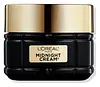
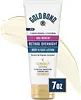
L'Oreal Age Perfect Cell Renewal Midnight Cream Versus Gold Bond Age Renew Retinol Overnight Body & Face Lotion
This night moisturizer is formulated around Saccharomyces/Xylinum/Black Tea Ferment and Capryloyl Salicylic Acid to calm irritation and control oil.


What's inside
What's inside
 Key Ingredients
Benefits
Concerns
Ingredients Side-by-side
Water
Skin ConditioningGlycerin
Humectant


Hydrogenated Polyisobutene
EmollientDimethicone
Emollient
Butylene Glycol
Humectant
Bis-Behenyl/Isostearyl/Phytosteryl Dimer Dilinoleyl Dimer Dilinoleate
EmollientButyrospermum Parkii Butter
Skin Conditioning




Limnanthes Alba Seed Oil
Skin Conditioning
Stearyl Alcohol
Emollient
C30-45 Alkyl Dimethicone
Skin Conditioning
PEG-20 Stearate
Emulsifying
Saccharomyces/Xylinum/Black Tea Ferment
Skin Conditioning
Panthenol
Skin Conditioning
Silica
Abrasive


Adenosine
Skin Conditioning
Capryloyl Salicylic Acid
Exfoliating

Hydroxyacetophenone
Antioxidant
Hydroxypropyl Tetrahydropyrantriol
Skin ConditioningNeohesperidin Dihydrochalcone
Masking

Pentaerythrityl Tetra-Di-T-Butyl Hydroxyhydrocinnamate
Antioxidant
Potassium Hydroxide
BufferingTetrasodium Glutamate Diacetate
ChelatingTocopherol
Antioxidant

Octyldodecanol
Emollient
Acrylates/C10-30 Alkyl Acrylate Crosspolymer
Emulsion StabilisingAmmonium Polyacryloyldimethyl Taurate
Emulsion StabilisingCaprylyl Glycol
Emollient
Carbomer
Emulsion StabilisingCitric Acid
Buffering
Glyceryl Stearate
Emollient
PEG-100 Stearate
Surfactant
PEG-30 Dipolyhydroxystearate
Emulsifying
Propylene Glycol
Humectant
Trideceth-6
EmulsifyingAlpha-Isomethyl Ionone
Perfuming

Benzyl Alcohol
Perfuming

Benzyl Salicylate
Perfuming
Citronellol
Perfuming
Geraniol
Perfuming
Hexyl Cinnamal
Perfuming
Hydroxycitronellal
Perfuming
Limonene
Perfuming
Linalool
Perfuming
CI 14700
Cosmetic ColorantCI 19140
Cosmetic ColorantChlorphenesin
Antimicrobial
Potassium Sorbate
Preservative
Sodium Benzoate
Masking
Parfum
Masking
Water, Glycerin, Hydrogenated Polyisobutene, Dimethicone, Butylene Glycol, Bis-Behenyl/Isostearyl/Phytosteryl Dimer Dilinoleyl Dimer Dilinoleate, Butyrospermum Parkii Butter, Limnanthes Alba Seed Oil, Stearyl Alcohol, C30-45 Alkyl Dimethicone, PEG-20 Stearate, Saccharomyces/Xylinum/Black Tea Ferment, Panthenol, Silica, Adenosine, Capryloyl Salicylic Acid, Hydroxyacetophenone, Hydroxypropyl Tetrahydropyrantriol, Neohesperidin Dihydrochalcone, Pentaerythrityl Tetra-Di-T-Butyl Hydroxyhydrocinnamate, Potassium Hydroxide, Tetrasodium Glutamate Diacetate, Tocopherol, Octyldodecanol, Acrylates/C10-30 Alkyl Acrylate Crosspolymer, Ammonium Polyacryloyldimethyl Taurate, Caprylyl Glycol, Carbomer, Citric Acid, Glyceryl Stearate, PEG-100 Stearate, PEG-30 Dipolyhydroxystearate, Propylene Glycol, Trideceth-6, Alpha-Isomethyl Ionone, Benzyl Alcohol, Benzyl Salicylate, Citronellol, Geraniol, Hexyl Cinnamal, Hydroxycitronellal, Limonene, Linalool, CI 14700, CI 19140, Chlorphenesin, Potassium Sorbate, Sodium Benzoate, Parfum
Water
Skin ConditioningHydroxyethyl Urea
Humectant
Butyrospermum Parkii Butter Extract
Skin Conditioning
Dimethicone
Emollient
Glycerin
Humectant
Stearyl Alcohol
Emollient
Niacinamide
Smoothing

Selaginella Lepidophylla Extract
EmollientSteareth-21
CleansingGlyceryl Stearate
Emollient
Cetyl Alcohol
Emollient
Jojoba Esters
Emollient
Jojoba Oil/Macadamia Seed Oil Esters
Skin Conditioning
Squalene
Emollient
Phytosteryl Macadamiate
Skin Conditioning
Phytosterols
Skin Conditioning
Tocopherol
Antioxidant
Retinol
Skin Conditioning
Cetearyl Alcohol
Emollient
Caprylic/Capric Triglyceride
Masking
Sodium Ascorbate
Antioxidant
Palmitoyl Hexapeptide-12
Skin Conditioning
Polysorbate 60
Emulsifying
Citrullus Lanatus Fruit Extract
Skin Conditioning
Pyrus Malus Fruit Extract
Skin Conditioning
Lens Esculenta Fruit Extract
Skin ConditioningSodium Lactate
Buffering
Sodium PCA
Humectant
Propylene Glycol
Humectant
Hydroxyacetophenone
Antioxidant
Theobroma Cacao Seed Butter
Emollient
Behentrimonium Methosulfate
SurfactantStearamidopropyl Pg-Dimonium Chloride Phosphate
Butylene Glycol
Humectant
Polyacrylate Crosspolymer-6
Emulsion StabilisingEthylhexylglycerin
Skin ConditioningGuar Hydroxypropyltrimonium Chloride
Skin ConditioningPanthenol
Skin Conditioning
Disodium EDTA
ChelatingCitric Acid
Buffering
C12-15 Alkyl Benzoate
AntimicrobialTribehenin
Emollient
Ceramide Ng
Skin Conditioning
PEG-10 Phytosterol
EmulsifyingCaramel
Cosmetic ColorantWater, Hydroxyethyl Urea, Butyrospermum Parkii Butter Extract, Dimethicone, Glycerin, Stearyl Alcohol, Niacinamide, Selaginella Lepidophylla Extract, Steareth-21, Glyceryl Stearate, Cetyl Alcohol, Jojoba Esters, Jojoba Oil/Macadamia Seed Oil Esters, Squalene, Phytosteryl Macadamiate, Phytosterols, Tocopherol, Retinol, Cetearyl Alcohol, Caprylic/Capric Triglyceride, Sodium Ascorbate, Palmitoyl Hexapeptide-12, Polysorbate 60, Citrullus Lanatus Fruit Extract, Pyrus Malus Fruit Extract, Lens Esculenta Fruit Extract, Sodium Lactate, Sodium PCA, Propylene Glycol, Hydroxyacetophenone, Theobroma Cacao Seed Butter, Behentrimonium Methosulfate, Stearamidopropyl Pg-Dimonium Chloride Phosphate, Butylene Glycol, Polyacrylate Crosspolymer-6, Ethylhexylglycerin, Guar Hydroxypropyltrimonium Chloride, Panthenol, Disodium EDTA, Citric Acid, C12-15 Alkyl Benzoate, Tribehenin, Ceramide Ng, PEG-10 Phytosterol, Caramel
Reviews
Ingredients Explained
These ingredients are found in both products.
Ingredients higher up in an ingredient list are typically present in a larger amount.
Butylene Glycol (or BG) is used within cosmetic products for a few different reasons:
Overall, Butylene Glycol is a safe and well-rounded ingredient that works well with other ingredients.
Though this ingredient works well with most skin types, some people with sensitive skin may experience a reaction such as allergic rashes, closed comedones, or itchiness.
Learn more about Butylene GlycolCitric Acid is an alpha hydroxy acid (AHA) naturally found in citrus fruits like oranges, lemons, and limes.
Like other AHAs, citric acid can exfoliate skin by breaking down the bonds that hold dead skin cells together. This helps reveal smoother and brighter skin underneath.
However, this exfoliating effect only happens at high concentrations (20%) which can be hard to find in cosmetic products.
Due to this, citric acid is usually included in small amounts as a pH adjuster. This helps keep products slightly more acidic and compatible with skin's natural pH.
In skincare formulas, citric acid can:
While it can provide some skin benefits, research shows lactic acid and glycolic acid are generally more effective and less irritating exfoliants.
Most citric acid used in skincare today is made by fermenting sugars (usually from molasses). This synthetic version is identical to the natural citrus form but easier to stabilize and use in formulations.
Rosacea skin has a lower threshold for acids generally, with 62.5% of rosacea subjects in one study reacting to lactic acid in a sting test. This is why we mark citric acid as a potential rosacea trigger.
However, this ingredient shows up as a pH adjuster or chelator at roughly 0.1-1% in many products. These low levels are unlikely to be an issue for rosacea skin and becomes a potential trigger at exfoliating concentrations (20%). Because everybody's skin is unique, we recommend a patch test if you are unsure.
Learn more about Citric AcidDimethicone is a type of synthetic silicone created from natural materials such as quartz. It is also known as polydimethylsiloxane.
What it does:
Dimethicone comes in different viscosities:
Depending on the viscosity, dimethicone has different properties.
Ingredients lists don't always show which type is used, so we recommend reaching out to the brand if you have questions about the viscosity.
This ingredient is unlikely to cause irritation because it does not get absorbed into skin. However, people with silicone allergies should be careful about using this ingredient.
Note: Dimethicone may contribute to pilling. This is because it is not oil or water soluble, so pilling may occur when layered with products. When mixed with heavy oils in a formula, the outcome is also quite greasy.
Learn more about DimethiconeGlycerin (or glycerol) is a compound naturally found in your skin. It's a powerhouse humectant that pulls water into the stratum corneum.
Topically, glycerin does several things at once:
Your skin makes glycerin on its own (mostly from sebaceous oil breakdown) and shuttles it to your outermost layer of skin, or your epidermis, via aquaporin-3.
Aquaporin-3 is a transporter that is essential for normal skin hydration, elasticity, and repair. Interestingly, mice lacking in AQP3 have dry and less elastic skin that can be fully corrected with glycerin.
This ingredient is non-irritating, plays well with almost every ingredient, and works across all skin types. Typical use is anywhere between 3-10% but can go up to 79% in some leave-on products.
Just know very high concentrations (>40%) can feel tacky in low humidity.
Glycerin is the name for this ingredient in American English. British English uses Glycerol/Glycerine.
Learn more about GlycerinGlyceryl Stearate is made by reacting glycerin with stearic acid (typically sourced from plant oils like palm or coconut). It's an emulsifier, emollient, and mild occlusive.
Emulsifiers help ingredients like oil and water stay mixed so your formula stays nicely blended and uniform in texture.
This ingredient is typically used in concentrations between 1-10%. Studies have found it to be non-sensitizing, non-phototoxic, and non-photoallergenic.
A close cousin of this ingredient is Glyceryl Stearate SE ("self-emulsifying"). This just has a small amount of sodium or potassium stearate added so it can emulsify without a co-emulsifier.
Since this ingredient is an ester of a C18 fatty acid, it may not be fungal acne safe. The Malassezia yeast can potentially metabolize within the C11-C24 range.
Fun fact: The human body also creates Glyceryl Stearate naturally.
Learn more about Glyceryl StearateHydroxyacetophenone is a small phenolic molecule that earns its place in a formulas as an antioxidant and preservative booster.
As a phenol, it is able to neutralize free radicals to protect both the product and the skin from oxidative stress.
Though it can't kill microbes on its own, it works as a good supporting agent when combined with other preservatives like Phenoxyethanol or 1,2-Hexanediol.
This ingredient naturally occurs as piceol in Norwegian spruce needles (~0.4-1.1% dry weight and in cloudberries). Though the cosmetic-grade material is synthesized for purity and consistency.
You'll usually see it used at low levels and suppliers recommend up to 1% added to a water phase.
Safety testing was done at concentrations like 0.05% in SPF products and 0.5% in a Human Repeated Insult Patch Test. The safety evidence is assuring; this ingredient is safe for cosmetics in current use and also holds safety status as a food flavoring as well.
An honest caveat: the "soothing" and "anti-inflammatory" claims come mostly from supplier marketing rather than published clinical trials. The Cosmetic Ingredient Review's own literature search found no useful efficacy studies on this ingredient.
So the antioxidant and preservative-boosting roles are the well supported ones while the calming benefit is plausible but thinly evidenced.
Overall, this is a well-tolerated, low-irritation multitasker that quietly helps a formula stay fresh and stable.
Learn more about HydroxyacetophenonePanthenol is a common ingredient that helps hydrate and soothe the skin. It is found naturally in our skin and hair.
There are two forms of panthenol: D and L.
D-panthenol is also known as dexpanthenol. Most cosmetics use dexpanthenol or a mixture of D and L-panthenol.
Panthenol is famous due to its ability to go deeper into the skin's layers. Using this ingredient has numerous pros (and no cons):
Like hyaluronic acid, panthenol is a humectant. Humectants are able to bind and hold large amounts of water to keep skin hydrated.
This ingredient works well for wound healing. It works by increasing tissue in the wound and helps close open wounds.
Once oxidized, panthenol converts to pantothenic acid. Panthothenic acid is found in all living cells.
This ingredient is also referred to as pro-vitamin B5.
Learn more about PanthenolPropylene Glycol is a synthetic, colorless, odorless liquid that has been a staple in cosmetics for decades. It is a skin conditioning agent, humectant, and solvent.
As a humectant, it draw water to the skin to reduce flaking and restore suppleness. It's also a solvent that helps dissolve other actives and keeps formulas stable across temperature changes.
The CIR Expert Panel has confirmed this ingredient to be nontoxic and clinical studies show no sensitization at cosmetic use concentrations.
True allergic reactions are quite rare: a 15-year retrospective study of 6,751 patients found only 0.31% had a positive reaction (and less than half were considered clinically relevant).
It seemed that when sensitization does occur, it's most commonly linked to topical medication (like corticosteroids) and not cosmetics. Allergic contact dermatitis also appears largely limited to individuals with underlying skin conditions.
Overall, propylene glycol is a well-studied ingredient that most people can tolerate without issue.
Learn more about Propylene GlycolStearyl Alcohol is a type of fatty alcohol from stearic acid. It is a white, waxy compound used to emulsify ingredients used as an emollient or to thicken a product.
Emollients help soothe and hydrate the skin by trapping moisture.
Fatty alcohols are usually derived from natural fats and oils and therefore do not have the same drying or irritating effect as solvent (ethanol) alcohols.
The FDA allows products labeled "alcohol-free" to have fatty alcohols.
This ingredient may not be fungal acne safe. It is a primary fatty alcohol with a chain length above 12 carbons. A study from 2019 show Malassezia can feed on fatty alcohols in this range, so it may trigger fungal acne in those prone to it.
Learn more about Stearyl AlcoholTocopherol is a fat-soluble antioxidant known as Vitamin E.
You'll find this ingredient in the vast majority of skincare (for good reason). It works to neutralize free radicals, or unstable molecules generated by UV exposure, pollution, and other environmental stressors, before they can cause oxidative damage to your skin cells.
Topically applied tocopherol has been shown to protect against UV damage by ramping up the skin's own natural defense enzymes.
It also acts as a skin conditioning agent; some studies show that regular topical use can improve the skin's water-binding capacity over 2-4 weeks.
This ingredient is especially loved for being a team player. When combined with Vitamin C, the photoprotective effect of both ingredients roughly doubles and the combo also helps reduce UV-induced DNA damage.
This ingredient has some brightening potential but it's more of a prevention ingredient than spot-fader. Cell studies show it can slow down melanin production but it's worth noting that it's not the most powerful brightener out there.
In formulations, it also serves as a stabilizer that helps protect other oxidation-prone ingredients from degrading.
Concentrations usually range from 0.1-1% in most leave-on products.
Learn more about TocopherolWater. It's the most common cosmetic ingredient of all. You'll usually see it at the top of ingredient lists, meaning that it makes up the largest part of the product.
So why is it so popular? Water most often acts as a solvent - this means that it helps dissolve other ingredients into the formulation.
You'll also recognize water as that liquid we all need to stay alive. If you see this, drink a glass of water. Remember to stay hydrated!
Learn more about Water

