Herbivore Nova 15% Vitamin C + Turmeric Brightening Serum Versus Goodal Green Tangerine Vita C Dark Spot Serum
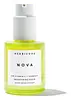
This brightening serum is formulated around Tetrahexyldecyl Ascorbate and Arctostaphylos Uva-Ursi Leaf Extract to brighten dull-looking skin and fade the look of dark spots.
This brightening serum is formulated around Niacinamide and Arbutin to fade the look of dark spots and brighten dull-looking skin.


What's inside
What's inside
 Key Ingredients
Benefits
Concerns
Ingredients Side-by-side
Water
Skin ConditioningTetrahexyldecyl Ascorbate
Antioxidant






Glycerin
Humectant

C9-12 Alkane
SolventSodium Stearoyl Glutamate
CleansingPropanediol
Solvent
Cetearyl Olivate


Sorbitan Olivate
Emulsifying
Arctostaphylos Uva-Ursi Leaf Extract
Skin Conditioning
Curcuma Longa Root Extract
Antioxidant
Terminalia Chebula Fruit Extract
Skin ConditioningTerminalia Ferdinandiana Fruit Extract
Antioxidant
Hyaluronic Acid
Humectant

Polyglyceryl-6 Stearate
Emollient
Sclerotium Gum
Emulsion StabilisingPolyglyceryl-6 Polyricinoleate
Emulsifying
Sodium Levulinate
Skin ConditioningSodium Anisate
AntimicrobialMelia Azadirachta Flower Extract
Skin ConditioningCoco-Caprylate/Caprate
Emollient
Butylene Glycol
Humectant
Melia Azadirachta Leaf Extract
Skin ConditioningOcimum Sanctum Leaf Extract
Skin ConditioningSodium Phytate
Averrhoa Carambola Fruit Extract
Skin ConditioningPolyglyceryl-6 Behenate
Emulsion Stabilising
Ocimum Basilicum Flower/Leaf Extract
TonicTocopheryl Acetate
Antioxidant
Echinacea Purpurea Extract
MoisturisingAnanas Sativus Fruit Juice
Skin ConditioningCorallina Officinalis Extract
Skin Conditioning
Leuconostoc/Radish Root Ferment Filtrate
Antimicrobial
Citric Acid
Buffering
Water, Tetrahexyldecyl Ascorbate, Glycerin, C9-12 Alkane, Sodium Stearoyl Glutamate, Propanediol, Cetearyl Olivate, Sorbitan Olivate, Arctostaphylos Uva-Ursi Leaf Extract, Curcuma Longa Root Extract, Terminalia Chebula Fruit Extract, Terminalia Ferdinandiana Fruit Extract, Hyaluronic Acid, Polyglyceryl-6 Stearate, Sclerotium Gum, Polyglyceryl-6 Polyricinoleate, Sodium Levulinate, Sodium Anisate, Melia Azadirachta Flower Extract, Coco-Caprylate/Caprate, Butylene Glycol, Melia Azadirachta Leaf Extract, Ocimum Sanctum Leaf Extract, Sodium Phytate, Averrhoa Carambola Fruit Extract, Polyglyceryl-6 Behenate, Ocimum Basilicum Flower/Leaf Extract, Tocopheryl Acetate, Echinacea Purpurea Extract, Ananas Sativus Fruit Juice, Corallina Officinalis Extract, Leuconostoc/Radish Root Ferment Filtrate, Citric Acid
Citrus Tangerina Extract
TonicButylene Glycol
Humectant
Niacinamide
Smoothing



Dipropylene Glycol
HumectantMethyl Gluceth-20
Humectant
Water
Skin Conditioning1,2-Hexanediol
Skin Conditioning
Glycereth-26
Humectant
Arbutin
Antioxidant
Chondrus Crispus Extract
Skin Conditioning
Saccharum Officinarum Extract
MoisturisingHydrolyzed Jojoba Esters
Skin Conditioning
Sodium Hyaluronate
Humectant
Citrus Aurantium Bergamia Fruit Oil
Masking


Melia Azadirachta Flower Extract
Skin ConditioningOcimum Sanctum Leaf Extract
Skin ConditioningMelia Azadirachta Leaf Extract
Skin ConditioningCurcuma Longa Root Extract
Antioxidant
Corallina Officinalis Extract
Skin Conditioning
Lavandula Angustifolia Oil
Masking
Citrus Limon Peel Oil
Masking

Cananga Odorata Flower Oil
Masking
Citrus Aurantium Dulcis Peel Oil
Masking
Eucalyptus Globulus Leaf Extract
Perfuming
Glycyrrhiza Uralensis Root Extract
Skin Conditioning
Anthemis Nobilis Flower Extract
Masking
Camellia Sinensis Leaf Extract
Antimicrobial
Centella Asiatica Extract
Cleansing
Rosmarinus Officinalis Leaf Extract
AntimicrobialPolygonum Cuspidatum Root Extract
Antioxidant
Centella Asiatica Leaf Extract
Skin Conditioning
Ammonium Acryloyldimethyltaurate/Vp Copolymer
Panthenol
Skin Conditioning
Choleth-24
EmulsifyingTromethamine
BufferingEthylhexylglycerin
Skin ConditioningAllantoin
Skin Conditioning
Tocopheryl Acetate
Antioxidant
Adenosine
Skin Conditioning
Sodium Phytate
Ascorbyl Glucoside
Antioxidant
Dipotassium Glycyrrhizate
Humectant
Glycerin
Humectant
Madecassoside
Antioxidant
Maltodextrin
Absorbent
Saccharide Hydrolysate
HumectantTocopherol
Antioxidant
Asiaticoside
Antioxidant
Carbomer
Emulsion StabilisingXanthan Gum
EmulsifyingLimonene
Perfuming
Linalool
Perfuming
Citrus Tangerina Extract, Butylene Glycol, Niacinamide, Dipropylene Glycol, Methyl Gluceth-20, Water, 1,2-Hexanediol, Glycereth-26, Arbutin, Chondrus Crispus Extract, Saccharum Officinarum Extract, Hydrolyzed Jojoba Esters, Sodium Hyaluronate, Citrus Aurantium Bergamia Fruit Oil, Melia Azadirachta Flower Extract, Ocimum Sanctum Leaf Extract, Melia Azadirachta Leaf Extract, Curcuma Longa Root Extract, Corallina Officinalis Extract, Lavandula Angustifolia Oil, Citrus Limon Peel Oil, Cananga Odorata Flower Oil, Citrus Aurantium Dulcis Peel Oil, Eucalyptus Globulus Leaf Extract, Glycyrrhiza Uralensis Root Extract, Anthemis Nobilis Flower Extract, Camellia Sinensis Leaf Extract, Centella Asiatica Extract, Rosmarinus Officinalis Leaf Extract, Polygonum Cuspidatum Root Extract, Centella Asiatica Leaf Extract, Ammonium Acryloyldimethyltaurate/Vp Copolymer, Panthenol, Choleth-24, Tromethamine, Ethylhexylglycerin, Allantoin, Tocopheryl Acetate, Adenosine, Sodium Phytate, Ascorbyl Glucoside, Dipotassium Glycyrrhizate, Glycerin, Madecassoside, Maltodextrin, Saccharide Hydrolysate, Tocopherol, Asiaticoside, Carbomer, Xanthan Gum, Limonene, Linalool
Reviews
Ingredients Explained
These ingredients are found in both products.
Ingredients higher up in an ingredient list are typically present in a larger amount.
Butylene Glycol (or BG) is used within cosmetic products for a few different reasons:
Overall, Butylene Glycol is a safe and well-rounded ingredient that works well with other ingredients.
Though this ingredient works well with most skin types, some people with sensitive skin may experience a reaction such as allergic rashes, closed comedones, or itchiness.
Learn more about Butylene GlycolCorallina Officinalis Extract is from the red seaweed, Corallina Officinalis. This seaweed is found all over the world but is most common in the rocky shores of Great Britain and Ireland.
Corallina Officinalis Extract contains antioxidant and emollient properties.
Extracted polysaccharides, galactose and xylose, in red algae showed antioxidant activity. Antioxidants help with anti-aging by neutralizing free-radical molecules. Free-radical molecules may damage your skin cells and DNA. Galactose is also a PHA.
Corallina Officinalis is structurally similar to coral due to its high calcium content.
Learn more about Corallina Officinalis ExtractCurcuma Longa Root Extract comes from the rhizome (underground stem) of the turmeric plant.
While the official EU Cosing Database lists this ingredient as a fragrance, it actually does more than give products a scent.
This ingredient contains a group of yellow pigments called curcuminoids (mostly curcumin) that give it genuine antioxidant and anti-inflammatory activity in skin.
Reviews of topical clinical studies have found turmeric/curcumin to be generally well-tolerated and useful across conditions like eczema and mild inflammation.
One thing working in its favor is that curcumin barely penetrates; in lab skin-permeation testing, the curcuminoids mostly stayed in the outermost layer of skin. This is a good thing because its soothing and antioxidant activity is a surface-level job anyway.
At this time, industry data shows there's no single "correct" cosmetic percentage. It's used across a wide range depending on the product and varies from tiny fractions of a percent up to a few percent.
Allergy-wise, curcumin is a documented (but uncommon) contact allergen. It can also cross react with related plants, so anyone with a turmeric/ginger/cinnamon allergy or reactive skin should patch test first.
Learn more about Curcuma Longa Root ExtractGlycerin (or glycerol) is a compound naturally found in your skin. It's a powerhouse humectant that pulls water into the stratum corneum.
Topically, glycerin does several things at once:
Your skin makes glycerin on its own (mostly from sebaceous oil breakdown) and shuttles it to your outermost layer of skin, or your epidermis, via aquaporin-3.
Aquaporin-3 is a transporter that is essential for normal skin hydration, elasticity, and repair. Interestingly, mice lacking in AQP3 have dry and less elastic skin that can be fully corrected with glycerin.
This ingredient is non-irritating, plays well with almost every ingredient, and works across all skin types. Typical use is anywhere between 3-10% but can go up to 79% in some leave-on products.
Just know very high concentrations (>40%) can feel tacky in low humidity.
Glycerin is the name for this ingredient in American English. British English uses Glycerol/Glycerine.
Learn more about GlycerinMelia Azadirachta Flower Extract is from the Neem tree. Neem trees originate from India.
Melia Azadirachta Flower Extract contains antioxidants. Antioxidants help fight free-radicals. Free-radicals are molecules that may damage your skin cells, such as pollution.
The flowers of this tree are lilac colored.
Learn more about Melia Azadirachta Flower ExtractThis ingredient is also known as neem leaf extract. It contains natural compounds like nimbidin, quercetin, and other polyphenols that give it antibacterial, antifungal, and anti-inflammatory activity.
Lab studies have shown neem leaf extract can inhibit acne-related bacteria and help calm skin. Animal studies on wound gels using 1-3% neem leaf extract found it sped up healing without causing irritation.
A wound-healing study testing gels with the extract at 1%, 2%, and 3% concentrations and found none of them irritated the skin.
Most commercial products also use it in a similar low range (typically under 5%).
Allergy-wise, there are some case reports on neem oil causing allergic contact dermatitis so people with plant/botanical sensitivities may want to patch test first.
Learn more about Melia Azadirachta Leaf ExtractOcimum Sanctum Leaf Extract comes from the Holy Basil plant. Holy Basil is native to India.
Holy Basil is rich in antioxidants due to its high romarinic acid, ferulic acid, and rutin content. This gives it skin brightening and soothing properties.
While Holy Basil has many claims to help fight acne, more research is needed.
One thing to note is the presence of tannins; tannins are naturally found in nature. However, this compound may be skin-sensitizing.
Learn more about Ocimum Sanctum Leaf ExtractSodium Phytate is the synthetic salt form of phytic acid. Phytic acid is an antioxidant and can be found in plant seeds.
Sodium Phytate is a chelating agent. Chelating agents help prevent metals from binding to water. This helps stabilize the ingredients and the product.
Tocopheryl Acetate is a stable, shelf-friendly form of vitamin E.
Formulators love it because plain vitamin E oxidizes quickly once it hits air. This acetate version stays stable and resists going off, helping to extend a product's shelf life.
It's actually inactive on its own and works like a slow-release "storage" form; the enzymes in your skin called esterases gradually convert it into active vitamin E over time.
One in vivo study showed 5% of the acetate in the living layer of the epidermis converted to vitamin E after 5 days of application. This study also found the skin gained protection against UV damage even though the conversion was slow and small.
Once converted, vitamin E acts as a skin's main fat-soluble antioxidant that fights free radicals to protect skin from damage.
Topical vitamin E generally boosts the skin's photoprotection, and it reduced UV-damage in animal models.
This ingredient has some brightening potential but it's more of a prevention ingredient than spot-fader. Cell studies show it can slow down melanin production but it's worth noting that it's not the most powerful brightener out there.
Overall, it has a pretty solid safety profile and has been found to be non-irritating and non-comedogenic. Allergic reactions may happen but stay rare due to how widely the ingredient gets used.
The concentration will vary depending on the formula; industry data shows 0.1% in baby lotions, 3% in lipsticks, and 5% in foot powders. You can also find this ingredient at 100% in a pure vitamin E oil.
Most leave-on skincare keeps it at the lower end, often between 0.5-1%.
Learn more about Tocopheryl AcetateWater. It's the most common cosmetic ingredient of all. You'll usually see it at the top of ingredient lists, meaning that it makes up the largest part of the product.
So why is it so popular? Water most often acts as a solvent - this means that it helps dissolve other ingredients into the formulation.
You'll also recognize water as that liquid we all need to stay alive. If you see this, drink a glass of water. Remember to stay hydrated!
Learn more about Water

