This calming sheet mask is formulated around Centella Asiatica Extract and Sodium Hyaluronate to calm redness and hydrate skin.
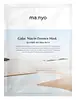
This brightening sheet mask is formulated around Niacinamide and Galactomyces Ferment Filtrate to brighten dull-looking skin and refine skin texture.

What's inside
What's inside
 Key Ingredients
Benefits
Concerns
Ingredients Side-by-side
Water
Skin ConditioningGlycerin
Humectant


Propanediol
Solvent
1,2-Hexanediol
Skin Conditioning
Hexylene Glycol
EmulsifyingHydroxyacetophenone
Antioxidant
Hydrolyzed Jojoba Esters
Skin Conditioning

Xanthan Gum
EmulsifyingBetaine
Humectant
Trehalose
Humectant
Hydroxyethylcellulose
Emulsion StabilisingCetearyl Olivate
Carbomer
Emulsion StabilisingSorbitan Olivate
Emulsifying
Polyglyceryl-10 Laurate
Skin Conditioning
Polyglyceryl-10 Myristate
Skin Conditioning
Dipropylene Glycol
HumectantButylene Glycol
Humectant
Disodium EDTA
ChelatingCaprylic/Capric Triglyceride
Masking
Centella Asiatica Extract
Cleansing

Rosa Damascena Flower Oil
Masking




Anthemis Nobilis Flower Extract
Masking
Hydrogenated Lecithin
Emulsifying
Rosa Centifolia Flower Extract
Astringent
Sodium Hyaluronate
Humectant
Anastatica Hierochuntica Extract
AstringentCeramide NP
Skin Conditioning
Cholesterol
Emollient
Pentylene Glycol
Skin Conditioning
Caprylyl Glycol
Emollient
Hydroxypropyltrimonium Hyaluronate
Hydrolyzed Hyaluronic Acid
Humectant
Sodium Acetylated Hyaluronate
Humectant
Hyaluronic Acid
Humectant
Hydrolyzed Sodium Hyaluronate
Skin Conditioning
Sodium Hyaluronate Crosspolymer
Humectant
Potassium Hyaluronate
Skin ConditioningWater, Glycerin, Propanediol, 1,2-Hexanediol, Hexylene Glycol, Hydroxyacetophenone, Hydrolyzed Jojoba Esters, Xanthan Gum, Betaine, Trehalose, Hydroxyethylcellulose, Cetearyl Olivate, Carbomer, Sorbitan Olivate, Polyglyceryl-10 Laurate, Polyglyceryl-10 Myristate, Dipropylene Glycol, Butylene Glycol, Disodium EDTA, Caprylic/Capric Triglyceride, Centella Asiatica Extract, Rosa Damascena Flower Oil, Anthemis Nobilis Flower Extract, Hydrogenated Lecithin, Rosa Centifolia Flower Extract, Sodium Hyaluronate, Anastatica Hierochuntica Extract, Ceramide NP, Cholesterol, Pentylene Glycol, Caprylyl Glycol, Hydroxypropyltrimonium Hyaluronate, Hydrolyzed Hyaluronic Acid, Sodium Acetylated Hyaluronate, Hyaluronic Acid, Hydrolyzed Sodium Hyaluronate, Sodium Hyaluronate Crosspolymer, Potassium Hyaluronate
Water
Skin ConditioningMethylpropanediol
Solvent1,2-Hexanediol
Skin Conditioning
Glycerin
Humectant
Niacinamide 2%
Smoothing





Butylene Glycol
Humectant
Galactomyces Ferment Filtrate
Humectant
Glycyrrhiza Uralensis Root Extract
Skin Conditioning
Chrysanthemum Zawadskii Extract
Skin ConditioningAnastatica Hierochuntica Extract
AstringentAlthaea Rosea Flower Extract
Skin ConditioningHamamelis Virginiana Water
Astringent

Hydrolyzed Hyaluronic Acid
Humectant
Hyaluronic Acid
Humectant
Sodium Hyaluronate
Humectant
Cyperus Rotundus Root Extract
Skin ConditioningLeonurus Sibiricus Extract
Skin ConditioningPaeonia Albiflora Flower Extract
TonicHydroxyethyl Urea
Humectant
Allantoin
Skin Conditioning
Tromethamine
BufferingEthylhexylglycerin
Skin ConditioningCentella Asiatica Extract
Cleansing
Lactobacillus Ferment
Skin Conditioning
Gynostemma Pentaphyllum Leaf/Stem Extract
Antioxidant
Oenothera Biennis Flower Extract
AstringentPinus Palustris Leaf Extract
TonicPueraria Thunbergiana Root Extract
Skin ConditioningUlmus Davidiana Root Extract
Skin Conditioning
Artemisia Capillaris Extract
Polyglyceryl-10 Laurate
Skin Conditioning
Polyglyceryl-10 Myristate
Skin Conditioning
Panthenol
Skin Conditioning
Sodium Phytate
ChelatingGlutathione
Glycine
Buffering
Serine
Masking
Glutamic Acid
Humectant
Aspartic Acid
Masking
Leucine
Skin ConditioningAlanine
Masking
Lysine
Skin ConditioningArginine
Masking
Tyrosine
MaskingPhenylalanine
Masking
Proline
Skin Conditioning
Threonine
Valine
MaskingIsoleucine
Skin ConditioningHistidine
Humectant
Cysteine
Antioxidant
Methionine
Skin ConditioningCarbomer
Emulsion StabilisingCaffeine
Skin Conditioning
Xanthan Gum
EmulsifyingAdenosine
Skin Conditioning
Water, Methylpropanediol, 1,2-Hexanediol, Glycerin, Niacinamide 2%, Butylene Glycol, Galactomyces Ferment Filtrate, Glycyrrhiza Uralensis Root Extract, Chrysanthemum Zawadskii Extract, Anastatica Hierochuntica Extract, Althaea Rosea Flower Extract, Hamamelis Virginiana Water, Hydrolyzed Hyaluronic Acid, Hyaluronic Acid, Sodium Hyaluronate, Cyperus Rotundus Root Extract, Leonurus Sibiricus Extract, Paeonia Albiflora Flower Extract, Hydroxyethyl Urea, Allantoin, Tromethamine, Ethylhexylglycerin, Centella Asiatica Extract, Lactobacillus Ferment, Gynostemma Pentaphyllum Leaf/Stem Extract, Oenothera Biennis Flower Extract, Pinus Palustris Leaf Extract, Pueraria Thunbergiana Root Extract, Ulmus Davidiana Root Extract, Artemisia Capillaris Extract, Polyglyceryl-10 Laurate, Polyglyceryl-10 Myristate, Panthenol, Sodium Phytate, Glutathione, Glycine, Serine, Glutamic Acid, Aspartic Acid, Leucine, Alanine, Lysine, Arginine, Tyrosine, Phenylalanine, Proline, Threonine, Valine, Isoleucine, Histidine, Cysteine, Methionine, Carbomer, Caffeine, Xanthan Gum, Adenosine
Reviews
Ingredients Explained
These ingredients are found in both products.
Ingredients higher up in an ingredient list are typically present in a larger amount.
1,2-Hexanediol is a synthetic liquid and another multi-functional powerhouse.
It is a:
- Humectant, drawing moisture into the skin
- Emollient, helping to soften skin
- Solvent, dispersing and stabilizing formulas
- Preservative booster, enhancing the antimicrobial activity of other preservatives
Anastatica Hierochuntica Extract is from a plant called the Rose of Jericho. This plane is found in the deserts of the Middle East and North Africa.
Anastatica Hierochuntica Extract has antioxidant properties. Antioxidants help fight free-radicals. Free-radicals are molecules that may damage your skin cells.
Butylene Glycol (or BG) is used within cosmetic products for a few different reasons:
Overall, Butylene Glycol is a safe and well-rounded ingredient that works well with other ingredients.
Though this ingredient works well with most skin types, some people with sensitive skin may experience a reaction such as allergic rashes, closed comedones, or itchiness.
Learn more about Butylene GlycolCarbomer is a synthetic thickening and gelling agent. It's basically the ingredient that gives a lot of serums, gels, creams, and sunscreens their smooth, non-sticky texture.
Although legally permitted at very high levels, carbomers are normally used at concentrations below 1%.
It also needs to be neutralized to actually thicken, and because it is a large molecule, it doesn't really penetrate the skin barrier.
Allergy-wise, the risk is very low. Clinical studies show carbomers have low potential for skin irritation/sensitization even at concentrations up to 100%.
A 2024 UK study patch-tested 1,302 patients and found true allergy to the parent group of carbomer to be rare with no confirmed relevant reactions.
Learn more about CarbomerCentella Asiatica Extract (Centella) is one of the most researched botanical extracts in skincare with decades of studies backing its effects on inflammation, collagen, and the skin barrier.
That research keeps pointing back to the same four triterpenoid saponins: Asiaticoside, Madecassoside, Asiatic Acid, and Madecassic Acid.
These compounds allow centella to dial back inflammation, encourage the skin to build and hold onto collagen, support the barrier and hydration, and bring solid antioxidant activity to protect against signs of aging.
Centella also carries a nice supporting cast of Vitamin A, vitamin C, several B vitamins, and amino acids. Put it all together and you get an ingredient that soothes, hydrates, and protects, all at once.
Most of centella's magic comes from the four big compounds (Asiaticoside, Madecassoside, Asiatic Acid, and Madecassic Acid). These are the actives doing the heavy lifting in almost every centella study.
Here is the short version of what they do in the skin:
So it is not just soothing for the sake of soothing. Centella calms the skin AND helps it rebuild.
Just FYI, not all centella on an ingredient list is the same. What you are getting actually depends on the extract:
Fun fact on the ratios: the leaves tend to be richest in Madecassoside and Asiaticoside, and lower in the two acids. The exact amounts shift with where the plant is grown and how it is processed. This means purity really does vary brand to brand.
Centella is one of the most easygoing actives out there.
It layers well with basically everything: niacinamide, hyaluronic acid, peptides, and vitamin C, and also pairs nicely with stronger actives like retinoids and exfoliating acids where it can help take the edge off irritation.
On the safety side, centella and its triterpenes are classified as weak sensitizers, meaning allergic reactions are possible but uncommon.
Patch tests at 1% and 5% came back negative in test panels, and creams at typical use levels did not cause allergic reactions across large groups of people.
But as with any new active, a patch test is still a smart move for very reactive skin.
Centella is widely used because it is effective at low percentages. For context, human safety testing found no meaningful irritation from creams containing centella extract at everyday use levels (the tested amounts were well under 1%).
The irritancy threshold in animal testing was also above 30% (so real-world formulas sit far below anything concerning).
In collagen lab studies, higher concentrations drove more collagen synthesis, so serums built around centella tend to feature it more prominently.
Bottom line: you will find centella working nicely anywhere from a fraction of a percent up to hero-ingredient levels depending on whether it is a supporting soother or the main event.
Fun fact: Centella has been used as a medicine and in food for many centuries. As a medicine, it is used to treat burns, scratches, and wounds.
Learn more about Centella Asiatica ExtractGlycerin (or glycerol) is a compound naturally found in your skin. It's a powerhouse humectant that pulls water into the stratum corneum.
Topically, glycerin does several things at once:
Your skin makes glycerin on its own (mostly from sebaceous oil breakdown) and shuttles it to your outermost layer of skin, or your epidermis, via aquaporin-3.
Aquaporin-3 is a transporter that is essential for normal skin hydration, elasticity, and repair. Interestingly, mice lacking in AQP3 have dry and less elastic skin that can be fully corrected with glycerin.
This ingredient is non-irritating, plays well with almost every ingredient, and works across all skin types. Typical use is anywhere between 3-10% but can go up to 79% in some leave-on products.
Just know very high concentrations (>40%) can feel tacky in low humidity.
Glycerin is the name for this ingredient in American English. British English uses Glycerol/Glycerine.
Learn more about GlycerinHyaluronic acid (HA) is a glycosaminoglycan (basically a long sugar chain) that your skin already makes on its own. In your skin, HA lives in the extracellular matrix and acts as the body's moisture reservoir.
Topically, HA is a humectant that binds water and helps skin look more plump, smooth, and hydrated.
The only catch is that HA isn't a single thing; it actually comes in a wide range of molecular weights (~50 - 2,000+ kDA) and size matters.
Some clinical evidence links low molecular weight versions to improved wrinkle depth, elasticity, anti-inflammatory effects, and barrier repair.
This is why the best HA serums blend the two sizes together so you get the best of both worlds.
The majority of cosmetic HA is produced by bacterial fermentation, typically using Streptococcus or Bacillus strains. Typical use levels in skincare sit around 0.1-2%.
A clinical study using a 0.2% low-molecular weight HA gel showed improvement in facial seborrheic dermatitis with excellent tolerance.
These are some other common types of Hyaluronic Acid:
Learn more about Hyaluronic AcidHydrolyzed Hyaluronic Acid is hyaluronic acid (HA) that is broken down into lower molecular weight fragments.
It's a humectant that pulls and holds water in the skin to help with hydration, plumpness, and reduce transepidermal water loss.
Because hydrolyzed hyaluronic acid is smaller in size, it can slip past your outermost layer of skin more easily than full-sized HA.
Most formulations will combine all sizes to get the best of both worlds.
Typical usage levels range from 0.01-1%. Any percentage higher than 2% might become goopy and tacky.
Learn more about Hydrolyzed Hyaluronic AcidPolyglyceryl-10 Laurate is a cleansing agent and emulsifier.
It rounds up dirt, oil, and grime, so they can be rinsed off easily as a cleanser.
On the emulsifier side, it keeps your formula smooth and well-mixed by playing peacekeeper for ingredients that don't naturally get along (like oil and water).
Because it has a C12 (lauric acid) fatty acid chain, this ingredient can potentially feed the Malassezia yeast that causes fungal acne. The Malassezia yeast prefers esters with C11-C24 fatty acids.
This ingredient is an ester of lauric acid and Polyglycerin-10.
Learn more about Polyglyceryl-10 LauratePolyglyceryl-10 Myristate is a nonionic emulsifier and skin conditioner made from Polyglycerin-10 and Myristic Acid.
As a skin conditioning agent, this ingredient leaves skin feeling soft without a greasy finish. As an emulsifier, it helps stabilize oil-in-water emulsions.
You'll likely see this ingredient in "clean" formulations because it's considered a natural alternative to PEGs.
Patch testing at concentration 0.1-1% showed no reactions and this ingredient is considered to be well-tolerated across skin types.
Due to its myristic acid base, this ingredient may not be fungal acne safe.
Learn more about Polyglyceryl-10 MyristateSodium Hyaluronate is the salt form of hyaluronic acid. It is a long sugar chain that is naturally found in your skin, joints, and connective tissue that maintains hydration and elasticity.
In skincare, it works as a humectant. It pulls water from the environment and deeper layers of skin and binds it to the surface.
Interestingly, the size of the molecule affects its behavior:
Some clinical evidence links low molecular weight versions to improved wrinkle depth, elasticity, anti-inflammatory effects, and barrier repair.
Many serums use a blend of both weights so you can get surface hydration plus longer-lasting and deeper effects.
You'll typically see concentrations between 0.1-2% for this ingredient.
Learn more about Sodium HyaluronateWater. It's the most common cosmetic ingredient of all. You'll usually see it at the top of ingredient lists, meaning that it makes up the largest part of the product.
So why is it so popular? Water most often acts as a solvent - this means that it helps dissolve other ingredients into the formulation.
You'll also recognize water as that liquid we all need to stay alive. If you see this, drink a glass of water. Remember to stay hydrated!
Learn more about WaterXanthan gum is used as a stabilizer and thickener within cosmetic products. It helps give products a sticky, thick feeling - preventing them from being too runny.
On the technical side of things, xanthan gum is a polysaccharide - a combination consisting of multiple sugar molecules bonded together.
Xanthan gum is a pretty common and great ingredient. It is a natural, non-toxic, non-irritating ingredient that is also commonly used in food products.
Learn more about Xanthan Gum

