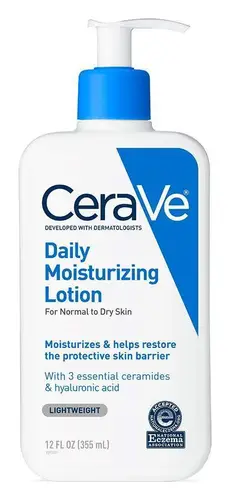
This barrier-repair moisturizer is formulated around Betula Platyphylla Japonica Juice and Panthenol to strengthen the skin barrier and hydrate skin.
This barrier-repair moisturizer is formulated around Centella Asiatica Extract and Aloe Barbadensis Leaf Extract to strengthen the skin barrier and hydrate skin.

What's inside
What's inside
 Key Ingredients
Benefits
Concerns
Ingredients Side-by-side
Betula Platyphylla Japonica Juice
Skin Conditioning
Caprylic/Capric Triglyceride
Masking

Propanediol
Solvent
Glycerin
Humectant
Water
Skin ConditioningCetearyl Alcohol
Emollient





Polyglyceryl-3 Methylglucose Distearate
Emulsifying
1,2-Hexanediol
Skin Conditioning
Olea Europaea Fruit Oil
Masking

Glyceryl Stearate Se
Emulsifying
Panthenol
Skin Conditioning

Stearic Acid
Cleansing
Simethicone
Emollient
Glyceryl Stearate
Emollient
Hydrogenated Lecithin
Emulsifying
Ceramide NP
Skin Conditioning

Methyl Glucose Sesquistearate
Emollient
Cholesterol
Emollient
Carbomer
Emulsion StabilisingArginine
Masking
Xanthan Gum
EmulsifyingEthylhexylglycerin
Skin ConditioningOleic Acid
Emollient
Macadamia Ternifolia Seed Oil
Emollient
Squalane
Emollient
Brassica Campestris Sterols
EmollientTocopherol
Antioxidant



Disodium EDTA
ChelatingBetula Platyphylla Japonica Juice, Caprylic/Capric Triglyceride, Propanediol, Glycerin, Water, Cetearyl Alcohol, Polyglyceryl-3 Methylglucose Distearate, 1,2-Hexanediol, Olea Europaea Fruit Oil, Glyceryl Stearate Se, Panthenol, Stearic Acid, Simethicone, Glyceryl Stearate, Hydrogenated Lecithin, Ceramide NP, Methyl Glucose Sesquistearate, Cholesterol, Carbomer, Arginine, Xanthan Gum, Ethylhexylglycerin, Oleic Acid, Macadamia Ternifolia Seed Oil, Squalane, Brassica Campestris Sterols, Tocopherol, Disodium EDTA
Cetearyl Olivate
Sorbitan Olivate
Emulsifying
Centella Asiatica Extract
Cleansing
Aloe Barbadensis Leaf Extract
Emollient
Stearyl Dimethicone
Emollient
Chamaecyparis Obtusa Water
MaskingFucus Vesiculosus Extract
Emollient
Eclipta Prostrata Leaf Extract
Skin ConditioningFicus Carica Fruit Extract
Humectant
Melia Azadirachta Flower Extract
Skin ConditioningAzadirachta Indica Leaf Extract
Skin ConditioningPortulaca Pilosa Extract
Skin ConditioningPueraria Lobata Root Extract
HumectantDipotassium Glycyrrhizate
Humectant
Paeonia Officinalis Flower Extract
TonicBacopa Monnieri Extract
Skin ConditioningCurcuma Longa Root Extract
Antioxidant
Ocimum Sanctum Leaf Extract
Skin ConditioningRibes Grossularia Fruit Extract
MoisturisingEclipta Prostrata Extract
Skin Conditioning
Ulmus Davidiana Root Extract
Skin Conditioning
Amaranthus Caudatus Seed Extract
Skin Conditioning
Corallina Officinalis Extract
Skin Conditioning
Hydrogenated Lecithin
Emulsifying
Argania Spinosa Kernel Oil
Emollient
Soluble Collagen
Humectant
Sodium Hyaluronate
Humectant
Chamomilla Recutita Flower Water
MaskingButylene Glycol
Humectant
Sodium Polyacrylate
Absorbent
Glyceryl Stearate
Emollient
PEG-100 Stearate
Surfactant
Dipropylene Glycol
HumectantPentaerythrityl Distearate
Emulsifying
Polysorbate 60
Emulsifying
Squalane
Emollient
Hydrogenated Polyisobutene
EmollientCeramide NP
Skin Conditioning
Allantoin
Skin Conditioning
Alcohol
Antimicrobial


Tocopheryl Acetate
Antioxidant
Saccharomyces Ferment Filtrate
Humectant
Isononyl Isononanoate
EmollientPolyglyceryl-10 Stearate
Skin Conditioning
Stearic Acid
Cleansing
Polyglyceryl-2 Dipolyhydroxystearate
Skin Conditioning
Fructooligosaccharides
Humectant
Lecithin
Emollient
Beta-Glucan
Skin Conditioning
Carbomer
Emulsion StabilisingPolysorbate 20
Emulsifying
Inulin Lauryl Carbamate
Emulsion StabilisingHydrolyzed Hyaluronic Acid
Humectant
Lactose
HumectantXanthan Gum
EmulsifyingCetearyl Olivate, Sorbitan Olivate, Centella Asiatica Extract, Aloe Barbadensis Leaf Extract, Stearyl Dimethicone, Chamaecyparis Obtusa Water, Fucus Vesiculosus Extract, Eclipta Prostrata Leaf Extract, Ficus Carica Fruit Extract, Melia Azadirachta Flower Extract, Azadirachta Indica Leaf Extract, Portulaca Pilosa Extract, Pueraria Lobata Root Extract, Dipotassium Glycyrrhizate, Paeonia Officinalis Flower Extract, Bacopa Monnieri Extract, Curcuma Longa Root Extract, Ocimum Sanctum Leaf Extract, Ribes Grossularia Fruit Extract, Eclipta Prostrata Extract, Ulmus Davidiana Root Extract, Amaranthus Caudatus Seed Extract, Corallina Officinalis Extract, Hydrogenated Lecithin, Argania Spinosa Kernel Oil, Soluble Collagen, Sodium Hyaluronate, Chamomilla Recutita Flower Water, Butylene Glycol, Sodium Polyacrylate, Glyceryl Stearate, PEG-100 Stearate, Dipropylene Glycol, Pentaerythrityl Distearate, Polysorbate 60, Squalane, Hydrogenated Polyisobutene, Ceramide NP, Allantoin, Alcohol, Tocopheryl Acetate, Saccharomyces Ferment Filtrate, Isononyl Isononanoate, Polyglyceryl-10 Stearate, Stearic Acid, Polyglyceryl-2 Dipolyhydroxystearate, Fructooligosaccharides, Lecithin, Beta-Glucan, Carbomer, Polysorbate 20, Inulin Lauryl Carbamate, Hydrolyzed Hyaluronic Acid, Lactose, Xanthan Gum
Ingredients Explained
These ingredients are found in both products.
Ingredients higher up in an ingredient list are typically present in a larger amount.
Carbomer is a synthetic thickening and gelling agent. It's basically the ingredient that gives a lot of serums, gels, creams, and sunscreens their smooth, non-sticky texture.
Although legally permitted at very high levels, carbomers are normally used at concentrations below 1%.
It also needs to be neutralized to actually thicken, and because it is a large molecule, it doesn't really penetrate the skin barrier.
Allergy-wise, the risk is very low. Clinical studies show carbomers have low potential for skin irritation/sensitization even at concentrations up to 100%.
A 2024 UK study patch-tested 1,302 patients and found true allergy to the parent group of carbomer to be rare with no confirmed relevant reactions.
Learn more about CarbomerCeramide NP (formerly known as Ceramide 3) is one of the skin's naturally occurring lipids.
Since ceramides are the major lipid components of the skin, they are crucial for maintaining skin barrier and hydration. Ceramide NP most closely mirrors the dominant kind in human skin amongst ceramide subtypes.
This ceramide works by slotting into gaps within the stratum corneum's lipid matrix to limit trans-epidermal water loss (TEWL) and shield the skin against external irritants.
A study with 312 patients found that using a ceramide-containing routine for 4 weeks reduced the severity of atopic dermatitis by over 61%.
Another clinical study in subjects aged 60 and older found that a ceramide body wash and moisturizer improved skin dryness and itchy skin in 15 days.
Overall, ceramides are considered non-irritating and safety tests have found little to no observable adverse effects from using this ingredient.
Ceramide NP is usually sourced from plants (like soybean or rice bran), or produced synthetically.
Learn more about Ceramide NPGlyceryl Stearate is made by reacting glycerin with stearic acid (typically sourced from plant oils like palm or coconut). It's an emulsifier, emollient, and mild occlusive.
Emulsifiers help ingredients like oil and water stay mixed so your formula stays nicely blended and uniform in texture.
This ingredient is typically used in concentrations between 1-10%. Studies have found it to be non-sensitizing, non-phototoxic, and non-photoallergenic.
A close cousin of this ingredient is Glyceryl Stearate SE ("self-emulsifying"). This just has a small amount of sodium or potassium stearate added so it can emulsify without a co-emulsifier.
Since this ingredient is an ester of a C18 fatty acid, it may not be fungal acne safe. The Malassezia yeast can potentially metabolize within the C11-C24 range.
Fun fact: The human body also creates Glyceryl Stearate naturally.
Learn more about Glyceryl StearateHydrogenated Lecithin is a more stable version of lecithin.
It's made by taking lecithin (a phospholipid commonly found in soybeans and egg yolks) and hydrogenating it. This just means the unsaturated fatty acids are turned into saturated ones so they don't go bad as easily.
This ingredient is an emollient, emulsifier, and penetration enhancer. As an emollient, it helps soften and hydrate skin by trapping moisture within. As an emulsifier, it prevents oil and water ingredients from separating.
Hydrogenated Lecithin can form tiny spherical structures made of phospholipid bilayers called liposomes. These liposomes are able to capture compounds inside their structure and deliver them through the skin barrier.
Because phospholipids are a natural component of our cell membranes, this ingredient is inherently compatible with skin.
A 2021 study found lecithin-based surfactants were less harsh and more tolerable comared to Sodium Lauryl Sulfate (SLS).
Learn more about Hydrogenated LecithinSqualane is the hydrogenated and shelf-stable form of squalene (a lipid that naturally occurs in human sebum).
It is an emollient and skin conditioning agent that is able to integrate seamlessly into the skin's lipid barrier without clogging pores.
This is due to how structurally similar it is to what your skin already produces.
Though it is mostly an emollient that helps soften and hydrate skin, it also has some humectant and occlusive action. Humectants help the skin retain moisture while occlusives seal it in, making squalane a triple-threat moisturizer.
Research shows it has antioxidant capabilities that help protect against stressors like UV exposure, specifically UVA induced oxidative stress. This study also found that it supports collagen biosynthesis in human dermal fibroblasts.
No clinical study has reported significant adverse effects and irritation reactions are very rare from this ingredient (even at 100% concentration).
Overall, it's a fantastic ingredient for hydration and is suitable for all skin types.
This depends on the source. Squalane can be derived from both plants and animals. Most squalane used in skincare comes from plants.
Please note: the source of squalane is only known if disclosed by the brand. We recommend reaching out to the brand if you have any questions about their squalane.
Read more about squalene with an "e".
Though squalane is often called an oil, it’s technically not one. It is a hydrocarbon, meaning it is only made of carbon and hydrogen. True oils are triglycerides and made of fatty acids and glycerol.
The term “oil-free” isn’t regulated so companies can define it however they want. Some exclude all oils, while others just avoid mineral oil or comedogenic oils.
Squalane has a comedogenic rating of 1 from the original 1972 study that tested raw ingredients under occlusion on rabbit ears. This system is not standardized or peer-reviewed, and using the raw ingredients is very different from how diluted cosmetic formulations are used on human skin.
A comedogenic rating of 1 means it is "unlikely to clog pores" according to the original rating system.
The overall formula of a product matters more than the individual ingredients on whether or not it will cause clogged pores.
Learn more about SqualaneStearic Acid is a fatty acid that is already found in your skin. It's one of the free fatty acids that works alongside ceramides and cholesterols to maintain your barrier.
In cosmetics, it is a multitasker:
Safety-wise, the CIR Expert Panel has concluded it to be safe in cosmetics when formulated to be non-irritating and non-sensitizing.
Free stearic acid is a C18 fatty acid that the Malassezia yeast can substrate, so this ingredient may not be fungal acne safe.
This ingredient does have a comedogenic rating of 2-3, but this doesn't mean a formula with this ingredient will clog pores.
Human testing has proved that any finished product with this ingredient won't automatically make you break out; it really comes down to concentration, formula, and your skin.
Learn more about Stearic AcidXanthan gum is used as a stabilizer and thickener within cosmetic products. It helps give products a sticky, thick feeling - preventing them from being too runny.
On the technical side of things, xanthan gum is a polysaccharide - a combination consisting of multiple sugar molecules bonded together.
Xanthan gum is a pretty common and great ingredient. It is a natural, non-toxic, non-irritating ingredient that is also commonly used in food products.
Learn more about Xanthan Gum