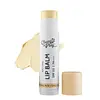
This barrier-repair lip moisturizer is formulated around Butyrospermum Parkii Butter and Cocos Nucifera Oil to strengthen the lip barrier and hydrate lips.
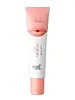
This brightening lip moisturizer is formulated around Niacinamide and Ceramide EOP to fade the look of dark spots and hydrate lips.

What's inside
What's inside
 Key Ingredients
Benefits
Concerns
Ingredients Side-by-side
Hydrogenated Polyisobutene
EmollientButyrospermum Parkii Butter
Skin Conditioning






Cocos Nucifera Oil
Masking


Octyldodecanol
Emollient
Butyloctyl Salicylate
Skin Conditioning

Lanolin
Emollient
Ethylhexyl Salicylate
UV Absorber
Diethylamino Hydroxybenzoyl Hexyl Benzoate
UV Filter
Diisostearyl Malate
EmollientDextrin Palmitate
Emulsifying
Lauryl Laurate
Skin Conditioning
Ethylhexyl Triazone
UV Absorber
Kojic Dipalmitate
Emollient
Aroma

Glucomannan
Skin ConditioningSodium Hyaluronate
Humectant


Palmitoyl Tripeptide-1
Skin Conditioning


Ceramide Ag
Humectant

Oryza Sativa Cera
Skin ConditioningPhospholipids
Skin Conditioning
Sphingolipids
Emollient
Tocopheryl Acetate
Antioxidant


Sorbitan Isostearate
Emulsifying
Tribehenin
Emollient
Trihydroxystearin
Skin Conditioning
Copernicia Cerifera Wax
Glyceryl Behenate/Eicosadioate
Emollient
Synthetic Wax
Abrasive
Ethylhexyl Palmitate
Emollient
Caprylic/Capric Triglyceride
Masking
Titanium Dioxide
Cosmetic Colorant
Hydrogenated Polyisobutene, Butyrospermum Parkii Butter, Cocos Nucifera Oil, Octyldodecanol, Butyloctyl Salicylate, Lanolin, Ethylhexyl Salicylate, Diethylamino Hydroxybenzoyl Hexyl Benzoate, Diisostearyl Malate, Dextrin Palmitate, Lauryl Laurate, Ethylhexyl Triazone, Kojic Dipalmitate, Aroma, Glucomannan, Sodium Hyaluronate, Palmitoyl Tripeptide-1, Ceramide Ag, Oryza Sativa Cera, Phospholipids, Sphingolipids, Tocopheryl Acetate, Sorbitan Isostearate, Tribehenin, Trihydroxystearin, Copernicia Cerifera Wax, Glyceryl Behenate/Eicosadioate, Synthetic Wax, Ethylhexyl Palmitate, Caprylic/Capric Triglyceride, Titanium Dioxide
Ricinus Communis Seed Oil
Masking
Euphorbia Cerifera Cera
Astringent
Cocos Nucifera Oil
Masking
Butyrospermum Parkii Butter
Skin Conditioning
Methylene Bis-Benzotriazolyl Tetramethylbutylphenol
UV Filter
Bis-Ethylhexyloxyphenol Methoxyphenyl Triazine
UV Absorber
Theobroma Cacao Seed Butter
Emollient
Prunus Amygdalus Dulcis Oil
Skin Conditioning
Daucus Carota Sativa Seed Oil
Emollient
Rubus Idaeus Seed Oil
Emollient
Niacinamide
Smoothing




Copernicia Cerifera Cera
Emollient
Kojic Dipalmitate
Emollient
Dicaprylyl Carbonate
EmollientCeramide EOP
Skin Conditioning
Glycyrrhiza Glabra Root Extract
Bleaching
Cetearyl Olivate
Sorbitan Olivate
Emulsifying
Zinc Oxide
Cosmetic Colorant
Titanium Dioxide
Cosmetic Colorant
Caprylyl Methicone
Skin Conditioning
Tocopheryl Acetate
Antioxidant
Olea Europaea Fruit Oil
Masking
Olea Europaea Leaf Extract
Perfuming
Olea Europaea Fruit Extract
BleachingCeramide NP
Skin Conditioning
Ceramide AP
Skin Conditioning
Sodium Hyaluronate
Humectant
Copper Tripeptide-1
Skin Conditioning
Palmitoyl Tripeptide-1
Skin Conditioning
Pisum Sativum Peptide
Skin Conditioning
Aroma
Ricinus Communis Seed Oil, Euphorbia Cerifera Cera, Cocos Nucifera Oil, Butyrospermum Parkii Butter, Methylene Bis-Benzotriazolyl Tetramethylbutylphenol, Bis-Ethylhexyloxyphenol Methoxyphenyl Triazine, Theobroma Cacao Seed Butter, Prunus Amygdalus Dulcis Oil, Daucus Carota Sativa Seed Oil, Rubus Idaeus Seed Oil, Niacinamide, Copernicia Cerifera Cera, Kojic Dipalmitate, Dicaprylyl Carbonate, Ceramide EOP, Glycyrrhiza Glabra Root Extract, Cetearyl Olivate, Sorbitan Olivate, Zinc Oxide, Titanium Dioxide, Caprylyl Methicone, Tocopheryl Acetate, Olea Europaea Fruit Oil, Olea Europaea Leaf Extract, Olea Europaea Fruit Extract, Ceramide NP, Ceramide AP, Sodium Hyaluronate, Copper Tripeptide-1, Palmitoyl Tripeptide-1, Pisum Sativum Peptide, Aroma
Reviews
Ingredients Explained
These ingredients are found in both products.
Ingredients higher up in an ingredient list are typically present in a larger amount.
Aroma refers to an ingredient, or mixture of ingredients, that impart or mask a flavor.
The name is slightly confusing. This is because INCI associates aroma with flavor instead of smell.
Here is the official definition from the The International Cosmetic Ingredient Dictionary and Handbook:
“Aroma is a term for ingredient labeling used to identify that a product contains a material or combination of materials normally added to a cosmetic to produce or to mask a particular flavor.”
INCI shows the only purpose of aroma to be "flavouring".
However, due to regulation differences, some companies may use aroma in place of parfum.
In Canada, this ingredient only has to be listed in concentrations above 1%.
Learn more about AromaThis ingredient is also known as shea butter. It is a plant-derived extract from the nuts of the Africa shea tree and one of the most well-studied emollients.
Because it has a high concentration of fatty acids (primarily oleic, stearic, and linoleic) it is able to form a protective barrier on the skin's surface. This helps seal in moisture and prevents transepidermal water loss (TEWL).
In vitro research found an increase in skin hydration by 58% and a decrease in TEWL by 37.8% after 24 hours of applying this ingredient (pretty impressive for a single ingredient!).
Besides hydration, shea butter also contains triterpenes that have anti-inflammatory potential. In particule, lupeol cinnamate has shown the highest anti-inflammatory activity in vivo.
Shea butter also contains vitamins A and E which may contribute to antioxidant activity.
While Shea Butter has an SPF rating of about 3-4, it is not a sunscreen replacement.
This ingredient may not be fungal acne safe because its fatty acids fall within the C11-C24 range that the Malassezia yeast can metabolize.
This ingredient shows up on a lot of "pore-clogging" lists but there's no real evidence behind that. It doesn't even have a comedogenic rating from an actual study; the numbers you'll find online come from blogs citing other blogs.
Ratings for other ingredients mostly come from a 1980s rabbit ear test. This test doesn't translate well to human skin or to real products because the ingredient sits at a much lower percentage.
Some people still find it breaks them out. So if that's you, definitely trust your skin. Just know this one's based on experience and not evidence.
Learn more about Butyrospermum Parkii ButterThis ingredient is also known as coconut oil. It is a plant-derived ingredient with skin conditioning properties.
The fatty acid profile of coconut oil is mostly lauric acid (~54%), followed by capric, caprylic, palmitic, and myristic acids. This profile allows it to penetrate easily into skin, moisturize, and improve dry skin.
A double-blind study confirmed that extra virgin coconut oil is as effective as mineral oil for treating very dry skin. Another study found it outperformed mineral oil for mild to moderate atopic dermatitis in children.
Another study from 2018 found that virgin coconut oil can soothe inflammation and boost key skin barrier proteins. Just know this evidence is still only from lab settings and not human trials.
It has also been shown to reduce Staphylococcus aureus, a bacteria that commonly overgrows in people with eczema.
Clinical testing shows very minimal skin irritation and no evidence of sensitization or phototoxicity.
Coconut oil gets flagged as a "fragrance" because it has a natural mild scent (not because it's a synthetic perfume). The European Cosmetic ingredient database also lists "perfuming" as a function of this ingredient.
Just so you know, the term "fragrance" is completely unregulated. Some brands still use botanical extracts or essential oils in their "fragrance-free" formulas, but regulatory databases technically classify these under "fragrance".
Coconut oil has a tiny and useless bit of natural SPF. Early lab studies clocked it around SPF 7-8 but a more recent study found the real number closer to SPF 1.2. It also offers no meaningful UVA protection (SPF only overs UVB rays).
The comedogenic rating of 4/5 means it has a high potential to clog pores; but it's worth noting that comedogenicity is highly individual and ratings cannot predict how an overall formula will behave on skin.
Since lauric acid is the dominant fatty acid, this ingredient may not be fungal acne safe. The Malassezia yeast feeds on fatty acids with carbon chain lengths between 11-24, and lauric acid falls within these lengths (C12).
Learn more about Cocos Nucifera OilKojic Dipalmitate is an oil-soluble ester of Kojic Acid. It was created by bonding Kojic Acid with two Palmitic Acid chains to solve the instability of regular Kojic Acid.
This ingredient is able to stay stable across a wide pH range (~3-10) and easier to work with in formulations.
On the skin, the enzymes found in our skin cells break down this ingredient to release kojic acid where it then gets to work inhibiting melanin production. This makes it popular in products that target hyperpigmentation, dark spots, melasma, and uneven skin tone.
You'll typically see this ingredient used in concentrations between 0.4 - 4%. Research has shown it can be more effective when combined with ingredients like Acetyl Glucosamine, Alpha Arbutin, or Vitamin C.
Because Kojic Dipalmitate is lipophilic (fat-loving), it is usually incorporated into the oil phase of a formulation and functions as a mild emollient. It is also considered more gentle than kojic acid because it doesn't directly form hydrogen bonds with skin proteins in the same way,
However, be sure to patch test this ingredient if you have sensitivities to Kojic Acid or Palmitic Acid.
Due to the Palmitic Acid, this ingredient may not be fungal acne safe.
Learn more about Kojic DipalmitatePalmitoyl Tripeptide-1 (aka Pal-GHK) is a synthetic signal peptide made of three amino acids attached to palmitic acid.
That fatty acid attachment is the key: it boosts the peptide's ability to penetrate the skin barrier. This puts it closer to the dermal cells where it can actually make a difference.
Once there, it acts as a matrikine, a signaling peptide that prompts fibroblasts to produce more collagen, fibronectin, and hyaluronic acid.
In vitro studies show it can boost collagen production in skin cells even when UV-damaged skin samples were treated with it at a tiny concentration (it almost fully restored dermal collagen at 5ppm). It achieved this at 100x lower concentration than retinoic acid, which needed 500 ppm to do the same thing.
Human clinical data is promising, but modest:
A study of 23 female volunteers found a small but statistically significant increase (~4%) in skin thickness after treatment at 4 ppm.
A separate small trial of 15 women showed statistically significant reductions in wrinkle length, depth, and skin roughness after applying it twice daily for four weeks.
You'll likely see Pal-GHK paired with Palmitoyl Tetrapeptide-7 as part of the Matrixyl 3000 complex.
Fungal acne note:
Usually a palmitic acid component can feed Malassezia in unbound form, but here is is covalently bonded to the peptide. This means it is very difficult for Malassezia to access, and therefore very unlikely to cause fungal acne.
Sodium Hyaluronate is the salt form of hyaluronic acid. It is a long sugar chain that is naturally found in your skin, joints, and connective tissue that maintains hydration and elasticity.
In skincare, it works as a humectant. It pulls water from the environment and deeper layers of skin and binds it to the surface.
Interestingly, the size of the molecule affects its behavior:
Some clinical evidence links low molecular weight versions to improved wrinkle depth, elasticity, anti-inflammatory effects, and barrier repair.
Many serums use a blend of both weights so you can get surface hydration plus longer-lasting and deeper effects.
You'll typically see concentrations between 0.1-2% for this ingredient.
Learn more about Sodium HyaluronateTitanium Dioxide (TD) is a mineral UV filter widely used in sunscreens and cosmetics.
It's one of only two UV filters officially classified as "mineral" by regulatory agencies (the other being Zinc Oxide).
A really common myth is that mineral filters work by reflecting UV light off your skin like tiny mirrors.
They don't only do that; modern research shows TD protects mostly by absorbing UV radiation, the same way chemical filters do.
When researchers measured this, reflection accounted for only about 4-5% of the protection (and less than SPF 2 on its own). The other ~95% comes from absorption: the UV photons hit the particle and their energy gets soaked up by its semiconductor band gap rather than bouncing off.
So "reflects vs. absorbs" was never really the right way to split mineral from chemical filters.
TD gives broad-spectrum protection that's strongest in the UVB and UVA-2 range and weaker in the UVA-1 range. Its UVA protection isn't quite as strong as Zinc Oxide's which is why you'll often see the two paired together.
Together, they make a solid broad-spectrum system.
TD is a great pick for sensitive, acne-prone, or redness-prone skin because it's non-irritating and chemically inert. Regulatory reviews classify it as a non-sensitizer and mild-to-non-irritant.
It's also unlikely to cause the "eye sting" some chemical filters are known for.
The main trade-off is cosmetic; TD can leave a white cast and has a thicker texture. This is why mineral sunscreens are often less cosmetically elegant than chemical or hybrid formulas (and harder to shade-match on deeper skin tones).
Formulators often use micronized or nano-sized TD to cut down on white case and improve spreadability. Smaller particles scatter less visible light so the formula looks less chalky while still filtering UV.
TD is almost always bundled with coatings like Alumina, Silica, Stearic Acid, or Dimethicone. These coatings do two important jobs:
TD can be used at up to 25% in a finished sunscreen; this is the regulatory ceiling in both the US and the EU.
In practice, the amount in any given product varies a lot depending on the target SPF and whether it's paired with other UV filters.
TD is one of the most heavily vetted sunscreen ingredients out there. It is approved as a UV filter in all major markets worldwide, including the US, EU, UK, Japan, Korea, China, Australia, and Canada.
The safety evidence is solid. There was an old worry that nano particles might absorb through skin into the body but multiple studies (including on damaged, sunburned, and UV-irradiated skin) have shown that TD stays on the surface and the layer of dead skin cells on top of everything else.
There's also no evidence of carcinogenicity, mutagenicity, or reproductive toxicity from dermal exposure of this ingredient.
For those who have seen the headline about a 2022 EU ban on TD, that was on TD as a food additive (a complete separate use from topical sunscreen).
There are ongoing questions about how nano-TD might affect marine ecosystems. As of now, there has been no conclusive evidence that any form of TD (or any other sunscreen filter) harms coral reefs or marine life.
The science is still developing and it's a space worth watching rather than packing over.
However, several destinations have reef-safety sunscreen rules that restrict certain chemical filters and steer visitors toward mineral, non-nano options. If you're traveling somewhere with these rules, a non-nano mineral sunscreen is the safe bet.
Learn more about Titanium DioxideTocopheryl Acetate is a stable, shelf-friendly form of vitamin E.
Formulators love it because plain vitamin E oxidizes quickly once it hits air. This acetate version stays stable and resists going off, helping to extend a product's shelf life.
It's actually inactive on its own and works like a slow-release "storage" form; the enzymes in your skin called esterases gradually convert it into active vitamin E over time.
One in vivo study showed 5% of the acetate in the living layer of the epidermis converted to vitamin E after 5 days of application. This study also found the skin gained protection against UV damage even though the conversion was slow and small.
Once converted, vitamin E acts as a skin's main fat-soluble antioxidant that fights free radicals to protect skin from damage.
Topical vitamin E generally boosts the skin's photoprotection, and it reduced UV-damage in animal models.
This ingredient has some brightening potential but it's more of a prevention ingredient than spot-fader. Cell studies show it can slow down melanin production but it's worth noting that it's not the most powerful brightener out there.
Overall, it has a pretty solid safety profile and has been found to be non-irritating and non-comedogenic. Allergic reactions may happen but stay rare due to how widely the ingredient gets used.
The concentration will vary depending on the formula; industry data shows 0.1% in baby lotions, 3% in lipsticks, and 5% in foot powders. You can also find this ingredient at 100% in a pure vitamin E oil.
Most leave-on skincare keeps it at the lower end, often between 0.5-1%.
Learn more about Tocopheryl Acetate

