Buttah Skin Tinted Mineral Sunscreen SPF 30 Versus Dr. Sheth's Ceramide And Vitamin C Sunscreen SPF 50 PA+++
This sunscreen offers SPF 30 protection with a matte finish that helps control shine.
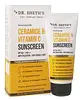
This hybrid sunscreen covers the full UV range and blocks ~98% of UVB at SPF 50.


What's inside
What's inside
 Key Ingredients
Benefits
Concerns
Ingredients Side-by-side
Water
Skin ConditioningCaprylic/Capric Triglyceride
Masking


Cyclopentasiloxane
Emollient
Propanediol
Solvent
Dimethicone
Emollient
Glycerin
Humectant
C12-15 Alkyl Benzoate
AntimicrobialPEG-100 Stearate
Surfactant

Glyceryl Stearate
Emollient
Cetyl Alcohol
Emollient
Hydroxyethyl Acrylate/Sodium Acryloyldimethyl Taurate Copolymer
Emulsion StabilisingGlyceryl Caprylate
EmollientCyclohexasiloxane
Emollient
Sucrose Cocoate
Emulsifying

Citric Acid
Buffering

Sodium Citrate
BufferingSodium PCA
Humectant
Glyceryl Isostearate
Emollient
Alumina
Abrasive
Caprylyl Methicone
Skin Conditioning
Polyhydroxystearic Acid
Emulsifying
Triethoxysilylethyl Polydimethylsiloxyethyl Hexyl Dimethicone
Skin Conditioning
Lauryl PEG-9 Polydimethylsiloxyethyl Dimethicone
Skin Conditioning
Chlorphenesin
Antimicrobial
Iron Oxides
Allantoin
Skin Conditioning
Xanthan Gum
EmulsifyingCamellia Oleifera Leaf Extract
AstringentChamomilla Recutita Flower Extract
Masking
Glyceryl Undecylenate
Emollient
Panthenol
Skin Conditioning
Phytic Acid
Chelating
Sodium Hyaluronate
Humectant
Water, Caprylic/Capric Triglyceride, Cyclopentasiloxane, Propanediol, Dimethicone, Glycerin, C12-15 Alkyl Benzoate, PEG-100 Stearate, Glyceryl Stearate, Cetyl Alcohol, Hydroxyethyl Acrylate/Sodium Acryloyldimethyl Taurate Copolymer, Glyceryl Caprylate, Cyclohexasiloxane, Sucrose Cocoate, Citric Acid, Sodium Citrate, Sodium PCA, Glyceryl Isostearate, Alumina, Caprylyl Methicone, Polyhydroxystearic Acid, Triethoxysilylethyl Polydimethylsiloxyethyl Hexyl Dimethicone, Lauryl PEG-9 Polydimethylsiloxyethyl Dimethicone, Chlorphenesin, Iron Oxides, Allantoin, Xanthan Gum, Camellia Oleifera Leaf Extract, Chamomilla Recutita Flower Extract, Glyceryl Undecylenate, Panthenol, Phytic Acid, Sodium Hyaluronate
Water
Skin ConditioningPropylene Glycol
Humectant
Terephthalylidene Dicamphor Sulfonic Acid
UV Absorber
Butyl Methoxydibenzoylmethane
UV Absorber
Isododecane
EmollientGlycerin
Humectant
Phenylbenzimidazole Sulfonic Acid
UV Absorber
3-O-Ethyl Ascorbic Acid
Skin Conditioning


Tapioca Starch
Triethanolamine
BufferingCyclopentasiloxane
Emollient
Ethylhexyl Methoxycinnamate
UV Absorber

Caprylic/Capric Triglyceride
Masking
Ammonium Acryloyldimethyltaurate/Vp Copolymer
Terminalia Ferdinandiana Fruit Extract
Antioxidant
Hyaluronic Acid
Humectant
Laminaria Digitata Extract
Skin Protecting
Hydrogenated Lecithin
Emulsifying
Cetyl-Pg Hydroxyethyl Palmitamide
Skin ConditioningCeramide EOP
Skin Conditioning
Ceramide Ng
Skin Conditioning
Ceramide NP
Skin Conditioning
Ceramide As
Skin Conditioning
Ceramide AP
Skin Conditioning
Cholesterol
Emollient
1,2-Hexanediol
Skin Conditioning
Ethylhexyl Salicylate
UV Absorber
Methylene Bis-Benzotriazolyl Tetramethylbutylphenol
UV Filter
Decyl Glucoside
Cleansing
Xanthan Gum
EmulsifyingDicaprylyl Carbonate
EmollientDimethicone
Emollient
Glyceryl Stearate
Emollient
Cetearyl Olivate
Sorbitan Olivate
Emulsifying
Cetearyl Alcohol
Emollient
Ceteareth-20
Cleansing
Phenoxyethanol
Preservative
Ethylhexylglycerin
Skin ConditioningXylitylglucoside
Humectant
Anhydroxylitol
Humectant
Xylitol
Humectant
Panthenol
Skin Conditioning
Sodium Polyacrylate
Absorbent
Capsicum Annuum Fruit Extract
Antimicrobial
Biosaccharide Gum-4
Skin Conditioning
Chamomilla Recutita Extract
Skin Conditioning
Allantoin
Skin Conditioning
Sodium Gluconate
ChelatingBHT
Antioxidant
Zinc Oxide
Cosmetic Colorant
Water, Propylene Glycol, Terephthalylidene Dicamphor Sulfonic Acid, Butyl Methoxydibenzoylmethane, Isododecane, Glycerin, Phenylbenzimidazole Sulfonic Acid, 3-O-Ethyl Ascorbic Acid, Tapioca Starch, Triethanolamine, Cyclopentasiloxane, Ethylhexyl Methoxycinnamate, Caprylic/Capric Triglyceride, Ammonium Acryloyldimethyltaurate/Vp Copolymer, Terminalia Ferdinandiana Fruit Extract, Hyaluronic Acid, Laminaria Digitata Extract, Hydrogenated Lecithin, Cetyl-Pg Hydroxyethyl Palmitamide, Ceramide EOP, Ceramide Ng, Ceramide NP, Ceramide As, Ceramide AP, Cholesterol, 1,2-Hexanediol, Ethylhexyl Salicylate, Methylene Bis-Benzotriazolyl Tetramethylbutylphenol, Decyl Glucoside, Xanthan Gum, Dicaprylyl Carbonate, Dimethicone, Glyceryl Stearate, Cetearyl Olivate, Sorbitan Olivate, Cetearyl Alcohol, Ceteareth-20, Phenoxyethanol, Ethylhexylglycerin, Xylitylglucoside, Anhydroxylitol, Xylitol, Panthenol, Sodium Polyacrylate, Capsicum Annuum Fruit Extract, Biosaccharide Gum-4, Chamomilla Recutita Extract, Allantoin, Sodium Gluconate, BHT, Zinc Oxide
Reviews
Ingredients Explained
These ingredients are found in both products.
Ingredients higher up in an ingredient list are typically present in a larger amount.
Allantoin is a soothing ingredient known for its protective and moisturizing properties; it's basically a quiet workhorse ingredient you can find in a huge range of cosmetics.
Though it can be derived from the comfrey plant, allantoin is produced synthetically for cosmetic products to ensure purity.
Research shows it can encourage your skin cells to turn over and renew by stimulating keratinocyte and fibroblast proliferation.
It also has mild keratolytic properties to help loosen and shed dead skin cells without being harsh.
Studies also suggest allantoin can help calm inflammation by dialing down some of the chemical signals your skin sends out when it is irritated.
This ingredient is typically used in the 0.1-0.5% range, and the FDA recognizes it as a skin protectant in OTC products up to 2%.
Overall, allantoin is a wonderful addition to most routines; it is stable across a wide pH range (~4-8), works well with other ingredients, and is considered non-sensitizing/non-irritating.
Fun fact: Allantoin is naturally occurring in comfrey root, beets, chamomile, and wheat sprouts. Our bodies even produce it as a byproduct of uric acid metabolism.
Learn more about AllantoinCaprylic/Capric Triglyceride (aka MCT Oil) is a lightweight emollient, solvent, and texture enhancer. It is considered a skin-softener by helping to prevent moisture loss.
Though it behaves like an oil, it is not technically one due to its chemical composition. One perk of this ingredient is that it is very stable, resistant to oxidation, and unlikely to go rancid.
In practice, that translates to a long shelf life and a consistently elegant skin feel.
While there is an assumption Caprylic Triglyceride can clog pores due to it being derived from coconut oil, there is no research supporting this. Just patch test if you have concerns.
Fractionated coconut oil and MCT Oil are both listed as Caprylic/Capric Triglyceride according to INCI. This is because INCI names are based on the ingredient’s final chemical composition and not its marketing name or source.
This ingredient is treated as the gold standard fungal acne safe oil. Even though it is coconut derived, the problematic lauric acid is stripped out.
This leaves just caprylic (C8) and capric (C10) acid. These chain lengths actually trend antifungal; a 2020 study found caprylic acid was enough to disrupt Malassezia furfur cell membrane, with a caprylic acid derivative damaging membrane structures at concentrations as low as 0.2%.
Learn more about Caprylic/Capric TriglycerideCyclopentasiloxane (D5) is a lightweight silicone that mostly acts as an emollient and solvent in cosmetics. Its the reason your products feel silky, fast-spreading, and non-greasy.
Since D5 is volatile, it does its thing and then evaporates off the skin quickly.
The safety profile of this ingredient is reassuring; the US CIR Expert Panel concluded D5 is safe as used in cosmetics and Health Canada concluded that D5 is not harmful to human health or the environment as currently used in cosmetics
There's a study that people mention about D5 in a rat study showing tumors. This study is related to long-term inhalation of high D5 levels.
Regulatory bodies have judged this study to be not applicable in topical skincare since skin absorption of D5 is very low and we're not really inhaling huge amounts of D5.
The only restriction for this ingredient is environmental. The European Chemicals Agency (ECHA) restricted D5 in wash-off cosmetics at or above 0.1% due to their persistence in water.
Learn more about CyclopentasiloxaneDimethicone is a type of synthetic silicone created from natural materials such as quartz. It is also known as polydimethylsiloxane.
What it does:
Dimethicone comes in different viscosities:
Depending on the viscosity, dimethicone has different properties.
Ingredients lists don't always show which type is used, so we recommend reaching out to the brand if you have questions about the viscosity.
This ingredient is unlikely to cause irritation because it does not get absorbed into skin. However, people with silicone allergies should be careful about using this ingredient.
Note: Dimethicone may contribute to pilling. This is because it is not oil or water soluble, so pilling may occur when layered with products. When mixed with heavy oils in a formula, the outcome is also quite greasy.
Learn more about DimethiconeGlycerin (or glycerol) is a compound naturally found in your skin. It's a powerhouse humectant that pulls water into the stratum corneum.
Topically, glycerin does several things at once:
Your skin makes glycerin on its own (mostly from sebaceous oil breakdown) and shuttles it to your outermost layer of skin, or your epidermis, via aquaporin-3.
Aquaporin-3 is a transporter that is essential for normal skin hydration, elasticity, and repair. Interestingly, mice lacking in AQP3 have dry and less elastic skin that can be fully corrected with glycerin.
This ingredient is non-irritating, plays well with almost every ingredient, and works across all skin types. Typical use is anywhere between 3-10% but can go up to 79% in some leave-on products.
Just know very high concentrations (>40%) can feel tacky in low humidity.
Glycerin is the name for this ingredient in American English. British English uses Glycerol/Glycerine.
Learn more about GlycerinGlyceryl Stearate is made by reacting glycerin with stearic acid (typically sourced from plant oils like palm or coconut). It's an emulsifier, emollient, and mild occlusive.
Emulsifiers help ingredients like oil and water stay mixed so your formula stays nicely blended and uniform in texture.
This ingredient is typically used in concentrations between 1-10%. Studies have found it to be non-sensitizing, non-phototoxic, and non-photoallergenic.
A close cousin of this ingredient is Glyceryl Stearate SE ("self-emulsifying"). This just has a small amount of sodium or potassium stearate added so it can emulsify without a co-emulsifier.
Since this ingredient is an ester of a C18 fatty acid, it may not be fungal acne safe. The Malassezia yeast can potentially metabolize within the C11-C24 range.
Fun fact: The human body also creates Glyceryl Stearate naturally.
Learn more about Glyceryl StearatePanthenol is a common ingredient that helps hydrate and soothe the skin. It is found naturally in our skin and hair.
There are two forms of panthenol: D and L.
D-panthenol is also known as dexpanthenol. Most cosmetics use dexpanthenol or a mixture of D and L-panthenol.
Panthenol is famous due to its ability to go deeper into the skin's layers. Using this ingredient has numerous pros (and no cons):
Like hyaluronic acid, panthenol is a humectant. Humectants are able to bind and hold large amounts of water to keep skin hydrated.
This ingredient works well for wound healing. It works by increasing tissue in the wound and helps close open wounds.
Once oxidized, panthenol converts to pantothenic acid. Panthothenic acid is found in all living cells.
This ingredient is also referred to as pro-vitamin B5.
Learn more about PanthenolWater. It's the most common cosmetic ingredient of all. You'll usually see it at the top of ingredient lists, meaning that it makes up the largest part of the product.
So why is it so popular? Water most often acts as a solvent - this means that it helps dissolve other ingredients into the formulation.
You'll also recognize water as that liquid we all need to stay alive. If you see this, drink a glass of water. Remember to stay hydrated!
Learn more about WaterXanthan gum is used as a stabilizer and thickener within cosmetic products. It helps give products a sticky, thick feeling - preventing them from being too runny.
On the technical side of things, xanthan gum is a polysaccharide - a combination consisting of multiple sugar molecules bonded together.
Xanthan gum is a pretty common and great ingredient. It is a natural, non-toxic, non-irritating ingredient that is also commonly used in food products.
Learn more about Xanthan Gum

