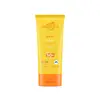
This chemical sunscreen covers the full UV range and blocks ~98% of UVB at SPF 50.
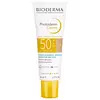
This chemical sunscreen covers the full UV range and blocks ~98% of UVB at SPF 50.


What's inside
What's inside
 Key Ingredients
Benefits
Concerns
Ingredients Side-by-side
Water
Skin ConditioningIsododecane
EmollientPropylene Glycol
Humectant


Butyl Methoxydibenzoylmethane
UV Absorber
Terephthalylidene Dicamphor Sulfonic Acid
UV Absorber
Glycerin
Humectant

Ethylhexyl Methoxycinnamate
UV Absorber

Methylene Bis-Benzotriazolyl Tetramethylbutylphenol
UV Filter
Decyl Glucoside
Cleansing
Xanthan Gum
EmulsifyingPhenylbenzimidazole Sulfonic Acid
UV Absorber
Triethanolamine
BufferingCaprylic/Capric Triglyceride
Masking
Ammonium Acryloyldimethyltaurate/Vp Copolymer
Tapioca Starch
Dicaprylyl Carbonate
EmollientEthylhexyl Salicylate
UV Absorber
Dimethicone
Emollient
Cyclopentasiloxane
Emollient
Cetearyl Alcohol
Emollient



Ceteareth-20
CleansingCetearyl Olivate
Sorbitan Olivate
Emulsifying
Phenoxyethanol
Preservative
Ethylhexylglycerin
Skin ConditioningGlyceryl Stearate
Emollient
Carica Papaya Fruit Extract
Skin ConditioningGlyceryl Glucoside
Humectant
Niacinamide
Smoothing









3-O-Ethyl Ascorbic Acid
Skin Conditioning
Polyester-7
Skin ConditioningNeopentyl Glycol Diheptanoate
EmollientSodium Polyacrylate
Absorbent
Ethoxydiglycol
HumectantHyaluronic Acid
Humectant
Biosaccharide Gum-4
Skin Conditioning
1,2-Hexanediol
Skin Conditioning
Capsicum Annuum Fruit Extract
Antimicrobial
Tocopheryl Acetate
Antioxidant
Sodium Gluconate
Skin ConditioningLaminaria Digitata Extract
Skin Protecting
Cetyl-Pg Hydroxyethyl Palmitamide
Skin ConditioningCeramide EOP
Skin Conditioning
Ceramide Ng
Skin Conditioning
Ceramide NP
Skin Conditioning
Ceramide As
Skin Conditioning
Ceramide AP
Skin Conditioning
Panthenol
Skin Conditioning
BHT
Antioxidant
Water, Isododecane, Propylene Glycol, Butyl Methoxydibenzoylmethane, Terephthalylidene Dicamphor Sulfonic Acid, Glycerin, Ethylhexyl Methoxycinnamate, Methylene Bis-Benzotriazolyl Tetramethylbutylphenol, Decyl Glucoside, Xanthan Gum, Phenylbenzimidazole Sulfonic Acid, Triethanolamine, Caprylic/Capric Triglyceride, Ammonium Acryloyldimethyltaurate/Vp Copolymer, Tapioca Starch, Dicaprylyl Carbonate, Ethylhexyl Salicylate, Dimethicone, Cyclopentasiloxane, Cetearyl Alcohol, Ceteareth-20, Cetearyl Olivate, Sorbitan Olivate, Phenoxyethanol, Ethylhexylglycerin, Glyceryl Stearate, Carica Papaya Fruit Extract, Glyceryl Glucoside, Niacinamide, 3-O-Ethyl Ascorbic Acid, Polyester-7, Neopentyl Glycol Diheptanoate, Sodium Polyacrylate, Ethoxydiglycol, Hyaluronic Acid, Biosaccharide Gum-4, 1,2-Hexanediol, Capsicum Annuum Fruit Extract, Tocopheryl Acetate, Sodium Gluconate, Laminaria Digitata Extract, Cetyl-Pg Hydroxyethyl Palmitamide, Ceramide EOP, Ceramide Ng, Ceramide NP, Ceramide As, Ceramide AP, Panthenol, BHT
Water
Skin ConditioningDiethylamino Hydroxybenzoyl Hexyl Benzoate
UV Filter
Homosalate
Skin Conditioning
Diisopropyl Sebacate
EmollientBis-Ethylhexyloxyphenol Methoxyphenyl Triazine
Skin Conditioning
Dibutyl Adipate
EmollientPropanediol
Solvent
Ethylhexyl Salicylate
UV Absorber
Ethylhexyl Triazone
UV Absorber
Silica
Abrasive
Glycerin
Humectant
CI 77891
Cosmetic ColorantPropylene Glycol
Humectant
Sucrose Stearate
EmollientGlyceryl Stearate
Emollient
PEG-100 Stearate
Surfactant
CI 77492
Cosmetic ColorantPentylene Glycol
Skin Conditioning
1,2-Hexanediol
Skin Conditioning
Sodium Citrate
BufferingXanthan Gum
EmulsifyingCI 77491
Cosmetic ColorantCaprylyl Glycol
Emollient
Polyacrylate Crosspolymer-6
Emulsion StabilisingCitric Acid
Buffering
CI 77499
Cosmetic ColorantEctoin
Skin Conditioning
Mannitol
Humectant
Xylitol
Humectant
Rhamnose
HumectantFructooligosaccharides
Humectant
Caprylic/Capric Triglyceride
Masking
Laminaria Ochroleuca Extract
Skin Conditioning
Water, Diethylamino Hydroxybenzoyl Hexyl Benzoate, Homosalate, Diisopropyl Sebacate, Bis-Ethylhexyloxyphenol Methoxyphenyl Triazine, Dibutyl Adipate, Propanediol, Ethylhexyl Salicylate, Ethylhexyl Triazone, Silica, Glycerin, CI 77891, Propylene Glycol, Sucrose Stearate, Glyceryl Stearate, PEG-100 Stearate, CI 77492, Pentylene Glycol, 1,2-Hexanediol, Sodium Citrate, Xanthan Gum, CI 77491, Caprylyl Glycol, Polyacrylate Crosspolymer-6, Citric Acid, CI 77499, Ectoin, Mannitol, Xylitol, Rhamnose, Fructooligosaccharides, Caprylic/Capric Triglyceride, Laminaria Ochroleuca Extract
Ingredients Explained
These ingredients are found in both products.
Ingredients higher up in an ingredient list are typically present in a larger amount.
1,2-Hexanediol is a synthetic liquid and another multi-functional powerhouse.
It is a:
- Humectant, drawing moisture into the skin
- Emollient, helping to soften skin
- Solvent, dispersing and stabilizing formulas
- Preservative booster, enhancing the antimicrobial activity of other preservatives
Caprylic/Capric Triglyceride (aka MCT Oil) is a lightweight emollient, solvent, and texture enhancer. It is considered a skin-softener by helping to prevent moisture loss.
Though it behaves like an oil, it is not technically one due to its chemical composition. One perk of this ingredient is that it is very stable, resistant to oxidation, and unlikely to go rancid.
In practice, that translates to a long shelf life and a consistently elegant skin feel.
While there is an assumption Caprylic Triglyceride can clog pores due to it being derived from coconut oil, there is no research supporting this. Just patch test if you have concerns.
Fractionated coconut oil and MCT Oil are both listed as Caprylic/Capric Triglyceride according to INCI. This is because INCI names are based on the ingredient’s final chemical composition and not its marketing name or source.
This ingredient is treated as the gold standard fungal acne safe oil. Even though it is coconut derived, the problematic lauric acid is stripped out.
This leaves just caprylic (C8) and capric (C10) acid. These chain lengths actually trend antifungal; a 2020 study found caprylic acid was enough to disrupt Malassezia furfur cell membrane, with a caprylic acid derivative damaging membrane structures at concentrations as low as 0.2%.
Learn more about Caprylic/Capric TriglycerideEthylhexyl Salicylate (also called Octisalate or Octyl Salicylate) is an oil-soluble organic UV filter that's been used in sunscreen since the 1950's.
It absorbs UVB light in the 280-320 nm range with a peak absorbance around 306 nm.
You'll often see it paired with other UV filters to boost overall SPF because octisalate is a fairly week filter on its own.
The reason you'll see it so often is because it can help solubilize and stabilize the trickier filters like oxybenzone and avobenzone.
Unlike these filters, octisalate has pretty good photostability and doesn't create skin-damaging free radicals when exposed to sunlight.
The fatty-alcohol part of the molecule also gives it a light, emollient feel so it doubles as a nice texture enhancer.
Usage levels vary around the world:
Safety-wise, this ingredient has a pretty reassuring track record. The EU's Scientific Committee on Consumer Products (SCCP) found very low skin penetration in human skin tests and negative results for irritation, phototoxicity, and photoallergy.
The real-world allergy risk is pretty low too; a 2012 European study of 1,031 people recorded only 2 reactions to it (a rate of 0.19%).
You might have seen scary headlines about sunscreen getting into your blood.
In 2019, the FDA found that several chemical filters can absorb through the skin and show up in the bloodstream at small but measurable levels.
Here's the important part: these tiny levels are just a cutoff the FDA uses to decide which ingredients need more testing and doesn't mean anything harmful was found.
The researchers were clear that the results are no reason to stop wearing sunscreen.
Learn more about Ethylhexyl SalicylateGlycerin (or glycerol) is a compound naturally found in your skin. It's a powerhouse humectant that pulls water into the stratum corneum.
Topically, glycerin does several things at once:
Your skin makes glycerin on its own (mostly from sebaceous oil breakdown) and shuttles it to your outermost layer of skin, or your epidermis, via aquaporin-3.
Aquaporin-3 is a transporter that is essential for normal skin hydration, elasticity, and repair. Interestingly, mice lacking in AQP3 have dry and less elastic skin that can be fully corrected with glycerin.
This ingredient is non-irritating, plays well with almost every ingredient, and works across all skin types. Typical use is anywhere between 3-10% but can go up to 79% in some leave-on products.
Just know very high concentrations (>40%) can feel tacky in low humidity.
Glycerin is the name for this ingredient in American English. British English uses Glycerol/Glycerine.
Learn more about GlycerinGlyceryl Stearate is made by reacting glycerin with stearic acid (typically sourced from plant oils like palm or coconut). It's an emulsifier, emollient, and mild occlusive.
Emulsifiers help ingredients like oil and water stay mixed so your formula stays nicely blended and uniform in texture.
This ingredient is typically used in concentrations between 1-10%. Studies have found it to be non-sensitizing, non-phototoxic, and non-photoallergenic.
A close cousin of this ingredient is Glyceryl Stearate SE ("self-emulsifying"). This just has a small amount of sodium or potassium stearate added so it can emulsify without a co-emulsifier.
Since this ingredient is an ester of a C18 fatty acid, it may not be fungal acne safe. The Malassezia yeast can potentially metabolize within the C11-C24 range.
Fun fact: The human body also creates Glyceryl Stearate naturally.
Learn more about Glyceryl StearatePropylene Glycol is a synthetic, colorless, odorless liquid that has been a staple in cosmetics for decades. It is a skin conditioning agent, humectant, and solvent.
As a humectant, it draw water to the skin to reduce flaking and restore suppleness. It's also a solvent that helps dissolve other actives and keeps formulas stable across temperature changes.
The CIR Expert Panel has confirmed this ingredient to be nontoxic and clinical studies show no sensitization at cosmetic use concentrations.
True allergic reactions are quite rare: a 15-year retrospective study of 6,751 patients found only 0.31% had a positive reaction (and less than half were considered clinically relevant).
It seemed that when sensitization does occur, it's most commonly linked to topical medication (like corticosteroids) and not cosmetics. Allergic contact dermatitis also appears largely limited to individuals with underlying skin conditions.
Overall, propylene glycol is a well-studied ingredient that most people can tolerate without issue.
Learn more about Propylene GlycolWater. It's the most common cosmetic ingredient of all. You'll usually see it at the top of ingredient lists, meaning that it makes up the largest part of the product.
So why is it so popular? Water most often acts as a solvent - this means that it helps dissolve other ingredients into the formulation.
You'll also recognize water as that liquid we all need to stay alive. If you see this, drink a glass of water. Remember to stay hydrated!
Learn more about WaterXanthan gum is used as a stabilizer and thickener within cosmetic products. It helps give products a sticky, thick feeling - preventing them from being too runny.
On the technical side of things, xanthan gum is a polysaccharide - a combination consisting of multiple sugar molecules bonded together.
Xanthan gum is a pretty common and great ingredient. It is a natural, non-toxic, non-irritating ingredient that is also commonly used in food products.
Learn more about Xanthan Gum

