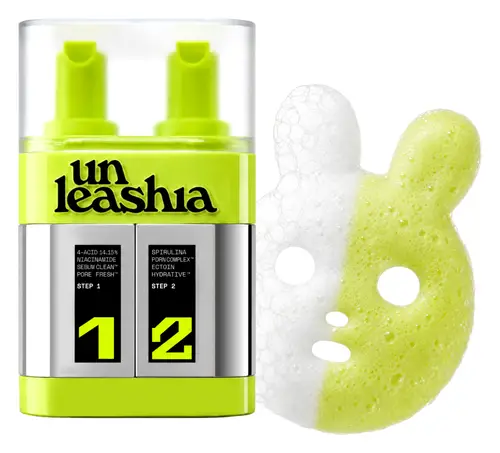
Unleashia 2-Step Zero Pore Overnight Bubble Serum Mask Versus Dr. Dennis Gross Skincare Alpha Beta Universal Daily Peel
This pore-care overnight mask is formulated around Lactic Acid and Niacinamide to refine the look of pores and refine skin texture.
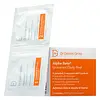
This smoothing exfoliator is formulated around Glycolic Acid and Salicylic Acid to refine skin texture and brighten dull-looking skin.


What's inside
What's inside
 Key Ingredients
Benefits
Concerns
Ingredients Side-by-side
Water
Skin ConditioningLactic Acid
Buffering










Tromethamine
BufferingNiacinamide
Smoothing




Gluconolactone
Chelating
Dipropylene Glycol
HumectantC12-14 Alketh-12
Emulsifying1,2-Hexanediol
Skin Conditioning
Trehalose
Humectant
Panthenol
Skin Conditioning
Glyceryl Glucoside
Humectant
Tripropylene Glycol
Antioxidant
Glycerin
Humectant
Salicylic Acid
Masking


Ethylhexylglycerin
Skin ConditioningZinc PCA
Humectant
Sargassum Fulvellum Extract
Skin ConditioningUndaria Pinnatifida Extract
Skin ConditioningSpirulina Maxima Extract
SmoothingEctoin
Skin Conditioning
Ceramide NP
Skin Conditioning
Capryloyl Salicylic Acid
Exfoliating
Butylene Glycol
Humectant
Vitis Vinifera Fruit Extract
Skin ConditioningUlmus Davidiana Root Extract
Skin Conditioning
Pueraria Lobata Root Extract
HumectantPinus Palustris Leaf Extract
TonicOenothera Biennis Flower Extract
AstringentDiospyros Kaki Fruit Extract
Skin ConditioningCastanea Crenata Shell Extract
Skin ConditioningCamellia Sinensis Leaf Extract
Antimicrobial
Propanediol
Solvent
Glycereth-26
Humectant
Sodium Polyacryloyldimethyl Taurate
Emulsion StabilisingPullulan
Polyglycerin-3
Humectant
Methyl Gluceth-20
Humectant
Methyl Gluceth-10
EmulsifyingAmmonium Acryloyldimethyltaurate/Vp Copolymer
Coptis Japonica Extract
AntimicrobialGardenia Florida Fruit Extract
Skin ConditioningAllantoin
Skin Conditioning
Hydroxyethylcellulose
Emulsion StabilisingAdenosine
Skin Conditioning
Beta-Glucan
Skin Conditioning
Litsea Cubeba Fruit Oil
Masking


Water, Lactic Acid, Tromethamine, Niacinamide, Gluconolactone, Dipropylene Glycol, C12-14 Alketh-12, 1,2-Hexanediol, Trehalose, Panthenol, Glyceryl Glucoside, Tripropylene Glycol, Glycerin, Salicylic Acid, Ethylhexylglycerin, Zinc PCA, Sargassum Fulvellum Extract, Undaria Pinnatifida Extract, Spirulina Maxima Extract, Ectoin, Ceramide NP, Capryloyl Salicylic Acid, Butylene Glycol, Vitis Vinifera Fruit Extract, Ulmus Davidiana Root Extract, Pueraria Lobata Root Extract, Pinus Palustris Leaf Extract, Oenothera Biennis Flower Extract, Diospyros Kaki Fruit Extract, Castanea Crenata Shell Extract, Camellia Sinensis Leaf Extract, Propanediol, Glycereth-26, Sodium Polyacryloyldimethyl Taurate, Pullulan, Polyglycerin-3, Methyl Gluceth-20, Methyl Gluceth-10, Ammonium Acryloyldimethyltaurate/Vp Copolymer, Coptis Japonica Extract, Gardenia Florida Fruit Extract, Allantoin, Hydroxyethylcellulose, Adenosine, Beta-Glucan, Litsea Cubeba Fruit Oil
Water
Skin ConditioningAlcohol Denat.
Antimicrobial
Glycolic Acid
Buffering
Potassium Hydroxide
BufferingHamamelis Virginiana Water
Astringent
Salicylic Acid
Masking
Polysorbate 20
Emulsifying
Citric Acid
Buffering
Lactic Acid
Buffering
Malic Acid
Buffering
Camellia Sinensis Leaf Extract
Antimicrobial
Achillea Millefolium Extract
CleansingAnthemis Nobilis Flower Extract
Masking
Soy Isoflavones
Skin ConditioningCopper PCA
HumectantZinc PCA
Humectant
Lecithin
Emollient
Disodium EDTA
ChelatingAlcohol
Antimicrobial
Polysorbate 80
Emulsifying
Parfum
Masking
Linalool
Perfuming
Benzyl Salicylate
Perfuming
Benzoic Acid
Masking
Phenoxyethanol
Preservative
Sodium Benzoate
Masking
Sodium Bicarbonate
Abrasive
Ascorbic Acid
Antioxidant
Ascorbyl Palmitate
Antioxidant
Retinyl Palmitate
Skin Conditioning
Retinol
Skin Conditioning
Tocopheryl Acetate
Antioxidant
Resveratrol
Antioxidant
Ubiquinone
Antioxidant
Leuconostoc/Radish Root Ferment Filtrate
Antimicrobial
Phospholipids
Skin Conditioning
Sodium PCA
Humectant
Dimethicone
Emollient
PEG-30 Stearate
Emulsifying
Octoxynol-9
EmulsifyingBHT
Antioxidant
Tetrasodium EDTA
ChelatingSorbic Acid
Preservative
Water, Alcohol Denat., Glycolic Acid, Potassium Hydroxide, Hamamelis Virginiana Water, Salicylic Acid, Polysorbate 20, Citric Acid, Lactic Acid, Malic Acid, Camellia Sinensis Leaf Extract, Achillea Millefolium Extract, Anthemis Nobilis Flower Extract, Soy Isoflavones, Copper PCA, Zinc PCA, Lecithin, Disodium EDTA, Alcohol, Polysorbate 80, Parfum, Linalool, Benzyl Salicylate, Benzoic Acid, Phenoxyethanol, Sodium Benzoate, Sodium Bicarbonate, Ascorbic Acid, Ascorbyl Palmitate, Retinyl Palmitate, Retinol, Tocopheryl Acetate, Resveratrol, Ubiquinone, Leuconostoc/Radish Root Ferment Filtrate, Phospholipids, Sodium PCA, Dimethicone, PEG-30 Stearate, Octoxynol-9, BHT, Tetrasodium EDTA, Sorbic Acid
Reviews
Ingredients Explained
These ingredients are found in both products.
Ingredients higher up in an ingredient list are typically present in a larger amount.
Camellia Sinensis Leaf Extract (tea extract) is one of the most well-researched plant extracts in skincare with an impressive resume.
Black tea, green tea, and oolong tea are all harvested from the Camellia Sinensis plant.
Studies show green tea extract and its catechins (like epigallocatechin gallate (EGCG)) help your skin cells product energy more efficiently and reducing the number of free-radicals that can damage your skin from the inside.
In lab-grown skin models, this translated to younger, healthier, and stronger skin.
There's also good sun protection data; researchers saw less DNA damage and redness on human skin when green tea was applied before UVB exposure. And the more they applied, the better the protection.
Needless to say, this ingredient shouldn't replace your sunscreen. But it is a great supportive ingredient that you can already find in many sunscreens and antioxidant serums.
A 2009 study found a 2% green tea lotion was effective for mild-to-moderate acne thanks to its anti-inflammatory and mild antimicrobial activity.
The quality of the extract matters a lot here:
Good extracts contain 50-90% catechins while lower quality ones are mostly there for marketing. We recommend reaching out to the brand if you have questions about the quality or source of their ingredients.
Human Repeated Insult Patch Testing showed no irritation or sensitization at use concentrations (0.86% in leave-on products and up to 30% as leaf water).
Learn more about Camellia Sinensis Leaf ExtractLactic Acid is another well-loved alpha hydroxy acid (AHA). It is gentler than glycolic acid but still highly effective.
Its main role is to exfoliate the surface of the skin by loosening the “glue” that holds dead skin cells together. Shedding those old cells leads to smoother, softer, and more even-toned skin.
Because lactic acid molecules are larger than glycolic acid, they don’t penetrate as deeply. This means they’re less likely to sting or irritate, making it a great choice for beginners or those with sensitive skin.
Like glycolic acid, it can:
Lactic acid also acts as a humectant (like hyaluronic acid). It can draw water into the skin to improve hydration and also plays a role in the skin's natural moisturizing factor (NMF) in the form of sodium lactate.
Studies show it can boost ceramide production to strengthen the skin barrier and even help balance the skin’s microbiome.
To get results, choose products with a pH between 3-4.
Lower strengths (5-12%) focus on surface exfoliation; higher strengths (12% and up) can reach deeper in the dermis (deeper, supportive layer) to improve skin texture and firmness over time.
Though it was originally derived from milk, most modern lactic acid used in skincare is vegan. It is made through non-dairy fermentation to create a bio-identical and stable form suitable for all formulations.
When lactic acid shows up near the end of an ingredient list, it usually means the brand added just a tiny amount to adjust the product’s pH.
Legend has it that Cleopatra used to bathe in sour milk to help reduce wrinkles.
Lactic acid is truly a gentle multitasker: it exfoliates, hydrates, strengthens, and brightens. It's a great ingredient for giving your skin a smooth, glowing, and healthy look without the harshness of stronger acids.
Read more about some other popular AHA's here:
Learn more about Lactic AcidSalicylic Acid (also known as beta hydroxy acid or BHA) is a well-known ingredient for treating skin that struggles with acne and clogged pores. It exfoliates both the skin's surface and deep within the pores to help clear out buildup, control oil, and reduce inflammation.
Unlike AHAs (alpha hydroxy acids), salicylic acid is oil-soluble. This allows it to penetrate into pores which makes it especially effective for treating blackheads and preventing future breakouts.
Salicylic acid is also known for its soothing properties. It has a similar structure to aspirin and can calm inflamed or irritated skin, making it a good option for acne-prone skin that is also sensitive.
Concentrations of 0.5-2% are recognized by the U.S. FDA as an over-the-counter topical acne product.
It can cause irritation and/or dryness if one's skin already has a compromised moisture barrier, so it's best to focus on repairing that before introducing this ingredient into your routine.
While salicylic acid does not increase sun sensitivity, it’s still important to wear sunscreen daily to protect your skin.
If you are looking for the ingredient called BHA or Butylated Hydroxyanisole, click here.
Learn more about Salicylic AcidWater. It's the most common cosmetic ingredient of all. You'll usually see it at the top of ingredient lists, meaning that it makes up the largest part of the product.
So why is it so popular? Water most often acts as a solvent - this means that it helps dissolve other ingredients into the formulation.
You'll also recognize water as that liquid we all need to stay alive. If you see this, drink a glass of water. Remember to stay hydrated!
Learn more about WaterZinc PCA is a clever two-in-one molecule: the zinc salt of pyrrolidone carboxylic acid (PCA).
Think of it as two useful things bonded together; the PCA half is one of your skin's own natural moisturizing factors (NMF) so it helps hold water in the upper layers. On the other hand, the zinc half does the heavy lifting on oil and bacteria.
The zinc part slows down an enzyme that turns testosterone into DHT, the hormone that tells your oil glands to pump out more sebum. Less of that signal means less oil. It also gently fights acne-causing bacteria and soothes redness/irritation.
This is why Zinc PCA often shows up in products for oily, breakout-prone skin and greasy scalps.
One lab study also hinted it might have a small anti-aging perk because it seemed to protect collagen from UVA damage and even helped the skin make a bit more of it. That last bit is still early research done in a dish and not real skin, so take it as a nice bonus rather than a promise for now.
As for scar healing, the picture is more "maybe" than a firm yes. Zinc itself plays a real role in wound repair because it is a cofactor for the enzymes involved in collagen building, calming inflammation, and helping new skin cells cover a wound. Lower zinc levels are also linked to slower healing.
Most of the scar healing research is on zinc oxide or oral zinc rather than zinc PCA specifically, with a focus on healing fresh wounds instead of scars that are already there.
Direct evidence that zinc PCA improves the look of established scars is still limited at this time. Though it would be fair to say zinc PCA supports the general skin-repair environment thanks to its zinc content .
This ingredient is water-soluble and plays nicely with other actives like niacinamide and salicylic acid. It works best at mildly acidic formulas (~4-6 pH) and is effective at low levels. Around 0.1% is enough to be active and finished products commonly use it anywhere up to 4%.
Overall, this is a well-tolerated, low-drama multitasker that suits oily and acne-prone skin.
Learn more about Zinc PCA

