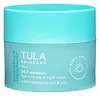
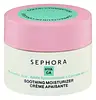
Tula Skincare 24-7 Moisture Hydrating Day & Night Cream Versus Sephora Collection Soothing Moisturizer With Hyaluronic Acid
This barrier-repair moisturizer is formulated around Squalane and Bifida Ferment Lysate to strengthen the skin barrier and hydrate skin.
This calming moisturizer is formulated around Centella Asiatica Extract and Sodium Hyaluronate to calm redness and hydrate skin.


What's inside
What's inside
 Key Ingredients
Benefits
Concerns
Ingredients Side-by-side
Water
Skin ConditioningButylene Glycol
Humectant

Ethylhexyl Palmitate
Emollient




Squalane
Emollient
Glycerin
Humectant
Cetyl Alcohol
Emollient

Caprylic/Capric Triglyceride
Masking
Dimethicone
Emollient
Hydrogenated Vegetable Oil
Emollient
Glyceryl Stearate
Emollient
PEG-100 Stearate
Surfactant
Bifida Ferment Lysate
Skin Conditioning

Lactose
HumectantLactis Proteinum
Skin ConditioningYogurt Extract
Skin ConditioningHydrolyzed Rice Protein
Skin ConditioningCichorium Intybus Root Extract
MaskingVaccinium Angustifolium Fruit Extract
Skin Protecting
Vegetable Oil
Skin Conditioning
Camelina Sativa Seed Oil
Skin Conditioning
Camellia Sinensis Leaf Extract
Antimicrobial



Curcuma Longa Root Extract
Antioxidant
Tocopheryl Acetate
Antioxidant
Ascorbyl Palmitate
Antioxidant
Carthamus Tinctorius Seed Oil
Masking
Olea Europaea Fruit Oil
Masking
Pyrus Malus Fruit Extract
Skin Conditioning
Citrullus Lanatus Fruit Extract
Skin Conditioning
Lens Esculenta Fruit Extract
Skin ConditioningSodium Lactate
Buffering
Sodium PCA
Humectant
Carbomer
Emulsion StabilisingSodium Hydroxide
BufferingPentylene Glycol
Skin Conditioning
Caprylyl Glycol
Emollient
Bulnesia Sarmientoi Wood Oil
Masking
Citrus Limon Fruit Oil
Astringent
Citrus Aurantium Dulcis Oil
Masking
Juniperus Mexicana Oil
Masking
Cananga Odorata Flower Oil
Masking


Ethylhexylglycerin
Skin ConditioningStearyl Alcohol
Emollient
Disodium EDTA
ChelatingCitric Acid
Buffering
Sorbic Acid
Preservative
Phenethyl Alcohol
MaskingSodium Benzoate
Masking
Potassium Sorbate
Preservative
Phenoxyethanol
Preservative
Parfum
Masking
Alpha-Isomethyl Ionone
Perfuming
Butylphenyl Methylpropional
Perfuming
Linalool
Perfuming
Hexyl Cinnamal
Perfuming
Water, Butylene Glycol, Ethylhexyl Palmitate, Squalane, Glycerin, Cetyl Alcohol, Caprylic/Capric Triglyceride, Dimethicone, Hydrogenated Vegetable Oil, Glyceryl Stearate, PEG-100 Stearate, Bifida Ferment Lysate, Lactose, Lactis Proteinum, Yogurt Extract, Hydrolyzed Rice Protein, Cichorium Intybus Root Extract, Vaccinium Angustifolium Fruit Extract, Vegetable Oil, Camelina Sativa Seed Oil, Camellia Sinensis Leaf Extract, Curcuma Longa Root Extract, Tocopheryl Acetate, Ascorbyl Palmitate, Carthamus Tinctorius Seed Oil, Olea Europaea Fruit Oil, Pyrus Malus Fruit Extract, Citrullus Lanatus Fruit Extract, Lens Esculenta Fruit Extract, Sodium Lactate, Sodium PCA, Carbomer, Sodium Hydroxide, Pentylene Glycol, Caprylyl Glycol, Bulnesia Sarmientoi Wood Oil, Citrus Limon Fruit Oil, Citrus Aurantium Dulcis Oil, Juniperus Mexicana Oil, Cananga Odorata Flower Oil, Ethylhexylglycerin, Stearyl Alcohol, Disodium EDTA, Citric Acid, Sorbic Acid, Phenethyl Alcohol, Sodium Benzoate, Potassium Sorbate, Phenoxyethanol, Parfum, Alpha-Isomethyl Ionone, Butylphenyl Methylpropional, Linalool, Hexyl Cinnamal
Water
Skin ConditioningC15-19 Alkane
SolventDicaprylyl Ether
Emollient
Boron Nitride
Absorbent
Pentylene Glycol
Skin Conditioning
Glycerin
Humectant
Polyglyceryl-3 Distearate
Emulsifying
Butyrospermum Parkii Butter
Skin Conditioning
Sodium Acrylates Copolymer
Glyceryl Stearate
Emollient
Tribehenin
Emollient
Olus Oil
Emollient
Potassium Cetyl Phosphate
EmulsifyingPropanediol
Solvent
Cetearyl Alcohol
Emollient
Lecithin
Emollient
Centella Asiatica Extract
Cleansing
CI 77288
Cosmetic ColorantGlyceryl Stearate Citrate
Emollient
Citric Acid
Buffering
Sodium Hyaluronate
Humectant
Sodium Phytate
ChelatingO-Cymen-5-Ol
Antimicrobial
Sodium Dehydroacetate
Preservative
Tocopherol
Antioxidant
Water, C15-19 Alkane, Dicaprylyl Ether, Boron Nitride, Pentylene Glycol, Glycerin, Polyglyceryl-3 Distearate, Butyrospermum Parkii Butter, Sodium Acrylates Copolymer, Glyceryl Stearate, Tribehenin, Olus Oil, Potassium Cetyl Phosphate, Propanediol, Cetearyl Alcohol, Lecithin, Centella Asiatica Extract, CI 77288, Glyceryl Stearate Citrate, Citric Acid, Sodium Hyaluronate, Sodium Phytate, O-Cymen-5-Ol, Sodium Dehydroacetate, Tocopherol
Reviews
Ingredients Explained
These ingredients are found in both products.
Ingredients higher up in an ingredient list are typically present in a larger amount.
Citric Acid is an alpha hydroxy acid (AHA) naturally found in citrus fruits like oranges, lemons, and limes.
Like other AHAs, citric acid can exfoliate skin by breaking down the bonds that hold dead skin cells together. This helps reveal smoother and brighter skin underneath.
However, this exfoliating effect only happens at high concentrations (20%) which can be hard to find in cosmetic products.
Due to this, citric acid is usually included in small amounts as a pH adjuster. This helps keep products slightly more acidic and compatible with skin's natural pH.
In skincare formulas, citric acid can:
While it can provide some skin benefits, research shows lactic acid and glycolic acid are generally more effective and less irritating exfoliants.
Most citric acid used in skincare today is made by fermenting sugars (usually from molasses). This synthetic version is identical to the natural citrus form but easier to stabilize and use in formulations.
Rosacea skin has a lower threshold for acids generally, with 62.5% of rosacea subjects in one study reacting to lactic acid in a sting test. This is why we mark citric acid as a potential rosacea trigger.
However, this ingredient shows up as a pH adjuster or chelator at roughly 0.1-1% in many products. These low levels are unlikely to be an issue for rosacea skin and becomes a potential trigger at exfoliating concentrations (20%). Because everybody's skin is unique, we recommend a patch test if you are unsure.
Learn more about Citric AcidGlycerin (or glycerol) is a compound naturally found in your skin. It's a powerhouse humectant that pulls water into the stratum corneum.
Topically, glycerin does several things at once:
Your skin makes glycerin on its own (mostly from sebaceous oil breakdown) and shuttles it to your outermost layer of skin, or your epidermis, via aquaporin-3.
Aquaporin-3 is a transporter that is essential for normal skin hydration, elasticity, and repair. Interestingly, mice lacking in AQP3 have dry and less elastic skin that can be fully corrected with glycerin.
This ingredient is non-irritating, plays well with almost every ingredient, and works across all skin types. Typical use is anywhere between 3-10% but can go up to 79% in some leave-on products.
Just know very high concentrations (>40%) can feel tacky in low humidity.
Glycerin is the name for this ingredient in American English. British English uses Glycerol/Glycerine.
Learn more about GlycerinGlyceryl Stearate is made by reacting glycerin with stearic acid (typically sourced from plant oils like palm or coconut). It's an emulsifier, emollient, and mild occlusive.
Emulsifiers help ingredients like oil and water stay mixed so your formula stays nicely blended and uniform in texture.
This ingredient is typically used in concentrations between 1-10%. Studies have found it to be non-sensitizing, non-phototoxic, and non-photoallergenic.
A close cousin of this ingredient is Glyceryl Stearate SE ("self-emulsifying"). This just has a small amount of sodium or potassium stearate added so it can emulsify without a co-emulsifier.
Since this ingredient is an ester of a C18 fatty acid, it may not be fungal acne safe. The Malassezia yeast can potentially metabolize within the C11-C24 range.
Fun fact: The human body also creates Glyceryl Stearate naturally.
Learn more about Glyceryl StearatePentylene Glycol (1,2-pentanediol) is a multitasking little diol with three main roles in a formula:
Research on alkanediols (the family pentylene glycol belongs to) show they work by disrupting microbial cell membranes. This disruption helps the primary preservative system in a product work more effectively at lower doses.
On the safety side, the Cosmetic Ingredient Review Expert Panel has concluded this ingredient to be safe as used in current cosmetic practices + concentrations.
Typical use levels in a formula run about 1-5%.
Learn more about Pentylene GlycolWater. It's the most common cosmetic ingredient of all. You'll usually see it at the top of ingredient lists, meaning that it makes up the largest part of the product.
So why is it so popular? Water most often acts as a solvent - this means that it helps dissolve other ingredients into the formulation.
You'll also recognize water as that liquid we all need to stay alive. If you see this, drink a glass of water. Remember to stay hydrated!
Learn more about Water

